Why Does My Green Smoothie Taste Bitter? Find the Ingredient
A bitter green smoothie rarely needs more of everything sweet. Find out whether the bitterness is leafy, citrus-like, powdery, or delayed first, and you can fix the cause without burying the entire drink.
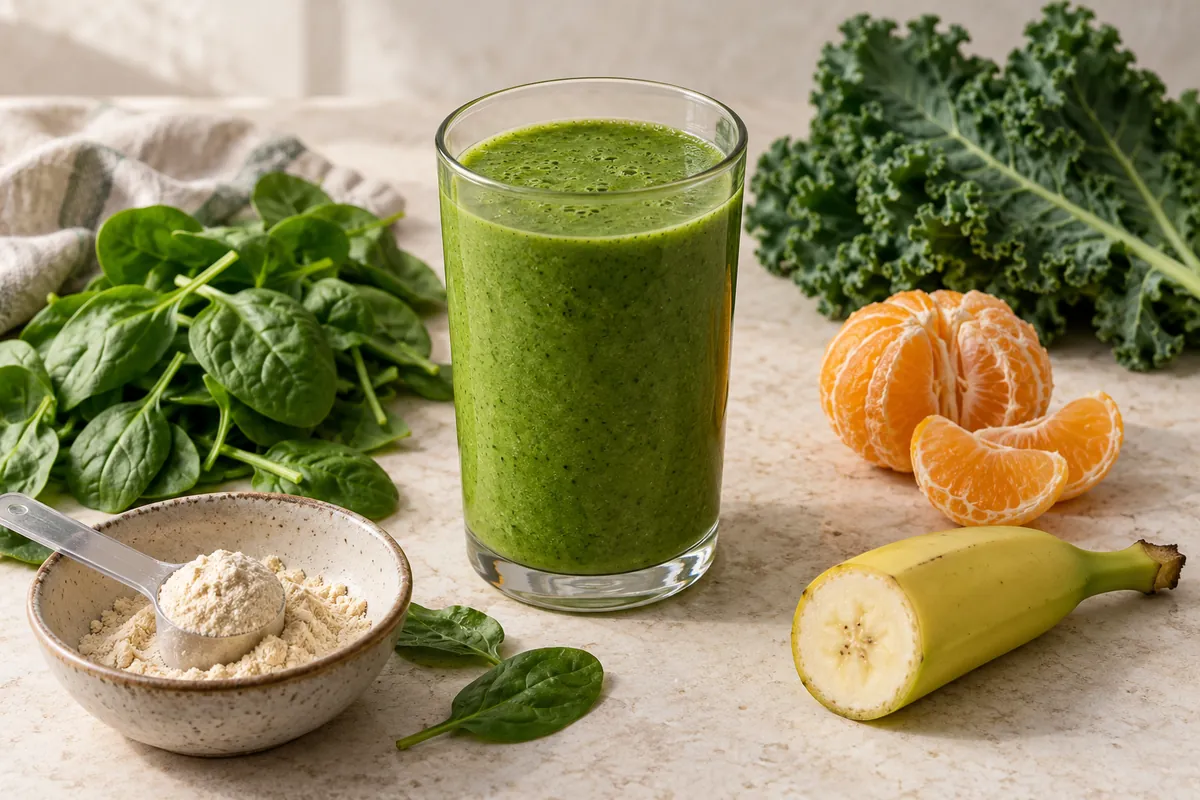
A green smoothie usually tastes bitter because one ingredient contributes more bitterness than the fruit and liquid can balance.
Mature kale, thick stems, citrus pith, some powders, underripe fruit, and too much peel are common suspects.
You will diagnose the drink more accurately if you taste it before adding anything. Bitter, sour, astringent, and stale are different faults, and the fix for one can make another worse.
A squeeze of lemon may brighten dull greens, for example, but it will not remove pith that was blended into the jar. Extra sweet fruit can suppress bitterness, yet it also changes the recipe's body and sweetness.
Taste the bitterness before you sweeten it
Bitterness tends to linger after the swallow, while sourness creates a brighter, mouth-watering sharpness. Astringency feels drying or rough rather than simply bitter, and protein powders can produce both sensations at once.
Once we separate those sensations, you have a useful first test. Taste a tiny piece or pinch of each suspect ingredient on its own, then compare its finish with the green smoothie in the glass.
| What you notice | Likely first suspect | First comparison |
|---|---|---|
| Green and peppery | Mature leafy greens or thick stems | Blend a smaller amount with the same fruit |
| Rind-like and lingering | Citrus pith, peel, seeds, or membranes | Use clean juice or peeled flesh only |
| Dry and chalky | Protein powder or another dry add-in | Reduce the powder while holding liquid steady |
| Bitter after standing | Citrus delayed bitterness or storage change | Taste a fresh portion beside the stored one |
| Sharp and mouth-watering | Acid balance rather than bitterness | Add ripe fruit before adding more acid |
Color alone cannot diagnose the problem. A dark glass may simply contain more chlorophyll-rich leaves, while a pale smoothie can hide bitter citrus membrane or a strongly flavored powder.
Timing helps more. Bitterness present in the first sip usually came in with an ingredient; bitterness that becomes clearer after several hours deserves a closer look at citrus and storage.
Storage judgment does not come from flavor. Food can be unsafe without looking or tasting spoiled, so a long unrefrigerated hold is not something sweetness can repair.
Leaf choice changes more than colour
Leafy greens carry their own bitter and pungent compounds. In kale and related Brassica vegetables, glucosinolate products and polyphenols contribute to perceived bitterness, though the intensity changes with the plant, the leaf, and the person tasting it.
Mature kale usually asserts itself more than baby spinach. Thick stems can add a tougher, pepperier impression, while tender young leaves disperse more quietly through ripe fruit.
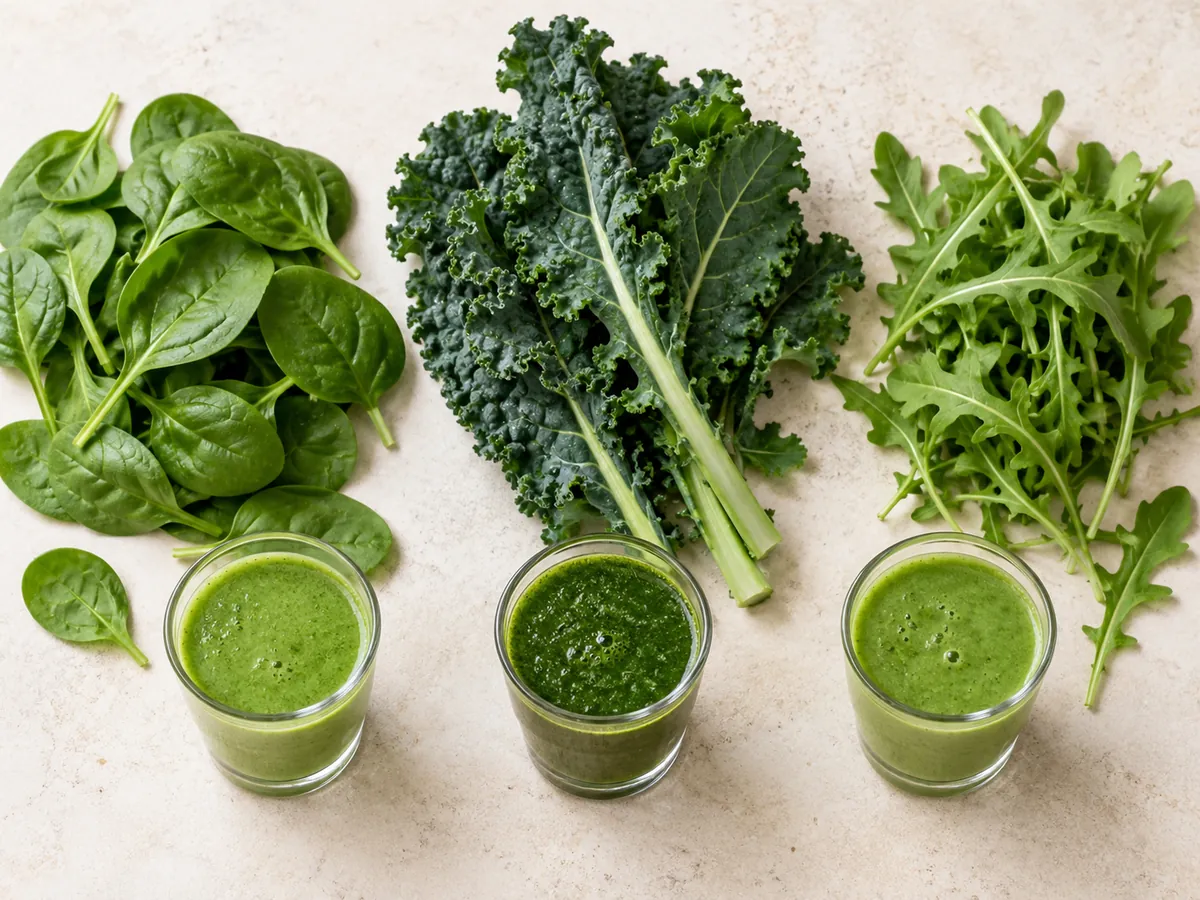
The amount matters as much as the name. A handful of kale in a large berry smoothie behaves differently from a tightly packed jar that is mostly leaves with one small apple.
Your clearest first comparison is to halve the suspected green rather than double every fruit. Keep the liquid and the rest of the recipe steady, because that comparison tells you whether the leaf load actually caused the bitter finish.
You can also remove thick stems before blaming the whole vegetable. The leaves may provide the flavor you wanted once the most fibrous, pungent parts are no longer blended into every sip.
Research on vegetable taste also shows that people perceive bitterness differently.
A ratio that tastes balanced to one person can remain assertive to another, so the useful endpoint is your glass rather than a claim that one green is universally mild.
If you want a stronger green flavor, build toward it across batches. Mixing a small amount of kale into spinach makes the change legible, whereas switching the entire leafy portion at once tells you only that the result is different.
Citrus can make bitterness arrive late
Citrus brings acid, aroma, and bitterness from different parts of the fruit. Clean juice can taste sharply sour without being bitter, while white pith, peel, seeds, and segment membranes contribute a rind-like finish that lingers.
A whole citrus wedge is therefore not equivalent to its juice. If the lemon went into the blender with a thick white layer or several seeds, no amount of precise liquid measurement will make those solid parts disappear from the flavor.
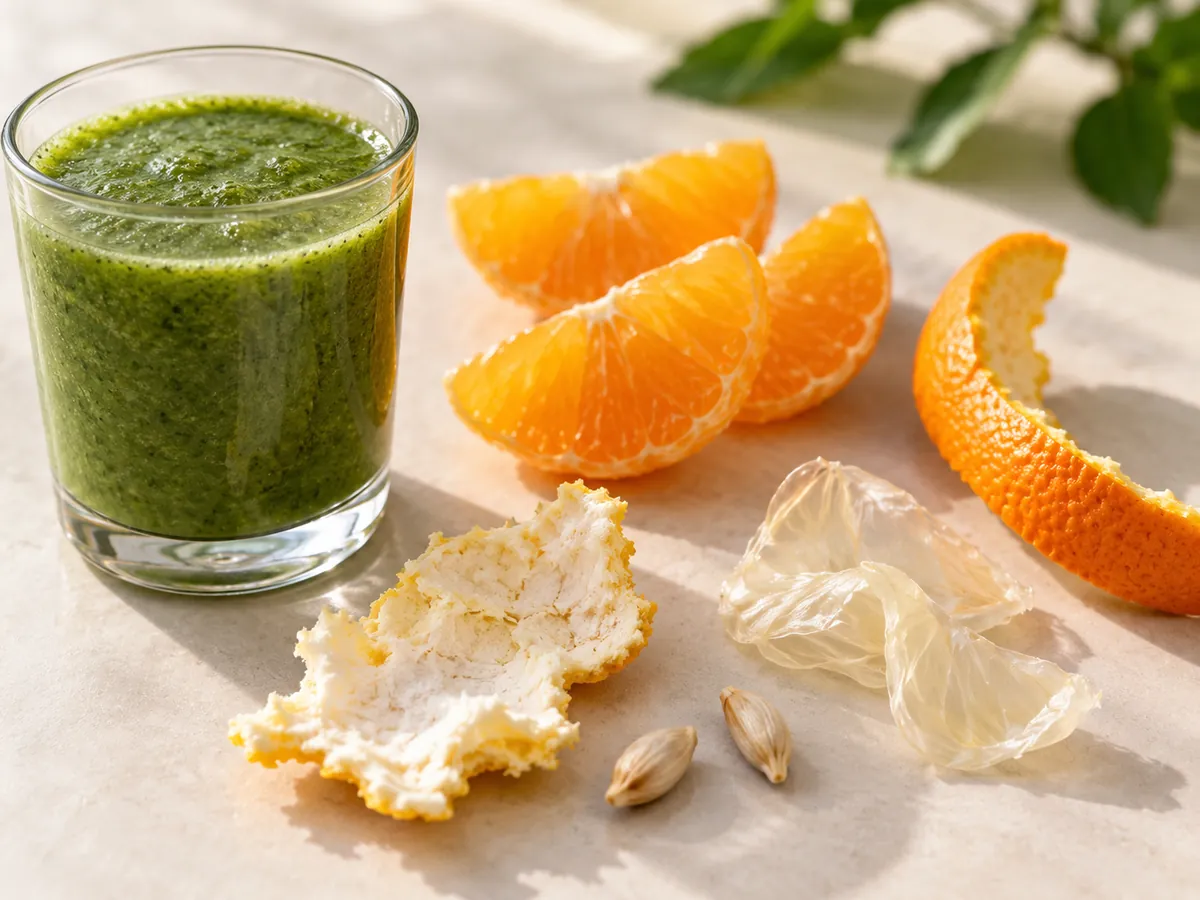
You can remove visible seeds and most white pith, then use peeled flesh or measured juice. An orange juice that tastes pleasant alone can brighten greens, but blending the membrane-heavy remains of the fruit can push the same smoothie toward bitterness.
Some citrus bitterness also develops after processing.
Research on stored citrus juice found delayed bitterness linked with limonoids, and the effect varied between closely related fruit types rather than appearing uniformly.
That matters when a smoothie tastes fine immediately and noticeably more bitter later. It does not prove that citrus is responsible, but it makes a fresh side-by-side portion more useful than adding sweetener to the stored glass and guessing.
Acid is not the enemy here. A little clean citrus juice can make a heavy green blend taste brighter; the fault is often bitter plant material or a fruit-specific delayed change, not sourness itself.
If the recipe uses apple juice as its liquid, compare a batch with clean citrus juice rather than a whole citrus piece. You preserve the acid contrast while removing peel, pith, and seeds from the test.
Powders and add-ins can move the balance
A smoothie can be green and still owe most of its bitterness to something other than the leaves. Unsweetened cocoa, matcha, citrus zest, some protein powders, and underripe banana can stack bitter, dry, or astringent notes on top of the vegetable base.
Powders are especially easy to overlook because they seem like texture ingredients. A protein smoothie may thicken sharply after one extra scoop, and the higher powder concentration makes both chalkiness and flavor more obvious.
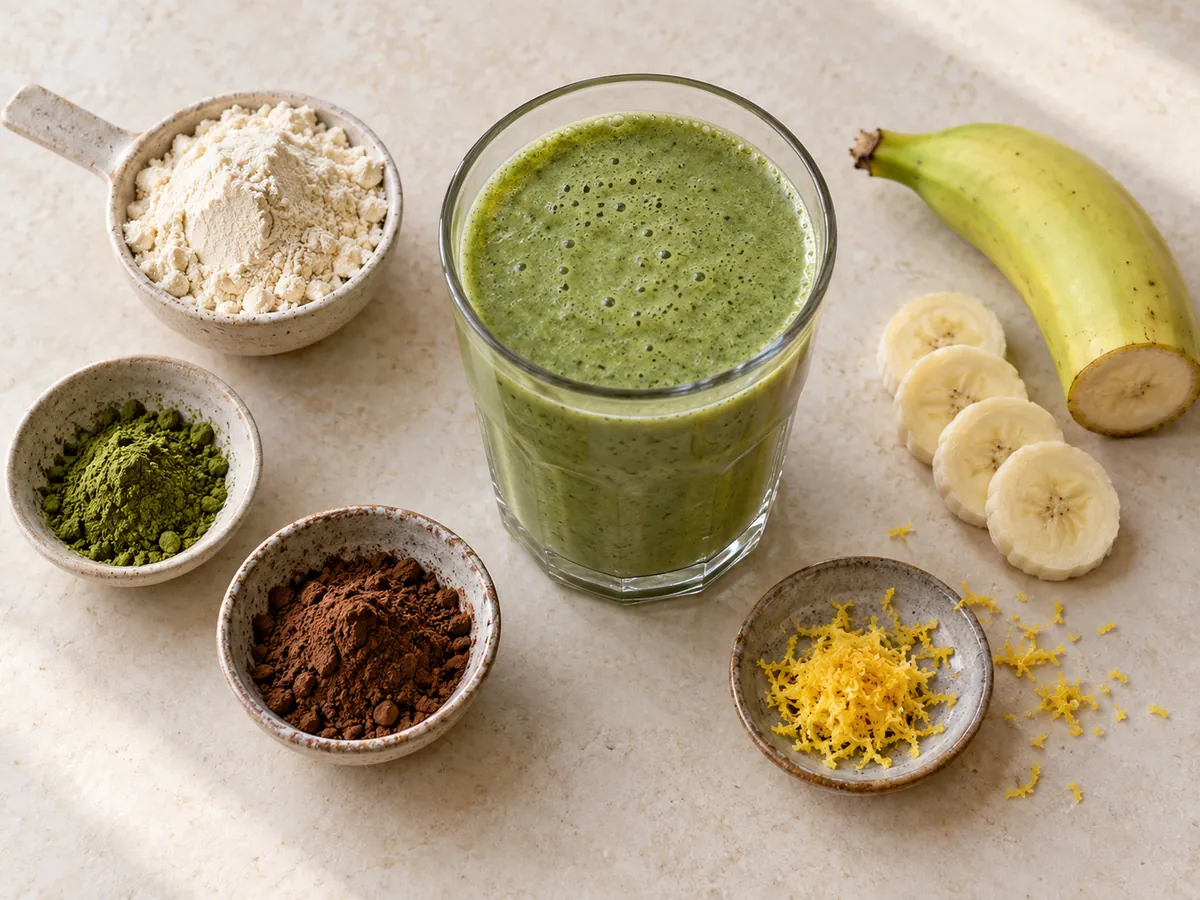
A pinch of the powder mixed with water or the recipe's liquid gives you a direct comparison. If its finish matches the smoothie, reducing the dose is a cleaner test than hiding it beneath syrup.
Practical smoothie guidance also warns that extra protein powder can become too much. Product formulas vary, so the label amount is a starting condition rather than proof that the flavor will suit your fruit and greens.
Matcha and cocoa are intentionally bitter to some degree.
Pairing them with ripe fruit or a creamier liquid can make sense, but removing every trace of their character defeats the reason they were added.
Underripe banana creates a different problem. It supplies less sweetness and can read starchy or drying, so the drink loses both a balancing flavor and the creamy body that a ripe banana would have provided.
Citrus zest is concentrated aromatic peel. A small amount can lift a bland smoothie, while a heavy strip of zest plus white pith can dominate the same jar long after the fresh citrus aroma fades.
Rescue the glass, then rebuild the recipe
Rescue makes sense when the ingredients are fresh, the smoothie has been handled safely, and the fault is flavor balance. Mold, gas, a fermented odor you did not intend, or a long unrefrigerated hold calls for disposal rather than a tasting experiment.
Your rescue will be more precise once you name the likeliest source. Leafy bitterness may need ripe fruit, citrus-pith bitterness may need dilution with the same pith-free base, and an excessive powder load may need both liquid and more of the original fruit.
- Rule out disposal signsStop when storage time, mold, gas, or an off odor makes flavor repair inappropriate
- Name the likely sourceChoose leaf, citrus material, powder, underripe fruit, or another specific add-in
- Add one balancing ingredientUse a small amount of ripe fruit, compatible liquid, yogurt, or another planned component
- Blend briefly and retastePulse only long enough to distribute the change
- Change the next recipe at the sourceReduce the suspect ingredient while holding the remaining recipe steady
Ripe banana adds sweetness and body, pineapple adds bright sweetness, and clean orange flesh contributes both sugar and acid. A small amount is enough for the first test because a sweeter smoothie can still be badly balanced.
A spoonful of yogurt or a compatible plant drink can soften an astringent, powder-heavy blend. It will also mute fruit aroma and loosen the texture, so it is a deliberate recipe change rather than a neutral fix.
If the smoothie is already thin, frozen fruit is usually more useful than juice. It cools and thickens at the same time, whereas extra liquid may make the bitterness less concentrated but leave the drink unsatisfying.
More ice can make the glass feel fresher without resolving the bitter flavor. Cold suppresses some flavor temporarily, but meltwater cannot remove the bitter compound and may reveal it again as the drink warms.
In your next batch, change one source at a time. You might use baby spinach instead of mature kale, remove citrus pith, halve the powder, or choose a riper banana while keeping everything else stable.
That comparison is what turns a rescue into a recipe you can repeat. Once you know which ingredient moved the bitterness, you can decide whether to reduce it, pair it more thoughtfully, or leave it out.