Why Does My Moka Pot Sputter? Read When and Where It Starts
A moka pot often gurgles briefly as the brew ends, but it should not spit violently from the first drops or vent through the safety valve. The moment and place where sputtering begins tell you whether to lower the heat, inspect the seal, or stop using the pot.
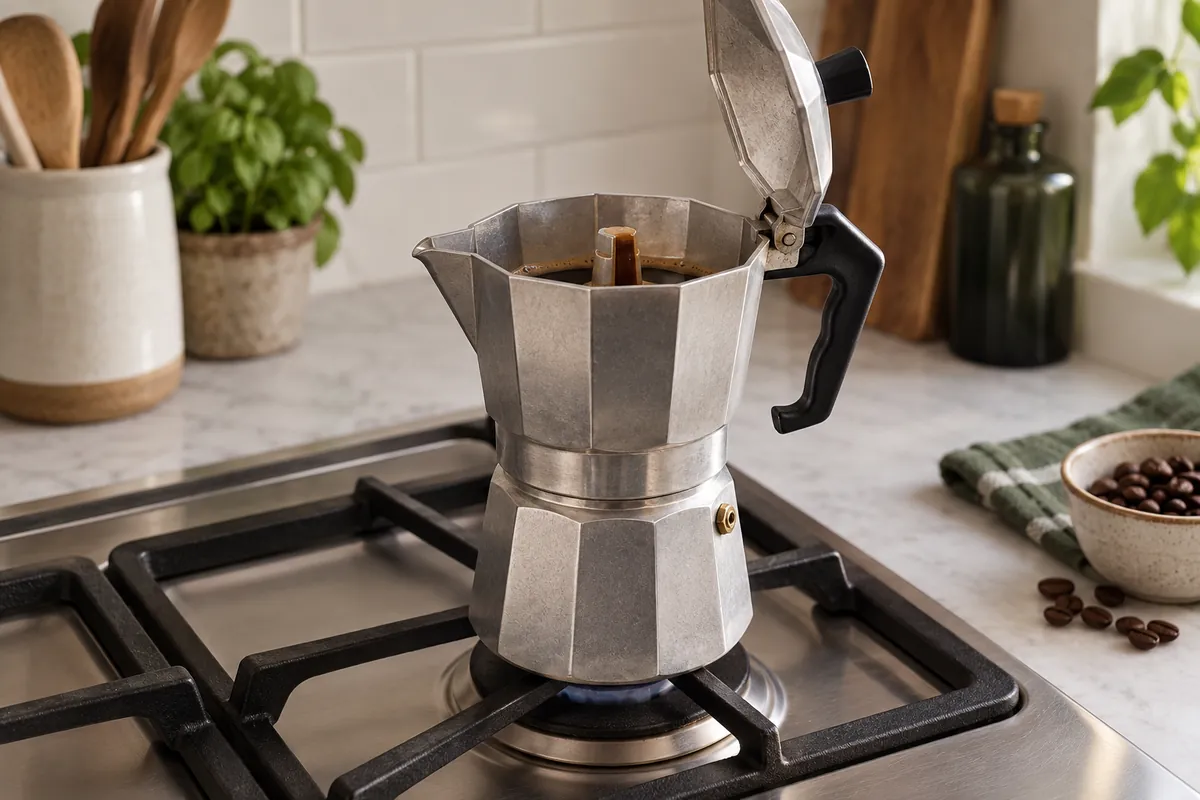
A moka pot sputters when gas begins interrupting the liquid stream or when pressure escapes along a path it should not take.
A brief gurgle at the end is normal; sputtering from the first drops, leakage at the joint, or steam from the safety valve is not.
Timing is your first clue. When and where the sputter appears will narrow the cause faster than changing grind, heat, and water together.
If coffee rises smoothly for most of the brew and becomes pale and bubbly only at the end, remove the pot from the heat and stop there. If the stream is broken from the beginning, the diagnosis belongs earlier in the pressure path.
The timing of the sputter is the first diagnosis
A moka pot pushes hot water upward while the lower chamber still covers the bottom of the funnel. Near the end, the water level falls low enough for more gas to reach that inlet, so the upper stream becomes lighter, noisier, and less continuous.
That final change is the familiar gurgle. It tells you the useful liquid phase is ending, not that the brewer should remain on the stove until every sound stops.
| What you observe | Most useful first check | What it means |
|---|---|---|
| Brief gurgle at the end | Remove from heat | Normal boiler depletion is beginning |
| Sputtering from the first drops | Lower heat, then inspect the seal | Pressure or flow is unstable before the finish |
| Steam or coffee at the joint | Cool the pot and inspect gasket and rim | Pressure is escaping between chambers |
| Steam from the safety valve | Remove heat and stop using the pot | The valve is relieving abnormal boiler pressure |
| Weak spurts with little coffee | Check seal, filter, funnel, and grind | Pressure is leaking or meeting excessive resistance |
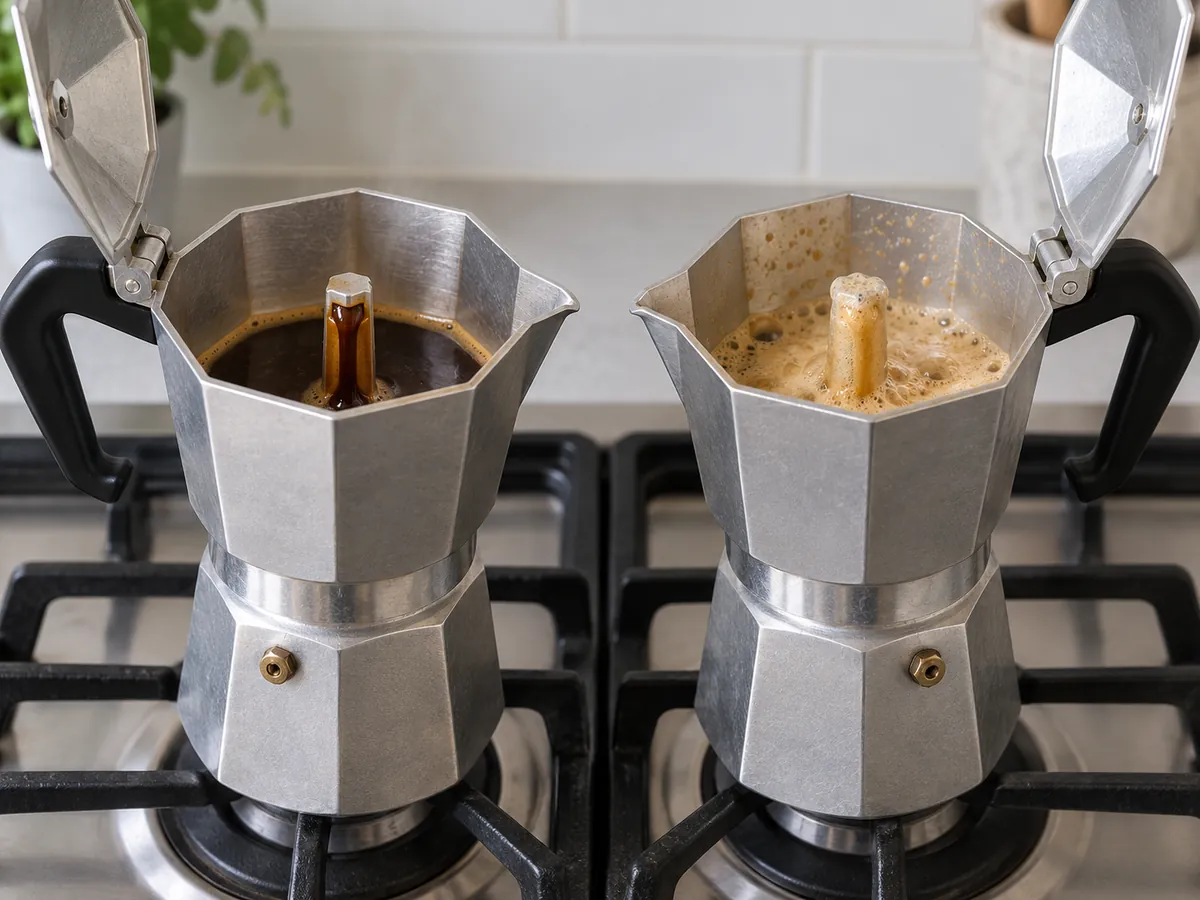
Sputtering at the threaded joint is a different event from gurgling at the chimney. The joint should contain pressure, so any visible escape there points toward assembly, debris, or a worn sealing part.
The safety valve is different again. It exists to relieve pressure in the boiler, and regular steam release there is a stop signal, not an alternative way for the coffee to finish.
A small amount of water remaining below is normal because the funnel does not reach the absolute bottom. Trying to drive every last drop upward keeps heat under a nearly depleted boiler and makes the final gas-heavy phase more aggressive.
The broader moka pot method explains the normal brew sequence. Here, the important point is that the final sound has a place in that sequence, while early or misplaced sputtering does not.
Too much heat makes pressure rise faster than the flow can settle
A moka pot is a pressure-driven brewer. Heating the lower chamber raises the temperature of the trapped air and water vapor, and that pressure pushes liquid through the funnel and coffee bed.
A thermo-fluid model of moka extraction treats heating, vapor pressure, and flow through the coffee as a coupled system. That connection explains why changing the burner changes both the arrival time and the character of the stream.
Too much heat can make pressure rise faster than the coffee path can pass liquid smoothly. The flow accelerates, breaks into droplets, and may turn pale early as hotter gas enters the upper path.
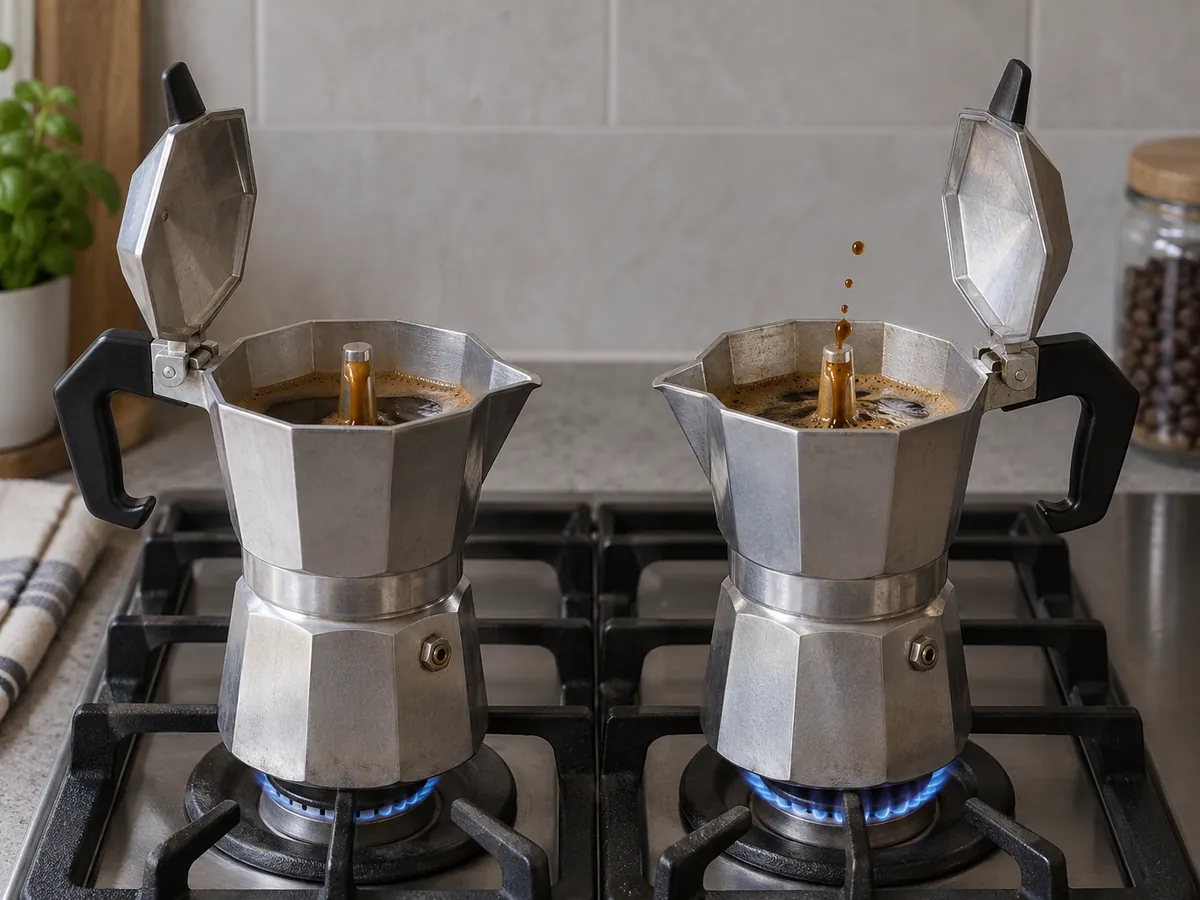
The stream gives you the clearest live feedback. Once coffee appears, you can reduce the burner enough to keep a calm flow rather than waiting for spurting to tell you the pot is too hot.
Bialetti specifies low-to-medium heat and removal when the pot is full. On gas, the flame should stay beneath the base rather than climbing the side where it heats the handle and upper chamber.
Starting with hot water can shorten the time that ground coffee sits over a warming boiler, but it does not excuse an oversized flame.
It also makes assembly a burn risk, so handle the filled base carefully and follow the method your pot's manufacturer supports.
Low heat cannot repair every sputter. If steam escapes at the joint, the safety valve vents, or the output remains weak, turning the burner down may soften the symptom without restoring the intended pressure path.
The moka pot and espresso machine comparison is useful here because a stovetop pot does not need espresso-machine pressure. Tamping the coffee to chase a stronger result raises resistance inside a brewer designed for a loose bed.
A weak seal sends pressure around the coffee
The gasket, filter plate, funnel rim, and boiler lip form one sealing stack. When those surfaces meet cleanly, rising pressure has one useful route: through the water, up the funnel, across the coffee, and into the chimney.
A single coffee ground on the rim can hold the gasket slightly open. A hardened ring can look intact yet fail to conform, and a bent funnel edge can leave a gap that tightening cannot correct.
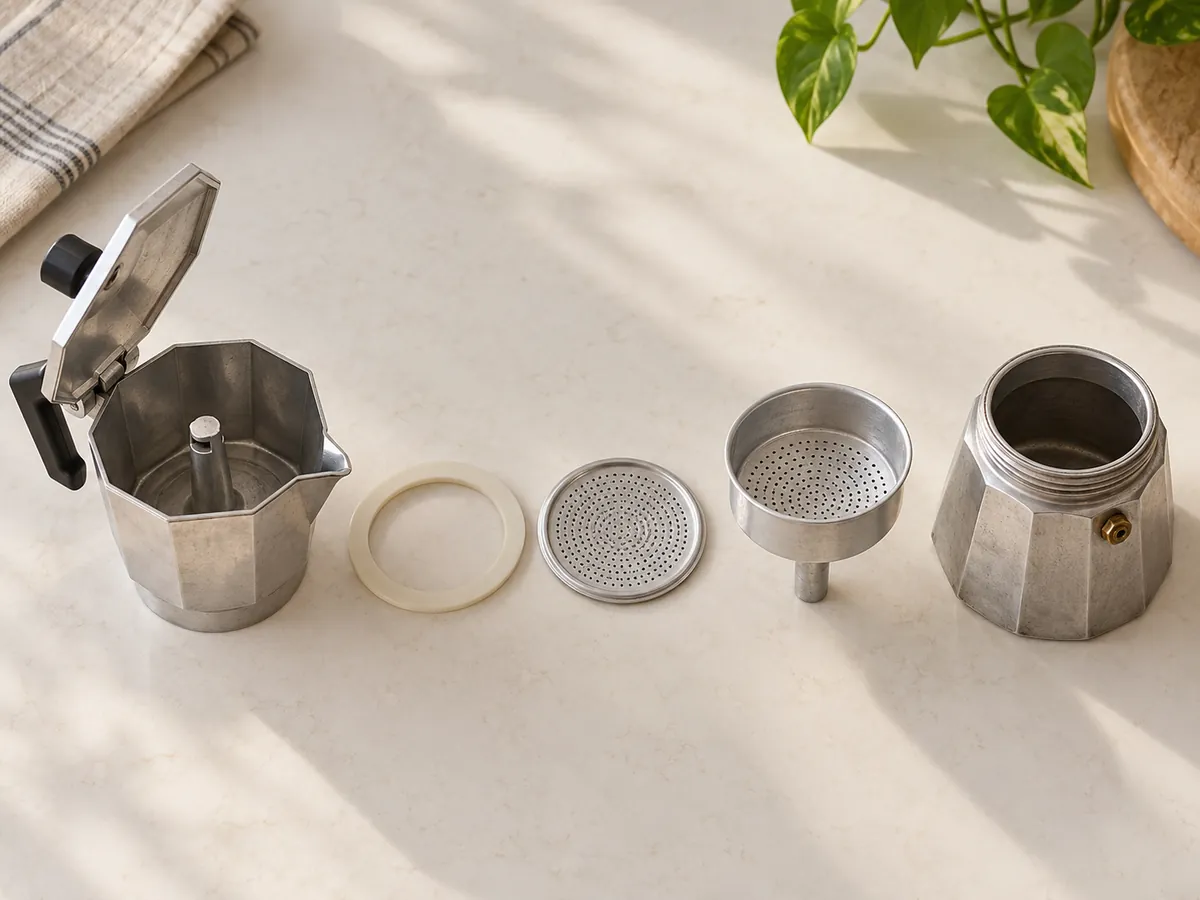
Wait until the pot is fully cool before you inspect it. You can then remove the gasket and filter plate as the manufacturer directs, clear loose grounds, and check whether the ring remains flexible, flat, and free of cracks.
Manufacturer troubleshooting connects poor moka flow with worn rings, dirty chamber rims, blocked filters, poor funnel fit, and loose assembly. Those checks belong together because several different faults can produce the same weak, irregular output.
The funnel rim should sit flat against a level visual reference. If it is distorted, heavily worn, or no longer sits snugly, you should replace it rather than use tape, extra seals, or force to make the chambers close.
The filter plate and central chimney also need a clear path. Coffee oils and fine grounds can narrow their openings, so a clean gasket alone does not rule out a restriction above the basket.
The maker's cleaning method matters because aluminium and stainless moka pots do not always share the same detergent or dishwasher instructions.
The generic moka-pot equipment guide cannot override the manual for the material in your hand.
Tighter is not always better. The chambers need to be firmly assembled, but excessive force does not restore elasticity to a worn gasket or straighten a damaged funnel.
Water and coffee set the resistance the pot must overcome
The lower chamber needs both water and an air space above it. Your fill line should sit at the manufacturer's mark or just below the safety valve, with the valve opening uncovered.
Water above that level reduces the intended air space and can leave the coffee boiling rather than flowing cleanly. It also hides a safety component that you should be able to inspect before every brew.
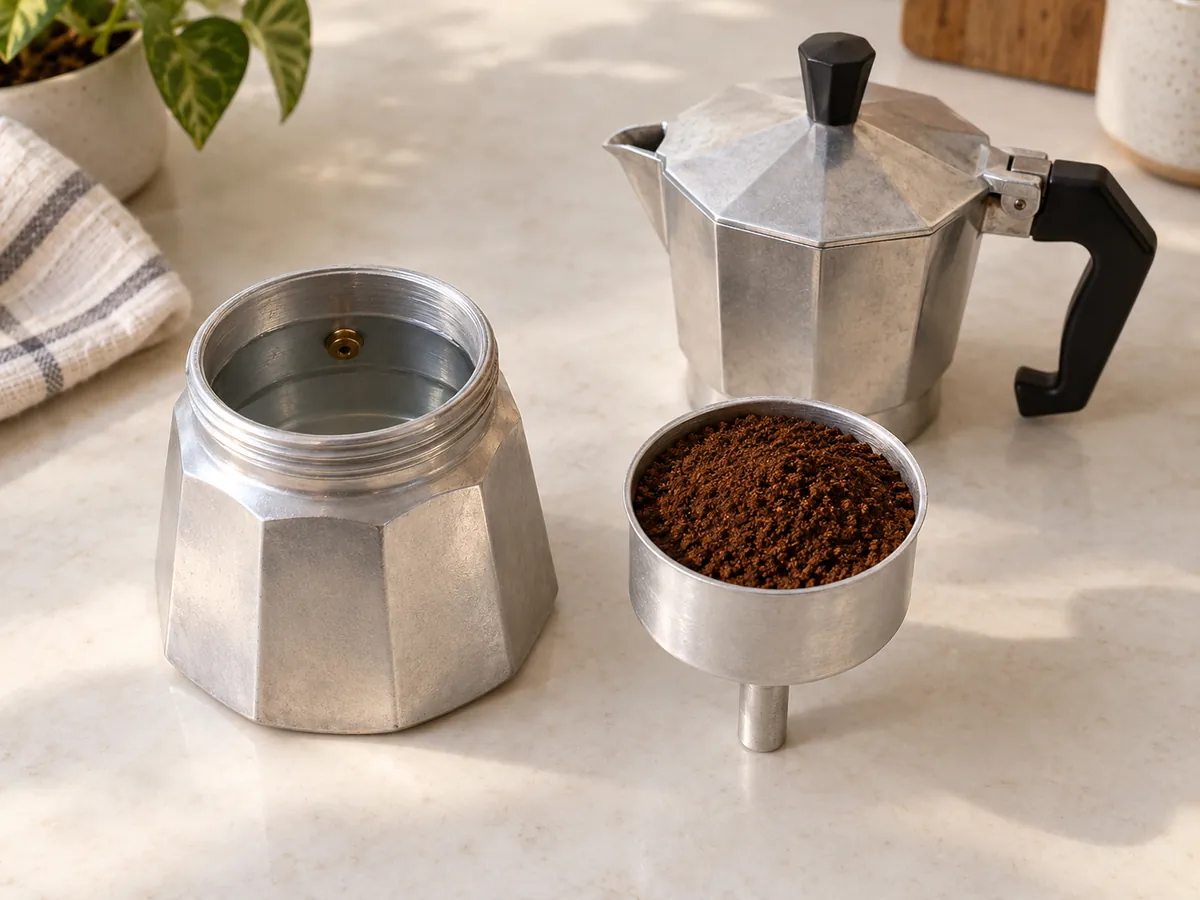
Your basket should be full, level, and loose. Bialetti's use instructions explicitly say not to press the coffee down, because a compacted bed adds resistance in a system with limited pressure.
A very fine espresso grind can create the same problem even without tamping. Moka coffee is concentrated, but the brewer and pressure are different, so the word espresso on a pre-ground bag does not guarantee an appropriate flow.
A useful starting point is finer than ordinary drip coffee but coarser than the powdery end of true espresso grinding. A burr grinder helps you change that texture in a controlled step instead of producing a broad mix of dust and boulders.
Grind belongs after the physical-path checks. A blocked filter or chimney can make a reasonable coffee bed look guilty, and grinding coarser will not remove debris from metal openings.
Water quality can contribute indirectly through mineral deposits.
If the valve or internal surfaces collect scale, follow the manufacturer-approved descaling approach and remember that brewing water affects both deposits and the cup.
Underfilling the basket or boiler will not reliably turn a large moka pot into a small one. The brewer's size sets its intended water volume, basket geometry, and pressure behavior, so a correctly sized pot is the better route to a smaller serving.
Stop, cool, inspect, then test one cause
Remove a violently sputtering moka pot from heat by its handle and keep your face and hands away from the outlet. Leave it assembled until it has cooled and any pressure has dissipated.
Do not twist open a hot pot to see what happened. The evidence you need will still be there after cooling: the water level, coffee bed, gasket, rim, filter, chimney, and valve condition.
- Remove the heatStop adding energy and move the pot only by its handle
- Leave the pot closedWait until the metal is cool and the brewer is no longer pressurised
- Inspect when coolCheck gasket, filter plate, funnel, rim, chimney, and valve cleanliness
- Change one likely causeTest heat, seal condition, grind, or loading separately
- Service persistent valve dischargeStop using the pot when the safety valve keeps releasing pressure
A safety valve that repeatedly releases steam may indicate blockage or valve trouble. If cleaning the accessible path does not stop that behavior, discontinue use and seek authorised service or replacement.
Keep the valve clean and unobstructed, and never fill water over it. Its job is to relieve excess boiler pressure, so modifying, weighting, or sealing it removes the protection the part exists to provide.
For an ordinary early sputter without valve discharge, you can follow the strongest clue. Lower the heat if the flow was fast and aggressive, clean and reseat the gasket stack if the joint leaked, or adjust grind and loading if output was weak behind an intact seal.
A repeat test tells you more when you keep the other variables steady. The same water level, coffee mass, and pot size make the result interpretable; changing everything may produce a better cup without telling you what fixed the sputter.
Once coffee flows smoothly and repeatably, your useful test is complete, and you can remove the pot at the pale final gurgle. That endpoint protects flavor and keeps a nearly empty boiler from spending unnecessary time over heat.