What Is a Protein Smoothie? Why the Powder Thickens Everything
Protein powder is a fine, thirsty solid that thickens whatever it lands in. Nearly every complaint about these drinks is a texture complaint, and all of them have mechanical fixes.
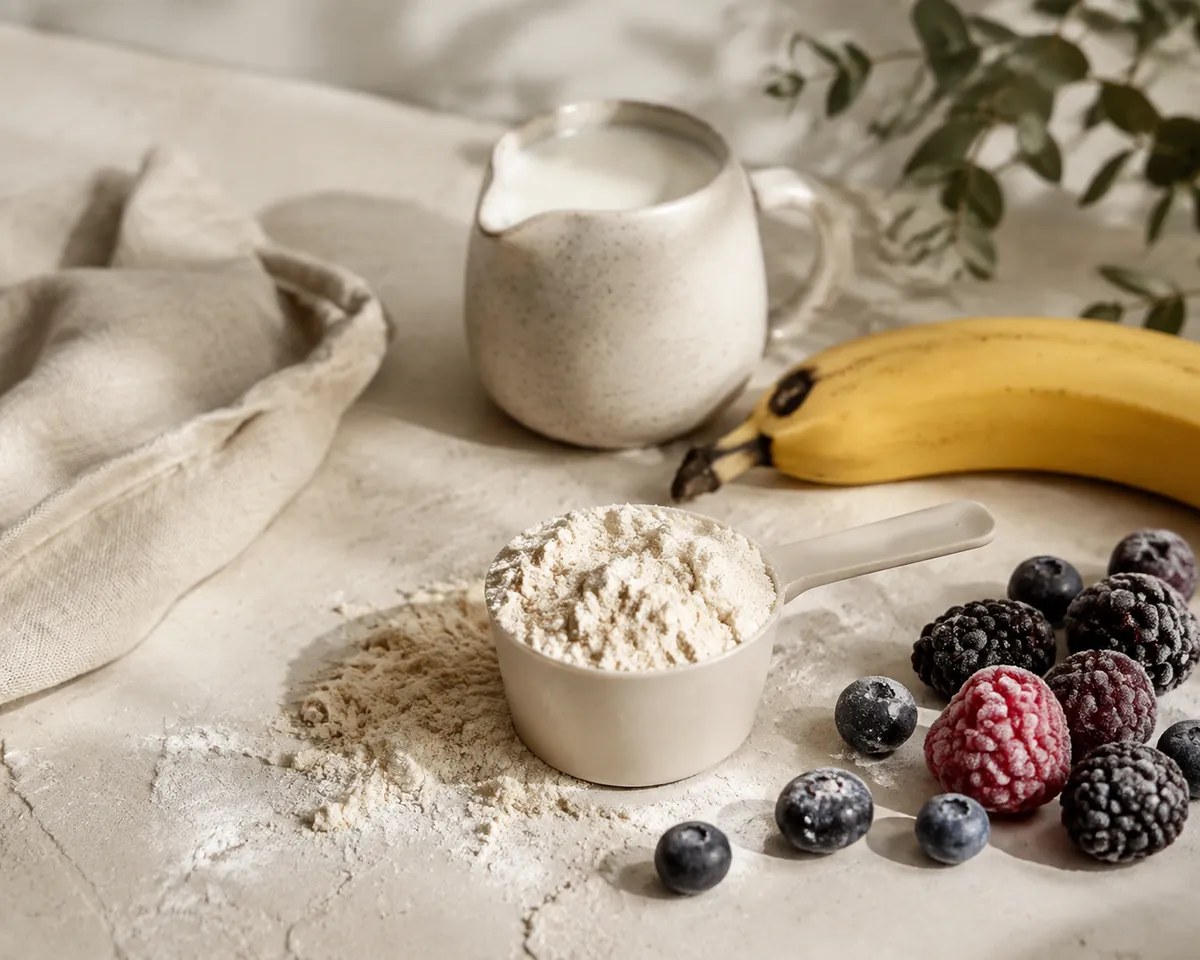
A protein smoothie is an ordinary blended drink with a scoop of protein powder in it, and that scoop changes the drink far more than its volume suggests.
Powder is not a flavouring. It is a fine, thirsty solid that thickens the liquid it meets, grabs water aggressively, and brings a texture of its own that has to be worked around rather than ignored.
Nearly every complaint about these drinks is a texture complaint, not a flavour one. Chalky, gritty, gluey, foamy and separated are the words people reach for, and all five have mechanical causes and mechanical fixes.
Protein smoothie at a glance
- Base
- Any smoothie: fruit, liquid, sometimes leaves
- The addition
- One label-defined serving of protein powder; scoop size varies
- Main effect
- Thickens the drink and changes its mouthfeel
- Main problem
- Chalkiness and clumping, both avoidable
- Powder types
- Whey, casein, and plant blends
- Best liquid
- More than you think, and colder than you think
What goes into a protein smoothie
The structure is the same as any other smoothie: a liquid, something soft for body, something frozen for cold and thickness, and then the powder.
Fruit does most of the flavour work. Banana is the default because it supplies sweetness and a smooth body at once, and frozen berries are the usual alternative, as in an ordinary berry smoothie.
The liquid is where people economise and should not. A protein smoothie needs more liquid than the same drink without the powder, because the powder absorbs a real share of it.
Everything else is optional. Oats, nut butter, cocoa powder and spices all appear, and each of them thickens the drink further, which compounds the same problem the powder introduced.
Oats are the addition most likely to catch people out. They keep absorbing water for as long as they sit in the drink, so a smoothie that was right at the jar can be close to porridge twenty minutes later, and a drink built on both oats and casein does this twice over.
Nut butter behaves better. Its fat coats the palate and hides residual grain the way whole milk does, and because it thickens by emulsifying rather than by absorbing, it stops thickening once it is blended in.
Why the powder is a texture problem first
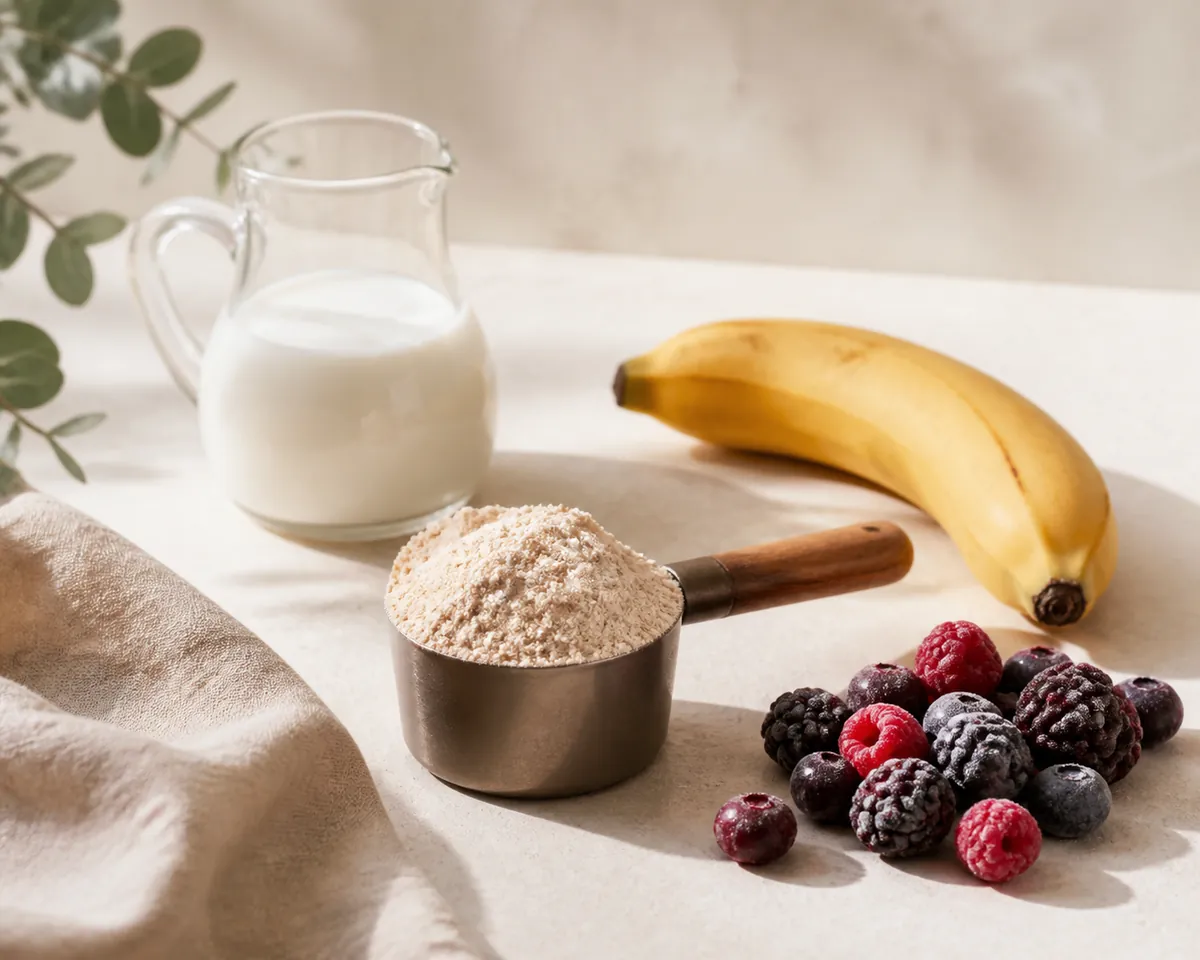
Protein powder is milled very fine, and its water demand changes both dispersal and thickness.
Drop a scoop onto liquid and the outside of each clump wets instantly and seals, leaving dry powder inside.
That is the clumping mechanism in full, and it is the same thing that happens with flour or cocoa. A sealed clump will not break down with more blending, because the blender is throwing an intact ball around rather than dispersing a powder.
Once dispersed, the powder still thickens. Protein binds water and the drink gains viscosity over the first minute or two, which is why a smoothie that looked right in the jar can be gluey in the glass.
Whey, casein and plant powders in a glass
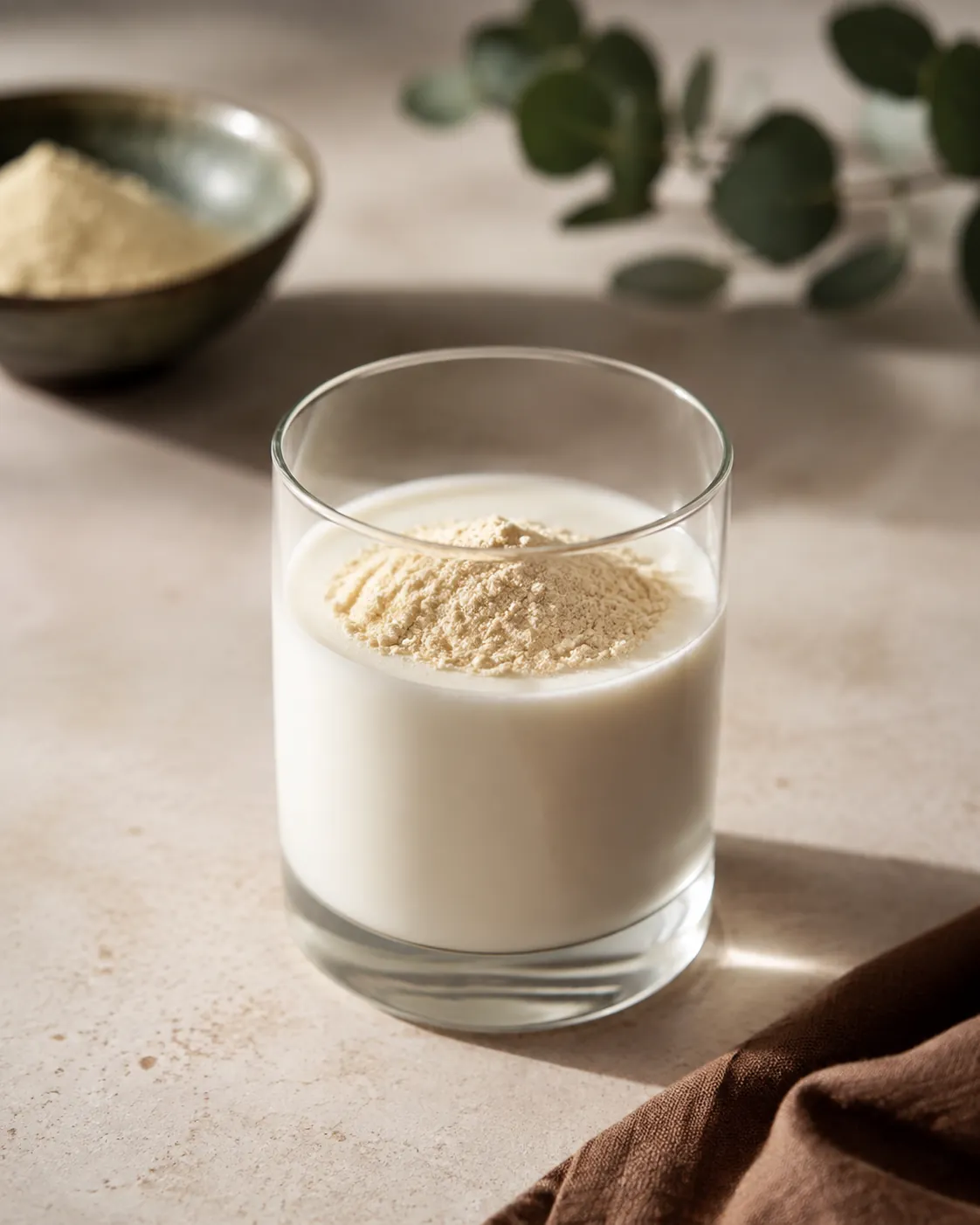
The powders behave differently in a drink, and the differences are about texture and dispersal rather than about anything else.
| Whey | Casein | Plant blends | |
|---|---|---|---|
| Dispersal | Easy; wets readily | Slower, clumps more | Variable, often gritty |
| Thickening | Modest | Substantial; gels over time | Moderate to heavy |
| Mouthfeel | Light, slightly foamy | Thick and smooth | Grainy without help |
| Flavour | Mild, milky | Mild, chalkier | Earthy, pea and rice show through |
| Foam | Considerable | Less | Depends heavily on the blend |
Whey is the easiest to work with and the one most forgiving of a careless method. It disperses quickly, tastes of very little, and its main quirk is a persistent foam.
Casein thickens far more and keeps thickening. A casein drink left for ten minutes can set to something closer to a pudding, which some people want and others are surprised by.
Plant blends, usually pea with rice or another grain, carry the most texture of their own. Grittiness is the plant-protein signature, and it is best handled by blending longer and serving colder rather than by adding more liquid.
How much protein is actually in the glass?
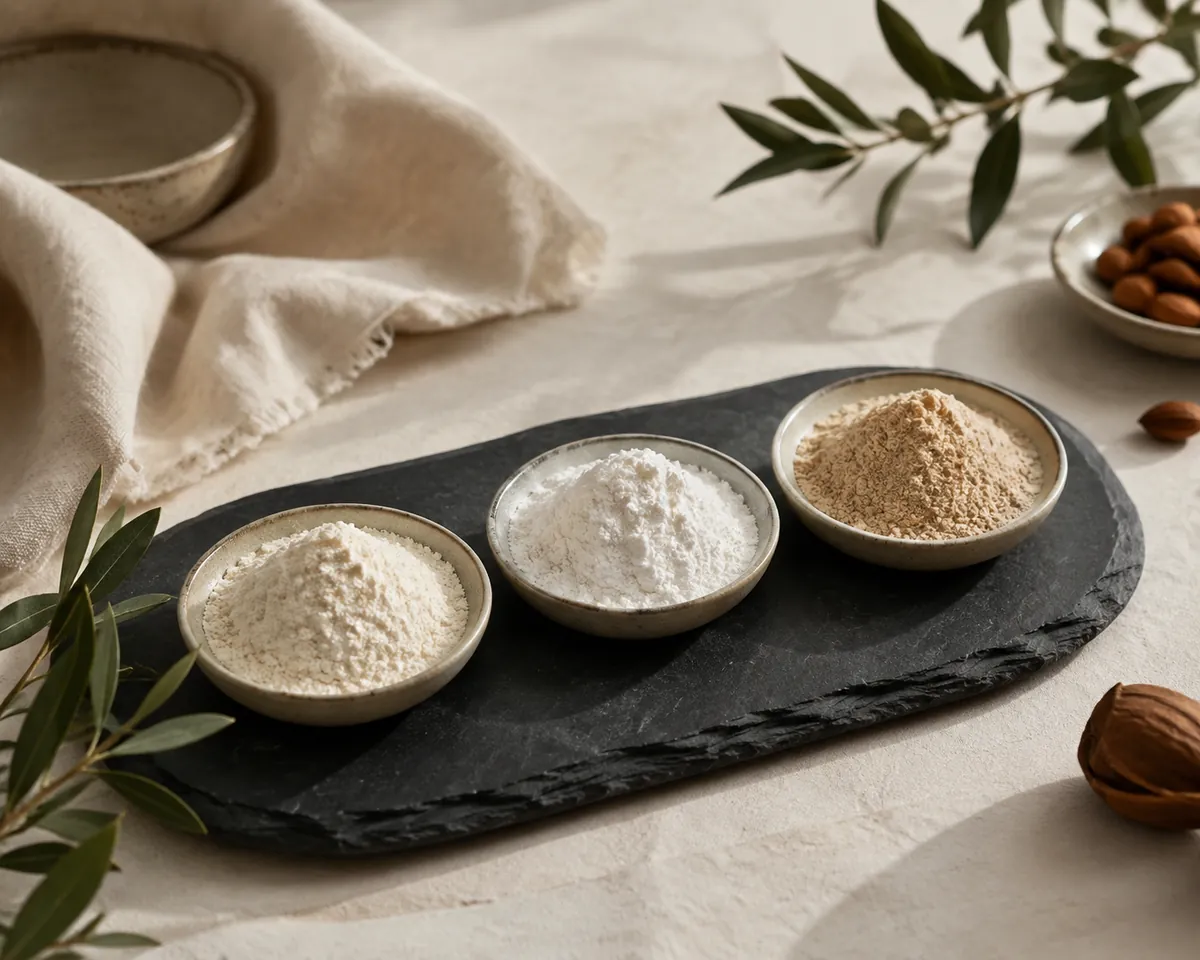
The scoop does not answer that question by itself because scoop capacity, powder density, and label serving size vary. Read the protein grams per labeled serving, then confirm whether the scoop supplied in the pouch represents one full serving or a different measure.
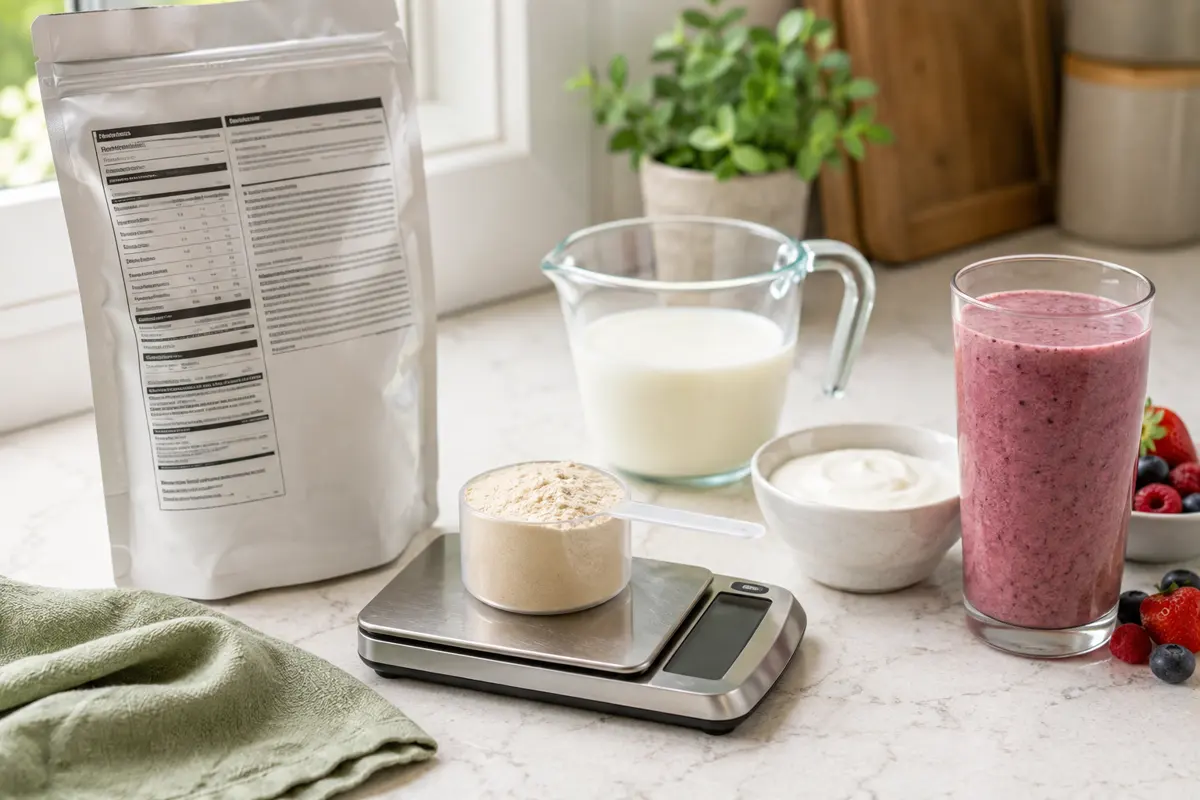
Milk, yogurt, soy drink, nut butter, and other ingredients can add protein of their own, so the total for the glass is the sum of the amounts actually used. When a blender makes two glasses, divide the whole batch by the number of real servings rather than assigning the entire powder amount to each glass.
| Check | What it tells you |
|---|---|
| Serving size | The amount to which the package numbers apply |
| Protein per serving | Protein supplied by the measured powder portion |
| Scoops per serving | Whether one included scoop equals the labeled serving |
| Other ingredients | Additional protein from milk, yogurt, soy, nuts, or oats |
| Batch yield | How the whole-blender total is divided between glasses |
The Nutrition Facts serving size describes the amount customarily consumed; it is not a recommendation for how much anyone should use. The label defines the calculation, while the recipe determines how that amount is distributed through the finished drink.
This arithmetic keeps a drink description honest without turning the article into personal nutrition guidance. Compare like with like: grams in the serving you actually pour, not package claims based on a different scoop or batch size.
The chalkiness, and where it comes from
Chalkiness is undispersed powder. Fine particles that never fully wetted stay suspended as individual grains, and the tongue reads them as a dry, dusty coating.
It is worse with plant proteins because the particles are harder and less soluble, and worse with any powder when there is too little liquid for it to disperse into.
Temperature matters too. Cold liquid slows dispersal, so a drink built entirely from frozen fruit and cold milk gives the powder less chance to wet properly than one with a splash of room-temperature liquid in it.
The mechanical fix is longer blending, because more liquid alone will not break every sealed clump.
Sweetness masks chalk poorly. A drink that tastes chalky and sweet is still chalky, and sugar or honey is not a repair for a dispersal problem.
Blending order that avoids clumps
Order matters more here than in any other smoothie, because the powder is the ingredient most likely to seal itself into a lump.
The order that works
- Liquid firstAll of it, into the jar before anything else
- Powder secondStraight onto the liquid, and blend briefly on its own
- Soft nextBanana, yoghurt, nut butter, oats
- Frozen lastBerries and frozen fruit on top
- Ice on topIf you are using it at all
Blending the powder into the liquid alone, for five or ten seconds, is the step that solves clumping. There is nothing thick in the jar yet to protect a clump, so every particle meets liquid.
Doing it the other way round is the standard mistake. Powder tipped onto a jar already full of frozen fruit lands on solids, never properly wets, and arrives in the glass as pale streaks.
Loading order is the same principle a blender depends on for everything else, applied to the one ingredient most likely to clump.
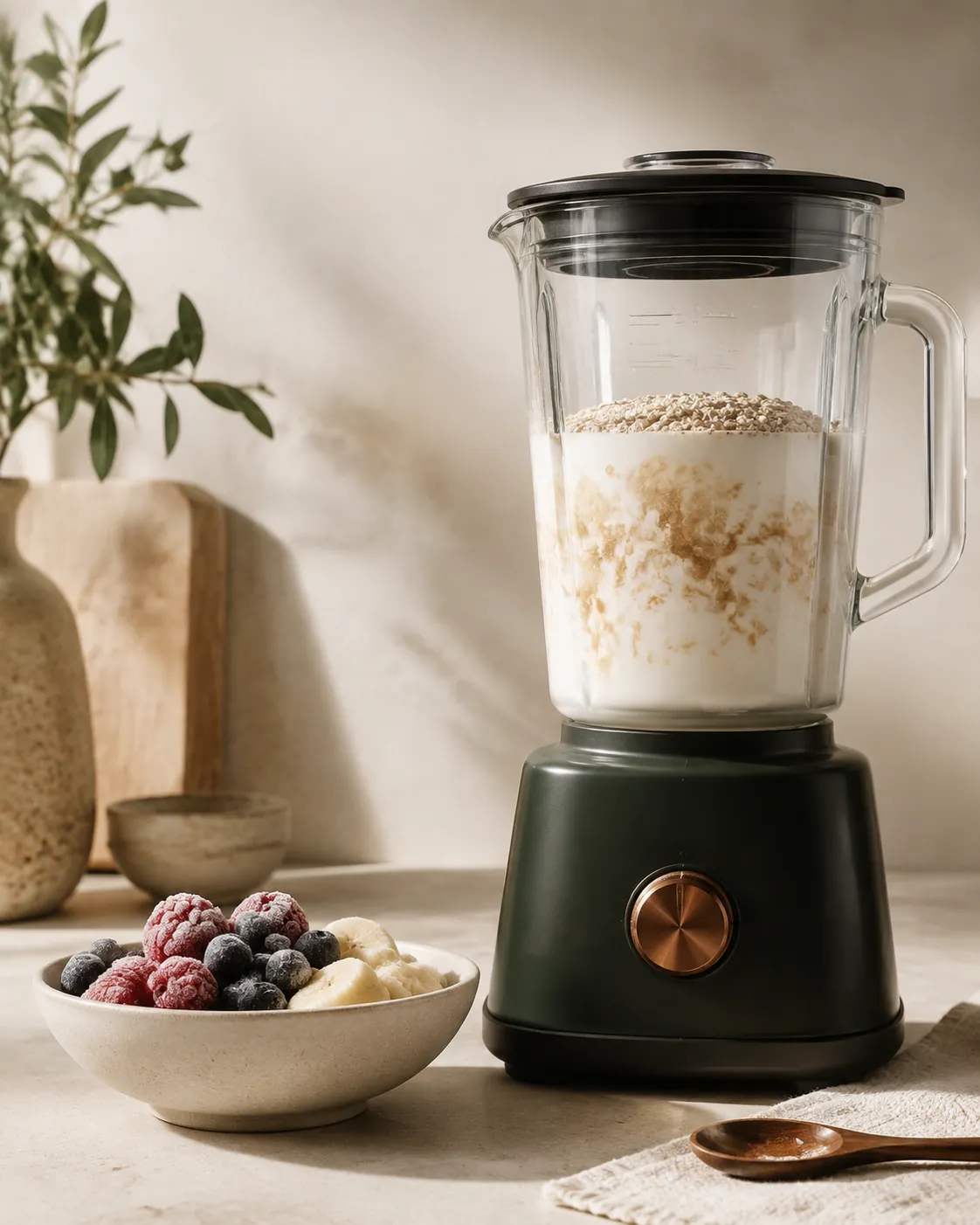
A shaker bottle is worse than a blender at this, not better, because it relies on impact rather than shear. It is fine for powder and water and poor for anything with fruit in it.
Liquid choice, and how much
The liquid does more than carry the flavour. It has to supply enough free water for the powder to disperse into and still leave the drink pourable.
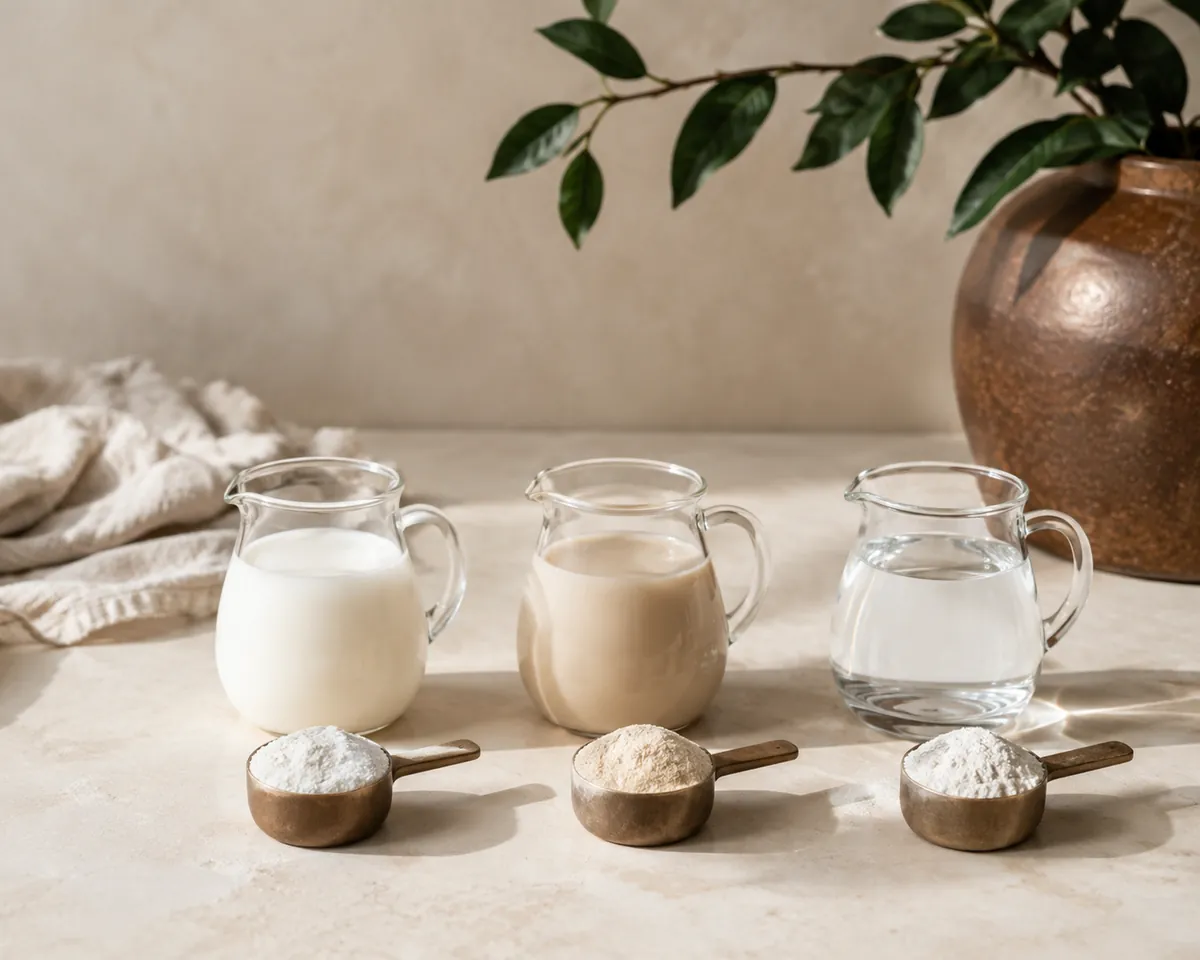
Whole milk gives the smoothest result, because its fat coats the palate and hides a good deal of residual grain. Water gives the thinnest and least flattering.
How well each liquid hides powder
- Whole milkFat and protein together mask grain effectively
- Oat milkThick and sweet; very forgiving
- Soy milkGood body, and its own beany note can clash with pea protein
- Almond milkThin; hides little, and the drink reads watery
- WaterHides nothing at all
Quantity is the other half. A rough starting point is 250 ml of liquid per scoop plus whatever the fruit needs, and thinner than instinct suggests, because the drink will thicken as it stands.
Oat milk is the most forgiving plant option and almond milk the least, which is the reverse of how they are usually chosen. Soy milk sits between them, and pea milk doubles up on a flavour a pea protein already has.
Flavour: what covers a powder and what does not
Unflavoured powder tastes faintly of milk or faintly of beans depending on its source, and neither is unpleasant so much as unwelcome.
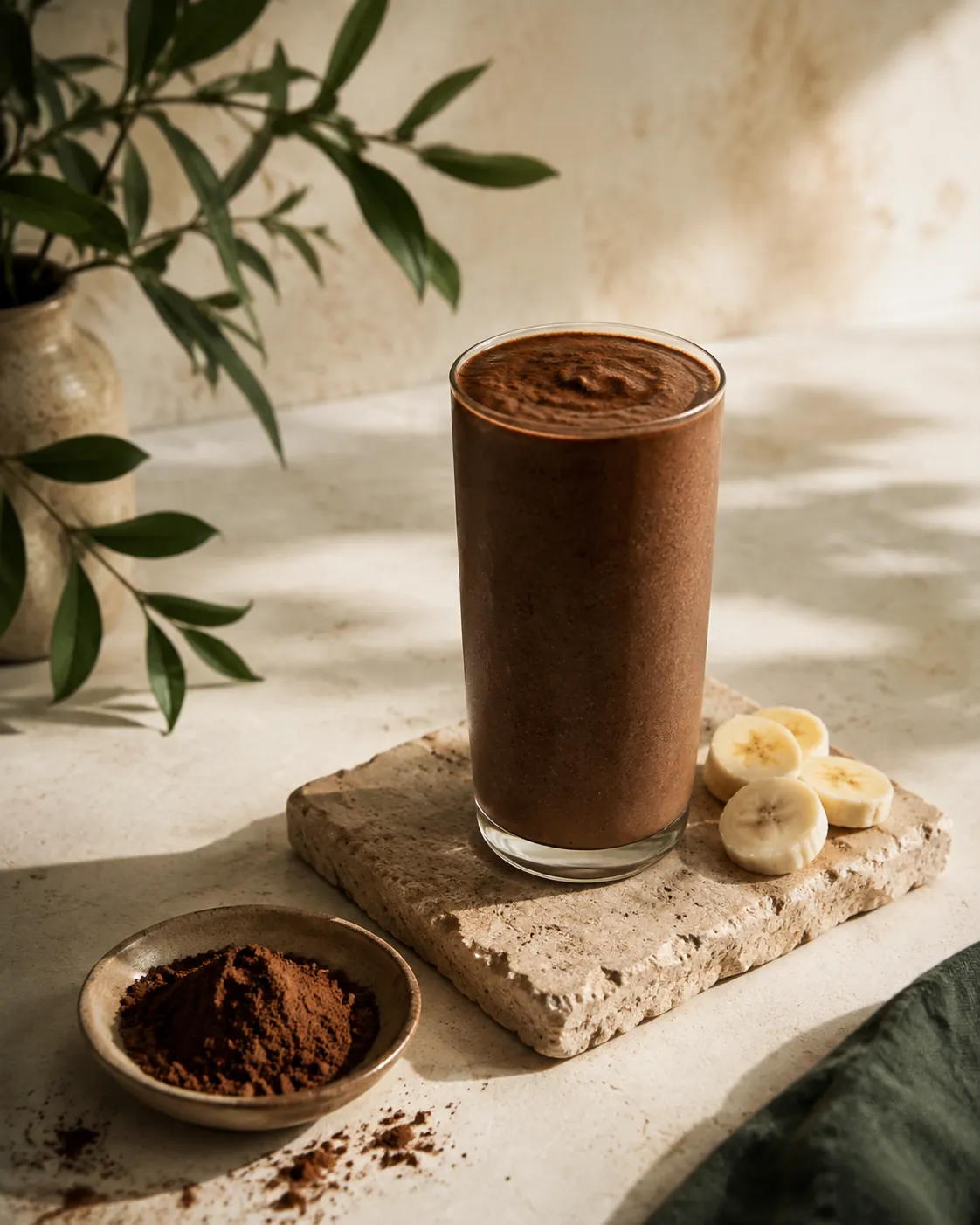
What covers it well is anything with body and sweetness together. Banana, cocoa powder, dates and nut butter all work, because they add mass as well as flavour and mass is what the tongue was noticing.
- Cocoa, which covers plant-protein earthiness better than anything else
- Banana, for sweetness and body in one ingredient
- Cinnamon and vanilla, which read as sweetness without sugar
- Coffee, whose bitterness balances a sweetened powder
- Berries, which work but leave the grain more exposed
A spoon of culinary matcha is the one green addition that survives a powder, since it is robust enough to be tasted through it. What does not work is thin bright flavour.
Citrus, cucumber and watery fruit leave the powder with nowhere to hide, and an acidic addition can also make a dairy powder curdle slightly at the edges.
Match the flavour to the powder, not to the fruit you happen to have. Earthy plant blends want cocoa or cinnamon; mild whey suits berries or vanilla perfectly well.
Foam, and why it collapses
Protein is a foaming agent, which is why milk foams at all, and a blender is very good at whipping air into one.
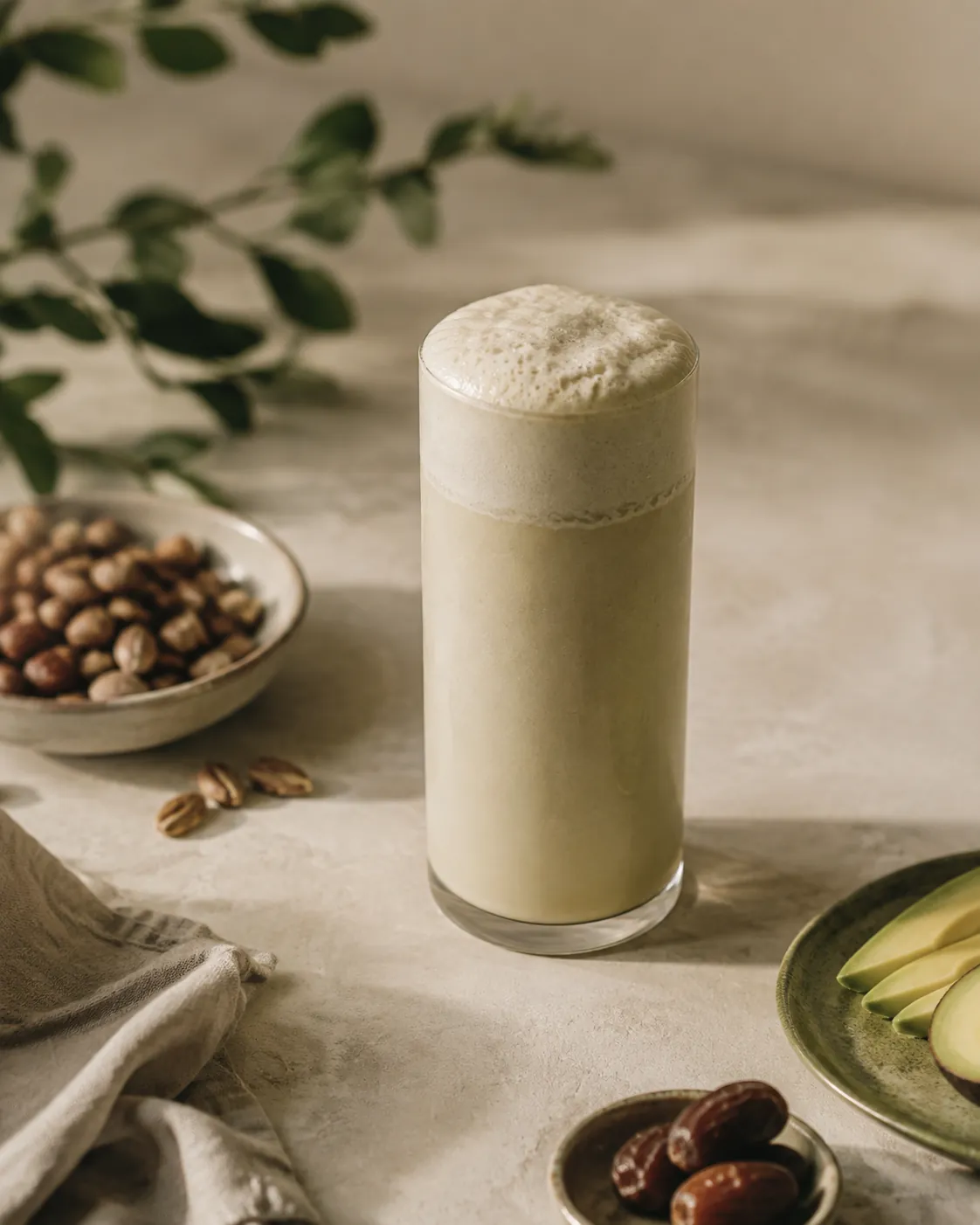
A whey smoothie typically arrives with two or three centimetres of pale foam on top. That foam is protein at the air interface, and it is unstable, so it collapses over a few minutes and leaves a tidemark on the glass.
The foam is harmless and mostly cosmetic, though it does make a drink feel lighter and finish faster than the volume suggests. Blending less, and blending at a lower speed for the last few seconds, reduces it.
Letting it stand is the simplest answer of all. Two minutes on the counter drops most of the foam, and the drink you pour afterwards is the drink you actually made.
Cold, ice and thickness
Cold and thickness are linked here in a way they are not in an ordinary smoothie, because the powder is already thickening the drink.
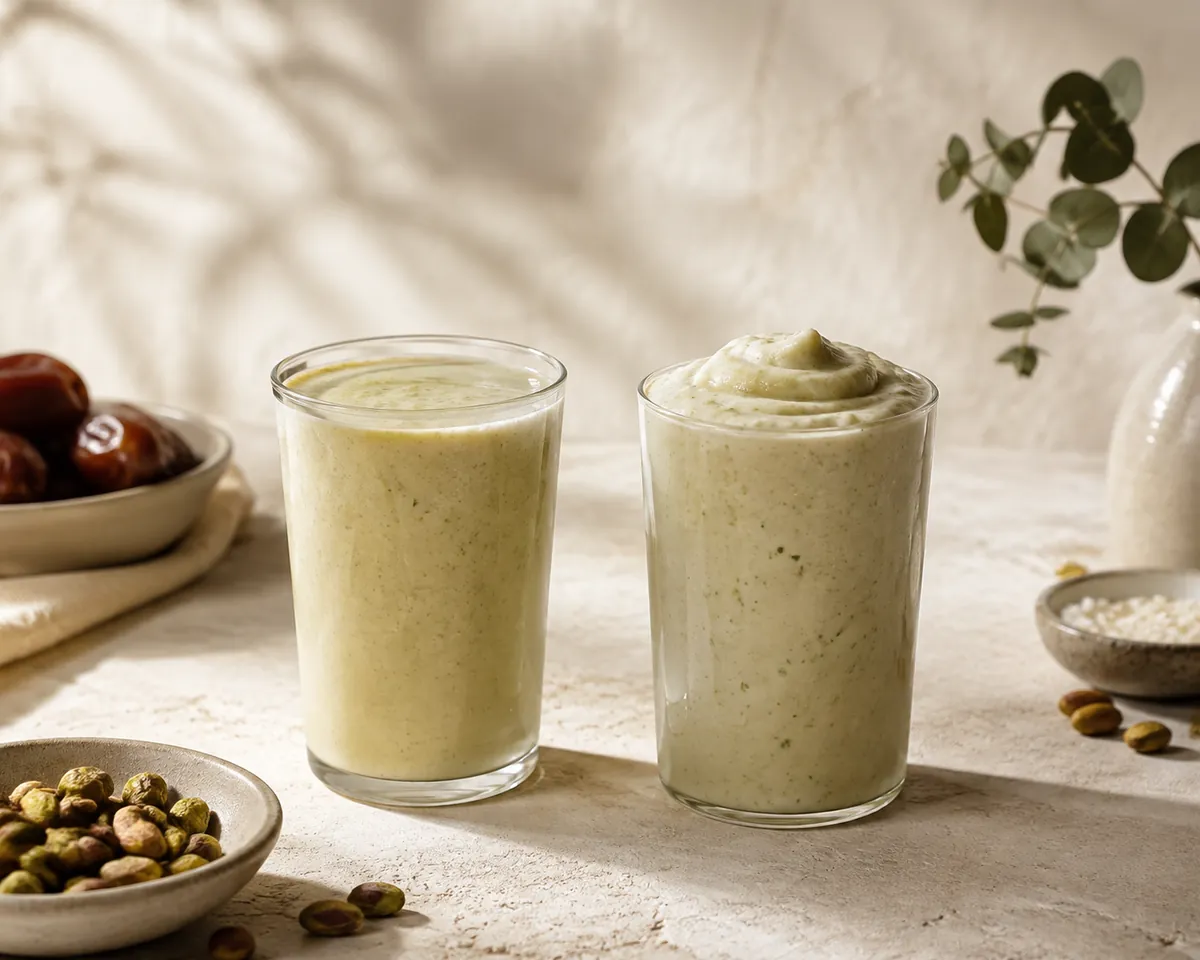
Frozen fruit chills without diluting and thickens further. Ice chills and thickens too, then dilutes as it melts, which partly undoes the thickening a few minutes later.
A starting point
- Liquid
- 250 ml
- Protein powder
- 1 scoop, about 25 to 30 g
- Frozen fruit
- 100 g
- Banana
- Half, for body
Serving temperature does real work on the texture problem. Cold suppresses the perception of grain, so the same drink at fridge temperature tastes noticeably smoother than at room temperature.
That is why a protein smoothie is worth making cold even when you are not chasing a thick drink, and why the leftover half glass tastes worse an hour later for reasons beyond separation.
Making it ahead, and what happens overnight
These drinks do not hold well, and they fail in a specific and predictable way rather than spoiling.
During overnight hydration, the powder continues to bind water and the drink thickens substantially, particularly with casein. Overnight it can set firm enough to eat with a spoon.
Separation follows. Fruit solids settle, liquid rises, and the drink needs shaking rather than stirring to recombine, which reintroduces the foam you waited out the night before.
Two hours
Thicker but fine; stir and drink
Overnight
Noticeably set, especially with casein
Separation
Normal; shake rather than stir
Souring
Dairy powders in a warm bag, which is a keeping problem
Better plan
Prepare the solids the night before, blend in the morning
Freezing the fruit and liquid portion in a bag and blending fresh is the approach that actually works. Nothing about the powder benefits from sitting in liquid, so it belongs in the jar rather than in the bag.
Where it sits among smoothies
A protein smoothie is a normal smoothie with a texture constraint attached, and it is best judged as a drink rather than as a supplement delivery system.
Against a green smoothie it is thicker, sweeter and less bright, and against a fruit smoothie it is heavier and less refreshing. Both of those follow from the powder rather than from anything else in the glass.
It is also firmly on the blended side of the juice against smoothie divide, and no version of it exists as a juice, since a juicer removes exactly the body the powder needs to sit in.
The craft is narrow and worth learning. Liquid first, powder second, blend it alone for ten seconds, and most of what people dislike about these drinks stops happening, which puts the rest of the juices and smoothies shelf back within reach.
Common questions
Why is my protein smoothie chalky?
Because some of the powder never fully wetted. Fine particles that stay dry sit in suspension as individual grains and the tongue reads them as a dusty coating. Longer blending disperses them better than more liquid does, and serving the drink properly cold suppresses the perception of what remains.
What order should the ingredients go in?
Liquid first, then the powder, and blend those two alone for five to ten seconds before anything else goes in. With nothing thick in the jar yet, every particle meets liquid. Powder tipped onto a jar full of frozen fruit lands on solids, seals into clumps, and arrives as pale streaks.
Why does it thicken after blending?
Protein binds water, so the drink gains viscosity over the first minute or two and keeps going in the fridge. Casein is the most dramatic and can set firm overnight. Judge the thickness a couple of minutes after blending, which means starting thinner than looks right in the jar.