The Juicer, and the Two Ways of Separating Fibre
A juicer separates liquid from fibre and throws the fibre away. There are two ways of doing it, and the difference between them shows up as air: how much gets whipped into the glass.
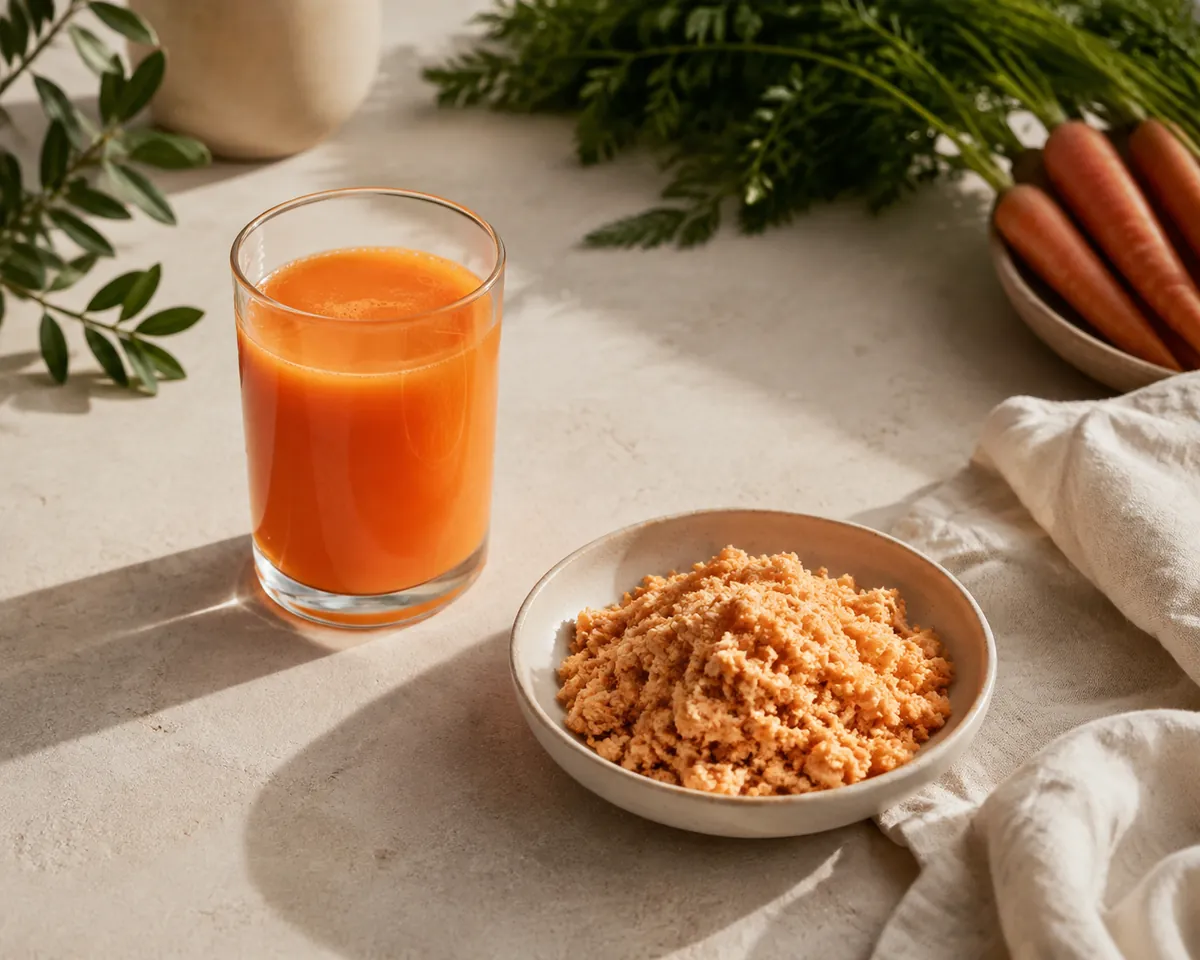
A juicer separates. It takes fruit or vegetables apart, keeps the liquid, and throws the fibre away into a bin, which is the opposite of what a blender does with the same ingredients.
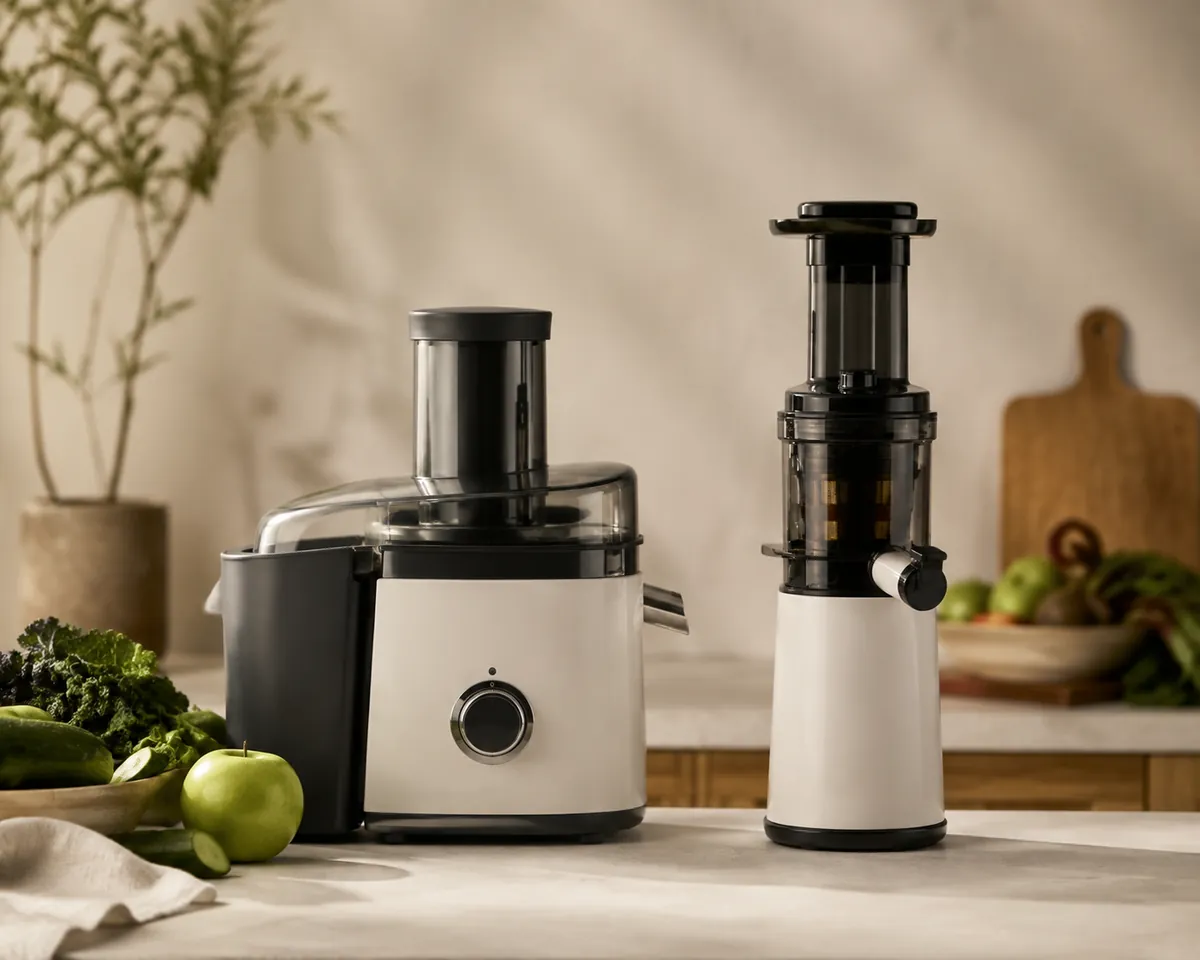
There are two ways of doing that separation, and the choice between them is the whole purchase. One machine grates produce against a fast-spinning disc and flings the liquid out through a mesh; the other crushes it slowly against a screen with a turning auger.
The difference between them shows up as air in the glass. Speed drags air into the juice, and air is what makes it foam, separate and go brown, so almost every practical distinction between the two designs traces back to that.
Juicer at a glance
- What it does
- Separates liquid from fibre and discards the fibre
- Two designs
- Centrifugal, fast and cheap; masticating, slow and thorough
- Key difference
- How much air ends up in the juice
- Best test
- Leafy greens, which centrifugal machines handle poorly
- Real cost
- Cleaning the screen, every single time
- Not a substitute for
- A blender, which keeps the fibre
What a juicer does that a blender does not
Both machines break produce down. A blender breaks the fibre into pieces small enough to drink and leaves them in; a juicer breaks the structure open and then removes the fibre entirely.
That produces two genuinely different drinks. A juiced carrot gives a thin, bright, intensely coloured liquid; a blended one gives a thick purée.
Neither machine can be persuaded to make the other's output.
The fibre is the whole distinction, and it decides texture, how filling the drink is, and how long it keeps. Juice against a smoothie works through that split in detail.
Straining a blend is not juicing. A blender has already reduced the fibre so fine that a good proportion passes through any cloth, and what comes out is a thin purée rather than a juice.
Centrifugal and masticating, the two designs
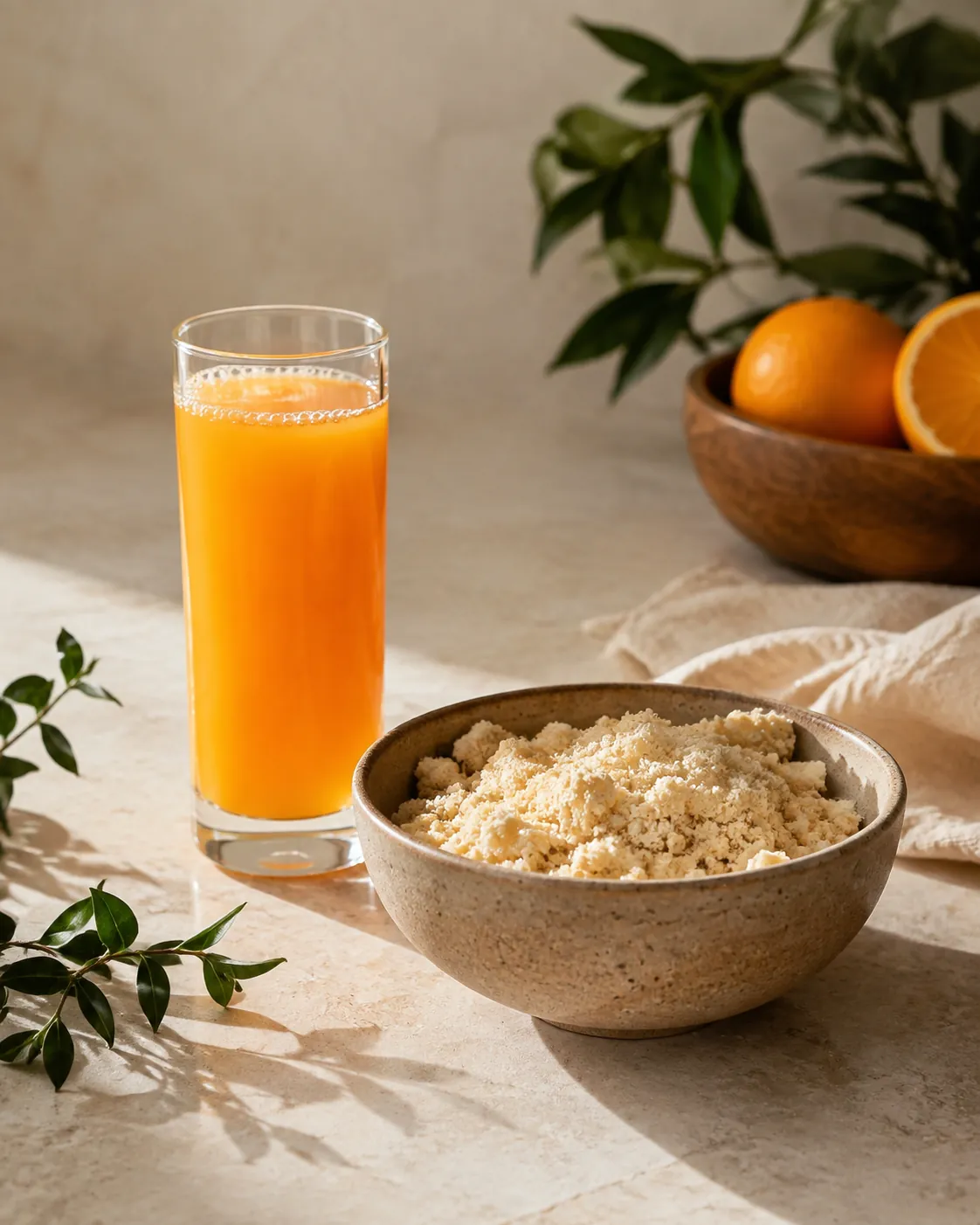
A centrifugal juicer has a flat grating disc spinning at high speed inside a mesh basket. Produce is pushed onto the disc, shredded, and the pulp is flung outwards while juice passes through the mesh.
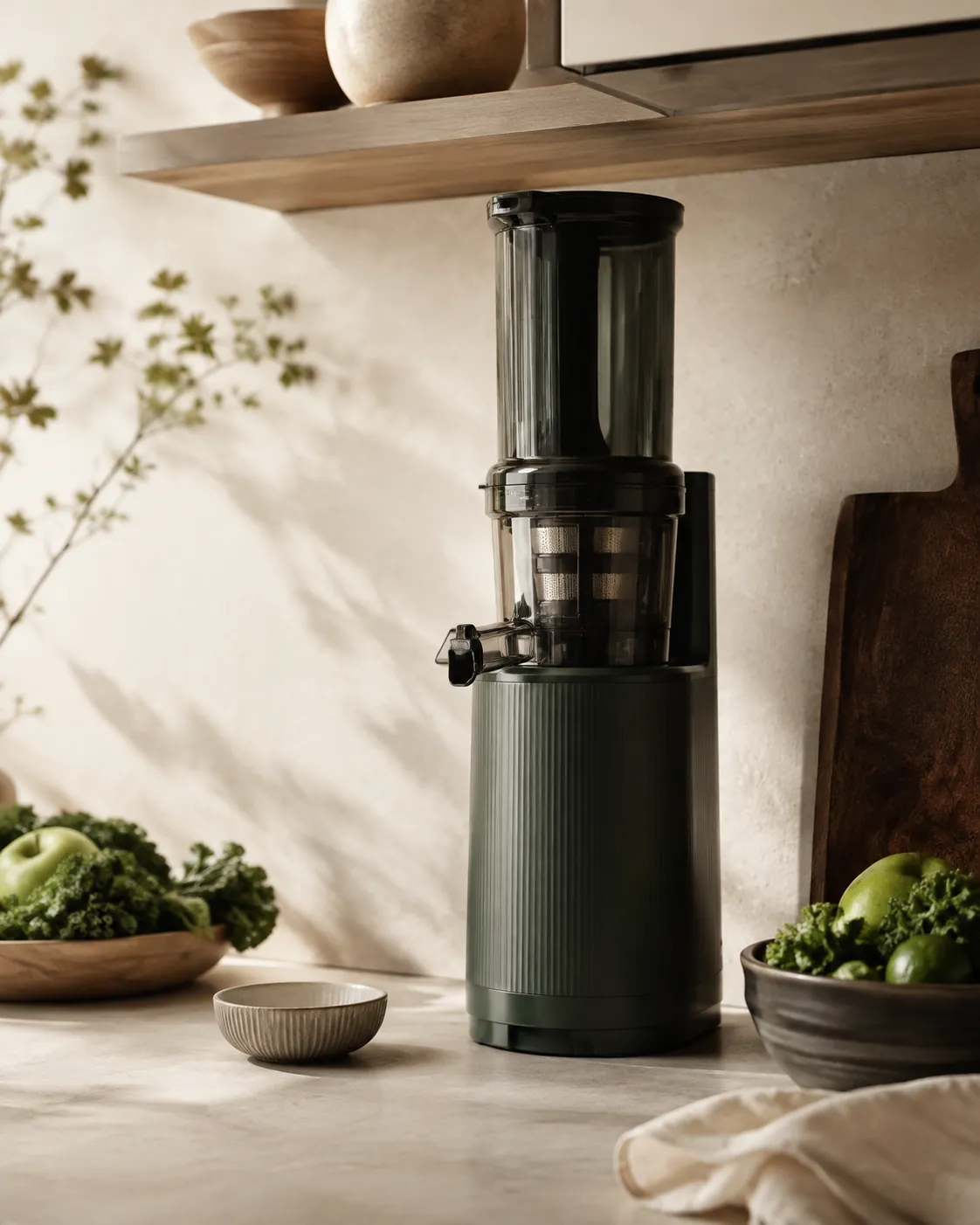
A masticating juicer, often sold as cold-press or slow, uses a turning auger to crush produce against a fixed screen. It works at a fraction of the speed and squeezes rather than throws.
| Centrifugal | Masticating | |
|---|---|---|
| Speed | Very fast, thousands of rpm | Slow, often under 100 rpm |
| Action | Grates and flings | Crushes and presses |
| Air introduced | A great deal | Very little |
| Yield | Lower; wetter pulp | Higher; drier pulp |
| Leafy greens | Poor | Good |
| Noise | Loud | Quiet |
| Price | Low to moderate | Moderate to high |
Hydraulic presses exist above both and are what commercial cold-pressed juice usually means. They crush a bag of pulp under real pressure and are a commercial rather than a domestic machine.
The cold-press label is applied loosely. Nothing in a masticating juicer is chilled, and the name refers to the absence of heat from friction rather than to any cooling.
Air, foam and why juice goes brown
Air is the enemy of fresh juice, and a centrifugal machine introduces a lot of it.
A disc turning at ten thousand rpm whips the liquid as it separates it, which is why the jug fills with a thick layer of foam.
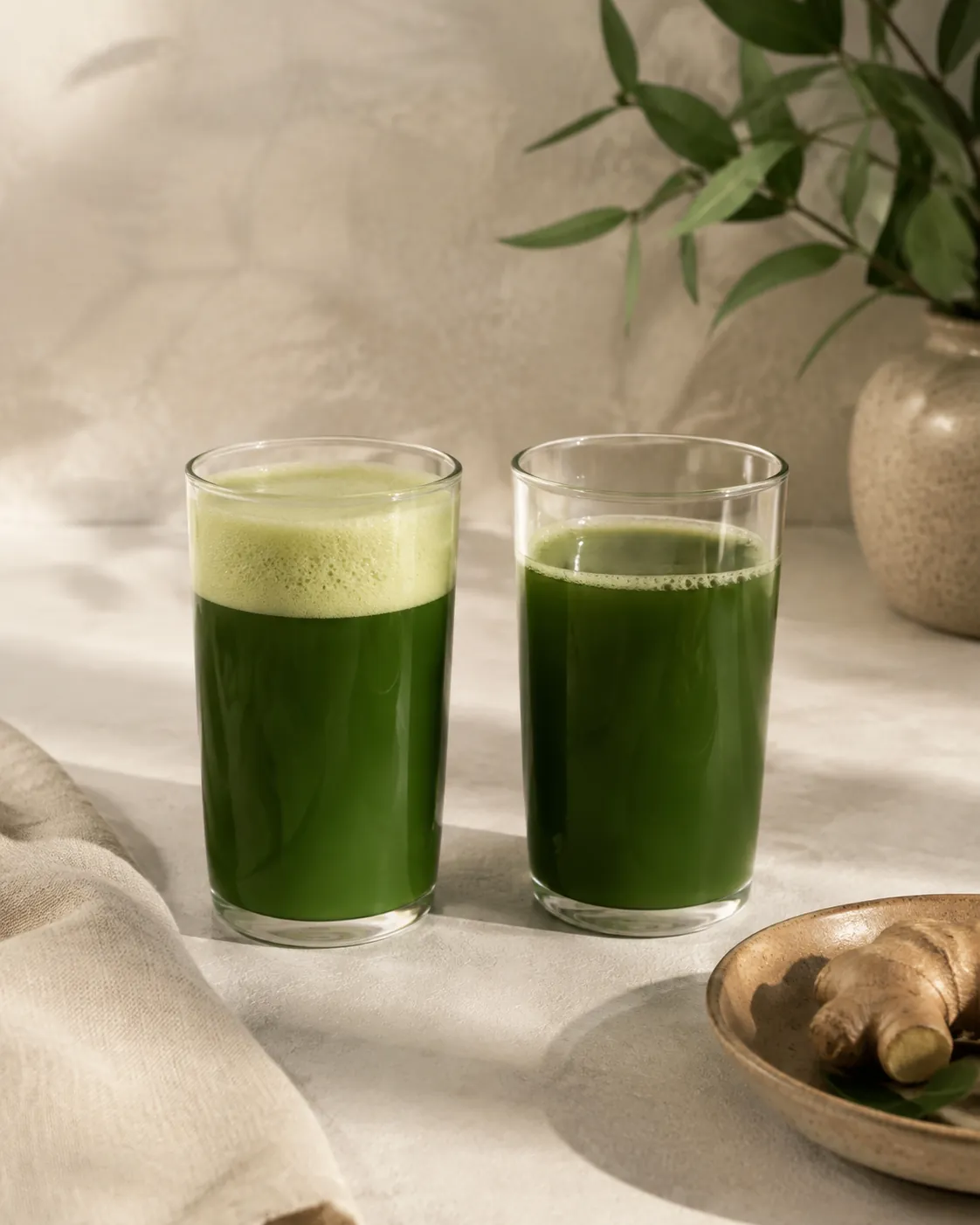
That air drives oxidation. Colour dulls, the fresh aroma fades, and a juice that was bright when it was made looks tired within an hour, which is the same process described under green juice.
What air does to a glass
- During juicingWhipped in as foam, especially with a fast disc
- First minutesColour begins to dull as oxidation starts
- First hourAroma flattens and the separation line appears
- OvernightLayers separate fully; flavour noticeably duller
- In a sealed bottleSlowed, but not stopped
A little citric acid, or simply lemon, slows the browning a fraction and is the only useful trick available. Masticating machines produce far less foam and a juice that holds its colour longer, which is the clearest single advantage they have.
A slow juicer buys you hours of shelf life, not days.
Neither machine makes juice that keeps well. Fresh juice is a drink to make and drink, and any storage advice is about slowing a decline rather than preventing it.
Serving it over ice slows nothing, though it does mask the dulling for a while.
Yield, and how to read the pulp
Yield is where the price difference is justified, and it is easy to check without any equipment beyond your hands.
Take a handful of the discarded pulp and squeeze it. Wet pulp that drips means juice went into the bin; pulp that stays as a dry crumb means the machine extracted most of what was there.
Yield, highest first
- Hydraulic pressThe commercial benchmark, driest pulp of all
- Masticating juicerHigh yield, pulp comes out crumbly
- Centrifugal, hard produceReasonable on apples and carrots
- Centrifugal, leafy greensPoor; wet pulp and little liquid
- Blending and strainingThin purée rather than juice
The gap is largest on soft and leafy material and smallest on hard produce. An apple or a carrot gives up its juice readily to either machine, which is why cheap juicers look adequate until someone tries spinach.
Yield compounds into cost. A machine that extracts a fifth less from every bag of produce is a permanent surcharge on every glass, and over a year it can exceed the price difference between the two designs.
Leafy greens, the machine's real test
Leaves are the discriminator, and any comparison that leaves them out is misleading.
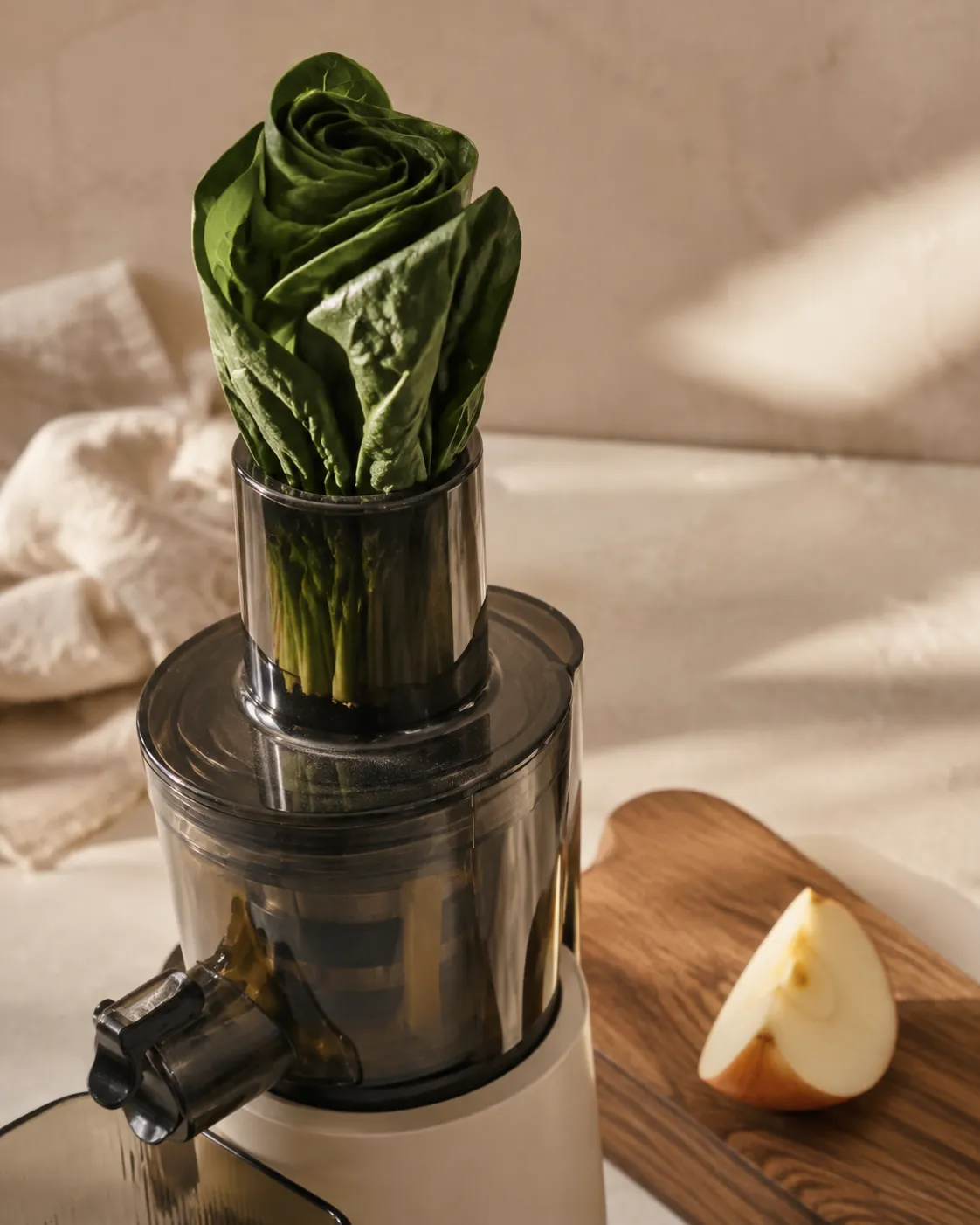
A centrifugal disc needs mass to grate against. A handful of spinach is light, flat and flexible, so it rides over the disc, wraps itself around the basket rim, and comes out as wet green pulp with very little liquid recovered.
An auger has no such problem. It draws leaves in, crushes them against the screen, and presses the liquid out, which is why celery juice and green blends are the drinks that sell masticating machines.
- If you juice only apples, carrots and citrus, a centrifugal machine is fine
- If leafy greens are the point, a masticating machine is close to necessary
- Wheatgrass needs a masticating machine; a centrifugal one recovers almost nothing
- Ginger and turmeric juice better slowly, and clog fast discs
- Soft fruit clogs both, and is better blended than juiced
Feeding technique helps a little. Rolling leaves into tight bundles and alternating them with a piece of hard produce gives a fast machine something to grate against, and it narrows the gap without closing it.
Speed at the counter, and where it goes
Centrifugal machines are much faster at the juicing itself, and that advantage is smaller than it looks once the whole job is counted.
A fast juicer works through a chute wide enough to take a whole apple, so preparation is minimal and the juicing takes seconds. A slow one has a narrower chute, needs produce cut down, and takes several minutes for the same jug.
Cleaning inverts it partly. Both machines need the screen scrubbed immediately, and the centrifugal basket has a large fine mesh that is genuinely awkward, so the time saved at the chute comes back at the sink.
Counted end to end, a fast juicer saves perhaps five minutes on a large batch and rather less on a single glass. That is a real advantage and a smaller one than the marketing suggests.
Cleaning, the honest cost
This is the reason most juicers end up in a cupboard, and it deserves to be stated plainly before anyone buys one.
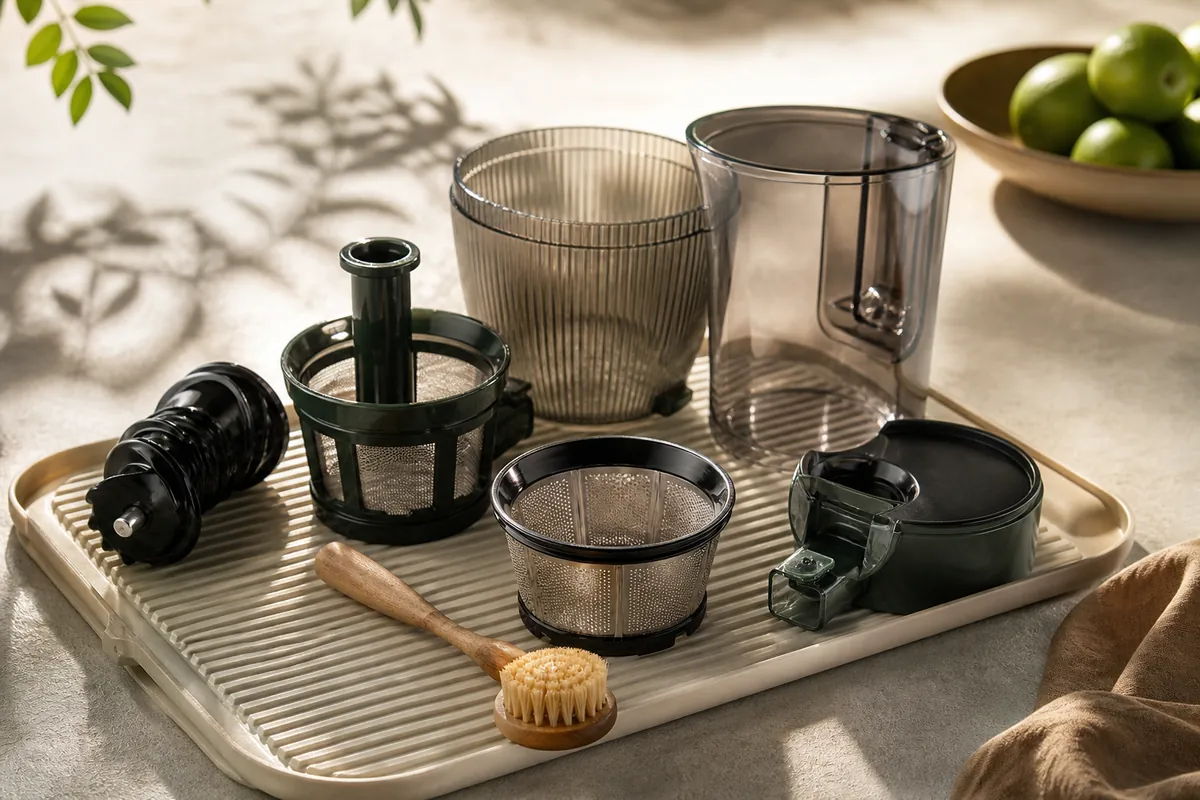
Every juicer has a fine screen that fills with packed pulp. It must be cleaned immediately, because dried pulp sets into the mesh and then needs soaking and a stiff brush rather than a rinse.
Immediately
Rinse every part before the pulp dries; this is not optional
The screen
A stiff brush, under running water, from the outside in
Parts count
Five to seven pieces on most machines, all of them wet
Dishwasher
Some parts, rarely the screen, and check before assuming
Weekly
Soak the screen to clear what brushing has missed
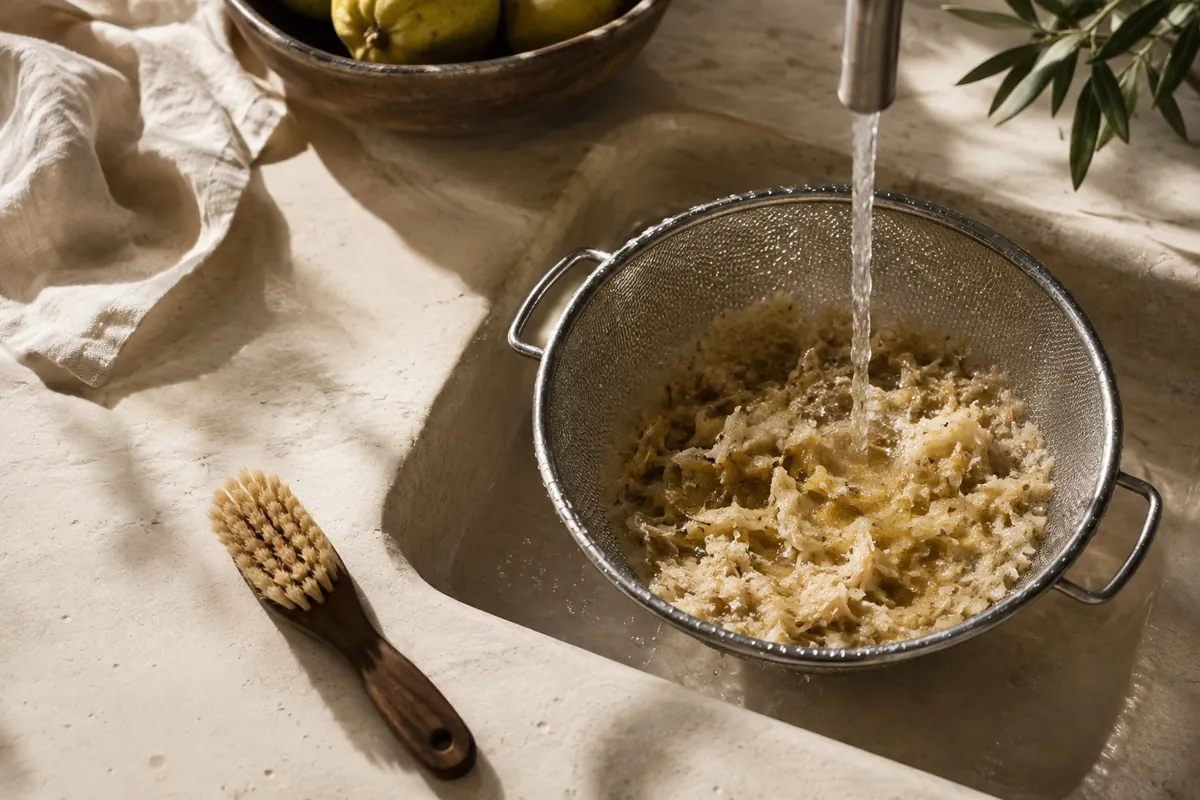
Reducing the parts count is the single most useful thing to look for. A machine with five pieces gets used; one with eight does not, whatever its yield figures say.
The bin matters too. Pulp is bulky and wet, a large batch fills a container quickly, and a machine with a small internal pulp bin needs emptying mid-job.
Citrus is a separate problem
Neither design is the right tool for citrus, and this catches people out because citrus is what most people want to juice first.
| Whole-fruit juicer | Reamer or press | Squeezing by hand | |
|---|---|---|---|
| Pith included | Yes, and it is bitter | No | No |
| Preparation | Peeling, which is slow | Halve the fruit | Halve the fruit |
| Yield | Good, once peeled | Very good | Moderate |
| Cleaning | Full machine strip-down | One part | Nothing |
| Worth it | Rarely | Almost always | For one lemon |
A juicer processes the whole fruit including the pith, which is bitter, and peeling citrus by hand to feed a juicer is slow and wasteful. The result is more bitter than a squeezed juice for more work.
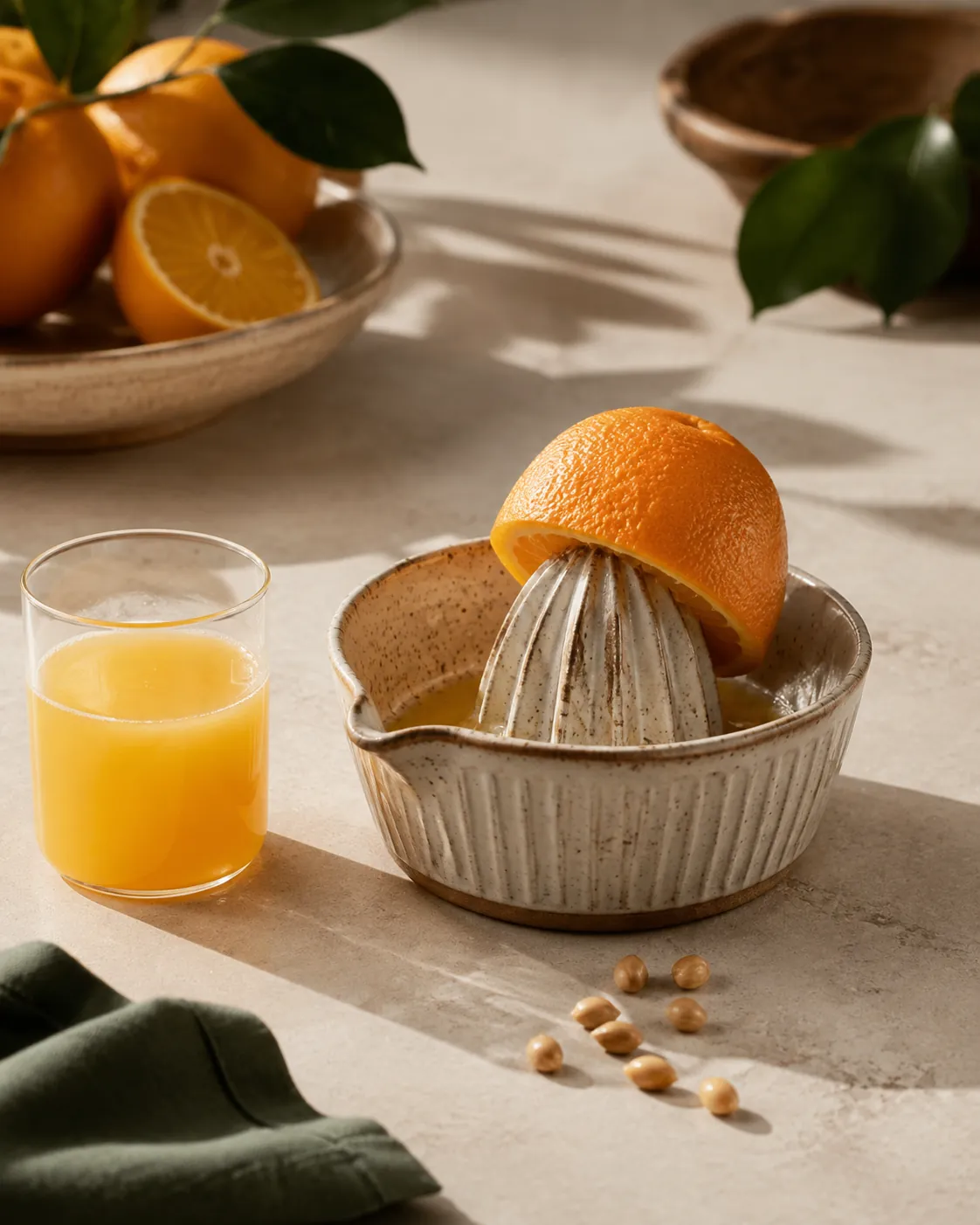
A dedicated citrus press, manual or electric, does the job better and faster with a fraction of the cleaning. It reams the flesh out of a halved fruit and leaves the pith behind entirely.
That is why orange juice at home is a press job rather than a juicer job, and why a lemon for a drink wants a squeezer rather than a machine. The exception is a whole-fruit blend, where the pith is wanted rather than avoided.
Noise, size and where it lives
A centrifugal juicer is genuinely loud, comparable to a vacuum cleaner, and it runs for the whole time it is working. A masticating machine hums.
Both are large.
A juicer is a tall assembly with a chute above it, so it needs headroom as well as counter space, and neither stores neatly in a cupboard.
The noise difference is worth weighing if the machine will run early or in a shared space. A centrifugal juicer cannot be used quietly at any speed, and it runs for the whole of a batch rather than in bursts, where a masticating machine is quiet enough to hold a conversation over.
Works well for
- Makes a drink no other machine can produce
- Extracts intense flavour and colour from ordinary produce
- A masticating machine handles greens nothing else will juice
- Pulp is a useful by-product rather than pure waste
Struggles with
- Cleaning is immediate, unavoidable and the reason most go unused
- Wastes a large share of the produce by weight
- Bulky, tall, and awkward to store
- Fresh juice keeps for hours rather than days
- Citrus is better handled by a cheap press
A juicer that lives in a cupboard is not used, which is a real consideration rather than a joke. The counter space it takes is part of the purchase.
What separates a good machine from a cheap one
Decide the design first, on the basis of leaves, and only then compare models within it.
- Count the parts that need washing, and treat fewer as better
- Check the chute width, which decides how much cutting up you do
- Look for a screen you can brush from both sides
- Prefer a machine whose pulp bin you can see filling
- Check the spare-parts position, since screens and augers wear
Motor power is close to irrelevant on a masticating machine, where torque at low speed does the work, and it is a poor guide on centrifugal machines too. Read the warranty on the motor and the auger separately, since those are the parts that fail and they are often covered for different terms.
A reverse function is worth having on a slow juicer. Fibrous material such as ginger or celery string wraps around an auger and jams it, and reversing for a second clears it without dismantling anything.
Buy for what you will juice weekly, not for the ambitious version of your habits. A cheap centrifugal machine used twice a week beats an expensive one used twice.
Whether you need one at all
A juicer is a single-purpose machine that makes one thing extremely well and nothing else at all, which is a fair description and not a criticism.
If what you want is a thin, bright, intensely flavoured drink, nothing else produces it. If what you want is something filling and thick, a blender is the right machine and a juicer will disappoint you.
For most kitchens the honest ranking puts a blender first. It covers green smoothies, a berry smoothie, frozen drinks and milk drinks, where the juicer covers one column of the juices and smoothies shelf.
The case for buying one is narrow and genuine. If you drink green juice regularly, a masticating machine pays for itself in yield and produces a drink no amount of blending imitates, and it belongs on the counter with the rest of the methods.
Common questions
Is a masticating juicer worth the extra money?
It depends entirely on leaves. On apples, carrots and other hard produce a centrifugal machine is adequate. On spinach, kale, celery and wheatgrass a fast disc has nothing to grate against and recovers very little, so if greens are the point the slow machine is close to necessary.
Why does my juice foam and go brown so quickly?
Air. A centrifugal disc turning at thousands of rpm whips air into the liquid as it separates it, and that air drives oxidation, so colour dulls and aroma flattens within the hour. A masticating machine introduces far less and buys you hours of shelf life, not days.
Can you juice citrus in a juicer?
You can, and a cheap citrus press does it better. A juicer processes the whole fruit including the bitter pith, so peeling by hand is slow and wasteful and the result is more bitter for more work. A reamer takes the flesh out of a halved fruit and leaves the pith behind.