What Is Apple Juice? Clear or Cloudy, and Why It Matters
Apple juice comes clear or cloudy, and the difference is not decoration. Clear juice has been filtered and treated with enzymes to remove exactly what cloudy juice keeps.
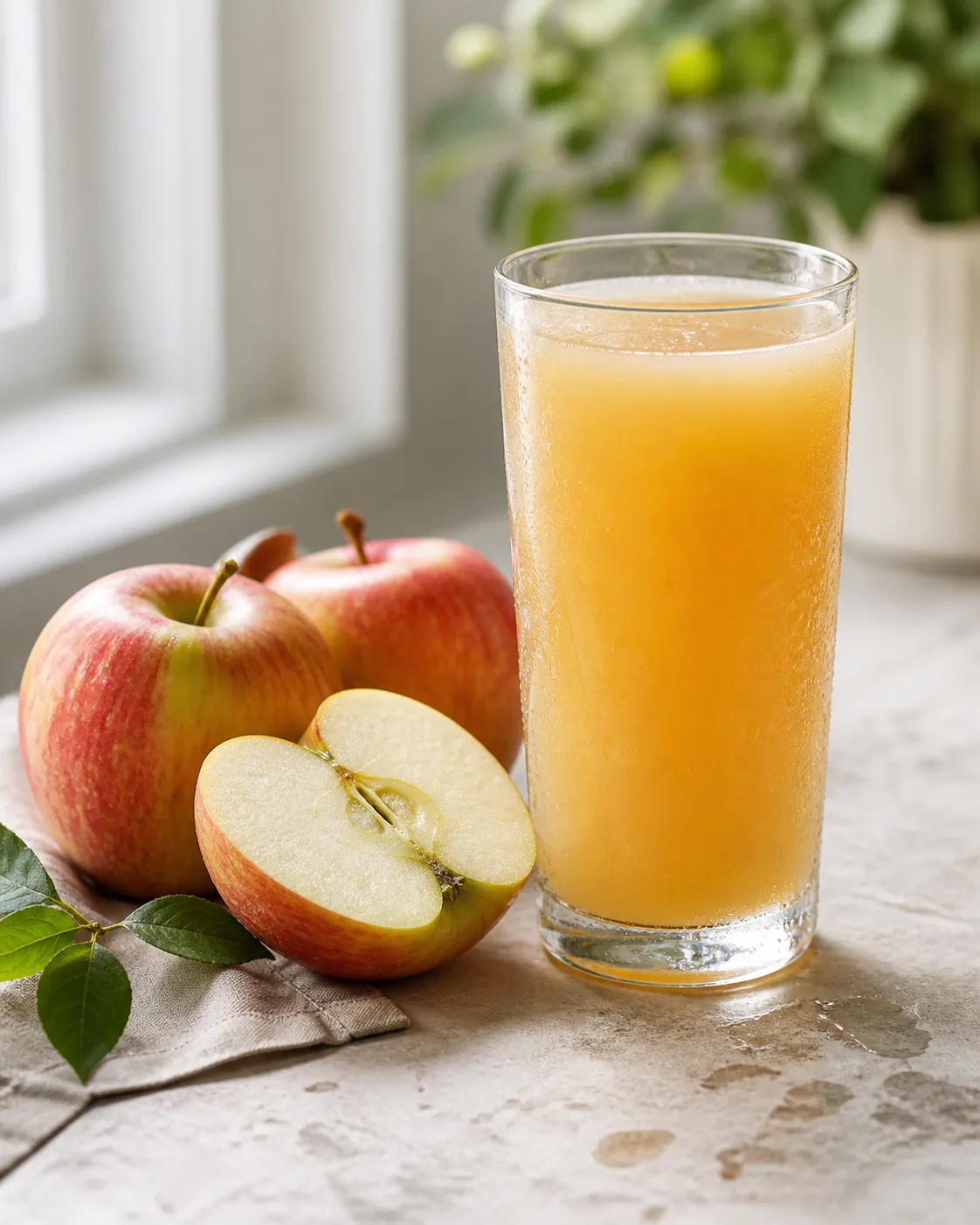
Apple juice is pressed from apples and then either filtered to a clear liquid or left cloudy. That single decision produces two products that look and taste quite different, and neither is the same thing as a cold-pressed juice.
Neither style is a lesser version of the other, and both start from the same fruit.
Apple juice at a glance
- Made from
- Pressed apples, then either filtered clear or left cloudy
- The two styles
- Clear is enzyme-treated and filtered. Cloudy is coarsely strained
- Sugars
- 9 to 11 g per 100 ml, naturally occurring, the same in both styles
- Most of what is sold
- Reconstituted from concentrate, which costs aroma
- Once opened
- Four to five days refrigerated. Months sealed and ambient
- Sediment
- Normal in cloudy juice and it shakes back in. Fizz means fermentation
What separates clear apple juice from cloudy
The distinction is the most important thing on an apple juice label, and it is visible through the bottle before you read a word.
| Clear | Cloudy | |
|---|---|---|
| Process | Enzyme treated, then finely filtered | Coarsely strained only |
| What is removed | Pectin, suspended solids, some polyphenols | Very little beyond seeds and skin fragments |
| Appearance | Transparent, pale gold | Opaque, pale brown-gold |
| Taste | Cleaner, sharper, simpler | Fuller, more apple-like, slightly astringent |
| Mouthfeel | Thin | Noticeably more body |
| Settles | No | Yes. It separates and needs shaking |
Cloudy juice is closer to what comes out of a press. Clarifying is an extra process that removes material, and it is done for appearance and shelf stability rather than because the juice needs it.
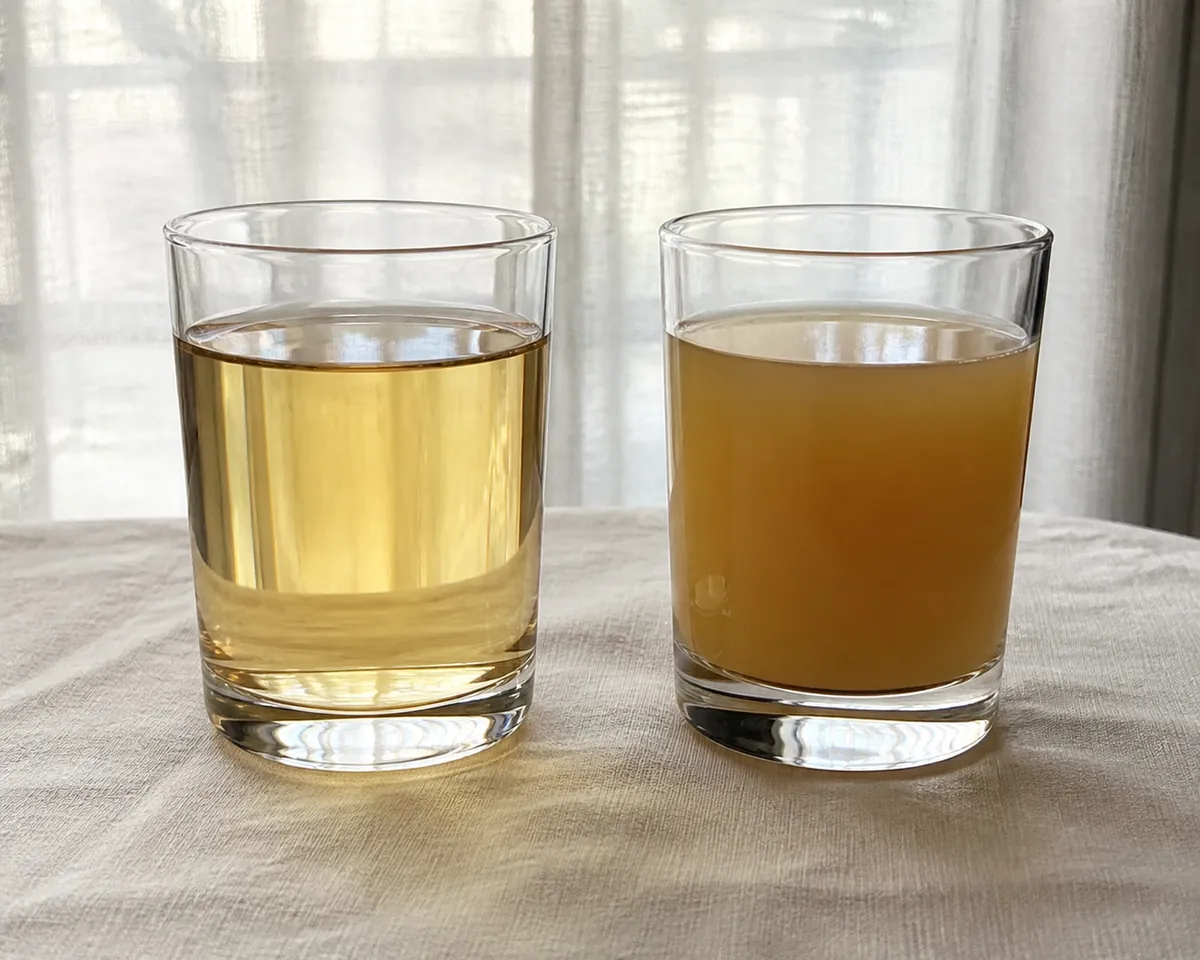
The two styles suit different jobs. Clear juice mixes cleanly and holds its appearance in the bottle, which is why it dominates ambient cartons, while cloudy juice carries more of the fruit and rewards being drunk on its own.
Neither is more natural in any regulated sense. Both are 100 per cent juice if the label says so, and the difference is a processing decision rather than a quality grade.
Price tracks the process rather than the fruit. Clarifying costs money and equipment, which is why the cheapest cartons on a shelf are usually clear and the expensive chilled bottles are usually cloudy.
What apple juice tastes like sets the two styles against each other in detail.
How clear apple juice is made
Clarifying apple juice is a chemical process rather than fine filtering.
Apple juice is full of pectin, the same substance that sets jam. Pectin holds fine particles in suspension, so no amount of filtering alone produces a clear liquid.
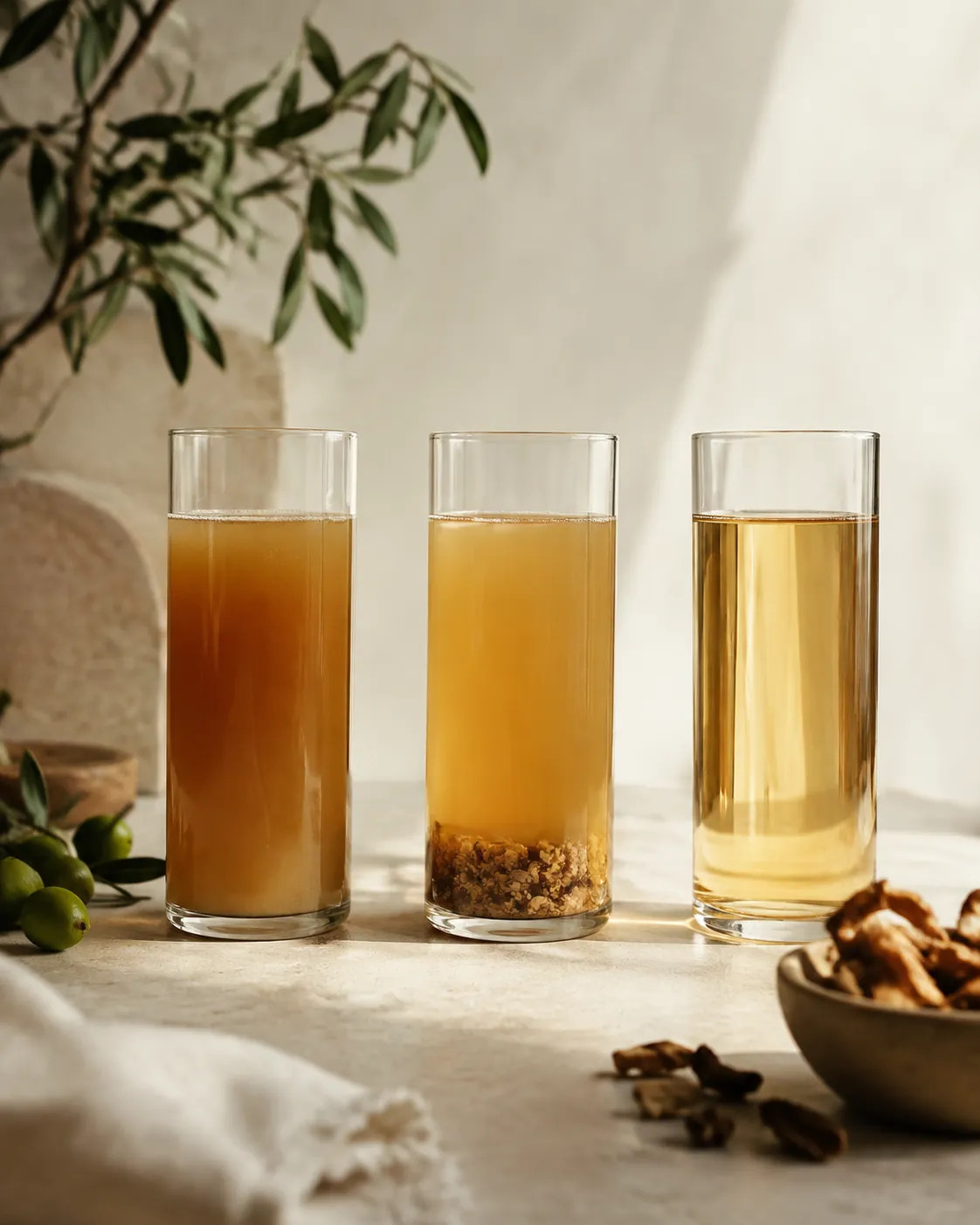
Clarification, step by step
- PressThe juice comes out cloudy, full of pectin and suspended solids.
- EnzymePectinase is added, which breaks the pectin chains down.
- SettleWith the pectin broken, solids clump together and drop out.
- FilterThe clarified liquid is filtered, sometimes through fine sheets.
- PasteuriseHeat treatment for shelf life, as with any packaged juice.
Pectinase is the step that makes clear juice possible. Without it you can filter apple juice indefinitely and it stays hazy.
That enzyme treatment also strips some of the polyphenols responsible for astringency, which is part of why clear juice tastes simpler and rounder than cloudy juice does.
The same chemistry explains why the clear style cannot be reproduced in a domestic kitchen. Straining through muslin removes pulp but leaves the pectin intact, so the juice stays hazy however many times it goes through the cloth.
Pectin also explains a smaller puzzle.
Juice pressed from very ripe apples clarifies more easily, because ripening has already broken some of the pectin down before the fruit reaches the press.
Why apple juice turns brown
Cut an apple and it browns within minutes. The same reaction affects the juice, and producers spend real effort controlling it.
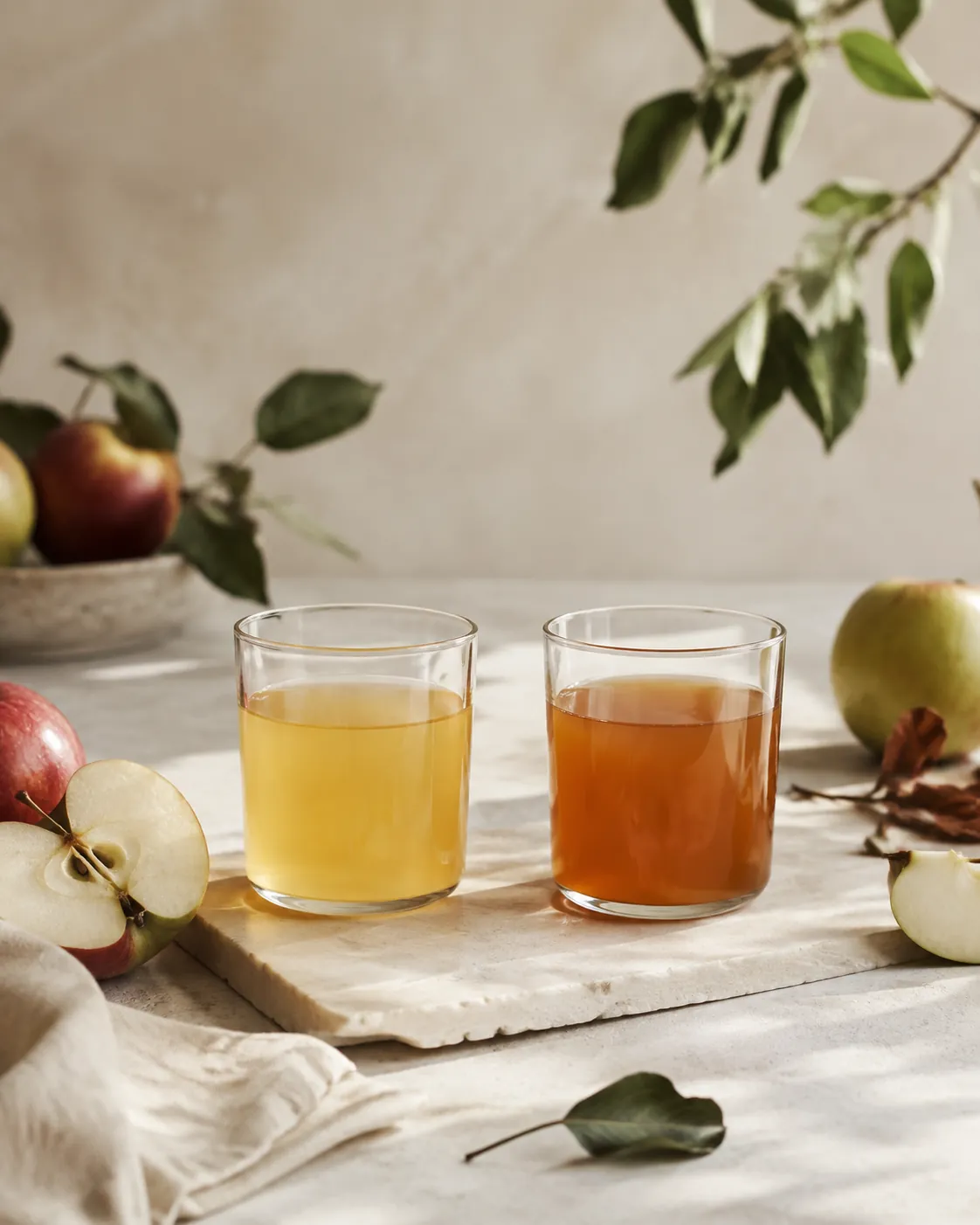
An enzyme called polyphenol oxidase reacts with oxygen and turns polyphenols into brown pigments. It is the reaction that darkens a cut apple, and the reason a green smoothie turns khaki within the hour.
What slows the browning
- Acid
- Lemon juice or ascorbic acid lowers the pH and slows the enzyme
- Heat
- Pasteurisation deactivates the enzyme entirely
- Excluding air
- The reaction needs oxygen, so a full sealed bottle browns slowly
- Cold
- Slows the reaction without stopping it
- Speed
- Pressing and packing quickly is the main commercial control
Home-pressed juice browns visibly within minutes, which alarms people unnecessarily. It is a colour change rather than spoilage, and a squeeze of fresh lemon juice largely prevents it.
Ascorbic acid on a commercial label is doing the same job. It is added as an antioxidant to hold the colour rather than as a nutritional claim, and its presence is routine.
Browning is not confined to apples. Carrot juice dulls the same way, though the change is harder to see against a colour that deep to begin with.
Why apple juice separates in the bottle
Cloudy juice settles, and the layer at the bottom is the most common reason people think a bottle has gone off.
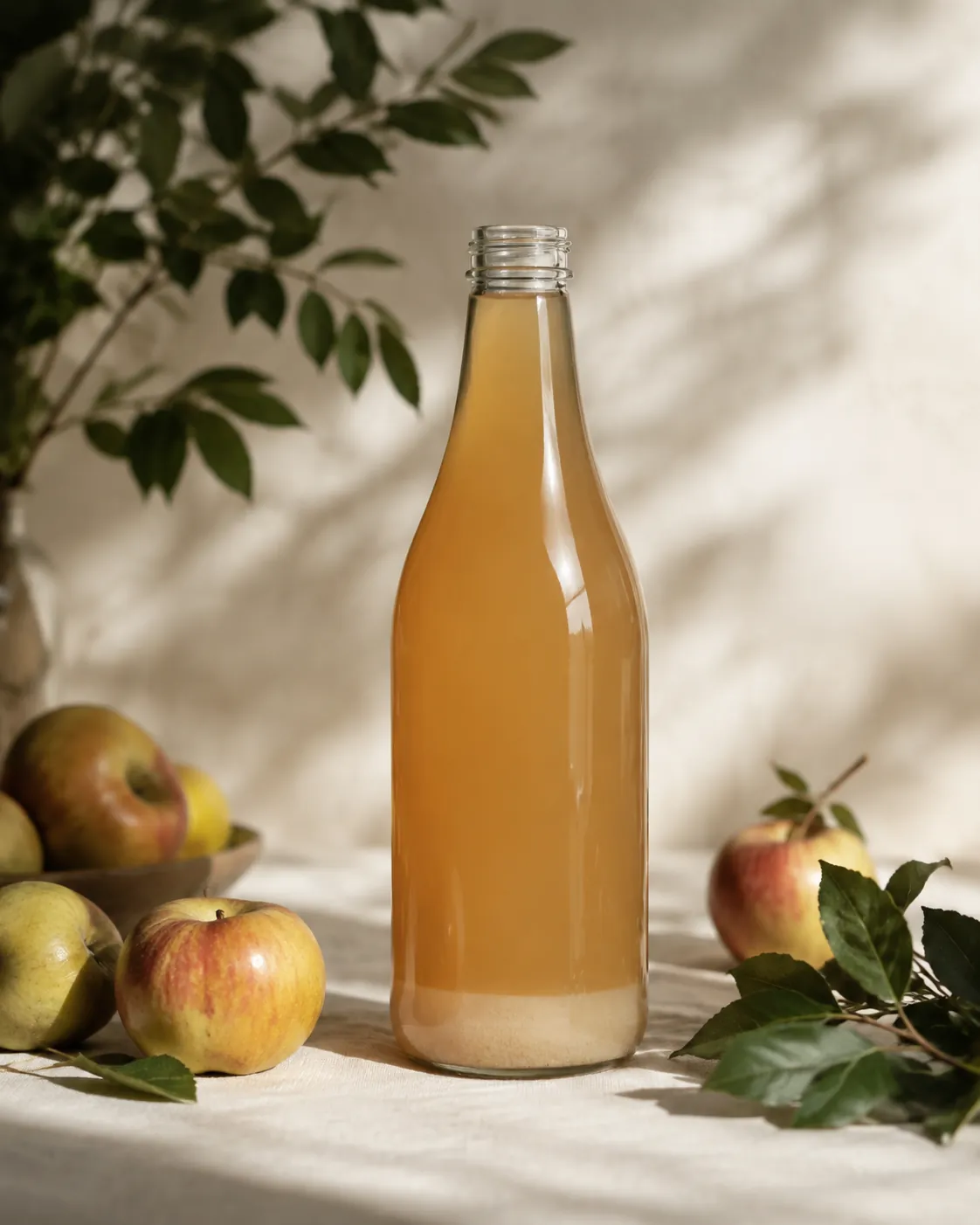
Those solids are pulp and pectin dropping out of suspension. Separation is what cloudy juice does when it stands, and it is the visible proof that the juice was never clarified.
Shaking redistributes it completely. The settled layer carries a good deal of the flavour and the body, so pouring carefully to leave it behind gives a thinner, blander drink.
Settling is not unique to juice. A carton of rice milk throws a layer for the same physical reason, and the instruction on the pack is the same one.
Clear juice does not behave this way. If a clear juice throws a haze or a sediment, something has changed inside the bottle and it is worth a closer look.
Apple juice ferments more readily than most juices. Its sugar content and the wild yeasts that travel on apple skins make an opened bottle left warm a genuinely likely candidate.
Temperature decides how fast that happens.
An opened bottle at room temperature can start within a day or two, while the same juice kept cold stays sound for the better part of a week.
How long apple juice keeps once opened
Unopened, apple juice holds for months and declines slowly. Once the seal breaks, oxygen starts working on it and the clock runs much faster.
- Refrigerate after opening and finish within four to five days.
- Keep the bottle sealed and as full as possible, since headspace drives both browning and flavour loss.
- Shake cloudy juice before every pour rather than only the first.
- Freeze fresh-pressed juice in portions if you cannot get through it in time.
- Treat anything fizzy or yeasty as fermented rather than merely old.
Chilled fresh-pressed juice is a different product from an ambient carton. It has days rather than weeks in it even unopened, which is why it is sold from a fridge.
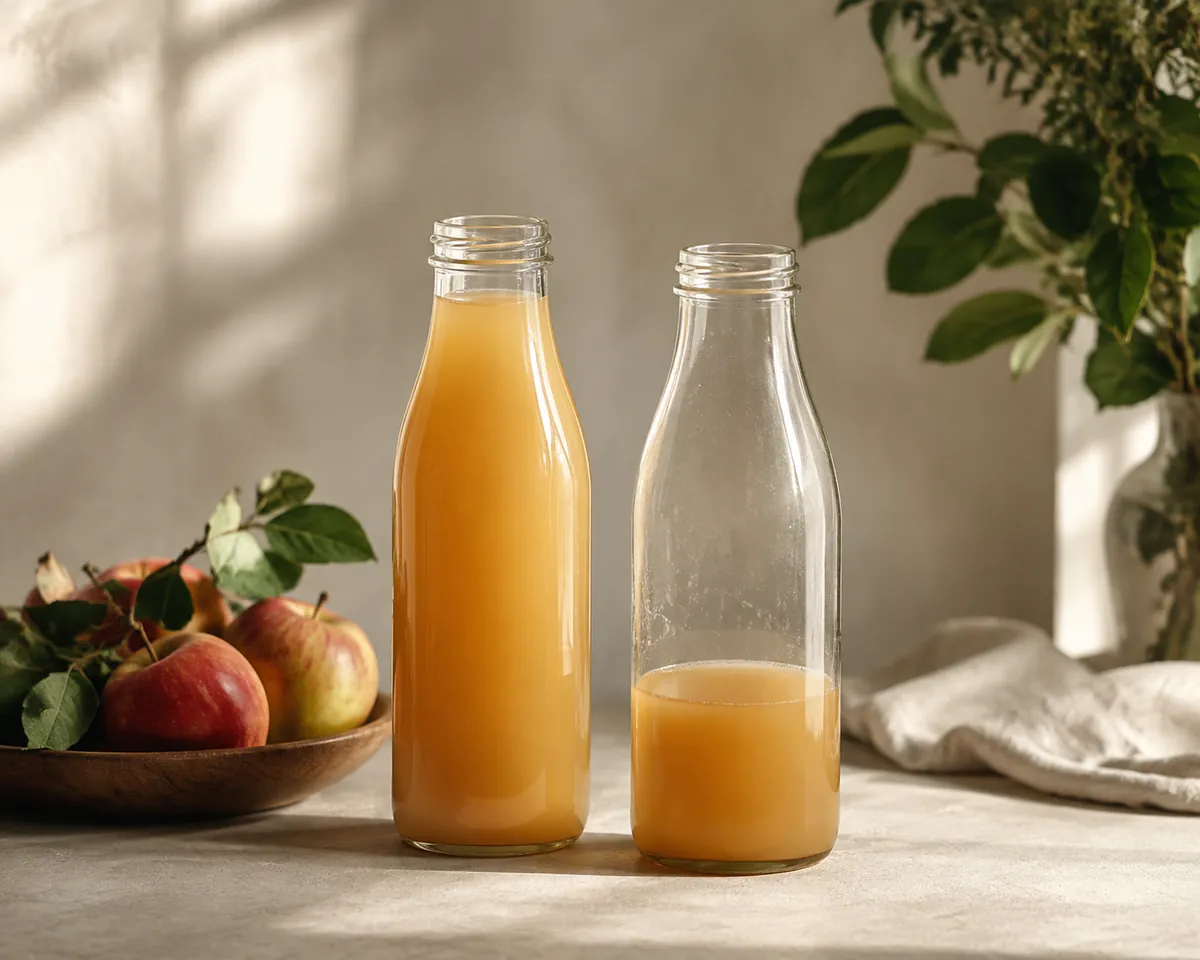
Decanting into a smaller bottle does more than it sounds like it should. Halving the headspace roughly halves the oxygen sitting on the juice, and the difference over three or four days is easy to taste.
Freezing works well, and expansion is the only real hazard. Leave room at the top of the container, because juice expands as it freezes and a full sealed bottle will split.
Storing apple juice covers the chilled and ambient formats separately, and why apple juice tastes wrong covers the faults that are not simply age.
Which apples make good juice
Variety matters as much for juice as it does for eating, and the criteria are not the same ones.
Bramley and cookers
Very sharp and high in acid. Excellent in a blend, harsh alone.
Cox and aromatic dessert apples
Complex and fragrant. The best single-variety juices.
Gala, Fuji and modern sweet apples
Sweet and simple. Pleasant, and one-dimensional alone.
Bittersweet cider apples
High tannin. Interesting, astringent, and rarely sold as juice.
Almost all good apple juice is blended. A single sweet variety gives a flat drink, and adding a sharp variety restores the acidity that makes it taste of apple rather than of sugar.
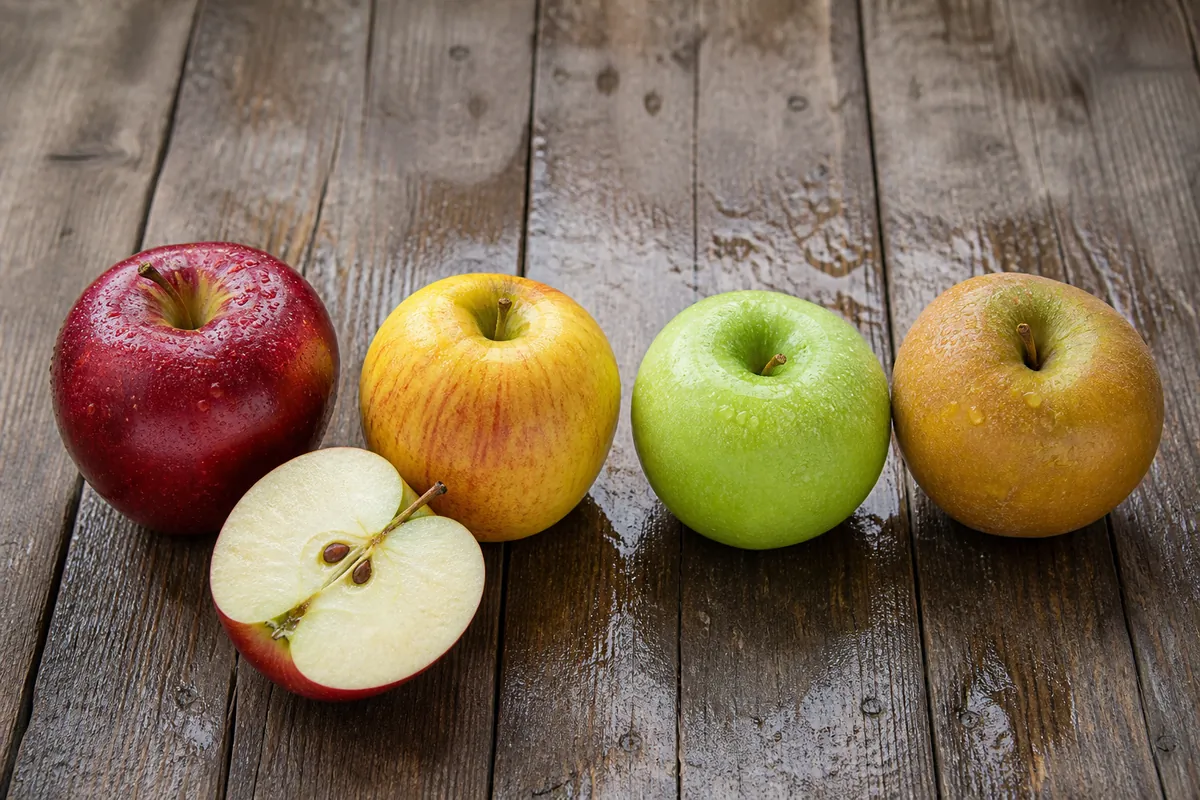
The working ratio is roughly two parts sweet dessert apple to one part sharp cooker. That is a starting point rather than a rule, and the right balance shifts with how ripe the fruit is and how sharp the cookers happen to be that season.
Acid does more than add sharpness. It carries aroma, so a juice with too little of it reads as sweet and vague even when the apples behind it were good ones.
That blending principle runs through most commercial fruit juice. It is why orange juice is dosed to a specification rather than left to whatever the crop delivered that year.
At the small end of the market sit producers pressing named varieties, usually cloudy, lightly pasteurised or not at all, and sold chilled in autumn. These taste distinctly of the apples they came from in a way a carton does not.
The gap between one of those and a standard carton is wider than the gap between a cheap and an expensive orange juice. Apple varieties differ far more from each other than orange ones do.
What "from concentrate" actually means
Most apple juice sold worldwide is reconstituted from concentrate, and that single fact explains most of what a carton tastes like.
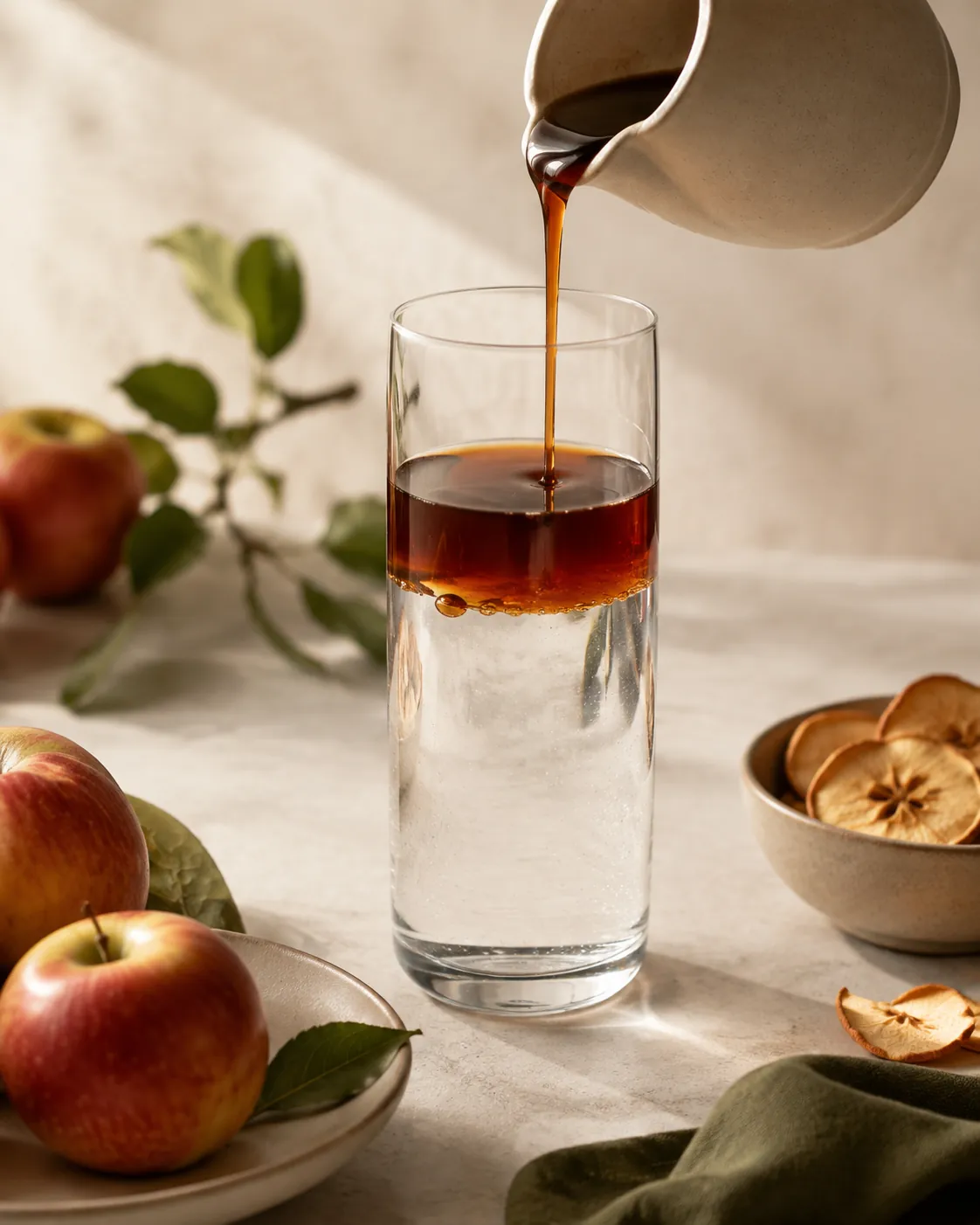
Apple concentrate is a traded commodity, produced in volume in China, Poland and Turkey among others. It ships as a thick syrup and is diluted back to strength near where it is sold.
That makes it cheap, consistent and available all year from a crop picked in a few weeks. What it costs is aroma, because concentrating drives off the volatile compounds that carry the smell of apple.
How much apple character survives
- Clear from concentrateSweet, simple, faintly generic
- Clear not from concentrateCleaner, some varietal character
- Cloudy commercialFuller, clearly apple, some astringency
- Fresh pressed, blendedComplex, sharp, aromatic
- Single-variety freshMost distinctive, and the most seasonal
The distance between the top and the bottom of that scale is larger than for most juices. Clarification and concentration each strip out part of what carries the flavour, and a clear juice from concentrate has been through both.
Some producers capture the aroma fraction during concentration and add it back on reconstitution. It restores part of what was lost and rarely all of it, which is why a good not-from-concentrate juice still tastes more like fruit.
Not-from-concentrate is much rarer in apple than in orange, largely because the apple trade is built around shipping concentrate and the supply chains have followed it.
What an apple juice label tells you
The category carries fewer legal distinctions than orange juice, so the label says less and the things it does say matter more.
What to look for
- Clear or cloudy
- Usually visible through the bottle, and the biggest single difference
- From concentrate
- Very common here. Flatter, cheaper, consistent
- Variety named
- A sign of a small producer, and usually a better drink
- Added vitamin C
- Ascorbic acid, added as an antioxidant to slow browning
- Juice percentage
- If a percentage is printed at all, it is not 100 per cent juice
That last line is the one that catches people out. A product calling itself a juice drink is juice diluted with water and usually sweetened, and it sits in a different category from juice however similar the bottle looks.
The same trap is common in the green juice aisle, where a blend sold as juice often turns out to be mostly water with a percentage printed in small type.
"Pressed" and "freshly pressed" carry no fixed meaning on a shelf-stable bottle. Anything ambient has been pasteurised whatever the front of the pack suggests, and the chilled cabinet is where the genuinely fresh product lives.
A date is often more informative than any claim. A short life points to light pasteurisation and a fresher juice, while months at ambient temperature point to a heavier heat treatment.
How much sugar is in apple juice
Apple juice is naturally sweet, and the figures are worth stating next to its neighbours.
Apple sits at the higher end of the juice range. That is a function of the fruit rather than of processing, and clear and cloudy juice pressed from the same apples carry much the same amount.
Clarifying removes no sugar at all. It takes out pectin, solids and some polyphenols, which changes body and astringency while leaving the sweetness exactly where it was.
Perceived sweetness and measured sugar are not the same thing. A cloudy juice with more acid and more tannin reads as less sweet than a clear juice at an identical figure, which is why the scale further up is about character rather than composition.
The useful comparison is between products rather than against any recommendation, which is the only thing an editorial page should do with numbers like these.
How to press apple juice at home
Home apple juice is straightforward, and the equipment decides the result more than the recipe does.
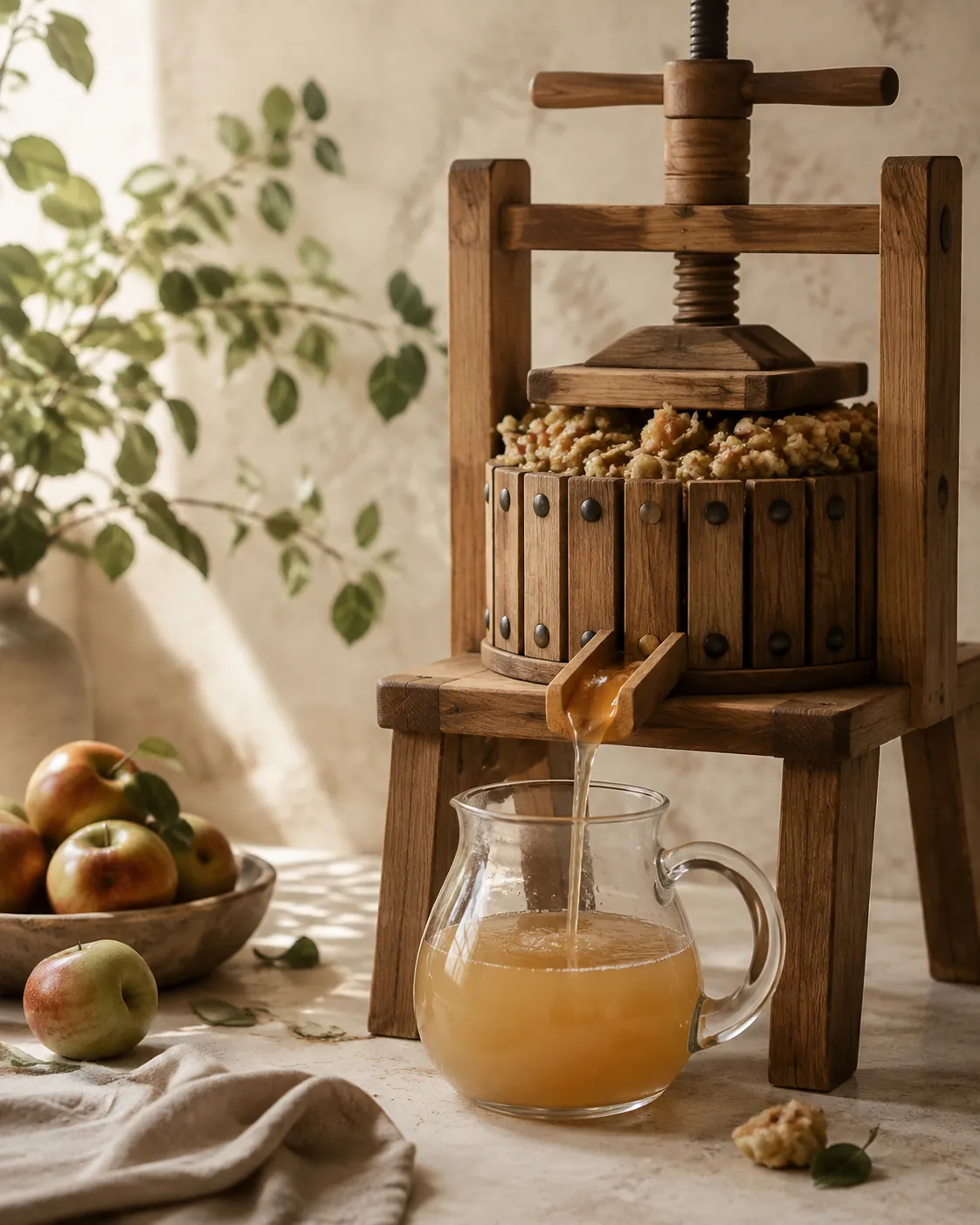
What a domestic machine makes is much closer to the cloudy commercial style than to the clear one. The clear style needs the enzyme and filtration steps described further up, and no amount of straining through cloth achieves it.
Home-pressed apple juice
- Apples
- About 1.5 kg per litre of juice
- Blend
- Two parts sweet dessert apple to one part sharp cooker
- Method
- Wash, quarter, and press. Peeling and coring are unnecessary
- Browning
- A squeeze of lemon per litre slows it considerably
- Keeps
- Two to three days refrigerated, or freeze in portions
A centrifugal juicer is the usual tool and it drags a lot of air through the pulp as it spins. That air is what speeds the browning, and it is the same air that turns a berry smoothie pale as you blend it.
A masticating machine or a proper screw press works slowly and introduces far less, which is the whole argument behind pressing cold. The yield is better too, because pressing extracts more from the same weight of fruit than spinning does, and it is the same machine difference that decides whether a green juice is worth attempting at all.
Making apple juice works through both routes.
Do not bother peeling. Most of the aroma sits in and just under the skin, so peeling costs flavour for no benefit at all.
Coring is optional for the same reason, though pips add a faint bitterness if the machine grinds them hard. A press leaves them largely whole and a centrifugal juicer does not, which is a small argument in favour of the press.
Is apple juice the same as cider?
The naming causes real confusion, and the answer depends entirely on where you are standing.
| Clear juice | Cloudy juice | Cider, unfermented | |
|---|---|---|---|
| Filtered | Heavily | Lightly or not at all | Not at all |
| Appearance | Transparent gold | Opaque tan | Opaque brown |
| Keeps | Months, sealed | Weeks | Days, refrigerated |
| Taste | Clean and sweet | Fuller, more apple skin | Closest to the raw fruit |
In the United States, cider commonly means unfiltered, unpasteurised apple juice, sold chilled and seasonally. In the United Kingdom and much of Europe, cider means the fermented alcoholic drink and nothing else.
The first sense is the one meant here. American cider is essentially cloudy apple juice, and what separates it from a bottled juice is filtration and pasteurisation rather than anything in the fruit itself.
That also explains its short life and its seasonality. Without pasteurisation it stays fresh for days rather than months, and it appears in shops when the crop comes in.
The confusion runs in both directions. A shelf-stable carton labelled cider in an American shop has usually been pasteurised, which makes it apple juice by any working definition and cider only by habit.
Reading the label settles it faster than reading the name. A bottle sitting chilled, carrying a date days away and saying unpasteurised, is the juice sense whatever the front of the pack calls it.
How to make sparkling apple juice
A carbonated version is widely sold as a non-alcoholic drink for celebrations, and it behaves differently from the still one.
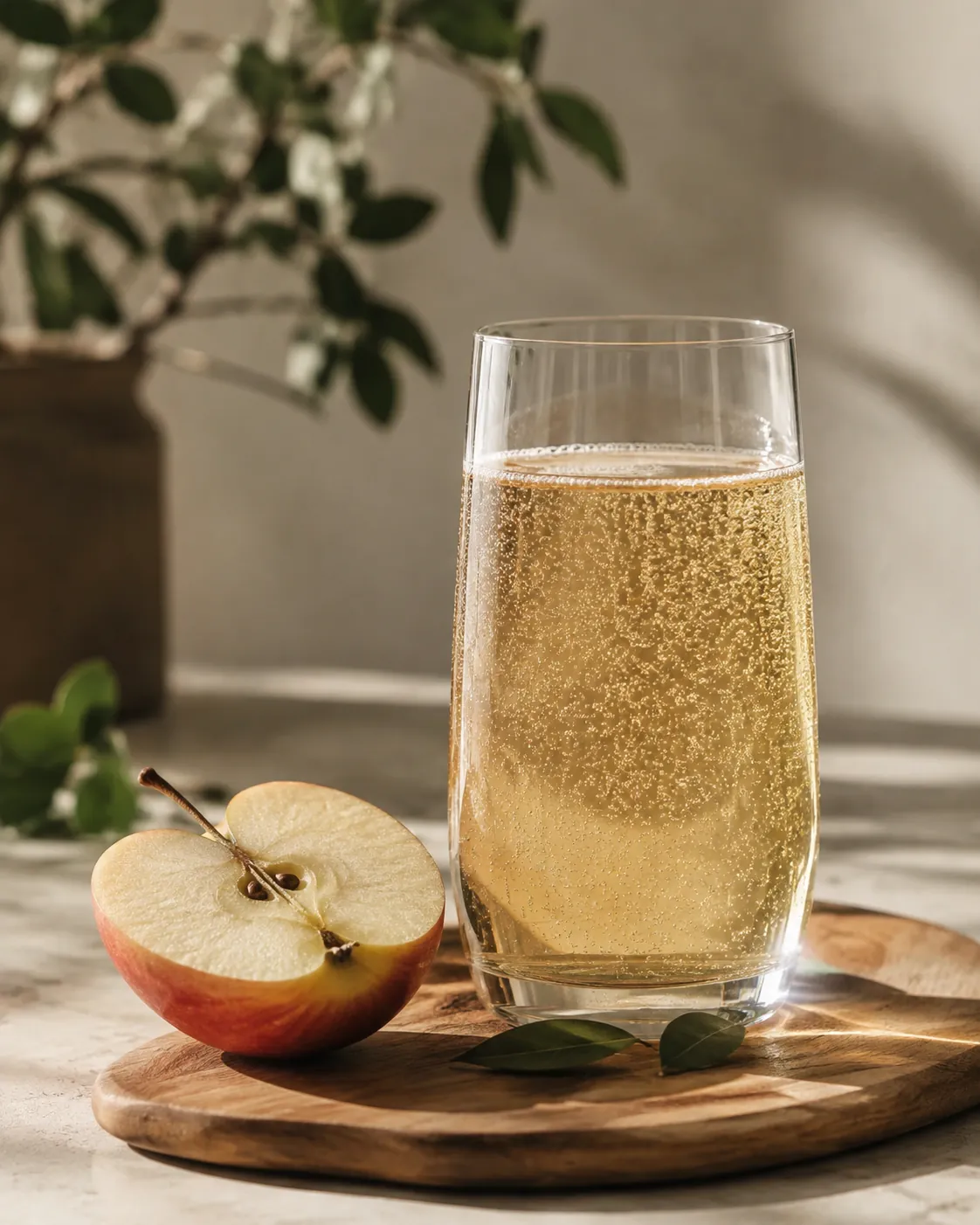
Carbonation sharpens the perception of acidity and suppresses sweetness slightly, which flatters apple juice considerably. A juice that reads as cloying still can read as crisp and dry with bubbles in it.
Most commercial sparkling apple juice is clear rather than cloudy. Suspended solids act as nucleation sites, so a cloudy version loses its fizz noticeably faster in the glass.
At home it works far better as a dilution than as a carbonation. Chill the juice thoroughly and lengthen it with sparkling water at the moment of serving, rather than forcing gas into juice, which foams uncontrollably because of the sugar and the pulp.
Cloudy apple juice topped with soda is a genuinely good long drink. It is close in construction to an Italian soda, with fruit doing the work that simple syrup does there.
Apple juice takes dilution better than most juices, for the same reason it takes carbonation well. Its flavour is carried by acid rather than by sheer intensity, and acid survives being lengthened.
Apple juice with food
Apple juice is one of the more food-friendly juices, and it earns that on acidity rather than on sweetness.
Its acid cuts through fat effectively, which is why it works alongside pork, hard cheese and rich pastry. Cloudy juice does this better than clear, because the tannin and the body give it more to push against.
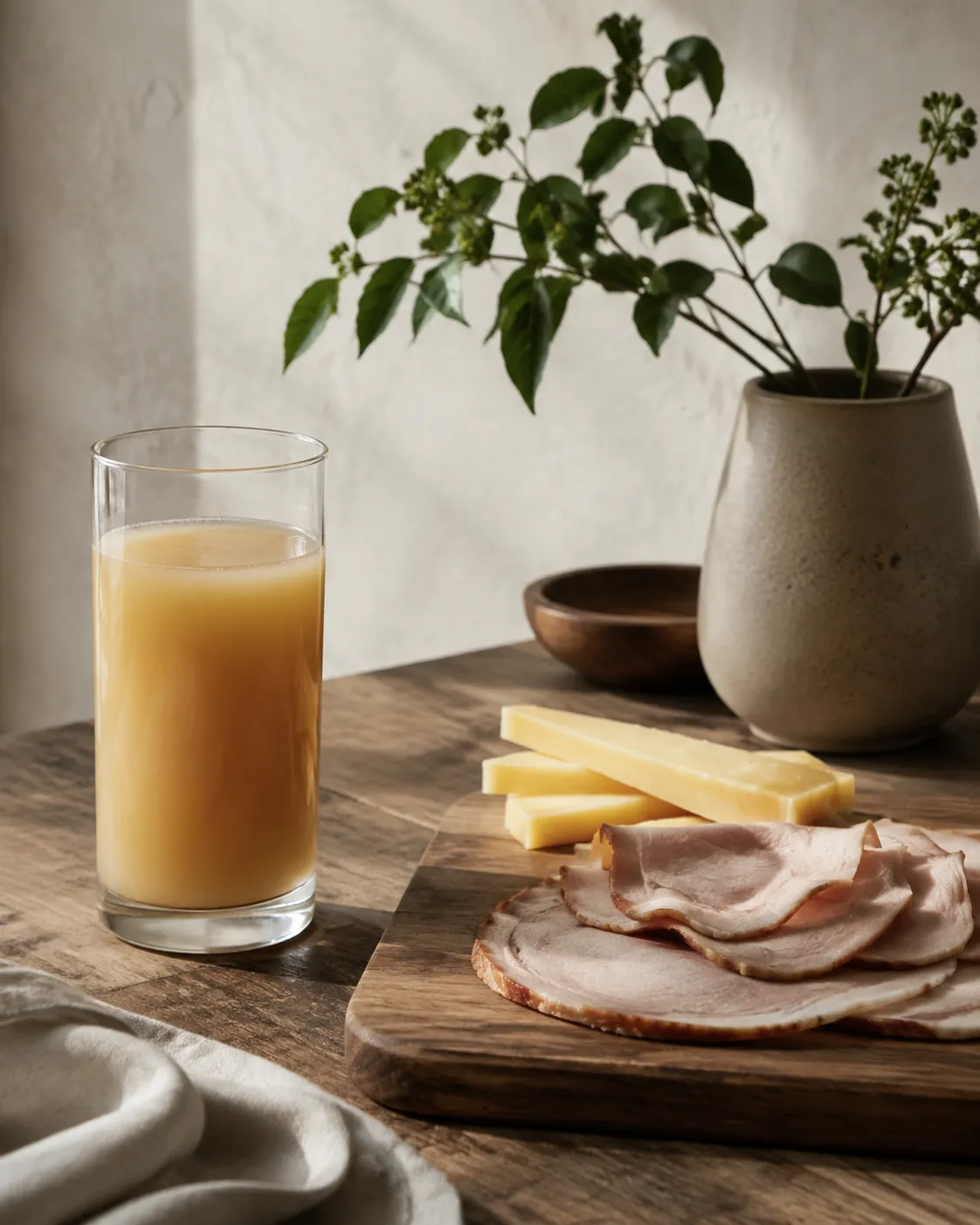
Roast pork and crackling
The classic pairing, and the reason apple sauce exists. Acid against fat.
Hard and blue cheese
Cloudy juice holds up where clear reads thin. Serve it cold and undiluted.
Rich pastry and pies
Sweetness matches, so lengthen it with soda or the plate wins.
Strongly spiced food
The one to avoid. Heat and sugar compound, and the juice turns cloying.
It is less successful against strongly spiced food. Heat and sweetness compound each other, so the juice reads as cloying rather than refreshing once chilli is involved.
Diluted with soda water it becomes a good drink to put on a table with a meal. That dilution also solves the sweetness problem that limits it neat.
Temperature matters as much as dilution does. Cold sharpens the acid and mutes the sugar, so a juice that tastes heavy at room temperature often works straight from the fridge.
What it does not take well is a glass packed with ice. Apple juice is subtle enough that heavy melt leaves very little behind, so chill it properly first rather than relying on the glass to do the cooling.
Serve cloudy juice shaken, for food or otherwise. An unshaken bottle pours two different drinks, and the half at the bottom is the one carrying what stands up to a plate.
Common questions
What is the difference between clear and cloudy apple juice?
Clear juice has been treated with pectinase to break down pectin, then finely filtered, which removes suspended solids and some polyphenols. Cloudy juice is only coarsely strained, so it keeps more body and more apple character.
Why does apple juice turn brown?
Polyphenol oxidase reacts with oxygen to form brown pigments, the same reaction that darkens a cut apple. It is a colour change rather than spoilage. Acid, cold and excluding air all slow it; pasteurisation stops it.
Do you need to peel apples before juicing?
No. Much of the aroma sits in and just under the skin, so peeling costs flavour and gains nothing. Coring is also unnecessary for most juicers.