Why Does My Blender Make Smoothies Warm? What the Heat Means
If your smoothie comes out warmer than the ingredients that went in, the blender has not secretly switched to a heating mode. Speed, time, and circulation explain most of the rise, and they also tell you what to change without watering down the drink.
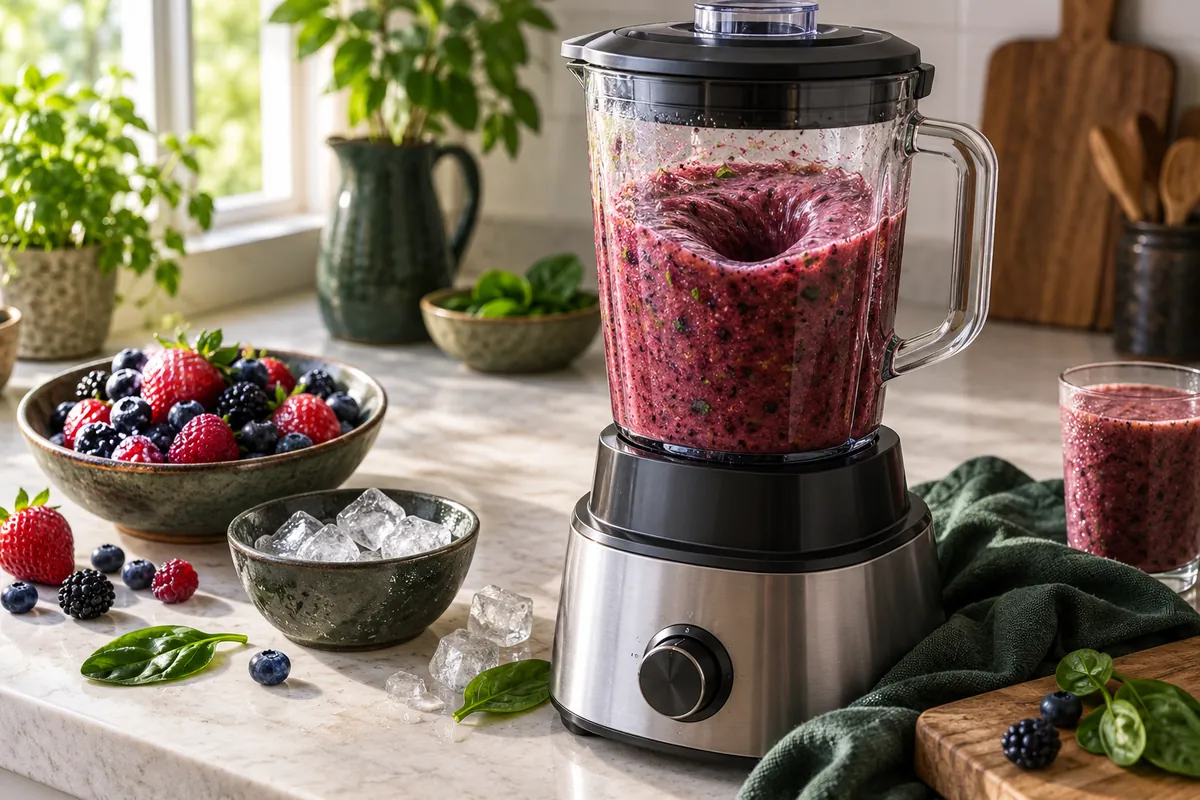
A blender makes a smoothie warm because the motor keeps putting energy into the jar.
The blades create movement and drag, and much of that work eventually ends up as heat in the drink.
The effect becomes obvious when you blend past the point where the texture is already smooth. More time still adds energy, but it no longer solves a real texture problem.
A mildly warm smoothie does not automatically mean your blender is failing. We can narrow the cause by asking where the heat is, when it appeared, and whether the ingredients kept circulating.
Where the heat in a warm smoothie comes from
High-speed blending moves a thick mixture through a narrow zone around the blades. Fruit fibres, liquid, ice, and air repeatedly accelerate, collide, and slow down, so the motion that breaks ingredients apart also raises their temperature.
High speed can warm blender ingredients, especially when the machine continues running after the mixture has become uniform. That is why a longer programme can produce a silkier drink and a warmer one at the same time.
How blender work becomes smoothie heat
- Motor turns the bladeElectrical energy becomes rapid blade movement
- The mixture circulatesLiquid and solids repeatedly pass through the cutting zone
- Drag disperses the workMotion is lost through friction and turbulence inside the drink
- Extra time adds heatThe motor keeps working even after the texture is smooth
The word friction can make this sound as though the blade is rubbing the smoothie hot at one tiny point. In practice, the whole moving mixture shares the work through circulation, which is why blend duration matters as much as blade speed.
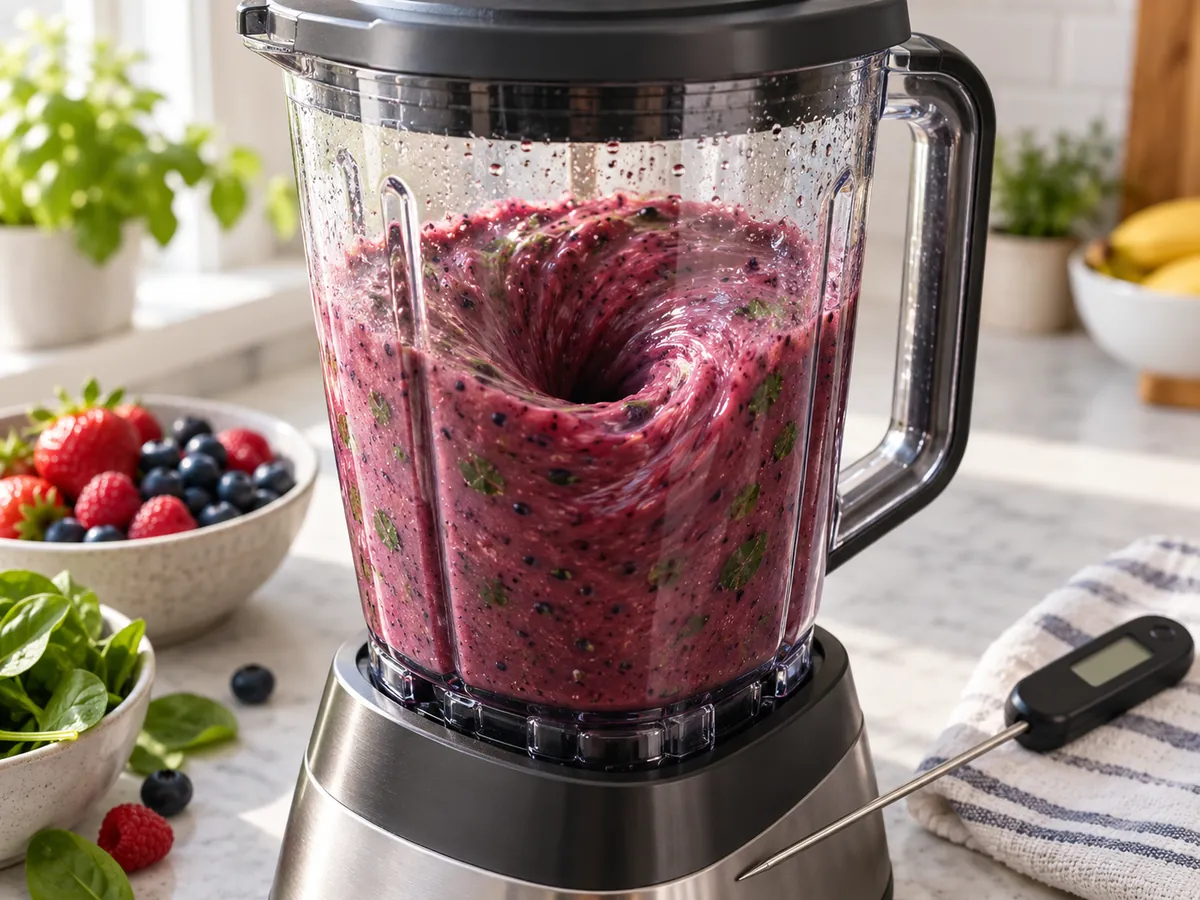
The temperature at the start still sets the baseline. A green smoothie made with room-temperature produce can finish warmer than a frozen berry smoothie even when both spend the same time in the jar.
Your texture is a better guide than an arbitrary round number on the timer. Once the last visible pieces disappear and the surface circulates evenly, another minute usually buys more heat than smoothness.
Warm drink or overheating blender?
Heat in the smoothie and heat in the motor base are related only indirectly. A drink can warm while the appliance sounds normal, moves the batch freely, and completes the cycle without a smell or shutdown.
Motor overload looks different. A strained change in pitch, repeated stalling, a hot electrical smell, smoke, or a protective shutdown belongs to the machine rather than to the flavor of the drink.
Some blenders use thermal overload protection that requires a cooldown. If yours stops, follow its manual; restarting it repeatedly while the mixture remains jammed only recreates the load that triggered the protection.
Location is the cleanest clue. Warm liquid with a normal-running base points toward blend time and ingredient temperature, while strong heat or odor at the base points toward load, ventilation, or an appliance fault.
A very thick smoothie bowl can place more load on a motor than a drinkable smoothie because the mixture folds slowly. That does not make thick blending unsafe by definition, but it makes the manufacturer's batch limit, speed advice, and tamper instructions more important.
Unplug a machine that smells electrical, smokes, or makes a new grinding sound. Do not open the base or reach into a mounted jar; a recipe adjustment is not a repair for damaged drive parts.
Cold ingredients buy you time, but not equally
Cold ingredients absorb some of the energy added during blending before the drink feels warm.
They do not all preserve the same texture, so the best choice depends on whether your smoothie is already too thin, too thick, or correctly balanced.
| Cold input | Cooling effect | Texture consequence |
|---|---|---|
| Chilled liquid | Lowers the starting temperature evenly | Keeps the recipe's water proportion unchanged |
| Frozen fruit | Cools while adding fruit solids | Makes the smoothie thicker and more concentrated |
| Ice | Absorbs heat as it melts | Adds water and gradually thins flavor and body |
| Room-temperature produce | Raises the starting load | Can outweigh one token frozen ingredient |
If the body is already right, refrigerating the liquid is the least disruptive move. Chilled almond milk or oat milk cools the whole liquid phase without adding the extra water that melting ice introduces.
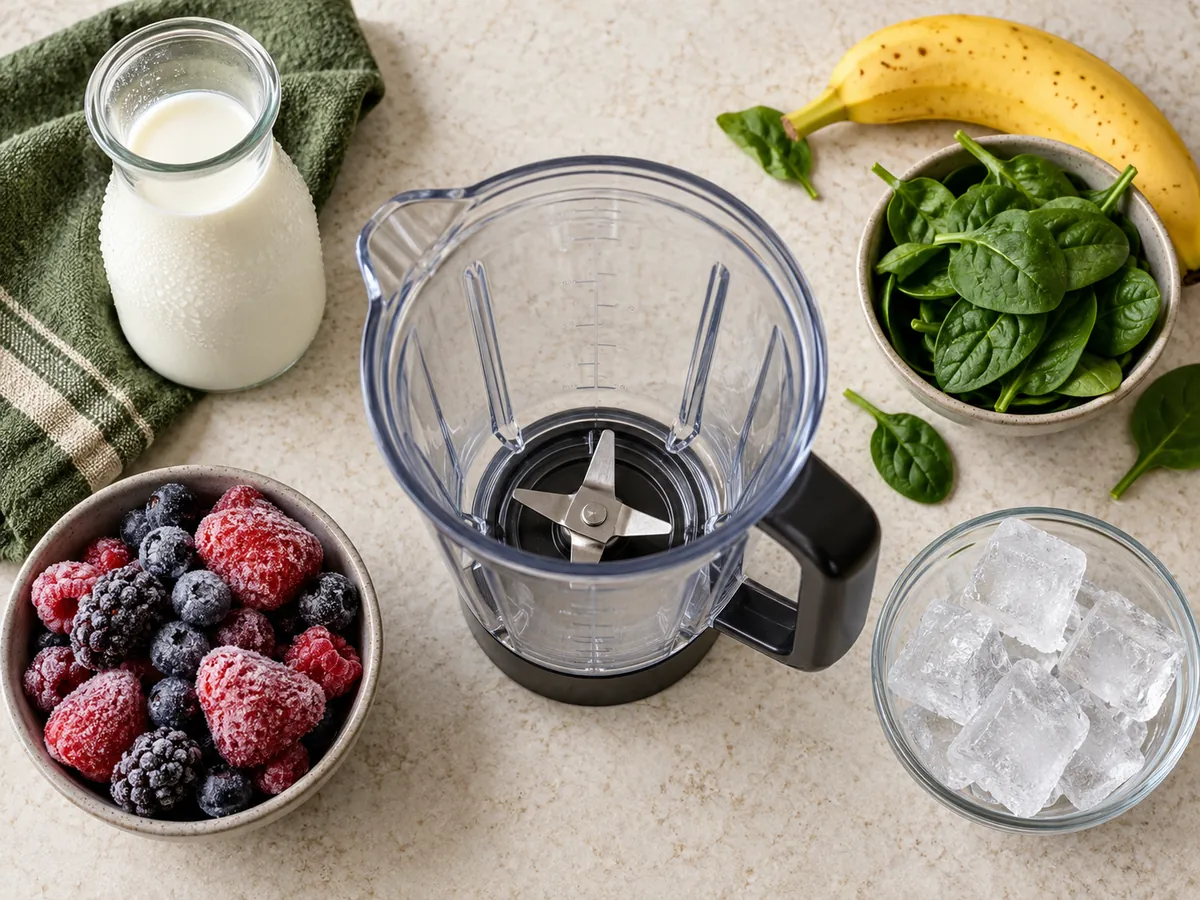
Frozen fruit works well when the drink can accept more thickness.
It also keeps fruit flavor in the mixture, whereas ice keeps changing a drink as it melts and can turn a good first sip into a watery final third.
One frozen banana does not make an entire large batch cold. If most of the fruit, greens, powder, and liquid begin at room temperature, their combined mass determines the starting point.
Ice is still useful when speed matters, but add it deliberately. A few cubes can pull down a mildly warm batch; a jar filled with ice may force a longer, harder blend and trade one source of warmth for another circulation problem.
A stalled vortex turns blending time into heat
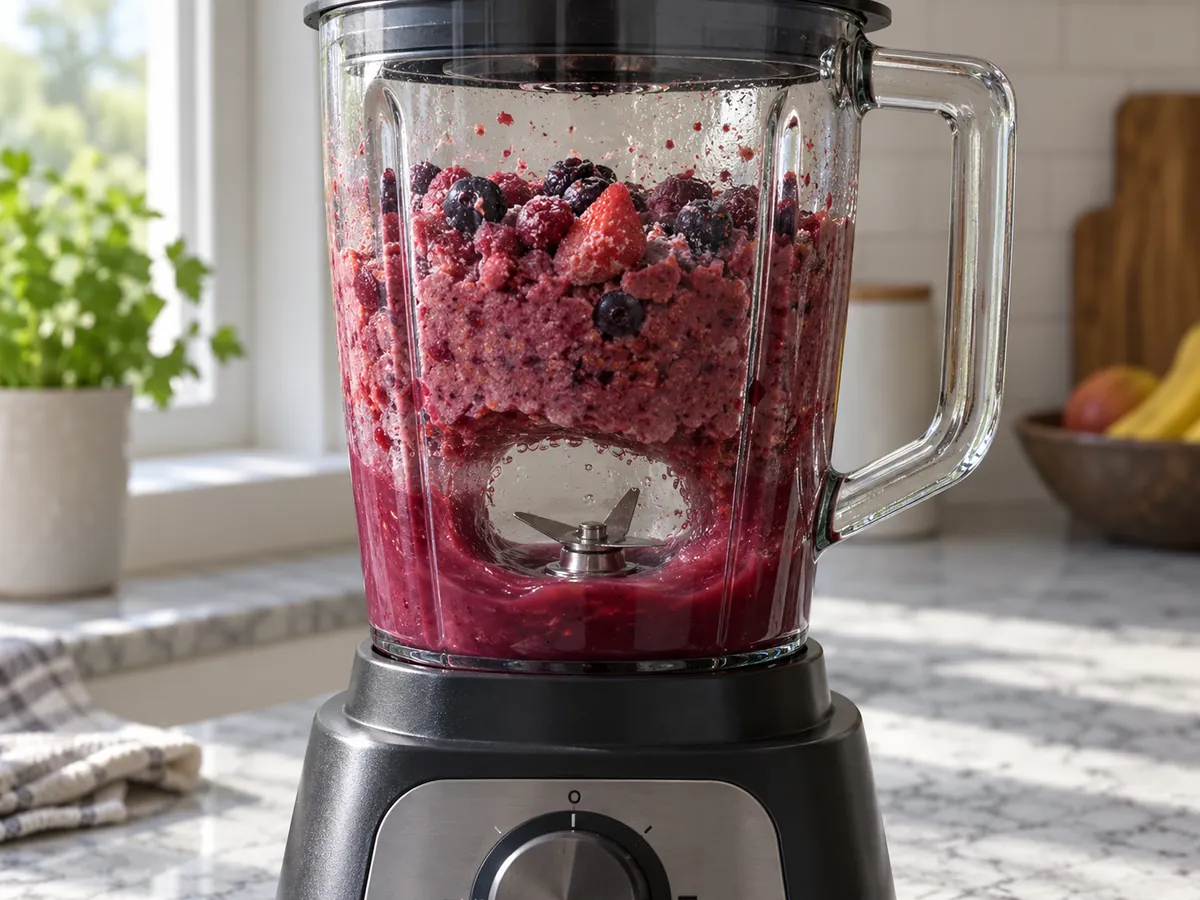
A blender cools nothing when ingredients stop moving. If the lower layer spins while frozen pieces and thick puree sit above it, the motor continues working but only part of the batch repeatedly reaches the blades.
This is often an air pocket around the blade or a mixture too thick to fold downward. Correct loading helps prevent that stalled pocket, although the exact order and any tamper use must follow your blender's design.
- Stop and lookSwitch off the blender and confirm whether the upper layer was actually moving
- Release the air pocketUse the approved tamper with the lid secured, or stir only after the machine is off and unplugged
- Add a little liquidPour a small amount near the blade zone when the mixture cannot fold downward
- Reduce the batchRemove some mixture when the jar is too full for a useful rise-and-fold path
- Restart only to finishBlend until the remaining pieces disappear, then stop
Liquid belongs low in many full-size jar loading orders because it gives the blades something mobile to pull into a vortex. That is also why a protein smoothie can suddenly stall after an extra scoop: some powders bind water and thicken the moving phase.
If the top looks still, pouring in half a cup at once makes the result harder to interpret. A small measured addition preserves the diagnosis, while a large one may restore movement only by turning the recipe into a different drink.
Batch size matters independently of liquid. An overfilled jar leaves little space for ingredients to climb the wall and fall back toward the blades, so dividing the mixture can shorten the total run even though you blend twice.
Cool this batch, then change one thing next time
A smoothie that is only slightly warm is usually salvageable. Your best rescue depends on how much time you have and how much change the texture can tolerate.
A short refrigerator rest in a shallow covered container cools without dilution. Pouring the smoothie over ice works faster and avoids another motor cycle, but the drink will thin as the cubes melt.
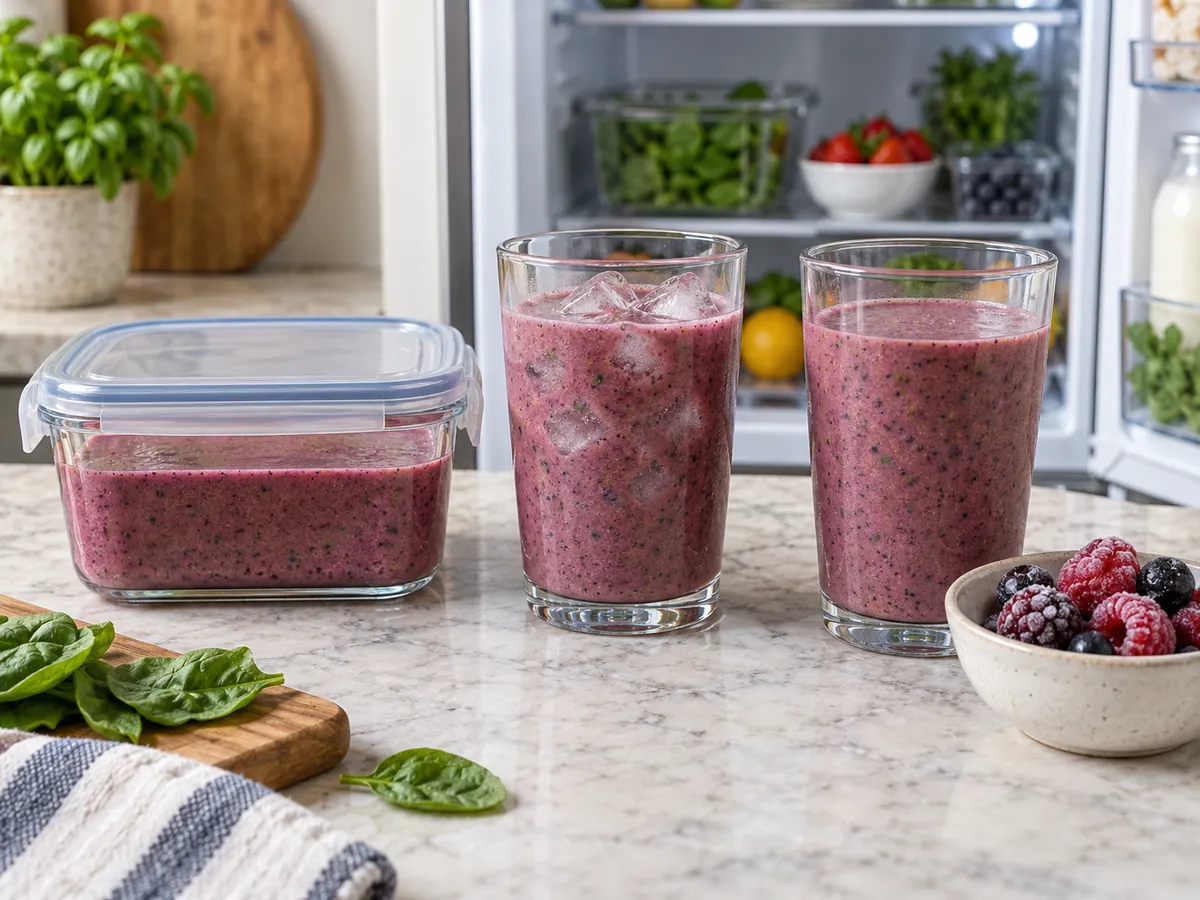
Adding a small amount of frozen fruit cools and restores body, but it also changes the flavor balance. That is a good rescue for a fruit-led drink and a poor one when the current recipe already tastes crowded.
Keeping an already smooth drink on the blades merely to incorporate one or two ice cubes adds more heat. You can crush them separately if your machine and manual permit it, or let them cool the glass while you drink.
Storage is a different question from temperature at serving.
Perishable foods should return to refrigeration promptly, and later chilling does not erase a long period at room temperature.
For the next batch, you will learn more if you hold the recipe and quantity steady. You can then change one useful variable: chill the liquid, replace some fresh fruit with frozen fruit, restore a continuous vortex, or stop as soon as the texture is smooth.
It helps to note whether the vortex stayed continuous and whether the final drink is both colder and still pleasant to sip. A colder smoothie is not an improvement if it became watery, chalky, or full of chunks.
That controlled comparison tells you more than a timer copied from another blender. Once you find the combination that keeps your jar moving and reaches the right texture quickly, the warm-smoothie problem becomes repeatable rather than mysterious.