Juice vs Smoothie
Juice vs Smoothie: What Each One Does With the Fibre
Juicing removes the solid matter and keeps the liquid. Blending keeps everything and breaks it small enough to pour. Axis by axis that one step explains the shopping list, the pulp bin, the thickness and the ingredient list, and on how fast each one goes dull neither has an advantage.
Juice is fruit and vegetables pressed or shredded so the liquid can be separated from the pulp, which is then discarded. A smoothie is the same produce broken down small enough to pour with nothing removed at all. That one step sets the texture, the volume a given board of produce yields, the waste, the machine required, and the fact that a banana can go into one and not the other.
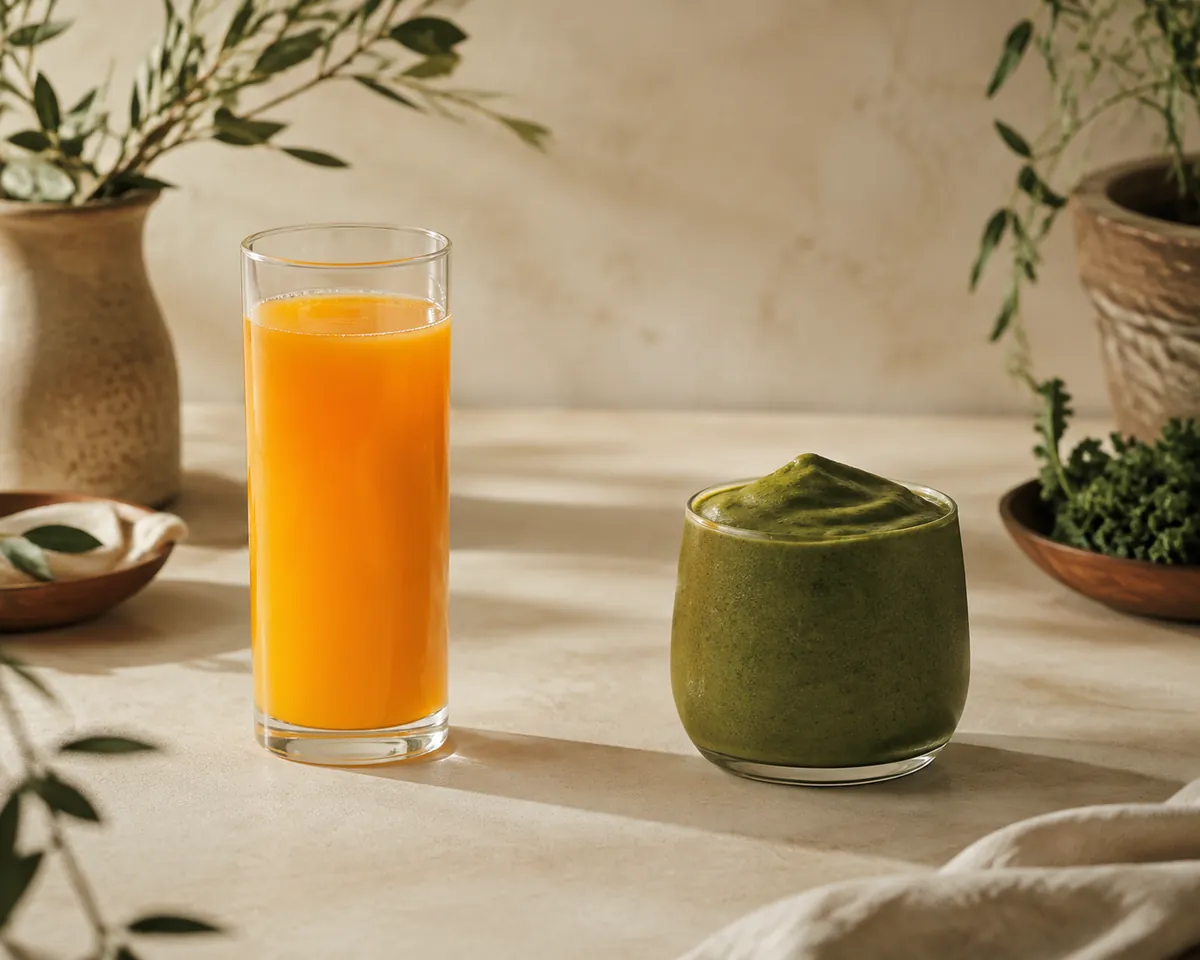
Side by side
| Attribute | Juice | Smoothie |
|---|---|---|
| What happens to the fibre | Removed with the pulp and discarded | All of it stays in the glass |
| Texture | Thin, pourable, often clear | Thick and opaque, adjustable with liquid |
| Physical form | A solution | A suspension |
| Produce needed per glass | A great deal, since most leaves as pulp | Little, since nothing is discarded |
| Waste | A pulp container after every glass | None |
| Works with banana or avocado | No, since neither yields liquid | Yes, and they supply the body |
| Machine | A juicer or a press | A blender, which can also make juice through a cloth |
| Time including cleaning | Ten to fifteen minutes for one glass | Two or three minutes |
| How it fails on standing | Sediment drops and cut surfaces brown | Green fades to khaki as the whipped-in air works |
| Best drunk | Within minutes | Within minutes |
The fibre stays or it goes
One step separates these two drinks and there is no second step worth arguing about. Juicing removes the solid matter and keeps the liquid.
Blending keeps everything and breaks it small enough to pour.
Put the same board of fruit and vegetables in front of a juicer and a blender and you get two glasses that share their ingredients and nothing else. One is a thin liquid you can see through.
The other is a suspension that will hold a spoon upright if the ratio was generous.
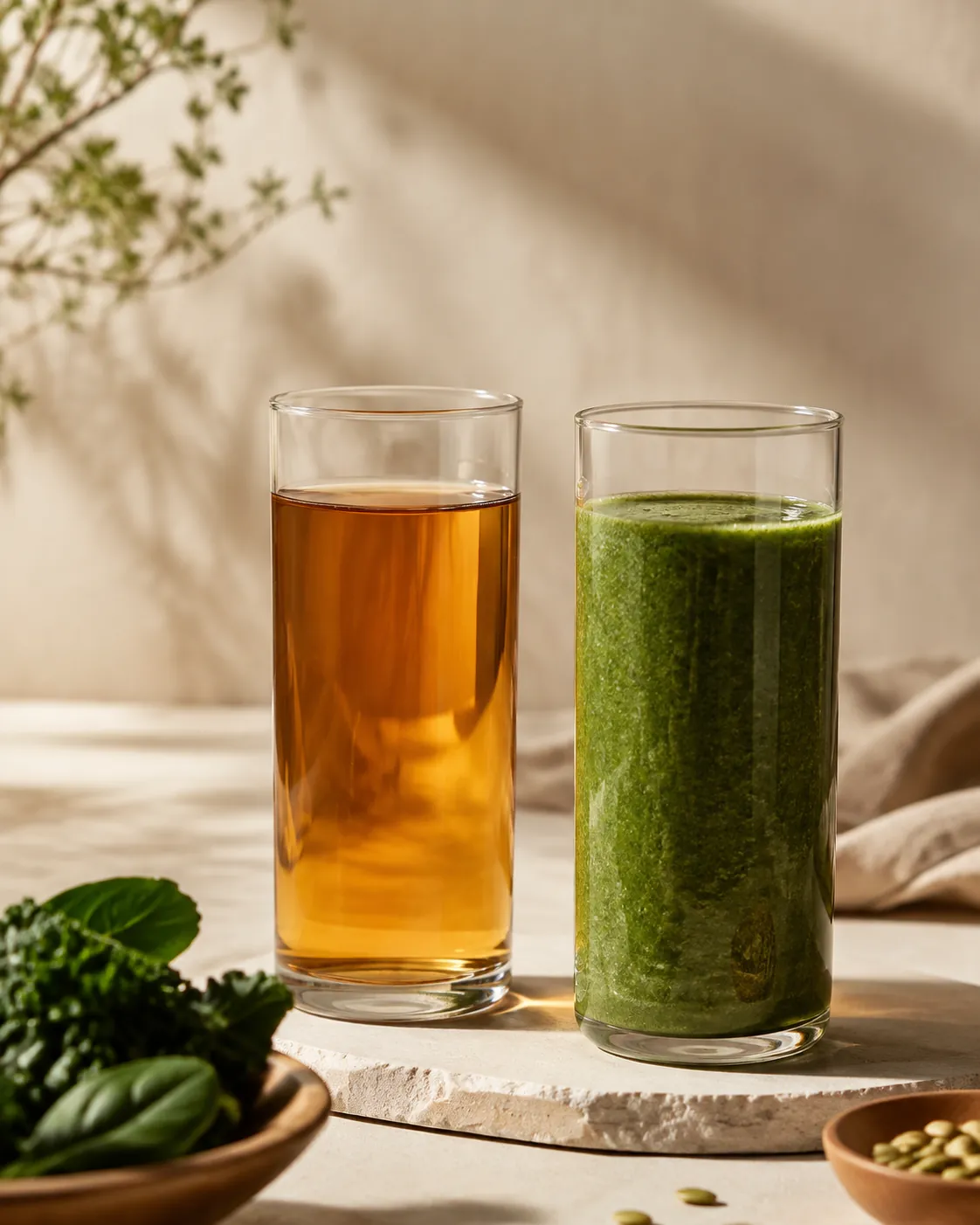
Everything below is downstream of that one decision. Yield, waste, texture, sweetness, colour, keeping, equipment and cost all follow from whether the pulp went into the glass or into a bin, and nothing else about either process matters nearly as much.
| Juice | Smoothie | |
|---|---|---|
| The fibre | Removed with the pulp | All of it stays in |
| Texture | Thin, and often clear | Thick, and opaque by construction |
| Volume from a given board | Low, since most of it is discarded | High, since nothing is |
| Waste | Substantial pulp | None |
| What it can be made from | Only produce that yields liquid | Anything a blade will break down |
| Equipment | A juicer or a press | A blender |
Neither is a better version of the other. They are two different drinks made from the same shopping, and the choice between them is decided by what is on the board and what is in the cupboard.
How much produce each glass takes
This is where the gap is widest, and it is a matter of arithmetic rather than of taste.
A glass of juice takes a great deal of produce, because most of what goes into a juicer leaves as dry pulp. The detail, including the yields of individual vegetables and what a daily glass costs in shopping, is set out under green juice, which is the hardest case in the category.
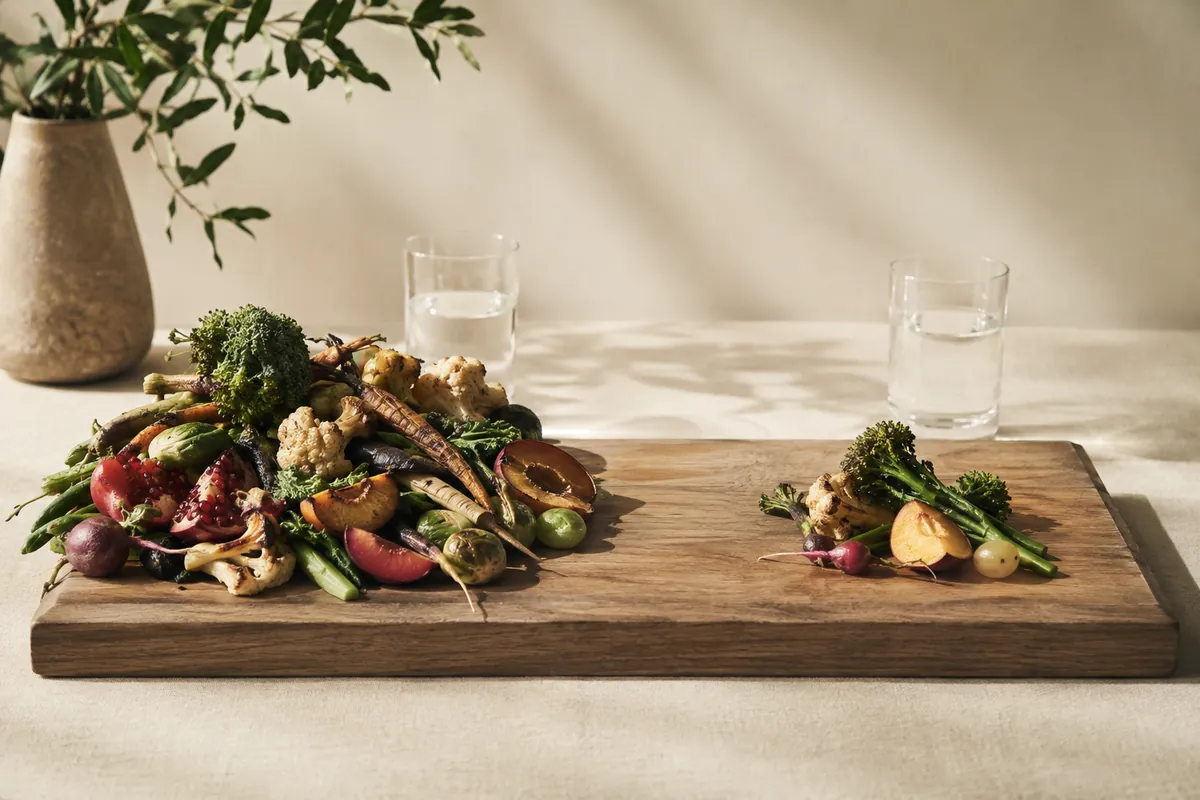
A glass of blended drink takes far less, because nothing is thrown away. Two handfuls of leaves and a banana give a full green smoothie, and the same two handfuls would barely register in a juicer.
How far a given quantity of produce goes
- Blended, with liquid addedEverything reaches the glass, and the liquid extends it further
- Blended, no added liquidEverything reaches the glass, thick and small in volume
- Juiced, watery produceCucumber and citrus give up most of their weight as liquid
- Juiced, firm produceApple and carrot give a fair yield and a wet pulp
- Juiced, leavesThe worst case by a wide margin, which is why recipes hide it
The shopping list is the honest difference between these two habits, and it is why a blender stays on the counter in more kitchens than a juicer does. Neither machine changes the produce, and only one of them asks you to buy several times as much of it.
Which fruits and vegetables suit each
Not every ingredient can go both ways, and the list of things that refuse one route is longer than most people expect.
Juicing needs something that will give up liquid under pressure. Cucumber, celery, apple, citrus, carrot and pineapple all do, and the drink is built on those whatever else goes in for flavour.
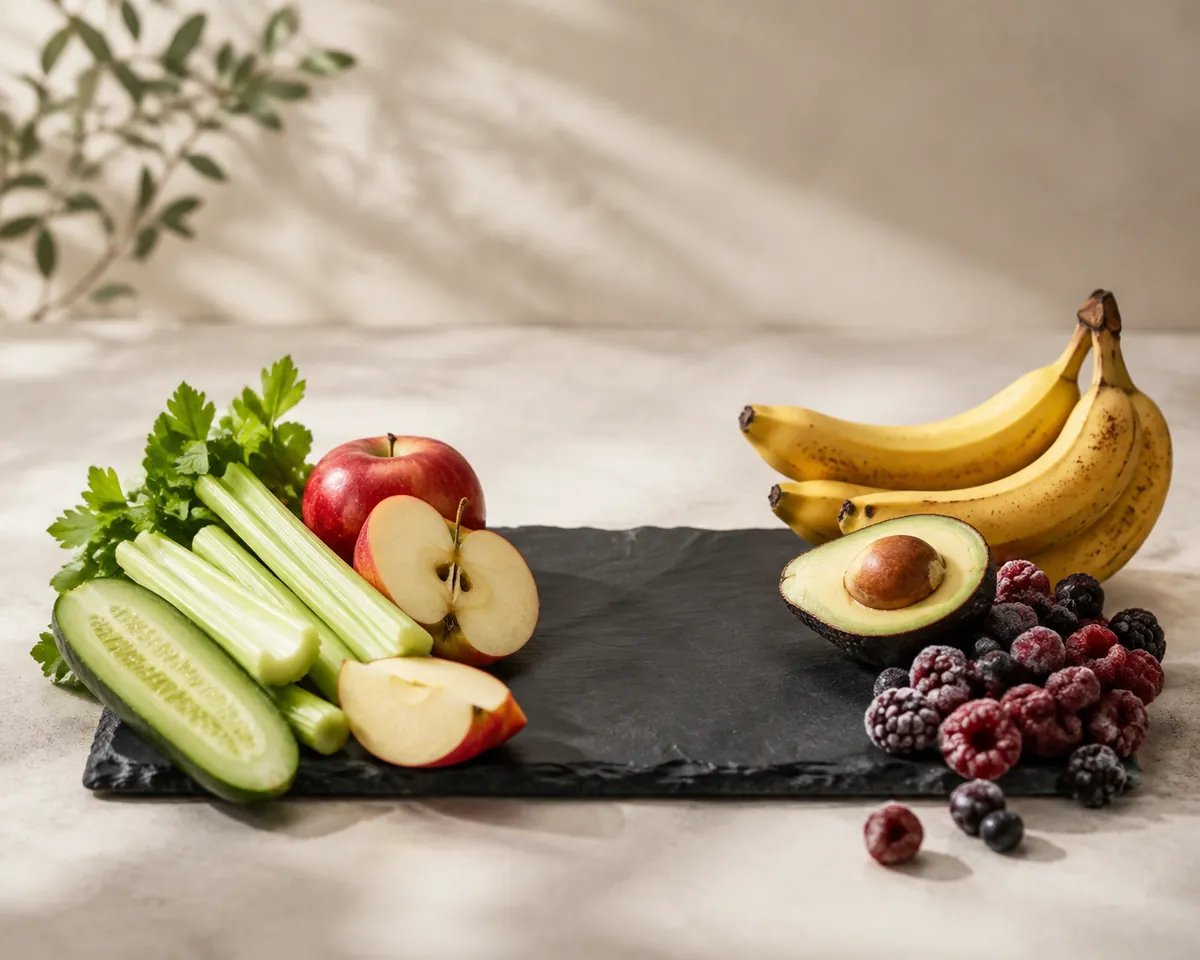
Blending needs nothing of the kind. Banana, avocado, mango and frozen berries carry very little free liquid and behave beautifully in a jug, and a banana in a juicer produces a smear on the auger and almost nothing in the glass.
Cucumber and celery
Juice well, and blend into something watery and thin
Citrus
Juices cleanly, and blending the whole segment brings pith and bitterness
Banana and avocado
Blend only. There is no juice in either to extract
Frozen berries
Blend only, and they chill the drink as they go
That asymmetry is worth stating plainly because it decides recipes before anyone has thought about flavour. A smoothie can contain anything a blade will break down, and a juice can only contain what was willing to give up its liquid.
Why one is thin and the other can stand a spoon up
Texture is the difference people notice first, and the two drinks arrive at it by different physics.
Juice is a solution. Sugars, acids and dissolved colour are in the water and the solids have gone, so it pours like water, it sits clear or lightly cloudy, and nothing in it will settle out except a fine sediment.
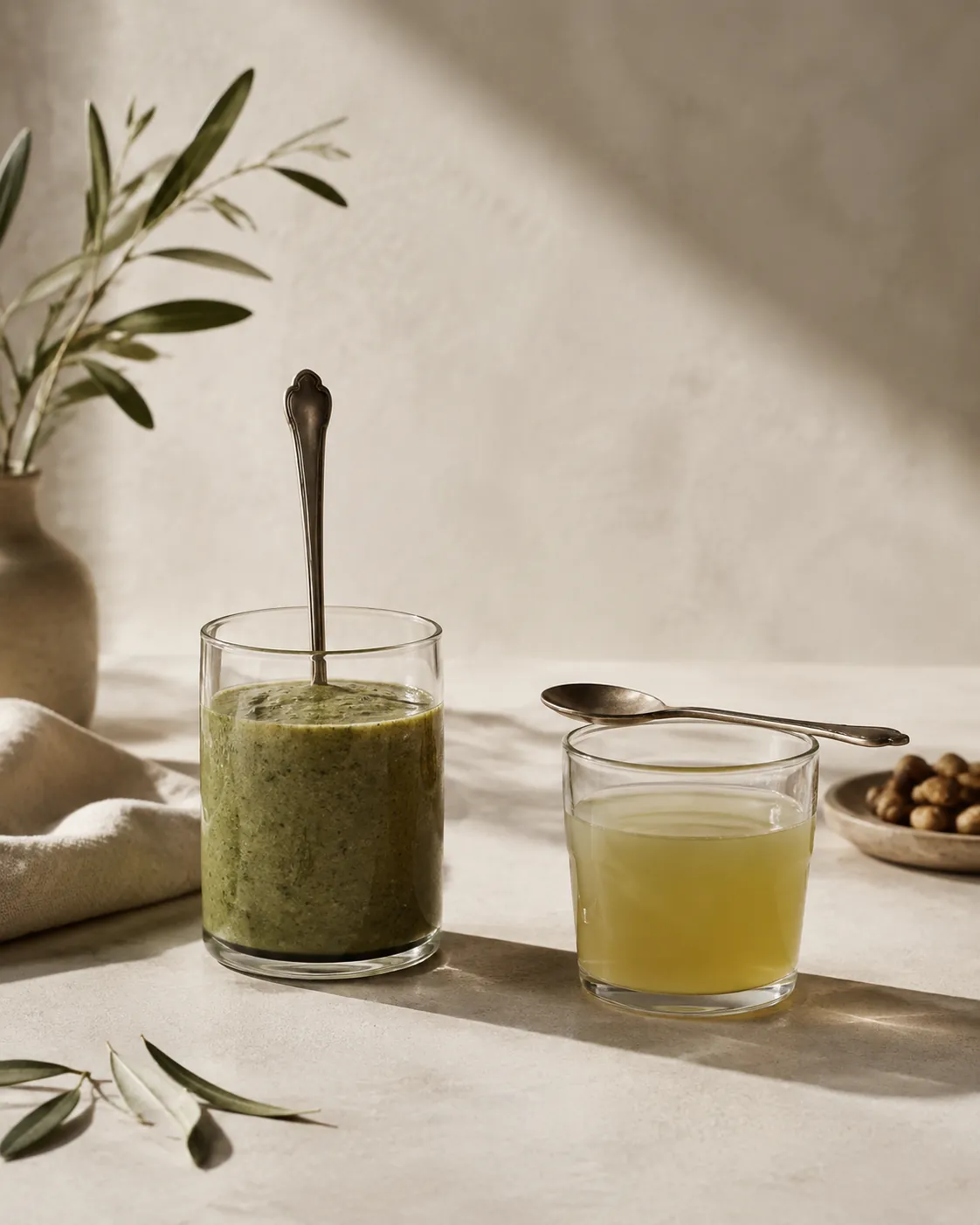
A smoothie is a suspension. Particles of fruit and leaf are held in the liquid rather than dissolved in it, and how small those particles are is entirely a matter of the blade, the speed and the time.
What the blender is actually doing
- ChopLarge pieces are broken down first, and the jug sounds rough
- SuspendThe mixture starts to circulate rather than jumping around the blade
- RefineParticle size falls, and grittiness gives way to smoothness
- AerateAir is worked in, which lightens the colour and the body
- Over-blendHeat from the motor warms the drink, and it thins and dulls
Under-blending is the commonest fault in a smoothie and it has no equivalent on the other side. Thirty more seconds fixes a gritty glass, whereas nothing added to a juice will thicken it, since the material that would have done so was removed on purpose.
What each glass does to the sweetness
Same fruit, two glasses, and the sweetness reads very differently, which is worth setting out carefully because the reason is arithmetic rather than anything mysterious.
A 250 ml glass of juice holds the liquid of a great deal of fruit. Nothing was discarded except the solids, so the sugars from all of that fruit are concentrated into a small volume, and the drink reads intensely sweet as a result.
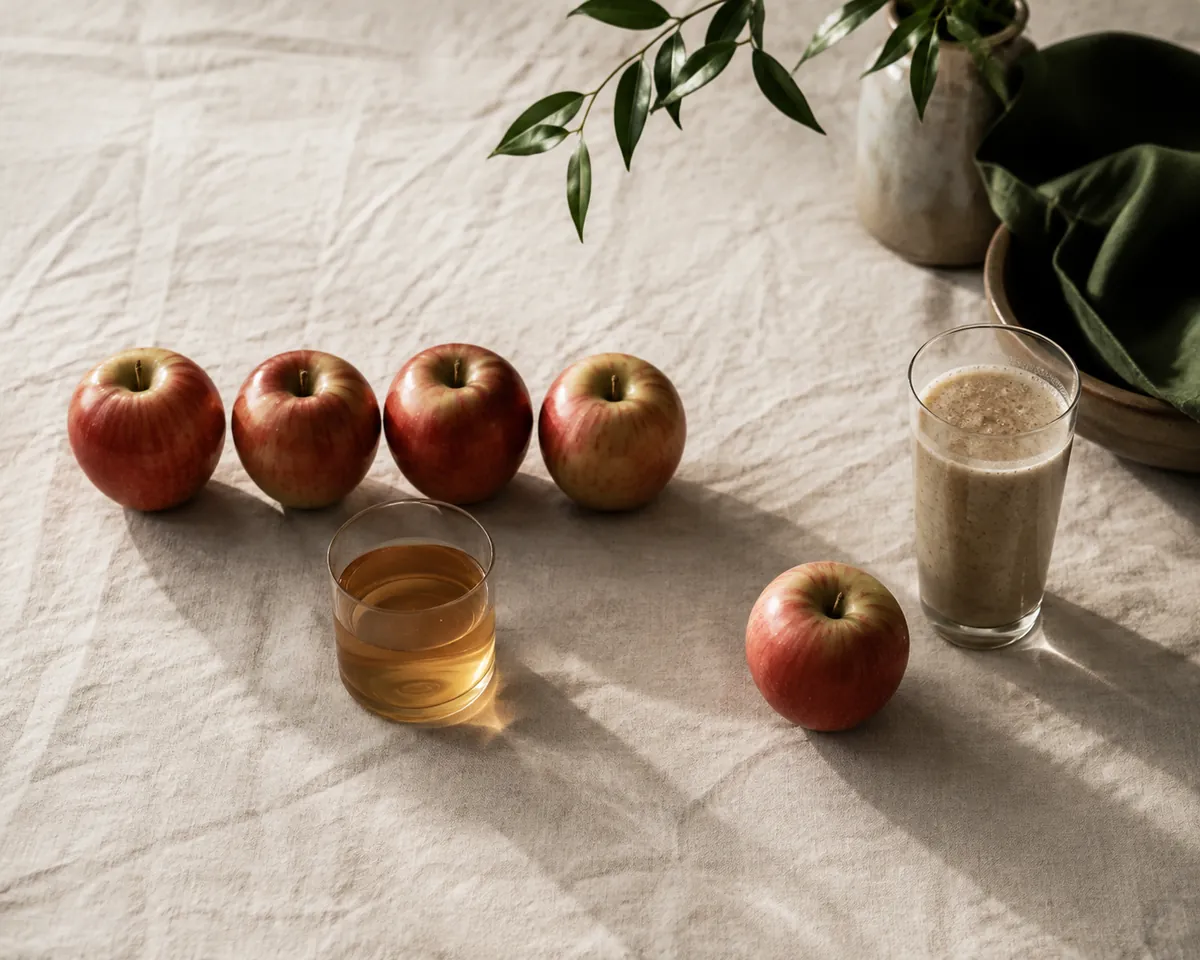
A 250 ml smoothie holds far less fruit and usually some added water. The solids take up volume the juice does not carry, so the same glass is built from a fraction of the produce and tastes less concentrated even when it tastes sweeter.
Both drinks can be pushed too sweet and both are usually pushed there by the same two habits: too much fruit and a sweet liquid. Using orange juice as the liquid in a smoothie is the classic version, and topping a vegetable juice with apple until it stops tasting of vegetables is the other.
Water or coconut water leaves the fruit to do the work on its own.
Both go dull, and for different reasons
Neither drink keeps well, and the two mechanisms behind that are different enough to change what you do about it.
Juice separates and browns. The fine sediment drops out within minutes, so the glass wants a stir, and cut fruit surfaces oxidise in the machine, which is why a centrifugal juice dulls faster than a slowly pressed one.
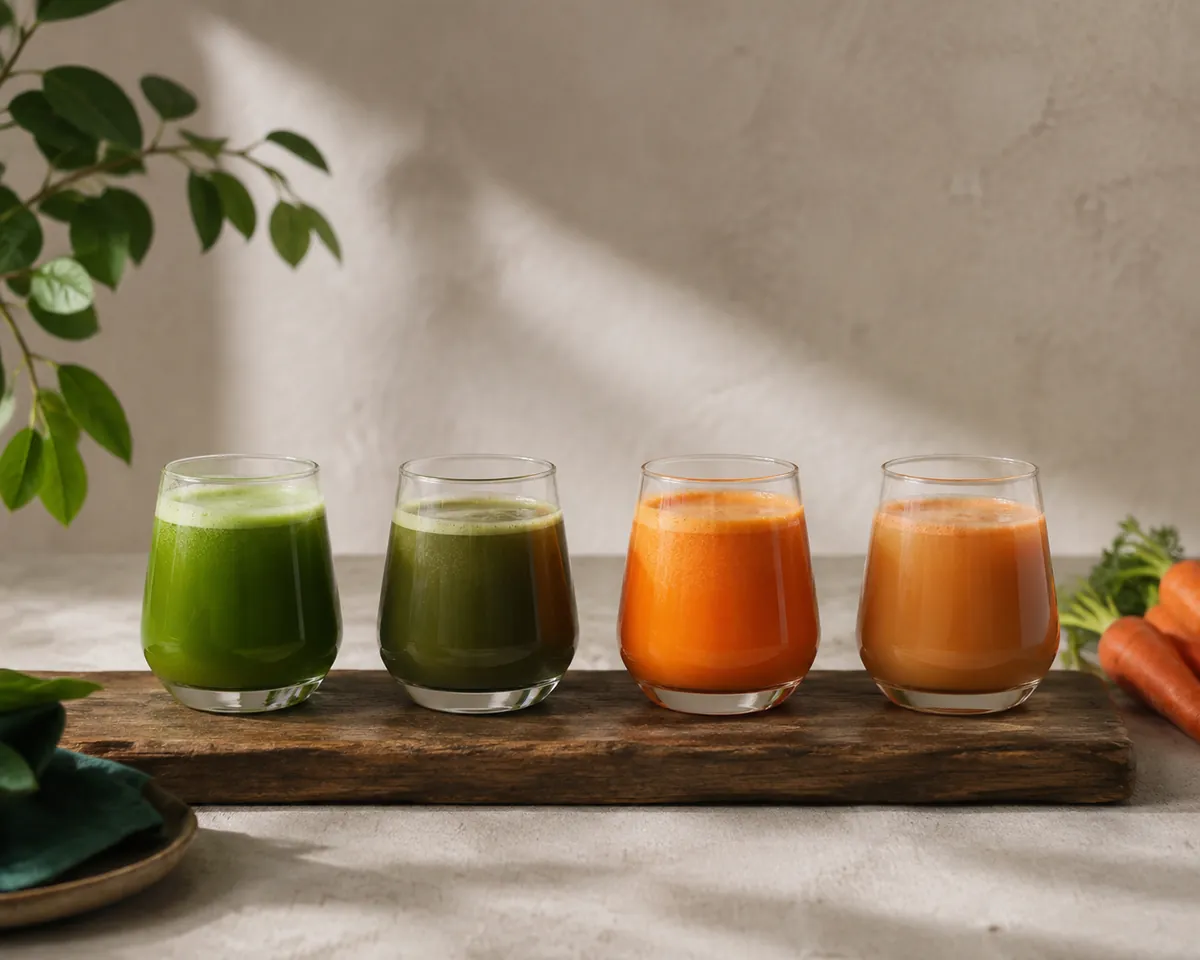
A smoothie goes khaki. Blending drives a lot of air into the mixture, and green pigment fades towards olive within an hour or two, which is cosmetic rather than a sign that anything has gone wrong.
| Change | Juice | Smoothie |
|---|---|---|
| Separation | Sediment drops within minutes | Very little, since the fibre holds it |
| Colour | Browns at cut surfaces and on the top | Fades from bright green to khaki |
| Cause | Oxidation, worst in a fast machine | Air whipped in during blending |
| Speed | Visible in twenty minutes | Visible within the hour |
| What slows it | Cold, a lid, and a slower press | Cold, a squeeze of lemon, and a full jug |
| The fix | Drink it soon | Drink it soon |
The honest advice is identical on both sides, which makes this one of the axes where neither drink has an advantage. Both are at their best within a few minutes of being made, and both are worth making in the quantity you will actually finish.
The waste runs one way only
Empty a juicer and you are holding most of the shopping. Empty a blender and you are holding a jug that needs rinsing.
Juicing produces a pulp container of dry shredded fibre after every glass, and there is very little to be done with it. It is dry, it has lost most of its flavour to the juice, and the usual suggestions for using it are worth less than the effort of following them.
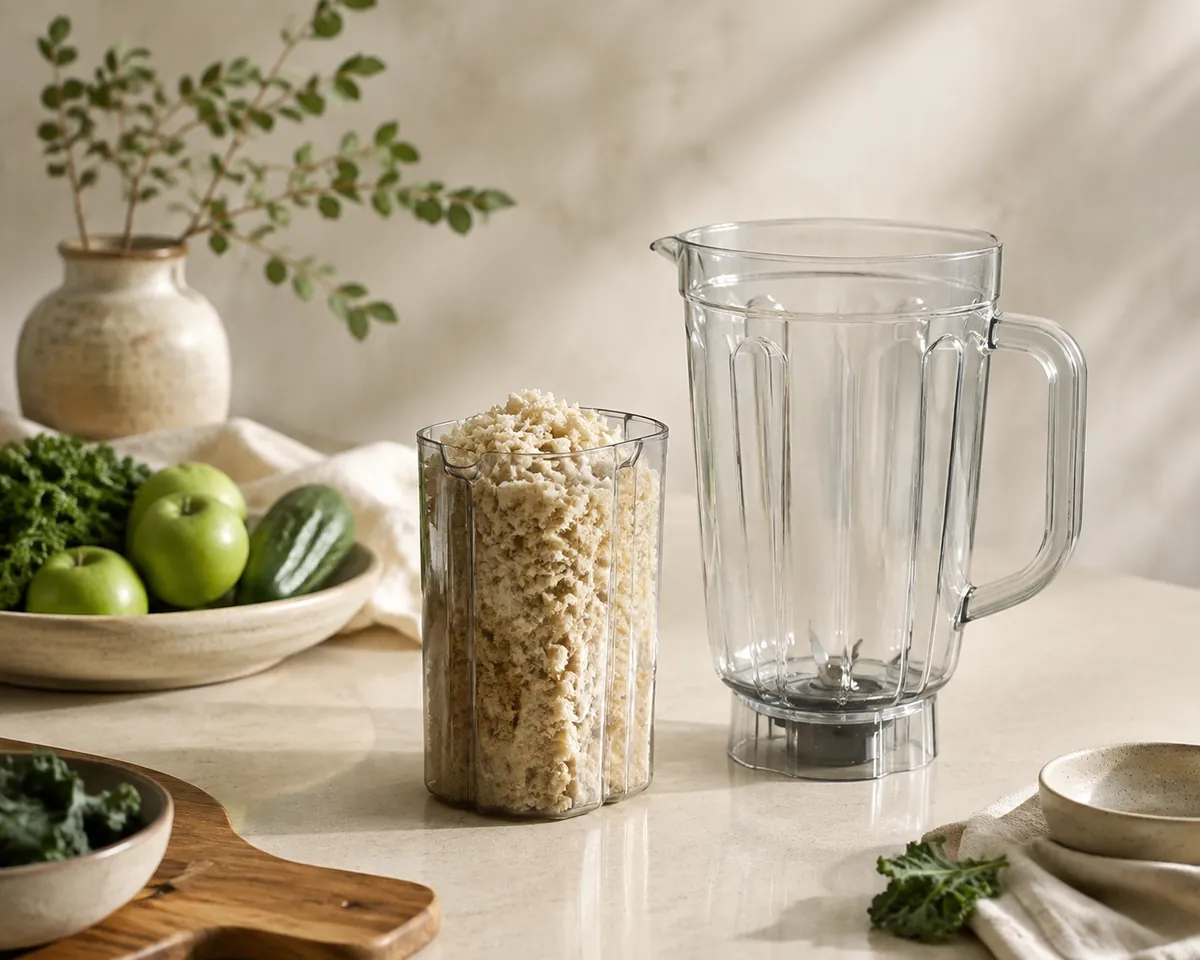
Blending produces nothing at all.
Every gram bought reaches the glass, which for anyone who has emptied a pulp container every morning is the argument that quietly decides the whole question.
- Juice leaves roughly the majority of the produce weight behind as pulp.
- Smoothies leave nothing, so the shopping and the drink are the same quantity.
- Juicer pulp is dry and largely flavourless, since the flavour went into the glass.
- Composting it is the realistic answer, where that is available.
- A juicer takes several minutes to strip down and wash after each use.
- A blender jug rinses in seconds if it is done before the drink is finished.
Cleaning belongs in the same accounting and it is not a small item. The washing up is part of the recipe on the juice side, and it is the single reason most home juicers end up in a cupboard within a year.
Which machine each one needs
A blender can make both drinks. A juicer can make only one, and that asymmetry decides what to buy far more cleanly than any comparison of models does.
Blend in a jug blender and strain through a cloth and you have juice, made slowly and with a fair yield on soft produce. It is messy and it is limited, and it works, which is why it is the standard advice for anyone unwilling to commit to a second machine.
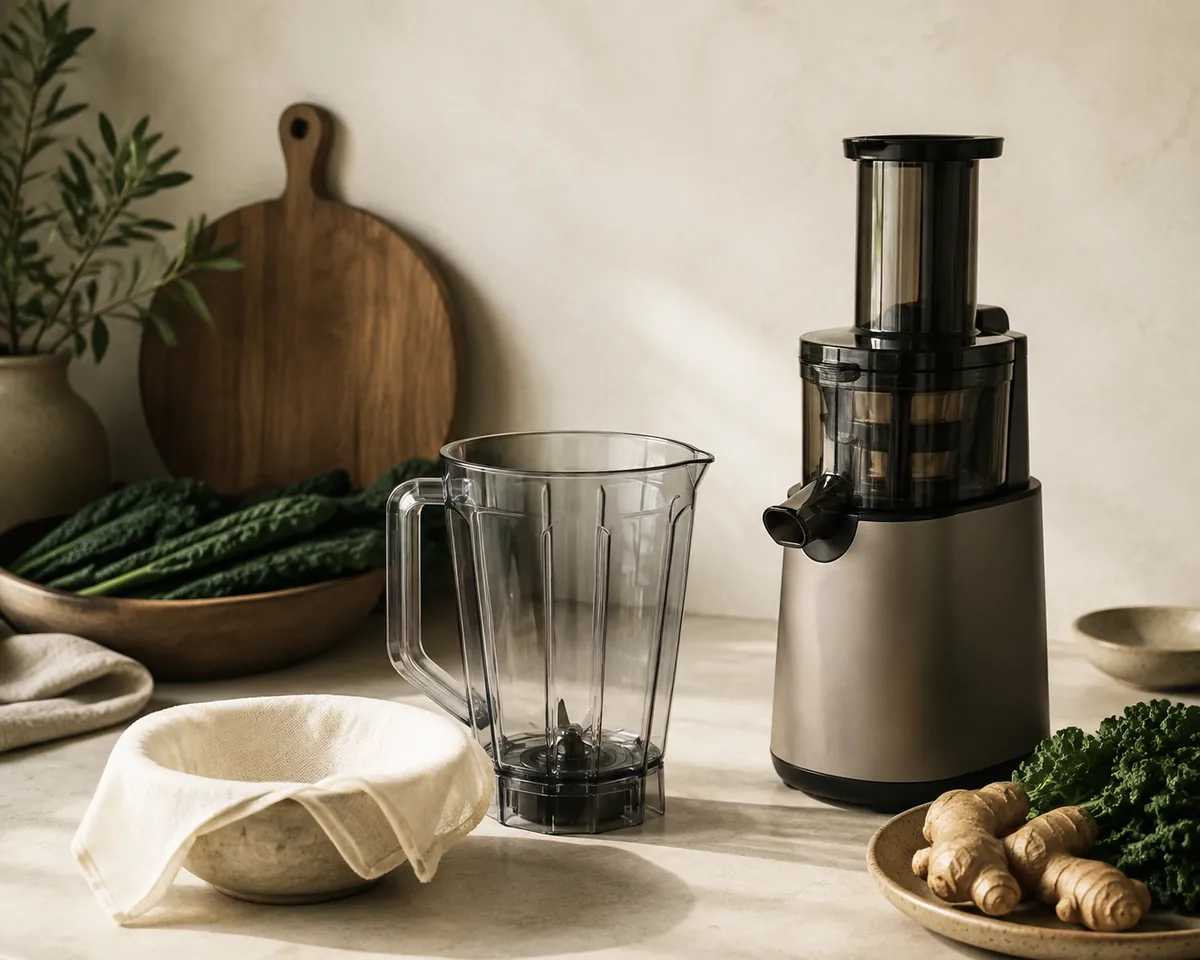
No juicer will ever make a smoothie. There is no strainer to remove and no setting to change, since the machine is built around separating solids from liquid, and taking the pulp out is the whole of what it does.
Blender alone
Makes smoothies well and juice slowly, through a cloth
Juicer alone
Makes juice well and smoothies not at all
Which to buy first
The blender, unless juice is the specific goal
Cleaning burden
A jug against a stack of parts with a mesh screen
The second machine only earns its place if you want juice specifically. Anyone who mostly wants fruit and vegetables in a glass has already bought the right appliance, and the cloth-and-blender route covers the occasional glass of juice well enough to defer the decision indefinitely.
How long each keeps, and what the shop does about it
Both are fresh drinks with short windows, and the commercial versions solve that in ways that change what is in the bottle.
Fresh juice is at its best within twenty minutes and drinkable for a day if it is kept cold and sealed. Shop-bought juice is either pasteurised, which changes the flavour towards cooked, or treated under high pressure, which keeps more of the fresh character and costs more.
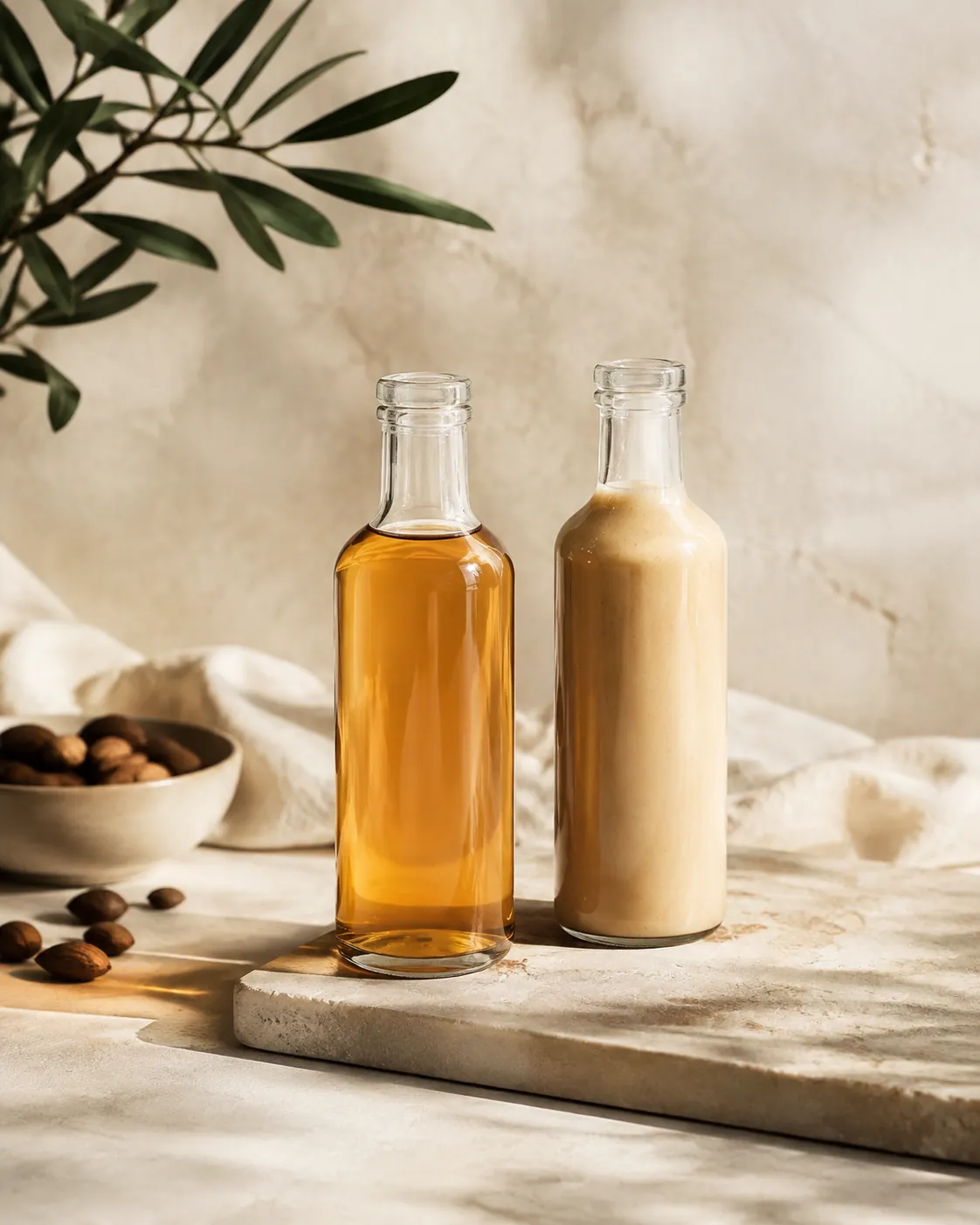
Fresh smoothies hold their texture longer than their colour. Separation is slow because the fibre suspends the solids, so a bottle from yesterday looks worse than it tastes, and the reverse is true of juice.
How long each holds up once made
- Pasteurised bottled juiceMonths unopened, with a cooked note in exchange
- Pressure-treated bottled juiceWeeks refrigerated, and closer to fresh
- Bottled smoothieDays to weeks, depending on the treatment
- Home smoothie, sealed and coldA day, and khaki by then
- Home juice, sealed and coldA day at a push, and dull well before that
- Either, on the counterMinutes at their best
Freezing works on one side and not the other. Frozen fruit blended straight from the bag makes a better smoothie than fresh fruit does, which is the trick behind keeping a smoothie habit going, and frozen and thawed juice separates and tastes flat.
Where the two are the same drink
Several of the things people expect to separate these glasses do not separate them at all, and the pair reads more honestly once those are set aside.
Both are made from fruit and vegetables and both can be built badly. A juice made mostly of apple and a smoothie made mostly of banana are both sweet drinks with a vegetable in them somewhere, whatever the colour suggests.
Both cost more than the produce when bought ready-made, and for the same two reasons: short shelf life and the handling that comes with it.
Made from
Fruit and vegetables, in both cases
Best fresh
Decisively, on both sides
Can be too sweet
Yes, and usually for the same two reasons
Bought cost
Several times the produce, either way
Which is better
A question about texture and shopping, not about the drinks
What either is for
Outside what is described here, on both sides
The sweetener question is a draw as well. A spoon of honey or cane sugar does the same thing in both glasses, as does a knob of ginger, and the fruit was already the sweetener in almost every recipe worth making.
Which to make, and what each is good at
Two questions settle this at the counter, and neither of them is about which drink is better.
Ask what is on the board. If it is bananas, avocado, frozen berries or a bag of leaves, the blender is the only machine that will do anything useful with it.
If it is cucumber, celery, citrus and apple, either route works and they give genuinely different drinks.
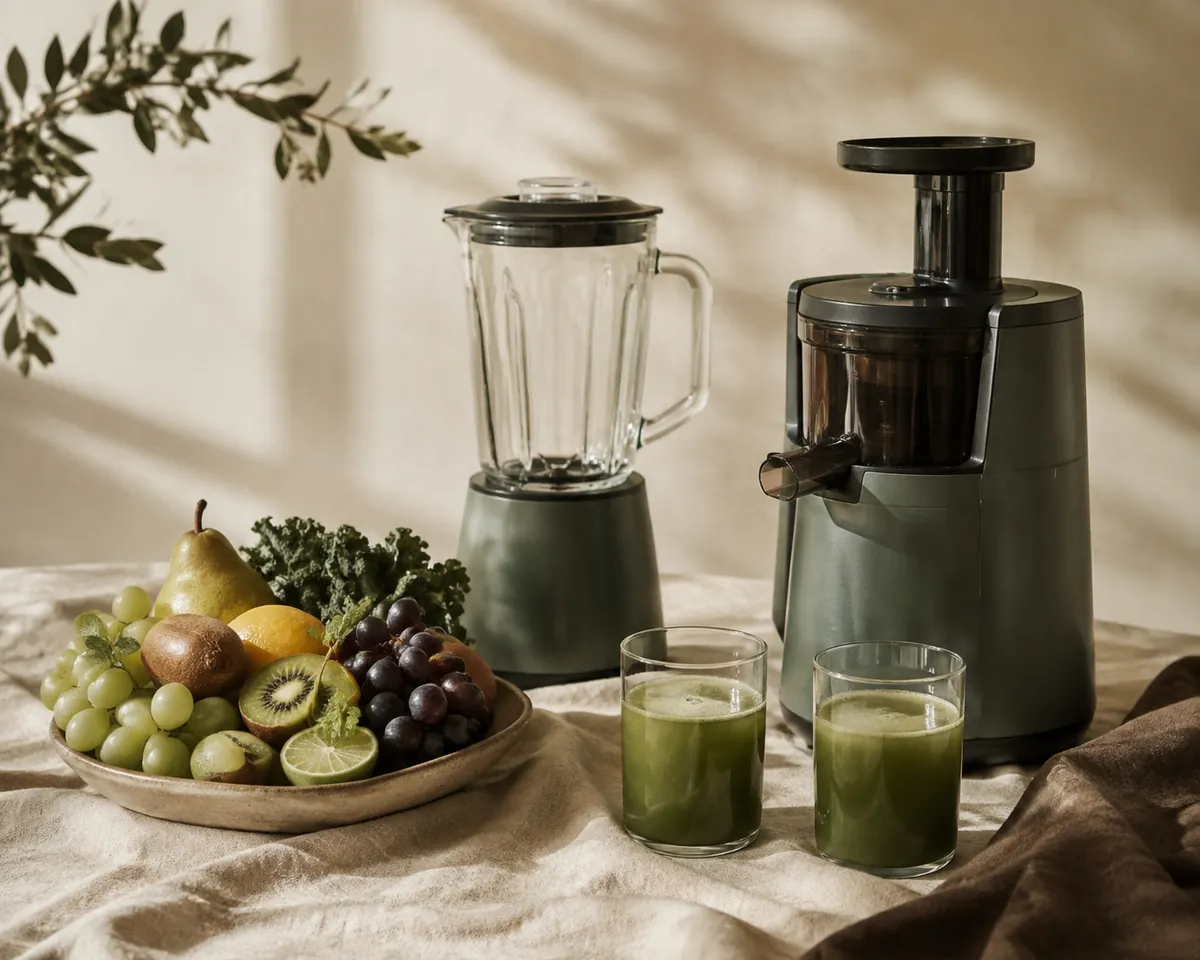
Ask second how much shopping and washing up you are willing to do. That question decides more juice habits than flavour ever has, and answering it honestly at the start saves a machine from a cupboard.
| Question | Juice | Smoothie |
|---|---|---|
| Works with banana or avocado | No | Yes |
| Produce needed per glass | A great deal | Little |
| Waste | A container of pulp each time | None |
| Time from board to glass | Ten to fifteen minutes with cleaning | Two or three minutes |
| Texture | Thin and pourable | Thick, and adjustable with liquid |
| Keeps until tomorrow | Poorly | Poorly, and it looks worse than it tastes |
Whichever way it goes, the drinks either side of this pair follow the same rule. A berry smoothie and a protein smoothie sit on the blending side with everything kept in, cold-pressed juice and celery juice sit on the other with the pulp discarded, and a smoothie bowl is only a smoothie with less liquid in it.
Common questions
What is the difference between a juice and a smoothie?
Juicing separates the liquid from the solid matter and discards the pulp, while blending keeps everything and breaks it small enough to pour. That single step decides the rest: juice is thin and often clear, a smoothie is a thick suspension, and the same board of produce yields far more glasses one way than the other.
Can a blender make juice, and can a juicer make a smoothie?
A blender can make juice if the result is strained through a cloth, slowly and with a fair yield on soft produce. A juicer cannot make a smoothie at all, since the machine is built around separating solids from liquid and there is no setting that keeps the pulp in. That asymmetry is why the blender is the first machine to buy.
Why can bananas be blended but not juiced?
Juicing needs produce that gives up liquid under pressure, and a banana holds almost none in free form. In a juicer it produces a smear on the auger and very little in the glass, while in a blender it contributes sweetness and body. Avocado, mango and frozen berries behave the same way.