What Is a Smoothie Bowl? A Drink Built to a Texture Target
A smoothie bowl is defined by a texture target: thick enough to hold a topping on its surface. That target works directly against the blender, which needs liquid to circulate at all.
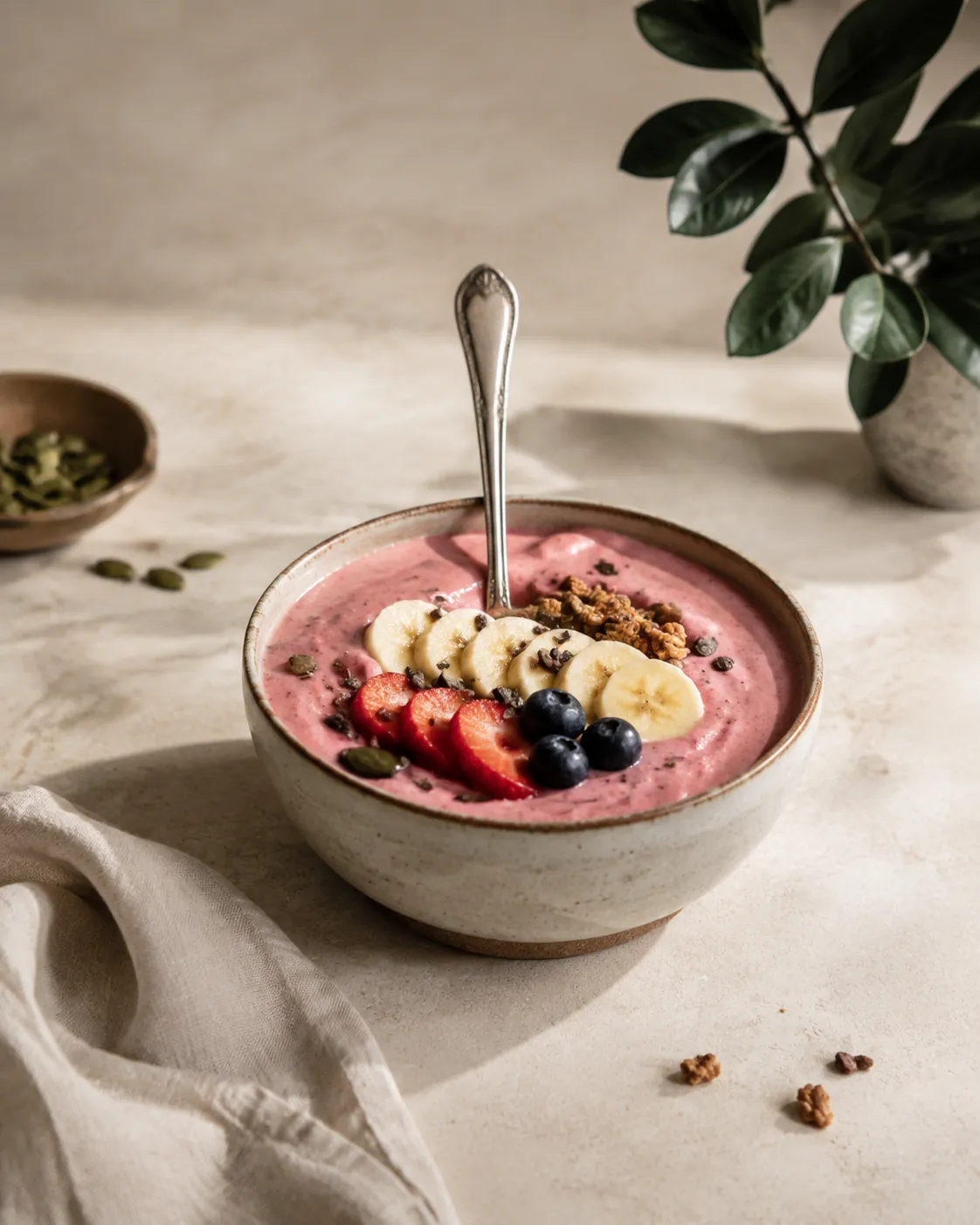
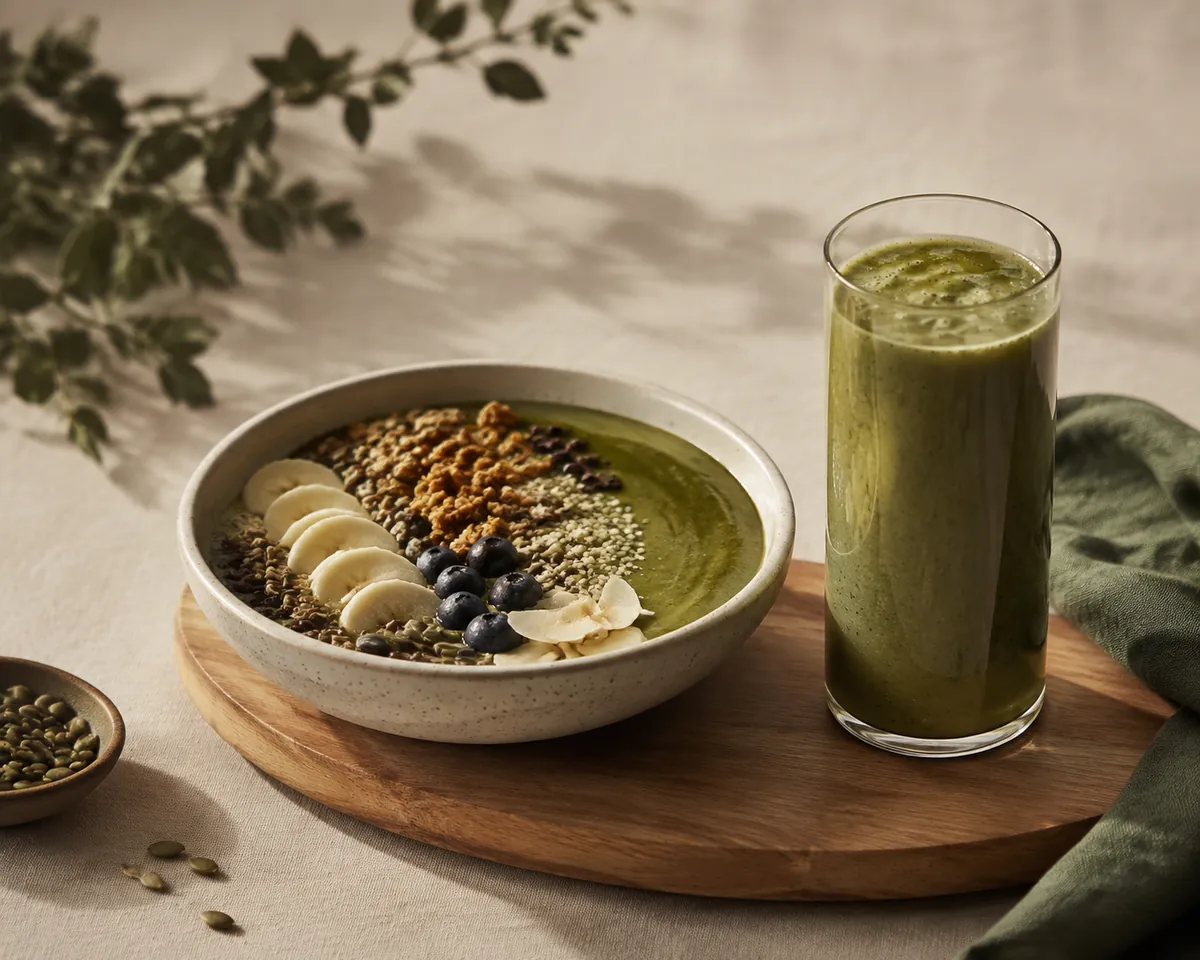
A smoothie bowl is a smoothie made thick enough to eat with a spoon, served in a bowl and scattered with toppings that sit on the surface instead of sinking.
That description contains the entire difficulty. The bowl is defined by a texture target, and the target works directly against the machine making it, because a blender needs liquid to circulate and a bowl needs as little liquid as possible.
Everything below is about managing that tension: how thick is thick enough, how little liquid you can get away with, and what to do when the blender stops.
Smoothie bowl at a glance
- What it is
- A smoothie thick enough to hold a topping
- Texture test
- A spoon stands up, or a drawn line holds its edge
- Base
- Mostly frozen fruit, very little liquid
- Workhorse ingredient
- Frozen banana
- Main failure
- The blender stalls, or the bowl is too thin
- Eating window
- Ten minutes before it slumps
What makes it a bowl rather than a glass
The difference is not the vessel. Pour an ordinary smoothie into a bowl and you have soup, and the toppings sink to the bottom within seconds.
What separates the two is viscosity. A drinkable smoothie pours; a bowl holds a shape, takes the mark of a spoon, and supports a spoonful of granola on its surface without swallowing it.
Getting there means shifting the ratio hard towards frozen solids and away from liquid, usually to somewhere around four parts frozen fruit to one part liquid by volume. An ordinary berry smoothie runs closer to two to one.
Nothing else changes. The ingredients are the same, the machine is the same, and the only variable that matters is how much liquid went in.
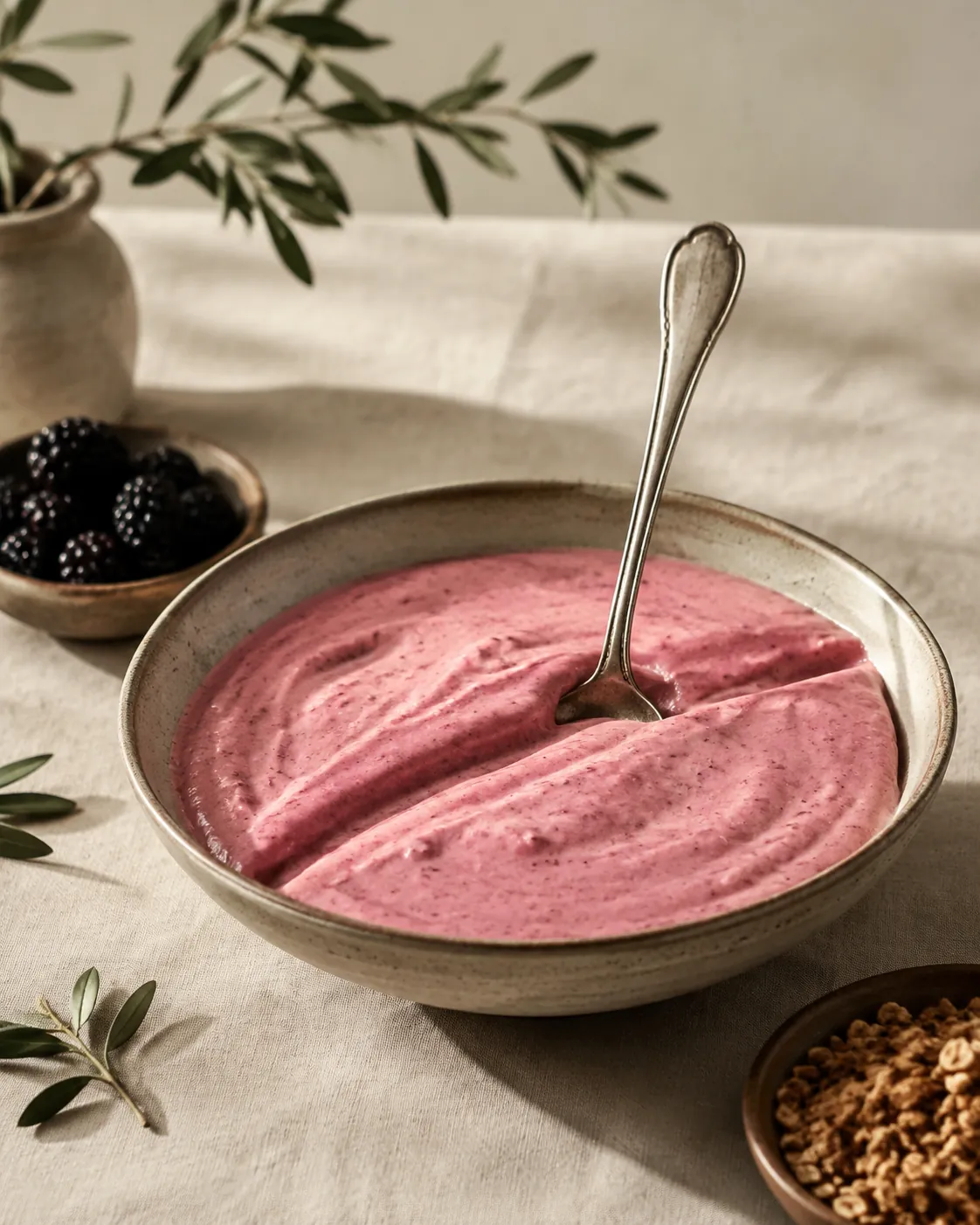
The texture target, and how to test it
Two tests settle it, and both take a second at the blender rather than at the table.
The spoon test is the simpler. Push a spoon in upright and let go: if it stays standing, the base is thick enough for any topping.
If it leans slowly, it will hold light toppings only.
The line test is more precise. Draw the back of a spoon across the surface and watch the groove.
A groove that stays open is a bowl; one that closes within a second or two is a thick drink.
Consistency, thickest first
- Spoon stands unsupportedHolds anything, including fresh fruit
- Groove holds for several secondsThe reliable working target
- Groove closes slowlyLight toppings only, eat promptly
- Pours thickly from the jarA drink in a bowl
- Pours freelyAn ordinary smoothie
Test it in the jar rather than in the bowl. Once it is plated the fix means going back to the blender, and reblending a bowl that has begun to warm rarely recovers the texture.
The tension: thick enough to hold, thin enough to blend
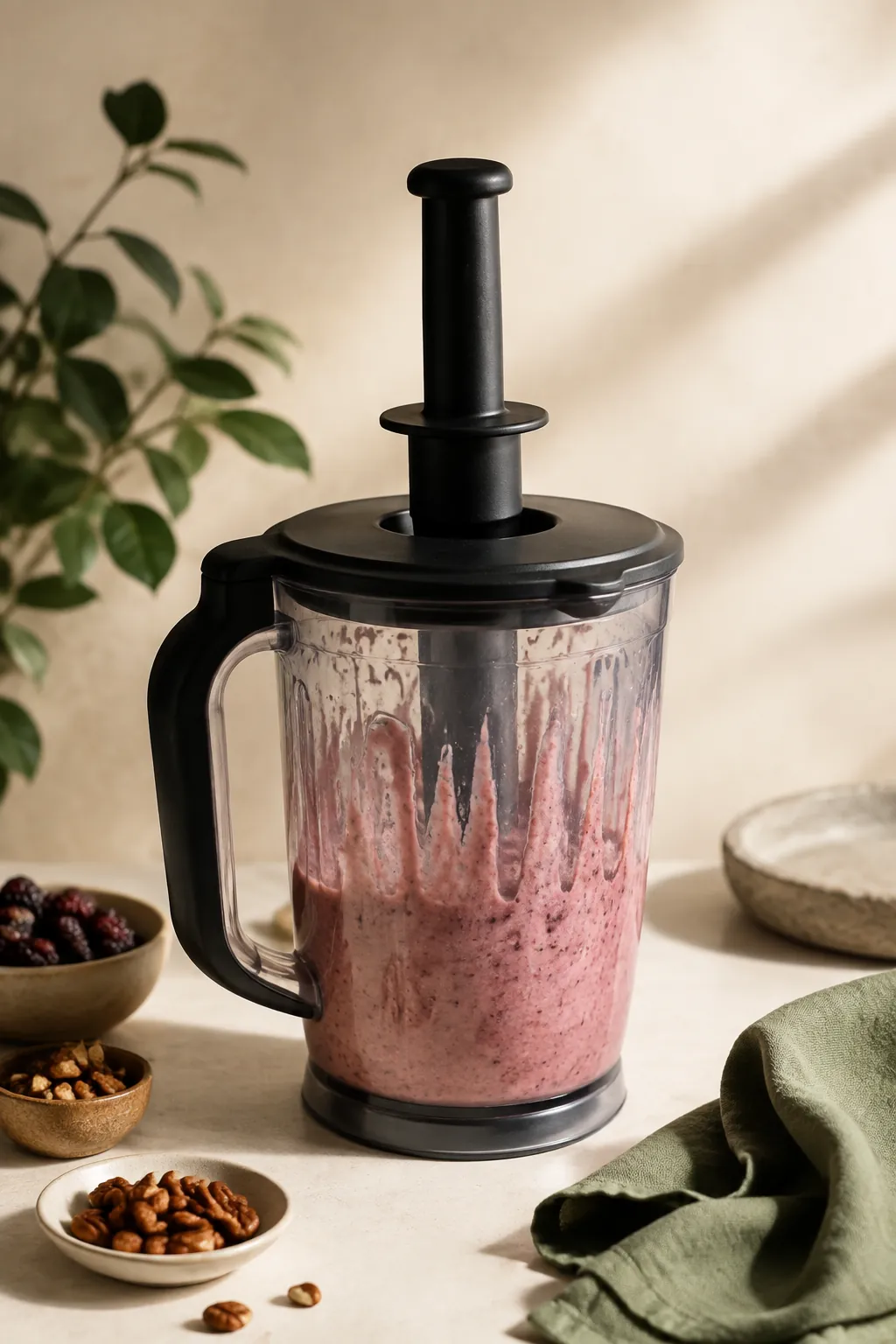
A blender works by circulation. Liquid thrown outwards by the blades climbs the jar walls and falls back into the middle, dragging everything else through the blade path repeatedly.
Take the liquid out and that circulation stops. The mixture stiffens, an air pocket opens around the blades, and the machine spins loudly against nothing, which is the cavitation described under the blender.
So the recipe and the machine want opposite things, and every technique for making a bowl is a way of buying thickness without buying a stall.
- Use a tamper if the machine has one; it is the proper solution
- Blend in a smaller jar, or use a personal blender cup
- Add liquid in 20 ml steps rather than in splashes
- Pulse to settle the load before running continuously
- Stop and scrape down rather than running longer
A tamper is what separates machines here more than power does. It does by hand what the vortex has stopped doing, pushing material back into the blades while the motor runs.
Frozen banana, and why it does the work
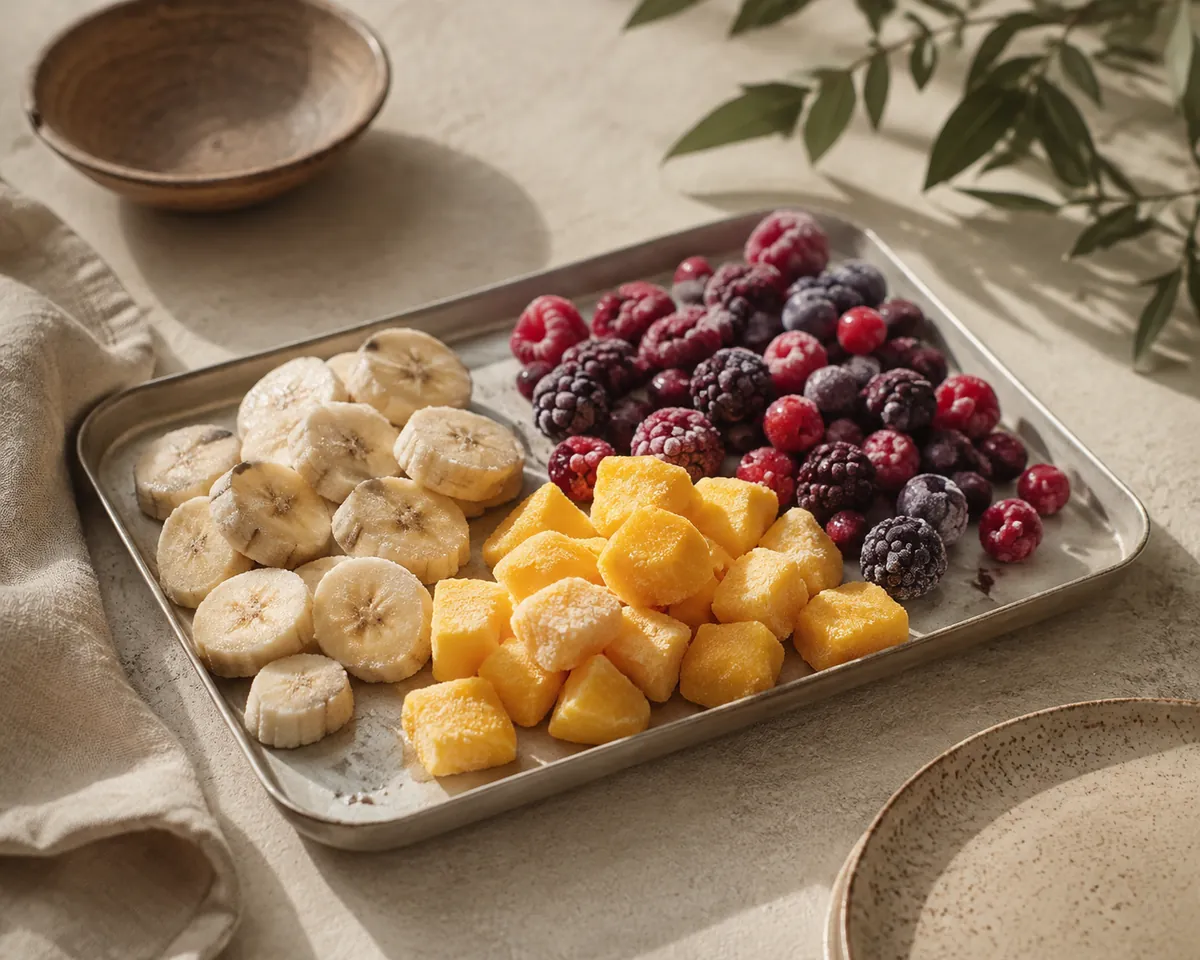
Frozen banana is the standard base for a reason that is structural rather than a matter of taste. It freezes without becoming icy, and it blends to a smooth, creamy solid rather than a granular slush.
Most fruit freezes hard and shatters into ice crystals under a blade. Banana has enough soft starch and low enough free water that it breaks down into something closer to a purée, which is why bowls built on it taste creamy without any dairy.
| Texture | Flavour | Thickening | |
|---|---|---|---|
| Frozen banana | Creamy, smooth | Sweet, dominant | Excellent |
| Frozen mango | Smooth, slightly fibrous | Sweet, tropical | Very good |
| Frozen berries | Slightly granular | Bright, tart | Good |
| Frozen avocado | Rich and dense | Neutral, fatty | Excellent |
| Ice | Granular and watery | None | Poor; melts and thins |
Ice is the ingredient to avoid here, which surprises people. It thickens briefly, contributes nothing, and then melts into water that thins the bowl exactly when you are trying to eat it.
A pinch of cinnamon works with banana and needs no sugar behind it. Slice bananas before freezing them.
A whole frozen banana is a hazard to a blade, and it will not break down evenly however long the machine runs.
How little liquid you can get away with
Less than instinct suggests, and it should go in gradually rather than all at once.
Start with about 60 ml for two bananas' worth of frozen fruit, blend, and add 20 ml at a time only when the machine genuinely stops moving material. Most bowls finish somewhere between 80 and 120 ml.
The liquid's own thickness counts. Oat milk and whole milk both contribute body, so less of either is needed than of water or juice.
A working base
- Frozen banana
- 2 medium, sliced
- Frozen berries or mango
- 100 g
- Liquid
- 80 ml, added in stages
- Optional thickener
- 1 tbsp oats or nut butter
Juice is the liquid to be careful with. Apple or orange juice adds sweetness and no body at all, so it thins the bowl faster per millilitre than milk does.
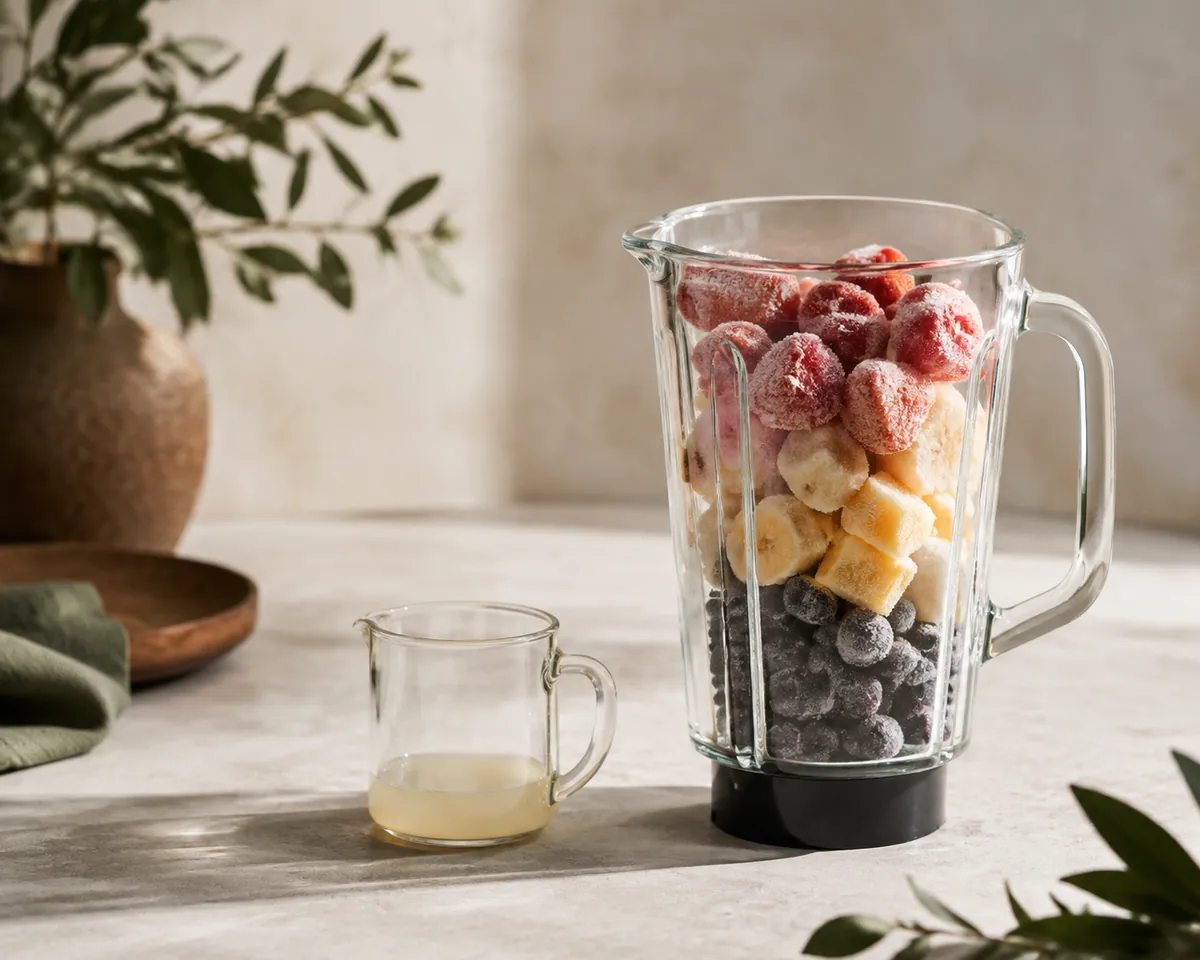
Getting a stalled blend moving
Every bowl stalls at least once, and the response decides whether you end up with a bowl or a drink.
The wrong move is adding liquid immediately. That is the fastest way to a thin bowl, and it is usually unnecessary, because the mixture has bridged rather than genuinely run dry.
In order, when it stalls
- StopSwitch off before doing anything else
- ScrapePush the mixture down off the walls into the blades
- TampUse the tamper through the lid, with the motor running
- PulseShort bursts settle the load better than continuous running
- LiquidOnly if the first four have failed, and 20 ml at a time
Never put a spoon or spatula into a running jar. A tamper is designed to be too short to reach the blades, and nothing else in a kitchen has that property.
If a machine simply cannot do it, halving the batch works better than adding liquid. A smaller volume in the same jar sits lower, closer to the blades, and circulates when a full jar will not.
Toppings, and why they sink
Toppings sink for one of two reasons: the base is too thin, or the topping is too heavy for a base that would otherwise hold.
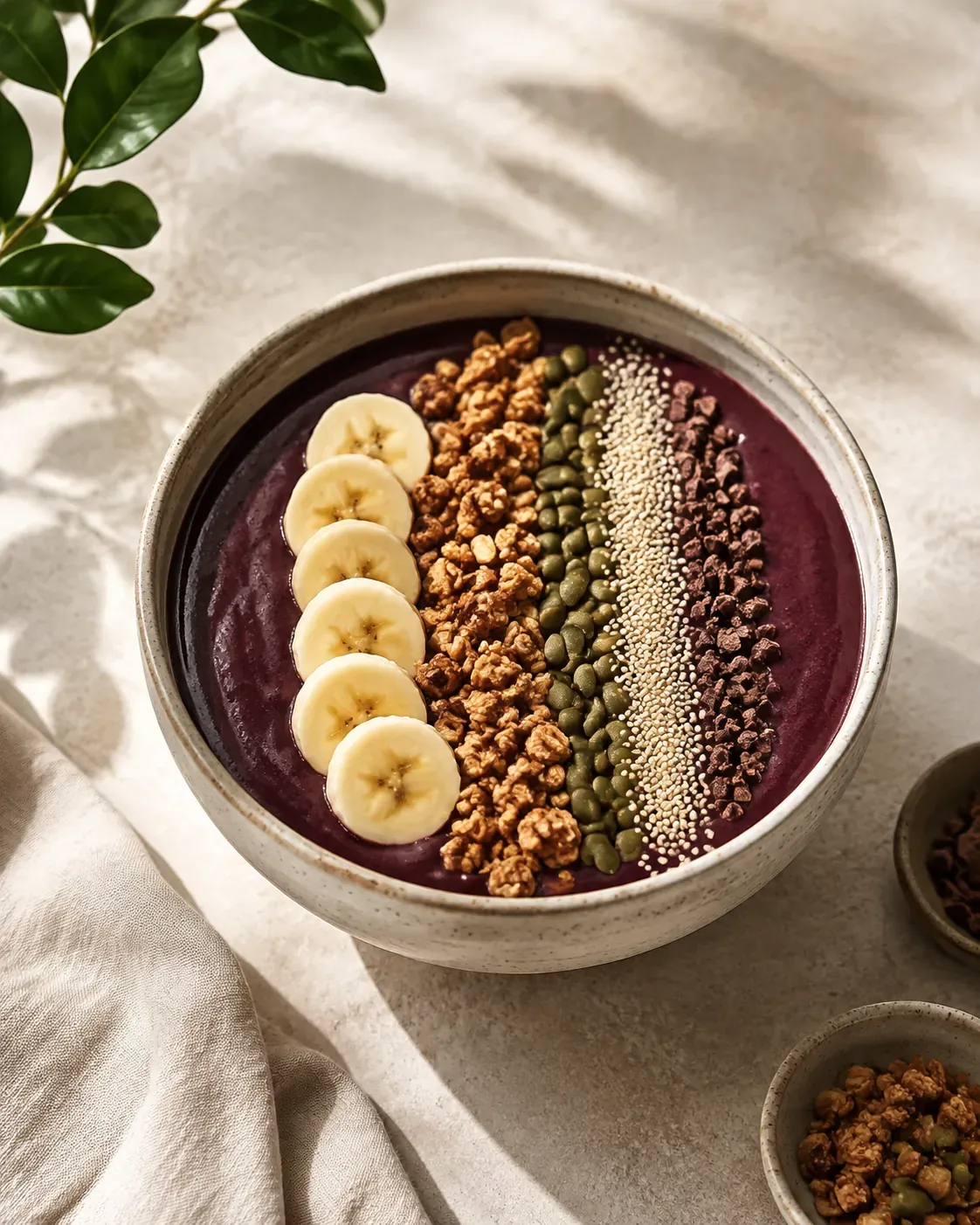
Weight is relative to surface area. A whole strawberry has mass concentrated in a small footprint and cuts through; the same strawberry sliced spreads its weight and sits on top.
Light and safe
Granola, seeds, coconut, cacao nibs, dried fruit
Needs a firm base
Sliced banana, berry halves, nut butter drizzle
Sinks readily
Whole fruit, heavy spoonfuls, anything wet
Slice everything
Spreading the footprint matters more than the weight
Add at the table
Toppings placed early sink while the bowl warms
Order helps too. Heavier items around the rim, where the base is deepest and least disturbed, and lighter ones in the middle where a spoon will go first.
Nothing here needs cane sugar; the frozen fruit has already supplied more sweetness than a drink would.
Wet toppings are the hidden problem. A spoonful of yoghurt or a wet fruit compote releases liquid onto the surface and thins the top layer locally, which is where a bowl usually collapses first.
A thin drizzle of honey does the same thing on a smaller scale.
Colour, and what makes a bowl look right
Colour is most of the appeal, and it comes from the frozen fruit rather than from anything added afterwards.
Berries give the pink and purple range, mango and peach the yellows, and greens come from spinach or culinary matcha, which holds its colour better than leaves do because it is not being oxidised by the blade. A green smoothie shows the same dulling on a shorter timescale.
Brown bowls are almost always cocoa. Cocoa powder flattens every other colour in the jar, so it belongs in a bowl built around it rather than added to a fruit base.
Air is what dulls it. A long blend whips air in, lightens the colour and speeds the browning, so a bowl blended for ninety seconds looks visibly paler than the same mixture stopped at forty.
Blend the shortest time that reaches the texture. That is better advice for colour than any addition, and a squeeze of lemon does less here than simply stopping sooner.
Serving, and the ten-minute window
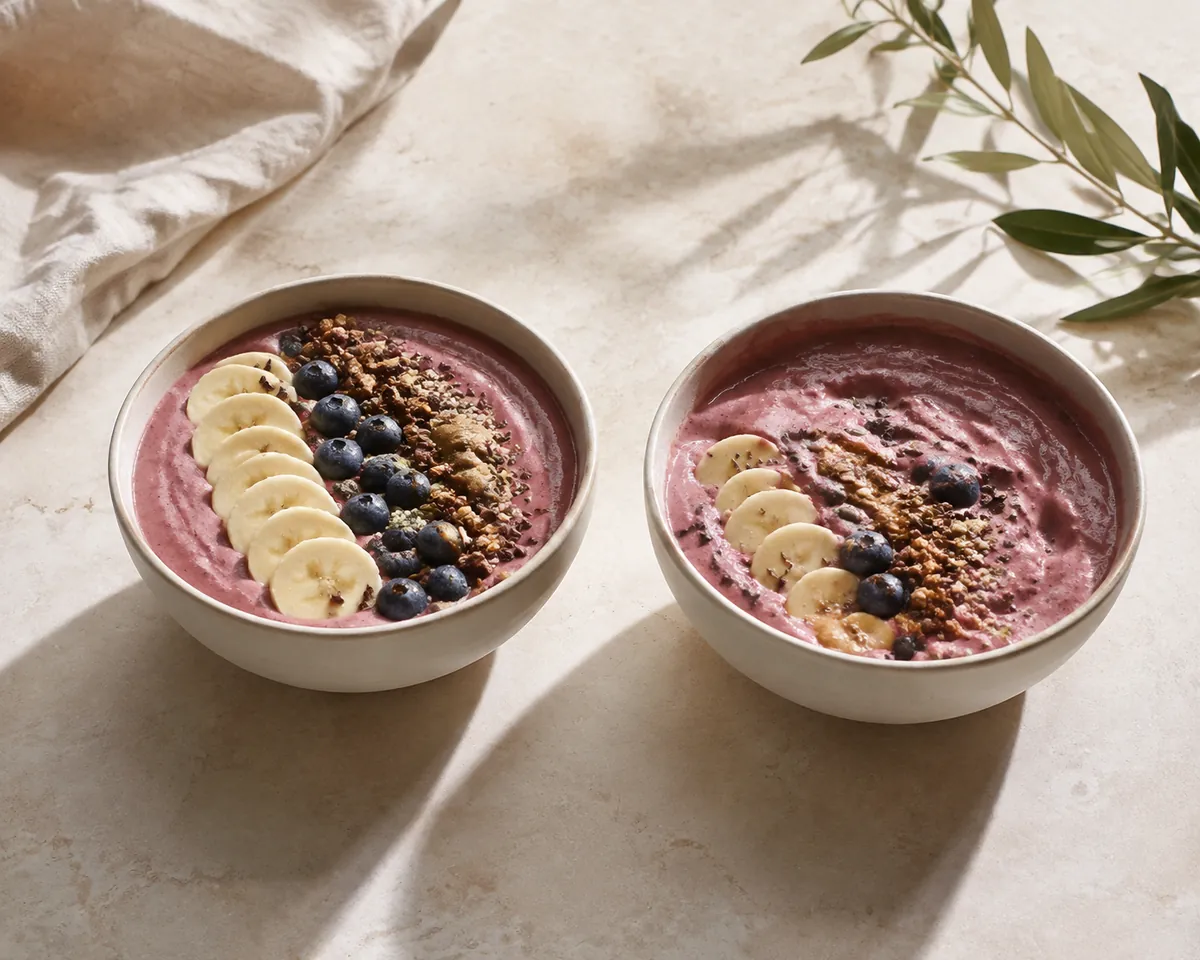
A smoothie bowl is at its best immediately and declines quickly, which is the honest constraint nobody mentions alongside the photographs.
Frozen fruit at blending temperature is around minus five degrees, and it warms fast in a room-temperature bowl. Within ten minutes the surface has slumped, the toppings have begun to sink, and the texture is closer to a thick drink.
Chilling the bowl helps and is worth doing. Five minutes in the freezer before serving buys several minutes at the table, and a shallow wide bowl warms faster than a deep narrow one.
Eat it where you made it. Carrying a bowl anywhere costs minutes from a window that was short to begin with, and a bowl that travels is a bowl that arrives as a drink.
What not to do: making it ahead
The one thing that does not work is preparing the blended base in advance, and it fails in both directions.
Refrigerated, the base melts, separates and thins within an hour, and the fruit solids settle out. Refrozen, it sets into a solid block that has to be broken up and reblended, which introduces the air and the warming you were avoiding.
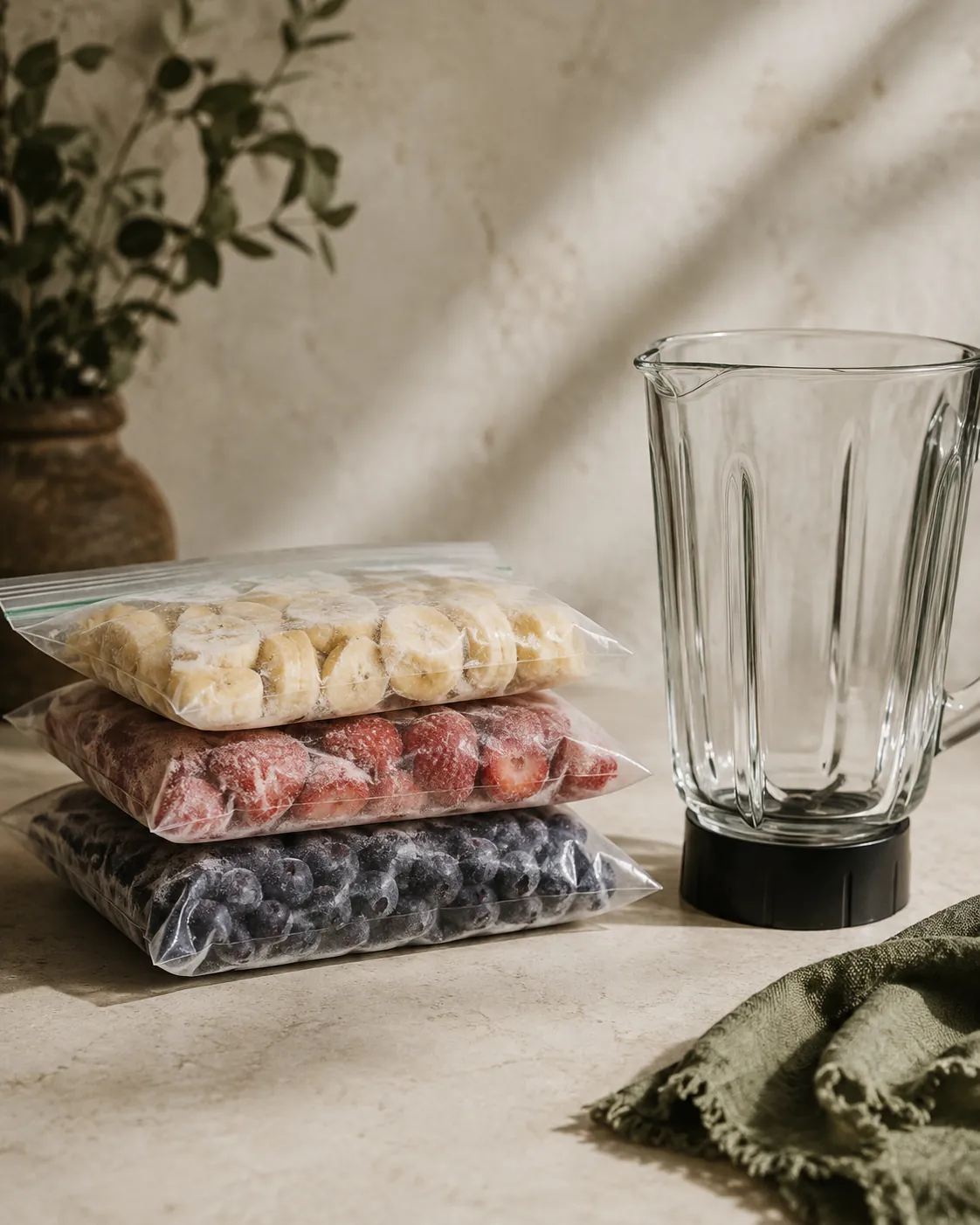
What does work is preparing the solids. Portion the frozen fruit into bags, keep them in the freezer, and blend one bag with fresh liquid when you want a bowl.
That is the same approach that suits a protein smoothie, and for the same reason. The frozen part keeps and the blended part does not, so the split is the sensible place to divide the work.
Where it sits between a drink and a meal
A smoothie bowl is where a smoothie stops being a drink. It is eaten with a spoon, it takes ten minutes rather than two, and the toppings are usually a larger share of it than anyone admits.
Against the rest of the juices and smoothies shelf it is the thickest thing there by a wide margin, and it sits at the far end of the same axis that separates juice from a smoothie: fibre kept, water removed, texture built up rather than stripped out.
The craft is genuinely narrow and worth knowing. Frozen fruit, almost no liquid, and a tamper produce a bowl; anything else produces a thick drink with granola floating on it, and the difference is entirely in the ratio.
Common questions
How thick should a smoothie bowl be?
Thick enough that a spoon pushed in upright stays standing, or that a groove drawn across the surface holds open for several seconds. A groove that closes within a second is a thick drink rather than a bowl, and it will swallow anything heavier than granola.
Why does my blender stall when I make one?
Because you have taken out the liquid it needs to circulate. An air pocket opens around the blades and nothing falls into it. Stop, scrape the mixture down, use a tamper, and pulse rather than running continuously. Adding liquid works but costs you the thickness you were after, so it is the last resort.
Can you make the base the night before?
No. Refrigerated it melts, thins and separates within an hour; refrozen it sets into a block that has to be broken up and reblended, which warms it and whips air in. Portion the frozen fruit into bags instead and blend one with fresh liquid when you want a bowl.