What Is Cold-Pressed Juice? Crushed First, Then Pressed Hard
Cold-pressed juice is made by crushing produce and then pressing it under high force, rather than shredding it with a fast spinning blade. The difference is heat and air, and it shows up mostly in how the juice keeps.
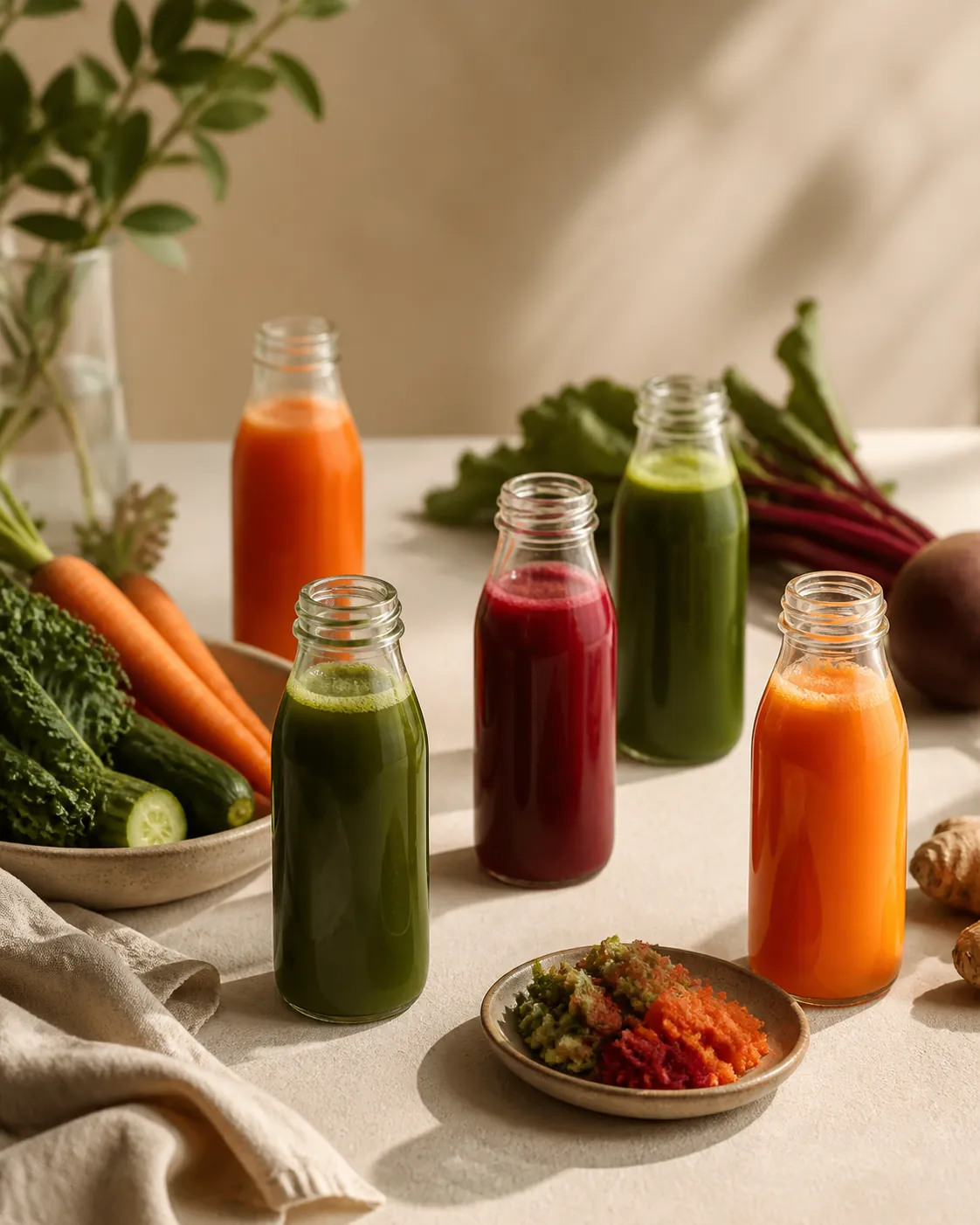
Cold pressing describes a two-stage mechanical process. Produce is first crushed or ground, then the pulp is pressed under considerable force to squeeze the liquid out, and nothing is heated at any point.
The contrast is with a centrifugal juicer, the common household type, which shreds produce against a fast-spinning grater and flings the juice outward. That is quicker and cheaper, but the speed generates some heat and whips a lot of air into the juice.
Almost everything else in this section that concerns shelf life, colour and price traces back to how much air went in during those few seconds.
Cold-pressed juice at a glance
- What it is
- Produce crushed, then pressed under a plate rather than shredded at speed
- The domestic form
- A masticating or slow juicer, one auger against a screen
- The commercial form
- A hydraulic press working ground pulp inside a cloth
- What it changes
- Less air in the juice, so slower browning and slower flavour loss
- What it does not mean
- Raw, unpasteurised, or untreated after pressing
- Untreated shelf life
- About three days refrigerated
- Treated shelf life
- Weeks, once high-pressure processed
How much air the method introduces
- Hydraulic pressCrushed then pressed, very little air
- Masticating juicerSlow auger, modest aeration
- Centrifugal juicerHigh speed, considerable air whipped in
- BlenderAir is part of the point, and the fibre stays in
Plate pressure against blade speed
Two mechanisms account for every juicer sold, and the half-dozen names attached to them in shops describe those same two things over again. The force comes from the plate rather than from speed, and that is the whole distinction.
Cold pressing against centrifugal juicing
- Heat
- Cold pressing generates very little. A centrifugal juicer warms the juice slightly through friction.
- Aeration
- Cold pressing incorporates far less air. Centrifugal juicing whips a lot in.
- Oxidation
- Less air means slower oxidation, which is why cold-pressed juice separates and browns more slowly.
- Yield
- Pressing generally extracts more juice from the same produce, particularly leafy greens.
- Speed
- Cold pressing is considerably slower.
- Cost
- Cold-press equipment is more expensive, and the product usually is too.
Less air in the juice means slower oxidation, so a pressed bottle holds its colour and its flavour longer than a shredded one. That is observable over hours, and it is separate from anything done to the juice afterwards.
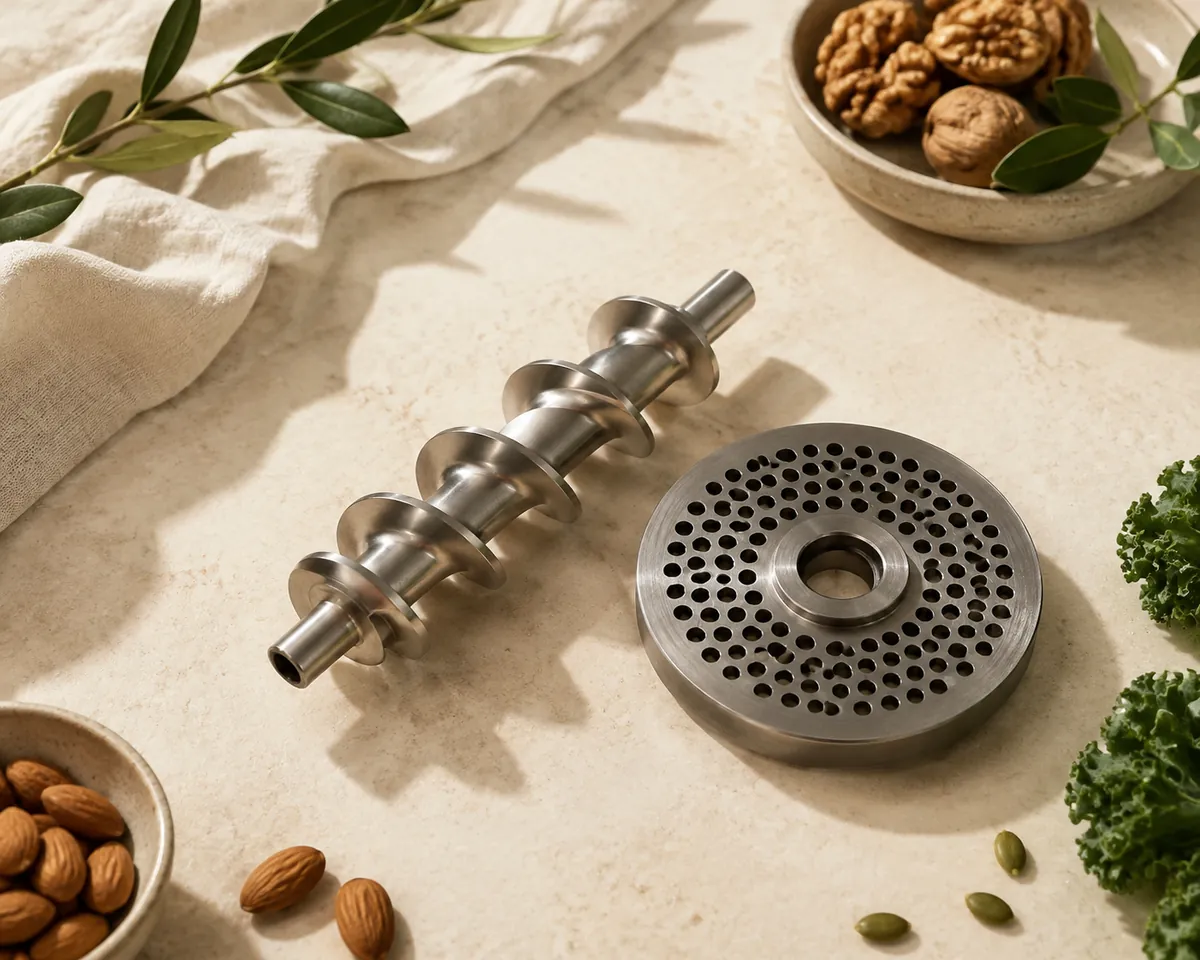
- Masticating or slow juicer. A single auger crushes produce against a screen. This is the domestic form of cold pressing.
- Twin gear or triturating. Two interlocking augers, slower still and more thorough, mostly used for leafy greens.
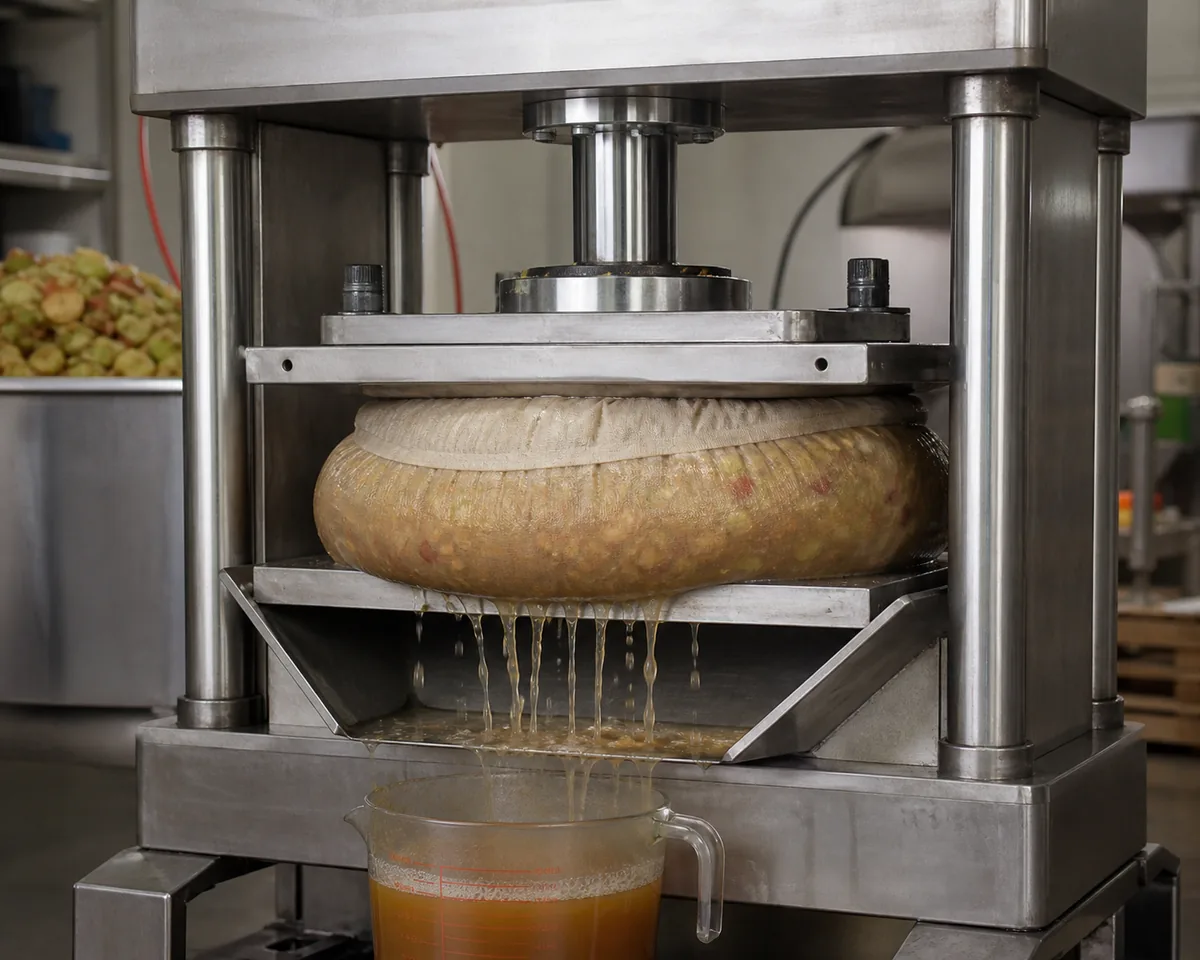
- Hydraulic press. The commercial form. Produce is ground first, then pressed in a cloth bag under a plate.
- Centrifugal. A fast spinning grater with a mesh basket. Quick, cheap and aerating.
A slow juicer sold as a cold press is doing the same job as a hydraulic press at smaller scale, and the distinction between them is thinner than the price gap suggests. Making cold-pressed juice covers the domestic version in sequence.
Where a press earns its price
The gap between the two methods is not constant. It is widest exactly where people care most, and close to invisible everywhere else.
- Leafy greens. Kale, spinach and wheatgrass yield far more under a press. A centrifugal juicer struggles to grip them at all.
- Hard produce. Carrots and apples yield well either way, and the difference is modest.
- Soft fruit. Berries and citrus give up their juice readily, so the press advantage is small.
- Herbs. Mint and parsley behave like leafy greens, and a press extracts noticeably more.
If you juice mostly apples and carrots, the press is buying you slower oxidation rather than more juice.
| Produce | Juice yield | Notes |
|---|---|---|
| Cucumber | Very high | Mostly water, so almost everything comes out |
| Apple | High | Presses cleanly and reliably |
| Carrot | Good | Dense pulp, but a press extracts well |
| Citrus | Good | Usually reamed rather than pressed |
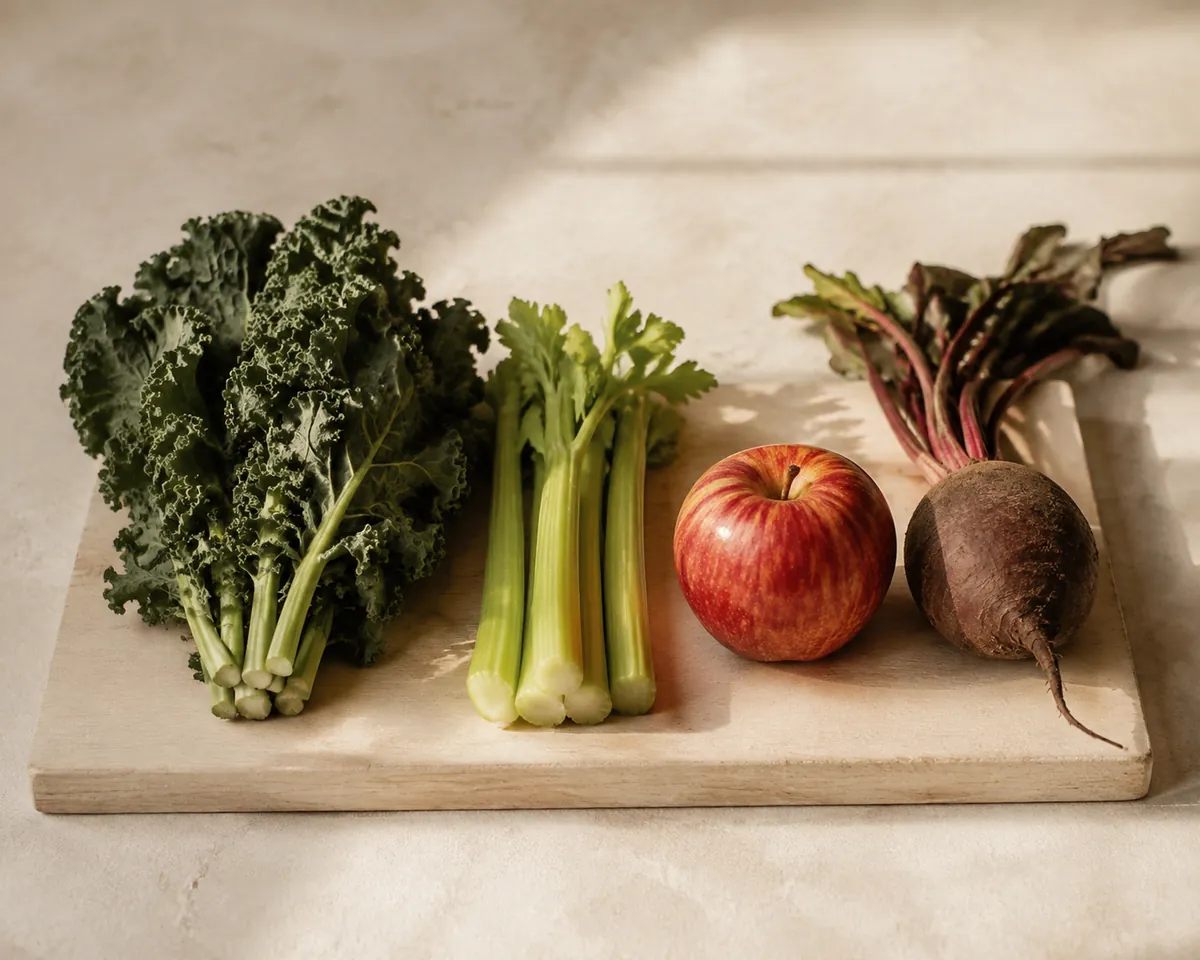
| Celery | Moderate | Fibrous, and the yield rewards a press over a centrifuge |
| Kale and spinach | Low | The reason green juices are expensive |
| Banana and avocado | None | These have no free liquid and cannot be juiced at all |
Leafy greens are where the press earns its price. A centrifugal machine cannot grip a leaf properly, so a leafy green juice made in one is largely apple with a hint of kale.
The last row surprises people. A drink described as banana juice is a smoothie or a purée-based product, because there is no free liquid in a banana to extract in the first place.
Celery juice is the clearest single-ingredient case for the machine. The stalk is fibrous enough that a shredding disc leaves a great deal of the liquid locked in the pulp, and the whole category is sold pressed for that reason rather than for any romance about the method.
Six thousand bar, and no heat at all
HPP appears on a great many bottles. It is rarely explained on the pack, and it is the single thing that decides how long the juice in your hand will keep.
High-pressure processing seals the bottled juice and subjects it to enormous water pressure, in the region of 6,000 bar. That pressure disrupts microbial cells without heating the liquid.
HPP against heat pasteurisation
- Mechanism
- Pressure disrupts microbes. Heat pasteurisation denatures them thermally
- Temperature
- Stays near ambient | Typically 70 C or above
- Effect on flavour
- Modest. The fresh character largely survives | Noticeable. Cooked notes develop
- Shelf life
- Weeks under refrigeration | Months, sometimes shelf stable
- Cost
- High. The equipment is expensive | Low and long established
This is why a bottle can honestly say cold-pressed and still keep for a month. The pressing was cold, and the treatment that followed was not heat, but it was unmistakably a treatment.
Genuinely raw juice, pressed and bottled with nothing done to it at all, keeps for about three days refrigerated and is usually sold that way on purpose rather than by accident.
The same presses treat a good deal else in the same chiller, coconut water among it, which is why those bottles carry a short refrigerated date instead of the ambient one their sealed appearance implies.
Storing cold-pressed juice works through what the two treatments mean once a bottle is open, where the gap between them narrows sharply.
What the label decides, and what it does not
The useful words on a juice bottle are the dull ones. Treatment, date and ingredient order settle everything the front of the pack is working not to say.
- Check whether it says pasteurised, high-pressure processed, or raw. That decides how long it keeps and how it must be stored.
- Check the use-by date and whether it needs refrigeration. Fresh unpasteurised juice has a short life.
- Check whether it is juice or a blend that includes puree, which is a different product with different texture.
- Cold-pressed on its own says how the juice was extracted. It says nothing about what was done to it afterwards.
Cold-pressed describes the extraction and nothing that came after it, which is the single most common misreading in the category and the one the front label relies on.
- Find the treatment: raw, high-pressure processed, or pasteurised. This decides the shelf life and how it must be stored.
- Find the pressing or bottling date rather than only the use-by date.
- Check whether it is 100 per cent juice or a blend containing puree, water or added sugar.
- Check the produce order in the ingredients list. A green juice led by apple is mostly apple.
- Prefer opaque or dark glass over clear plastic if the bottle will sit under shop lighting.
That fourth point catches most people out. Ingredients are listed by weight, so the first name is the bulk of the bottle, and a green juice whose list opens with apple is a sweet drink with colouring.
Where two bottles with identical labelling genuinely diverge is in the glass, and what it tastes like is the part no label covers at all.
Where the fibre ends up
A juice and a smoothie made from identical produce are different drinks, and the difference is not the machine but which fraction gets thrown away.
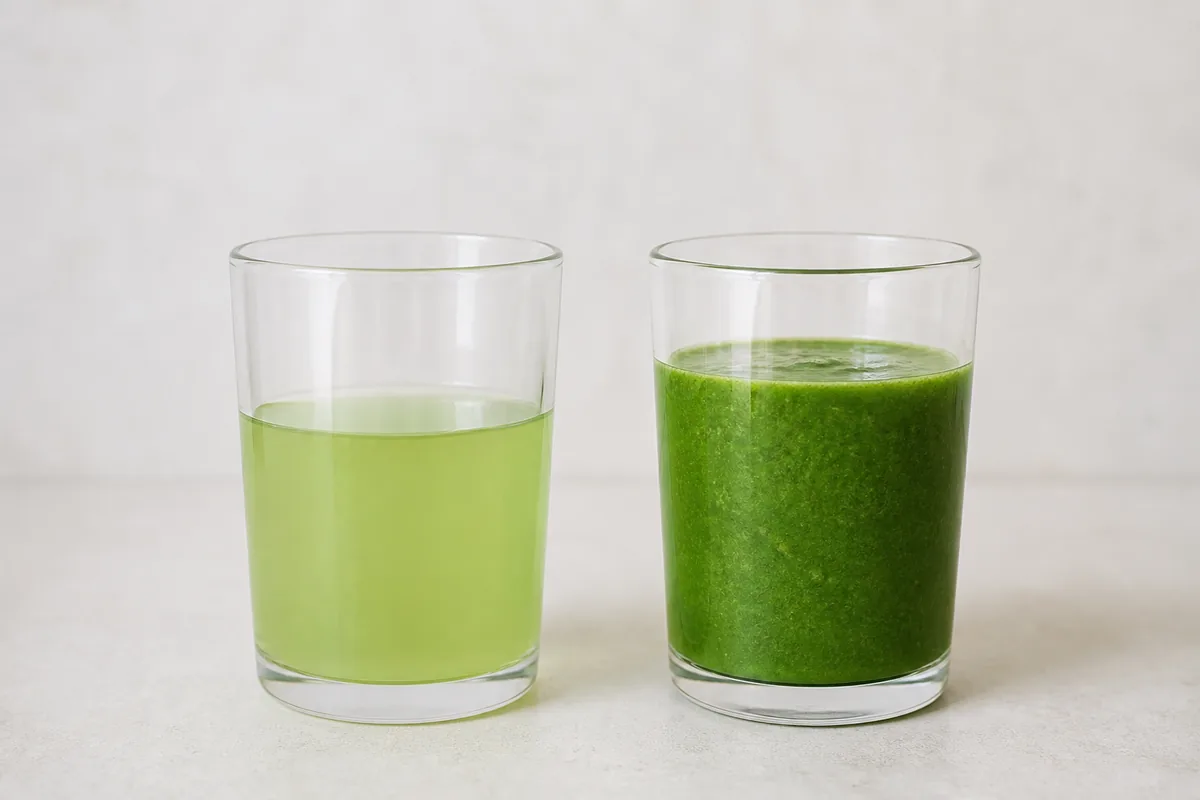
| Juice | Smoothie | |
|---|---|---|
| Process | Liquid separated from the pulp | Whole produce broken down and kept |
| Fibre | Most of it removed with the pulp | Retained |
| Texture | Thin and light | Thick, holds together |
| Separation | Settles into layers within minutes | Stays combined much longer |
A smoothie is the whole fruit or vegetable in a different physical form. A juice is one fraction of it with the rest discarded.
A green smoothie takes a fraction of the produce for the same volume in the glass, because nothing leaves as pulp. That arithmetic, rather than the machine, is most of the price gap between the two drinks.
Texture follows from the same fact. A berry smoothie holds together for an hour because the fibre is still suspending everything in it, where a pressed juice begins layering within minutes of standing still.
Settling, browning and the three-day clock
Fresh juice has three enemies. They act on quite different timescales, and only one of them is reversible.
Layering within minutes is normal and is not a fault.
Fresh juice is a suspension of fine solids in liquid, gravity pulls those solids down, and a shake puts them back where they were.
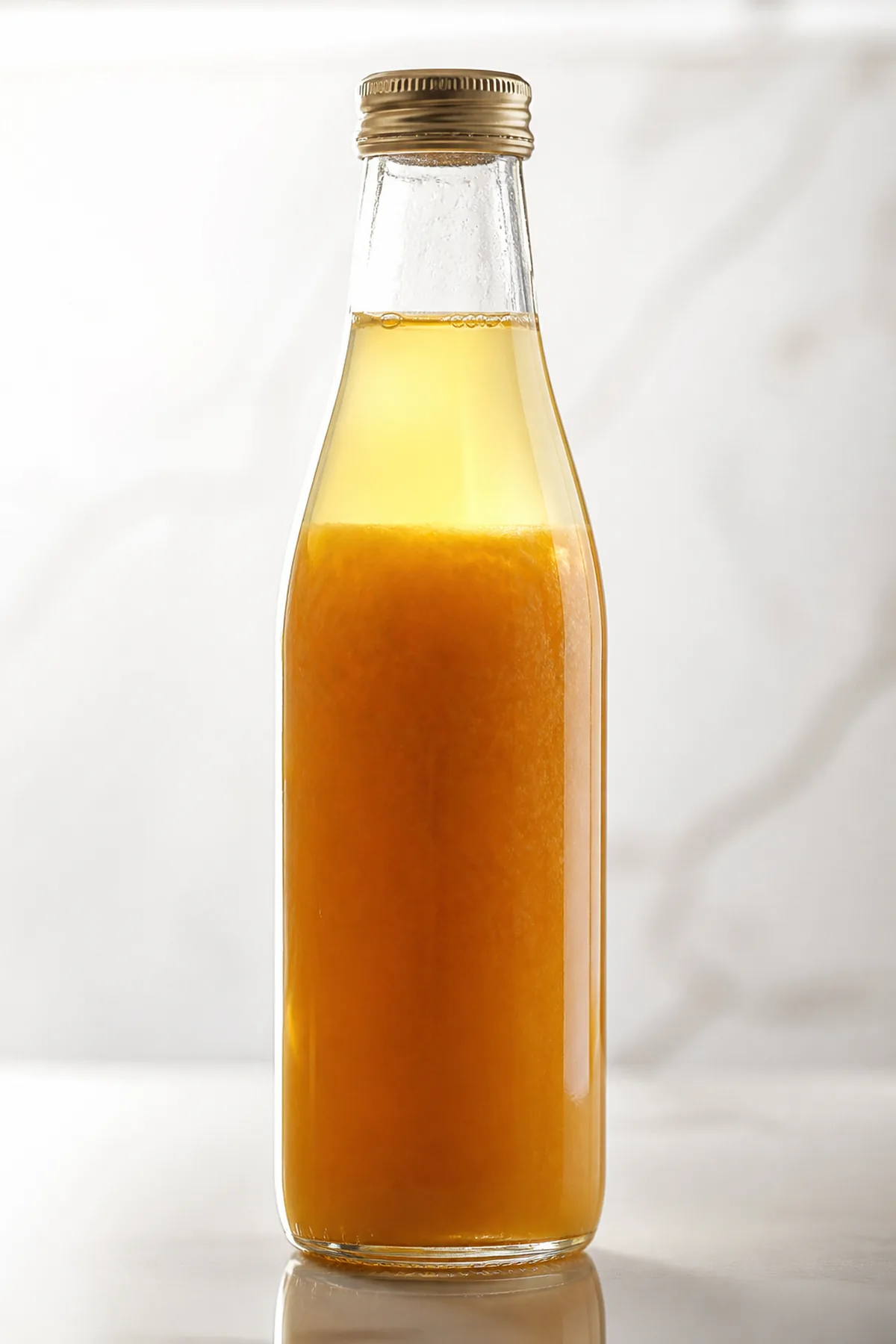
Colour change is a different matter. Browning is oxidation, and it comes with a genuine loss of the fresh flavour, which is the main practical argument for drinking fresh juice soon after it is made.
For separation with an entirely different cause, curdling in coffee is worth reading beside this. Protein rather than gravity does the work there, and no amount of shaking undoes it.
Oxygen
Browns the juice and dulls the fresh flavour within hours. The main reason to fill a bottle to the brim.
Light
Degrades pigments and some vitamins, which is why cold-pressed juice is usually sold in opaque or dark bottles.
Warmth
Accelerates everything, and unpasteurised juice must stay refrigerated throughout.
Time
Even refrigerated and sealed, raw juice is a three-day drink rather than a week-long one.
Freezing works better than most people expect. Juice frozen immediately after pressing, in a container filled almost to the top, keeps its colour and flavour far better than juice refrigerated for the same period.
Acid is the cheapest brake available.
Half a lemon into a litre of pressed apple or carrot slows the browning measurably, which is why so many blends carry a citrus note the flavour never asked for.
Settling is normal and reversible, and browning or any sour smell is not. What goes wrong sorts the two apart, because the first prompts people to throw away perfectly good juice.
The pulp is most of the weight and most of the price
Pressing separates the juice from most of the fibre. That fibre is the bulk of the original produce by weight, and it is also the bulk of what a bottle costs.
A kilogram of carrots yields roughly 400 to 500 ml of juice and several hundred grams of damp pulp. The exact split depends on the press and on the produce.
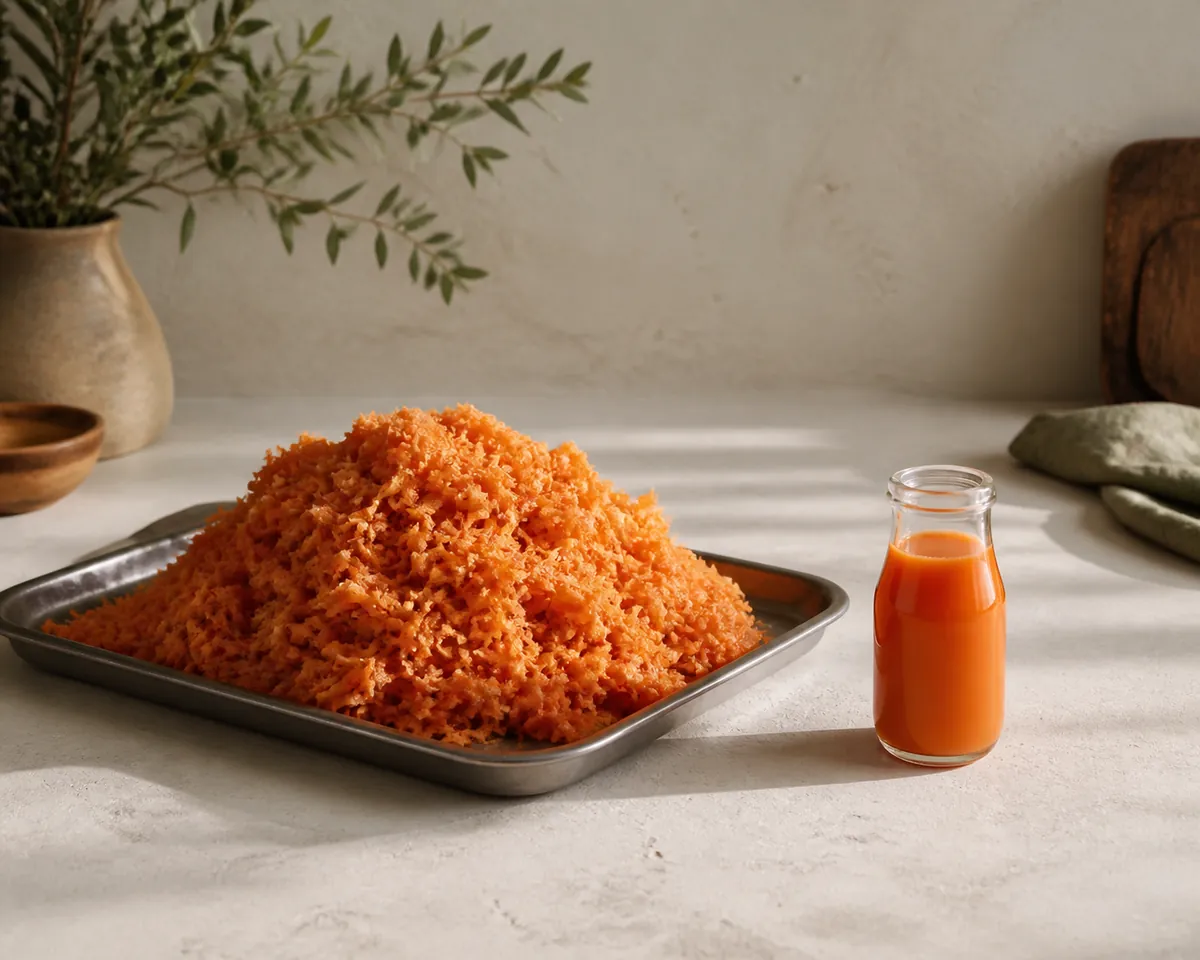
Some producers bake with the pulp, some send it to stock, and most compost it. Carrot pulp is the one genuinely worth keeping, being sweet and dense enough to carry a soup or a cake on its own.
The price arithmetic surprises people, and it is mostly about yield rather than margin. A 250 ml bottle of green juice can take a kilogram or more of raw produce, because leafy greens give up very little liquid.
Add refrigerated transport, a short shelf life, and high-pressure processing at several thousand pounds per production run, and the shelf price follows without anyone being greedy about it.
The machine is the smaller cost over time. A masticating press is a significant purchase spread across hundreds of litres, whereas the produce is spent in full every single time.
Getting more out of a domestic press
The gap between a home press and a commercial one is smaller than the gap between the two domestic juicer types. Technique closes most of what remains.
Getting more out of a home press
- Chill the produceCold produce oxidises more slowly while you work.
- Alternate soft and hardFeeding a leaf then a carrot uses the hard produce to push the soft through.
- Roll leaves tightlyA loose handful of spinach slips past the auger without being crushed.
- Press the pulp againRunning the pulp through a second time recovers a surprising amount.
- Fill the bottle to the brimLess air in the container means slower browning.
- Drink it within a dayWithout HPP there is nothing slowing the clock.
The last step decides whether home pressing is worth doing at all. Fresh juice is a drink you finish, not one you stock, and a fridge shelf of bottles is the point at which most people give up.
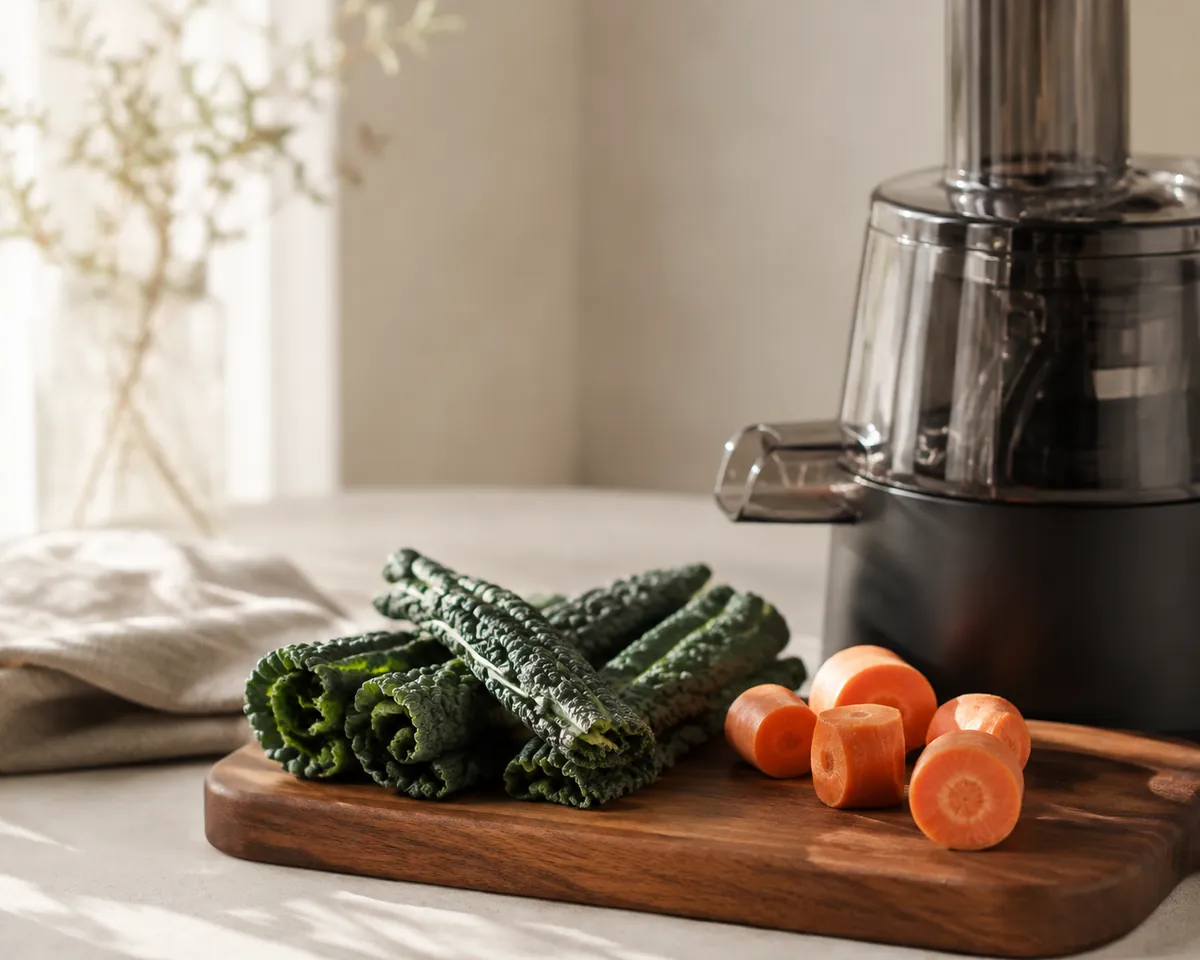
Chilling is the step most often skipped and the one with the clearest effect, since a cold press produces a cold juice and a warm one starts browning while it is still in the jug. Chilling the produce beats adding ice afterwards, which only dilutes what the pressing worked for.
Running the pulp through a second time is the other free gain. It recovers a useful amount from carrots and apples and almost nothing from citrus, so it is worth the extra minute on hard produce and a waste of it on soft.
Cold-pressed, raw, cloudy and not from concentrate
Four phrases do most of the confusing. Each describes a different stage of production, and only one of them is about the press at all.
Not from concentrate describes what was not done to a juice rather than how it was extracted, and it appears routinely on juice that was pasteurised in an entirely conventional way.
Raw and unpasteurised get used interchangeably in marketing and are not the same thing. High-pressure processing is a pasteurisation step by any functional definition, so a juice can be cold-pressed, HPP-treated and still sold to you as raw.
Cloudy is a style rather than a process. A cloudy juice can come off a hydraulic press or out of a centrifugal machine with the filtration simply left out, and clear against cloudy is settled by enzymes and a filter long after the pressing is over.
The one phrase that genuinely describes extraction is cold-pressed itself, and even that says nothing about the fortnight the bottle then spent in a chiller cabinet.
Which juices the press changes most
Cold-pressed is a process rather than a drink or a category of its own. The comparison worth making is against the same juices extracted another way.
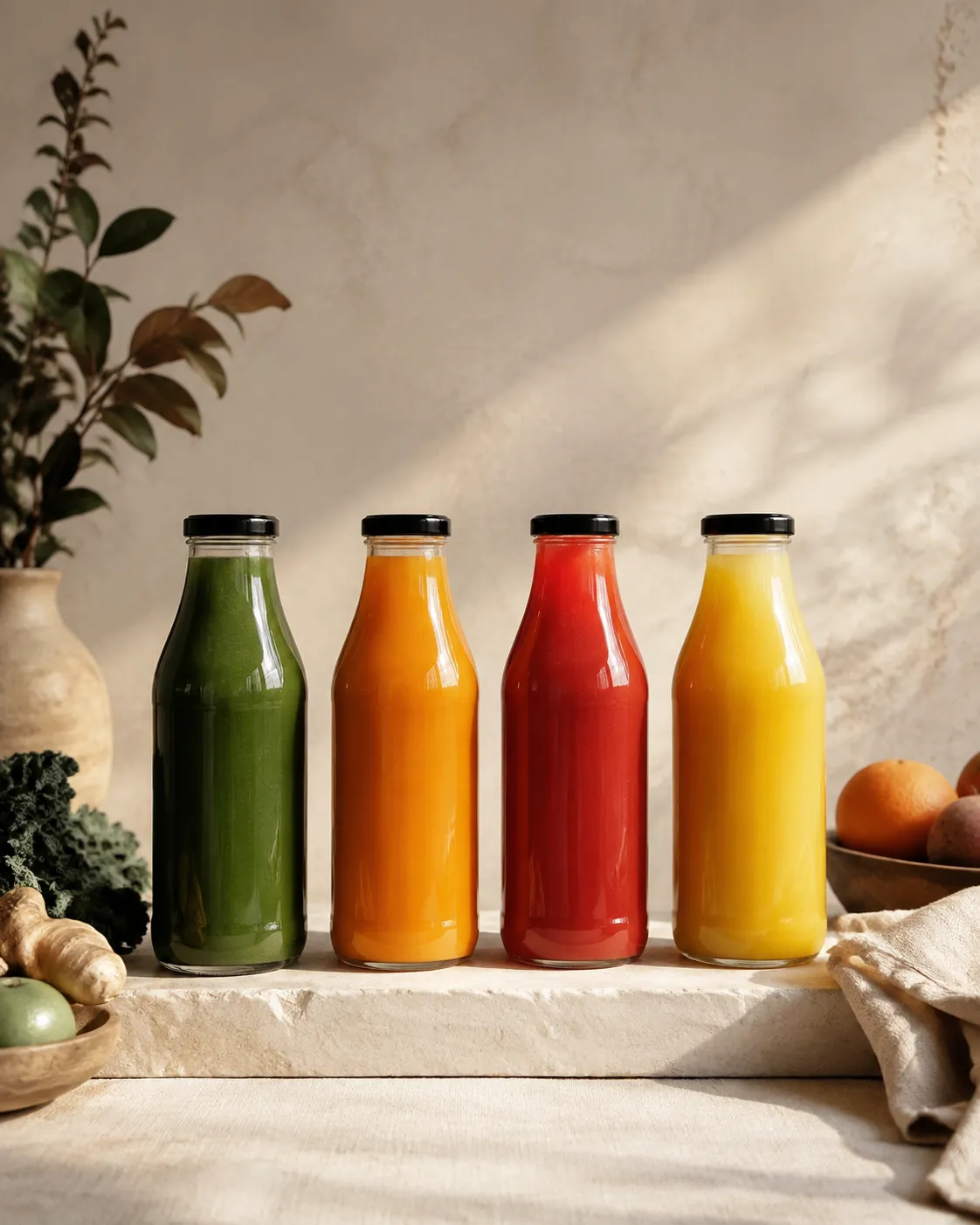
Orange juice
The category where cold-pressed changes least, since citrus is easy to extract by any method.
Apple juice
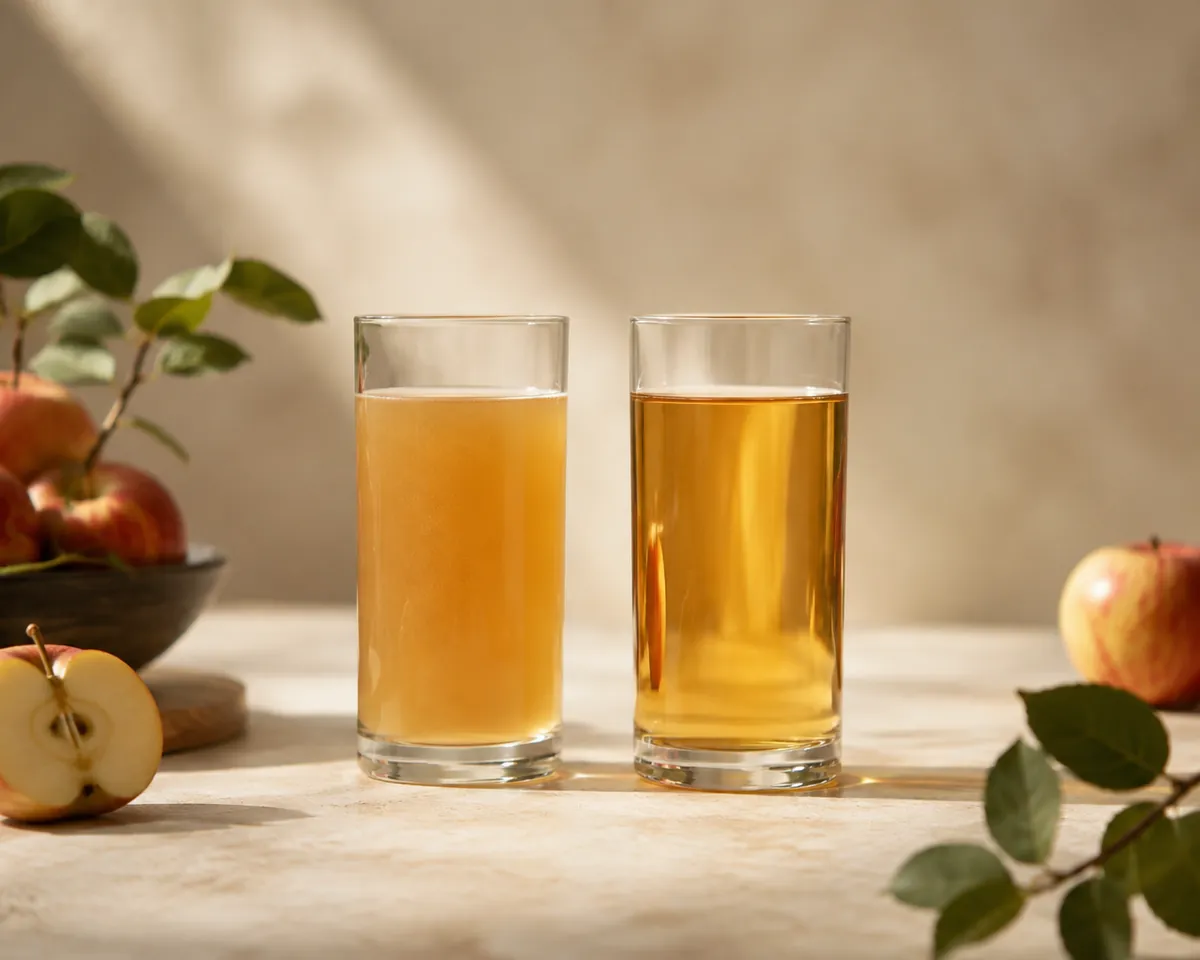
Cold-pressed apple is cloudy and browns fast, where commercial clear juice is enzyme-treated and filtered.
The pattern is that the harder the produce is to extract from, the more the press earns its price. On soft fruit the difference shrinks until the method is mostly a story on the label.
Berries are the interesting exception at the other end. They release their liquid readily but clog a screen with seed and skin, so the press helps and the yield stays poor either way, which is why they are pressed commercially far less often than their popularity suggests.
Against a smoothie the comparison changes shape entirely, since nothing is removed and there is no yield left to improve. That is a decision about fibre and waste rather than about extraction, and no machine settles it.
Common questions
Is cold-pressed juice healthier than other juice?
No health claim is made here. What is defensible is that cold pressing incorporates less air and less heat, so the juice oxidises more slowly and holds its colour and flavour longer.
Does cold-pressed mean unpasteurised?
No. Cold-pressed describes how the juice was extracted. Many bottled cold-pressed juices are treated afterwards, often by high-pressure processing, which is why they keep for weeks. The label will say.
Why does fresh juice separate into layers?
It is a suspension of fine solids in liquid, and they settle under gravity. Separation within minutes is normal and reverses when you shake it. Browning is a different thing and indicates oxidation.