How to Make an Americano
An Americano is balanced espresso diluted after extraction. Choose the final concentration deliberately and keep extra water out of the coffee bed.
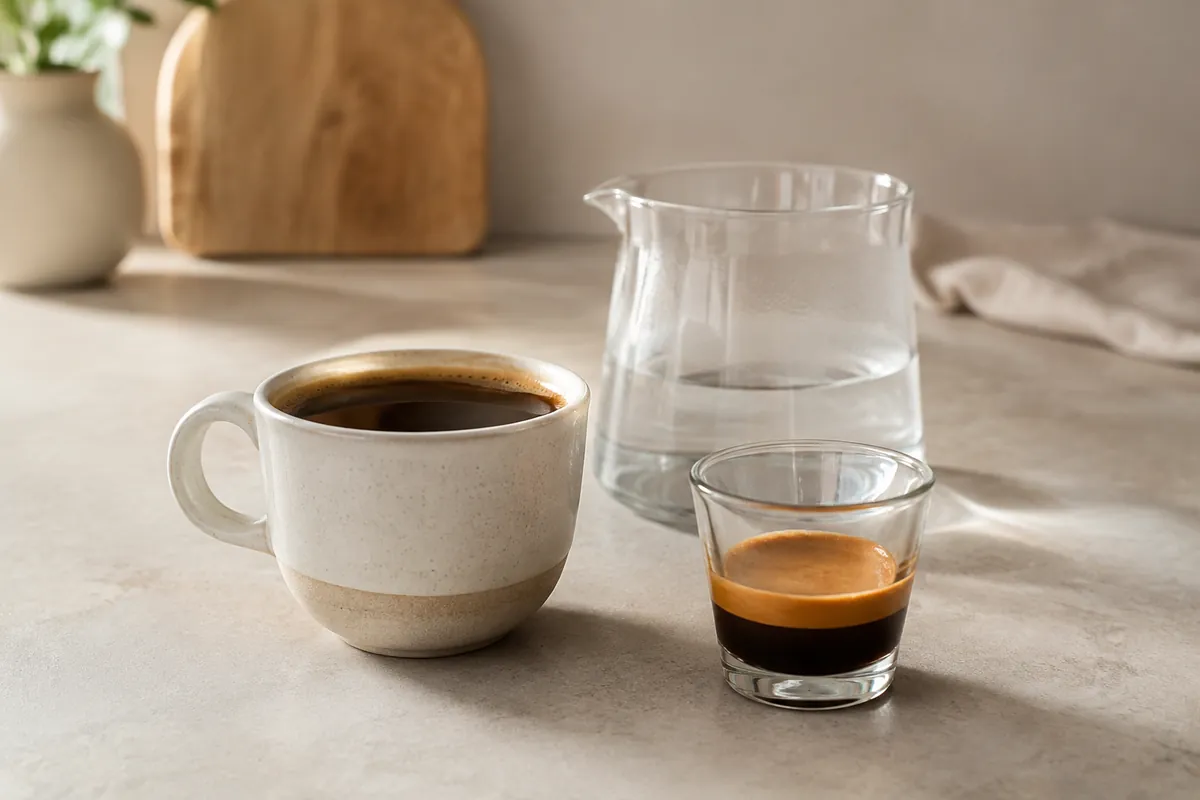
To make an Americano, brew a balanced espresso first and dilute it with hot water. Start with one double espresso and about twice its volume of water, taste, then add more water only if you want a longer and milder black coffee.
The water is added after extraction, so it changes concentration without forcing extra liquid through the coffee bed. A good Americano depends on a good espresso underneath, because dilution makes the shot easier to drink but does not repair sourness, bitterness, or stale aroma.
Start with the espresso-to-water ratio
Americano starting ratios
- Short and intense
- 1 part espresso to 1 part hot water
- Balanced starting point
- 1 part espresso to 2 parts hot water
- Long and mild
- 1 part espresso to 3 or 4 parts hot water
- Example
- 40 g double espresso plus 80 g hot water
- Cup
- Preheated 150 to 240 ml cup, chosen for final volume
Start with concentration.
Americano ratios vary between cafés because cup size and shot style vary, while a 1:2 ratio of espresso to added water keeps the drink coffee-forward and 1:3 or 1:4 produces a longer cup closer in concentration to brewed coffee.
Measure the espresso and water separately at least once. Café ounces and machine buttons can hide large differences, while grams reveal whether the changing flavor came from dilution or from a different shot.
A ratio refers to the espresso beverage, not the dry coffee dose. If 18 grams of grounds yields 36 grams of espresso, a 1:2 Americano ratio means roughly 72 grams of added water, not 36 grams.
Shot count and ratio solve different problems.
A second shot increases coffee material and caffeine as normally prepared, while less added water merely raises concentration around the same extracted material.
The most useful comparison uses one espresso divided between small cups, then different measured water additions. That isolates dilution and makes the point where aroma becomes faint easy to identify.
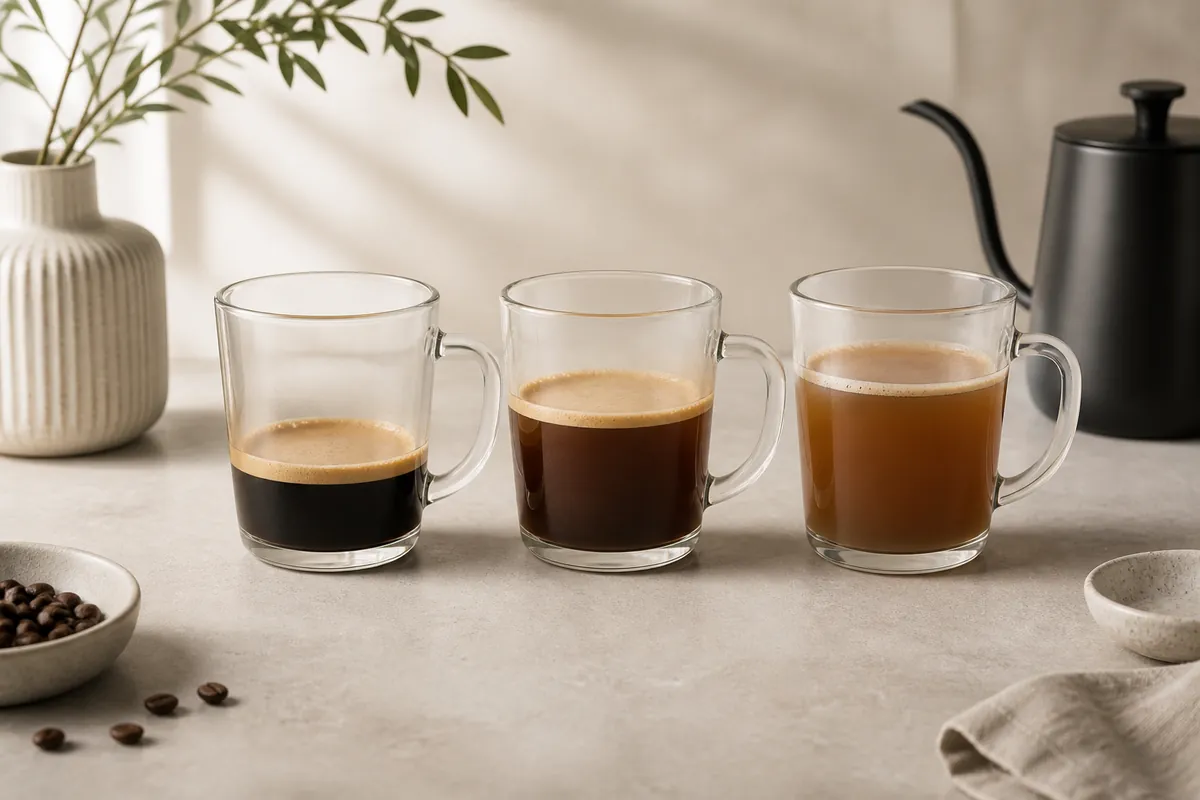
Your ratio should follow final concentration, not cup capacity. Filling every cup to the rim can turn the same espresso into a balanced drink in one vessel and a weak drink in another.
Pull the shot before you try to improve the water
Use an espresso you would be willing to drink straight. A common starting point is roughly twice as much beverage as dry coffee, such as 18 grams in and about 36 grams out, but the useful yield belongs to the coffee and grinder rather than the Americano recipe.
If the shot runs quickly and tastes sour, added water will spread the sourness through a larger cup. If it runs slowly and tastes drying or hollow, dilution may reduce intensity while leaving the unpleasant finish intact.
Crema can make the undiluted shot taste more bitter at the surface because it concentrates bubbles and suspended material. Stirring before evaluation gives a representative taste and prevents a bitter crema cap from driving an unnecessary recipe change.
Roast level influences the useful final ratio.
A dark roast may remain recognizable at a longer dilution, while a light, aromatic espresso can show more detail in a shorter Americano before delicate compounds become hard to perceive.
Do not pull a longer shot to save the separate water step.
Late extraction changes flavor by continuing contact with the puck rather than merely lowering concentration.
- Use freshly ground coffee and an evenly prepared puck.
- Stop the shot at its balanced yield rather than running extra water through the grounds.
- Taste a small spoonful before dilution when you are diagnosing a new coffee.
- Keep the shot count fixed while comparing water ratios.
- Clean old coffee oils from the portafilter and cup before blaming the beans.
An Americano is different from a lungo because the extra water never touches the grounds. Extract the shot to balance first, then use separate dilution to lengthen it in the cup.
This separation protects the espresso from the dry, late-stage flavors that can appear when extraction is stretched simply to produce more volume.
Use hot water that does not flatten the cup
Water close to brewing temperature can make the finished Americano uncomfortably hot and mute its aroma until it cools. Water that is merely warm drops the drink below a satisfying serving temperature as soon as it meets the espresso.
A practical range is about 75 to 85 C for the added water, adjusted for cup temperature and final ratio. The water should taste clean on its own, since it becomes most of the drink at longer ratios.
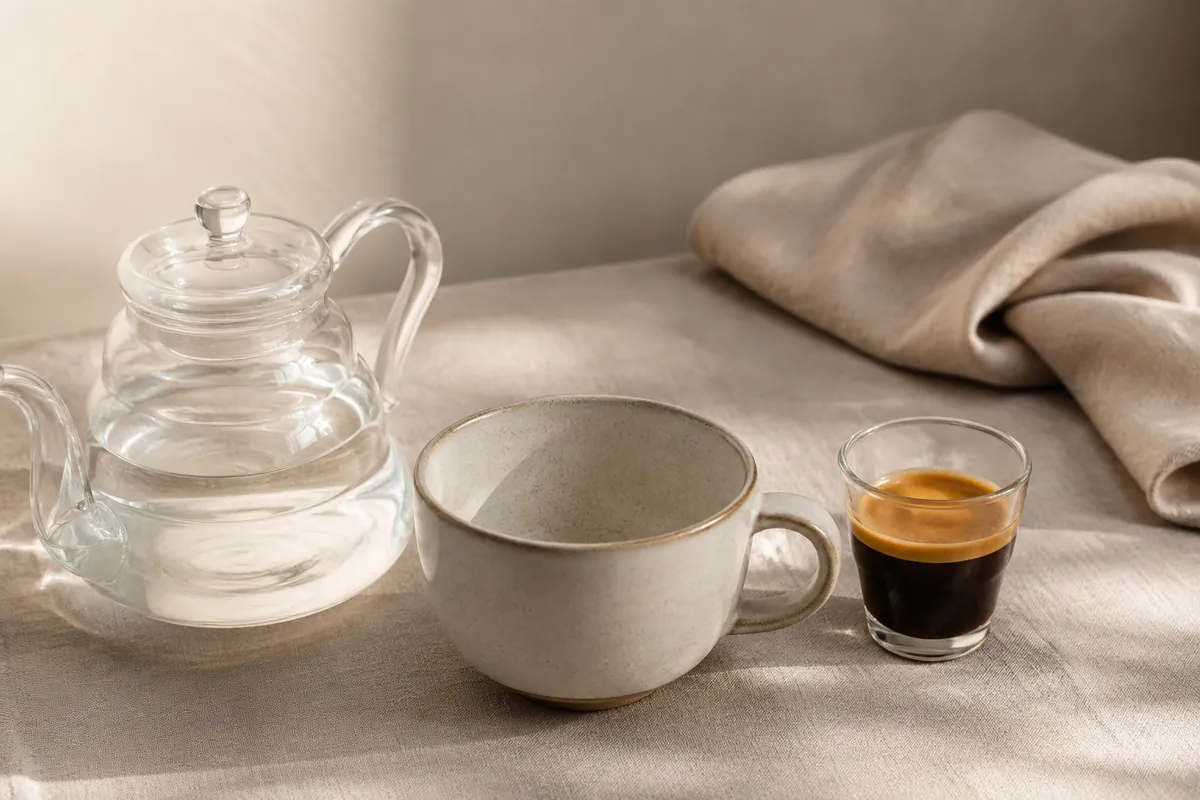
Preheat the cup, then discard that water before making the drink. This warms the ceramic without forcing you to use excessively hot dilution water.
Mineral content matters because very soft water can make coffee seem sharp and empty, while heavily mineralized water can mute acidity and leave scale in a kettle. Use pleasant drinking water and avoid water with a strong chlorine odor.
The espresso and dilution water may come from the same supply, but they perform different jobs. Espresso water extracts from the puck under heat and pressure, while added water only changes concentration, temperature, and volume.
At a 1:4 ratio, defects in water become easier to notice because most liquid in the cup never touched coffee. Filtered water can help when tap water carries odor, but distilled water often tastes empty and is not automatically better.
Cup material changes cooling speed.
A thick preheated ceramic cup holds heat, while a thin glass shows the drink clearly but loses heat faster and may need gentler preheating to avoid thermal shock.
The added water should reveal the espresso without adding a taste of its own.
Decide which goes into the cup first
Espresso first followed by water disperses the crema and mixes the drink thoroughly. Water first followed by espresso preserves more foam at the surface and is often associated with a long black, although café naming and ratios vary.
| Method | Surface | Mixing | Best when |
|---|---|---|---|
| Espresso, then water | Crema breaks and thins | Even without stirring | You want a uniform Americano and do not care about a crema cap |
| Water, then espresso | More foam can remain on top | Slightly layered at first | You prefer a stronger aromatic first sip |
| Separate service | Surface remains intact until combined | Reader controls ratio | Several people want different strengths from the same shot style |
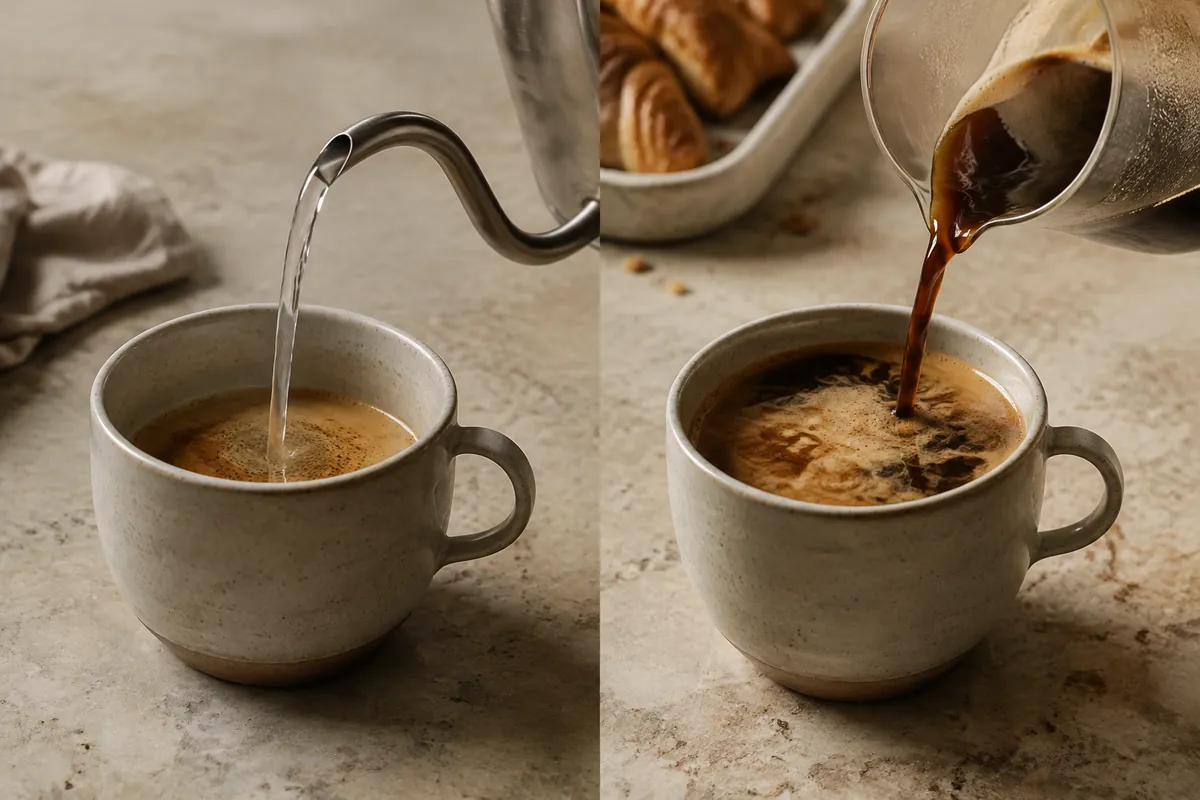
Crema retention changes appearance and the first sip more than the drink's basic identity. The same espresso and water are present either way, and stirring quickly removes most difference.
Water poured from height breaks the crema more aggressively and cools as it travels. Pouring close to the surface limits splashing and gives better control as the target weight approaches.
When making several drinks, combine each Americano individually. Holding a large jug of espresso lets aroma dissipate and makes the same ratio harder to preserve across cups.
Use espresso first when repeatability matters.
It makes the water addition easy to weigh and gives a consistent mixture from top to bottom.
Make the Americano in one clean sequence
Keep your sequence short enough that neither component waits. Measure before combining so the cup is repeatable without slowing the fresh espresso.
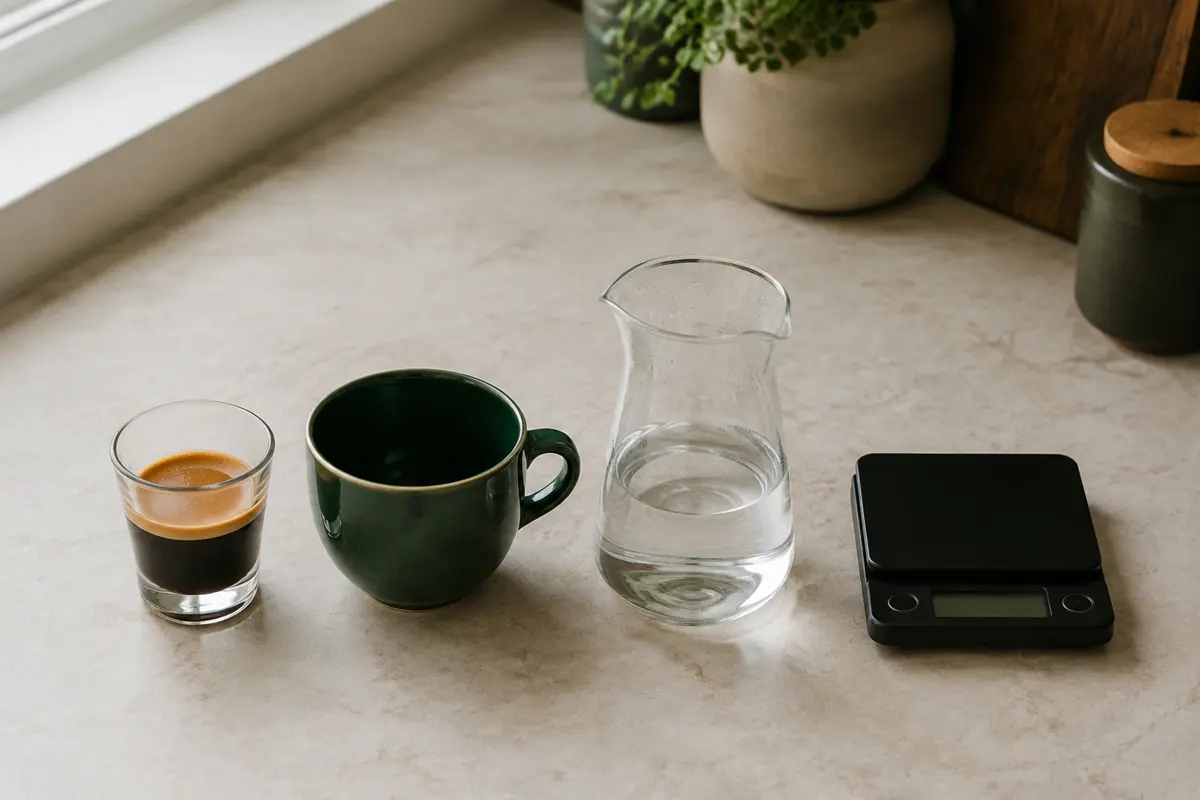
- Preheat the cup and measure the intended dilution water.
- Pull a balanced espresso into the serving cup or a small shot glass.
- Add water to the chosen ratio rather than filling to the rim.
- Stir once only when the pour has left visible concentration layers.
- Taste after a brief cooling pause before changing the next shot.
Heat fresh water and preheat the cup while the espresso machine reaches a stable temperature. Prepare and pull the espresso normally rather than changing the shot recipe to account for later water.
How to make a hot Americano
- PreheatWarm the serving cup with hot water, then empty and dry it
- PullBrew one balanced double espresso into the cup or a small shot glass
- MeasureStart with about twice the espresso weight in hot water
- CombineAdd water to espresso for an evenly mixed cup, or espresso to water when surface foam matters
- TasteLet the drink cool briefly, then decide whether it needs a little more water
- ServeDrink promptly while the diluted aroma remains lively
Add water in stages near the end of dialing the ratio.
It is easy to make a cup milder, while recovering concentration from an over-diluted Americano requires another shot.
Taste after the drink has cooled below its first serving temperature.
Very hot liquid masks sweetness and detail, so judging immediately can lead to an unnecessarily short, intense ratio.
Milk and sweetener are optional, but they should come after the water ratio is settled. Otherwise milk dilution and water dilution move together, and the result becomes difficult to repeat.
Stop at the clear but still present point, before the espresso becomes faint.
A marked kettle or scale makes that point repeatable tomorrow.
Make an iced Americano without watery flavor
An iced Americano uses cold water and ice after the espresso is extracted, with the ice counted as water because some melts immediately under the hot shot. The rest continues diluting the cup as it sits.
Iced Americano starting build
- Double espresso
- About 36 to 45 g
- Cold water
- 80 to 120 g
- Ice
- Enough to chill quickly, weighed when repeatability matters
- Order
- Cold water and ice first, fresh espresso last
- Serving
- Stir briefly and drink before extensive melt
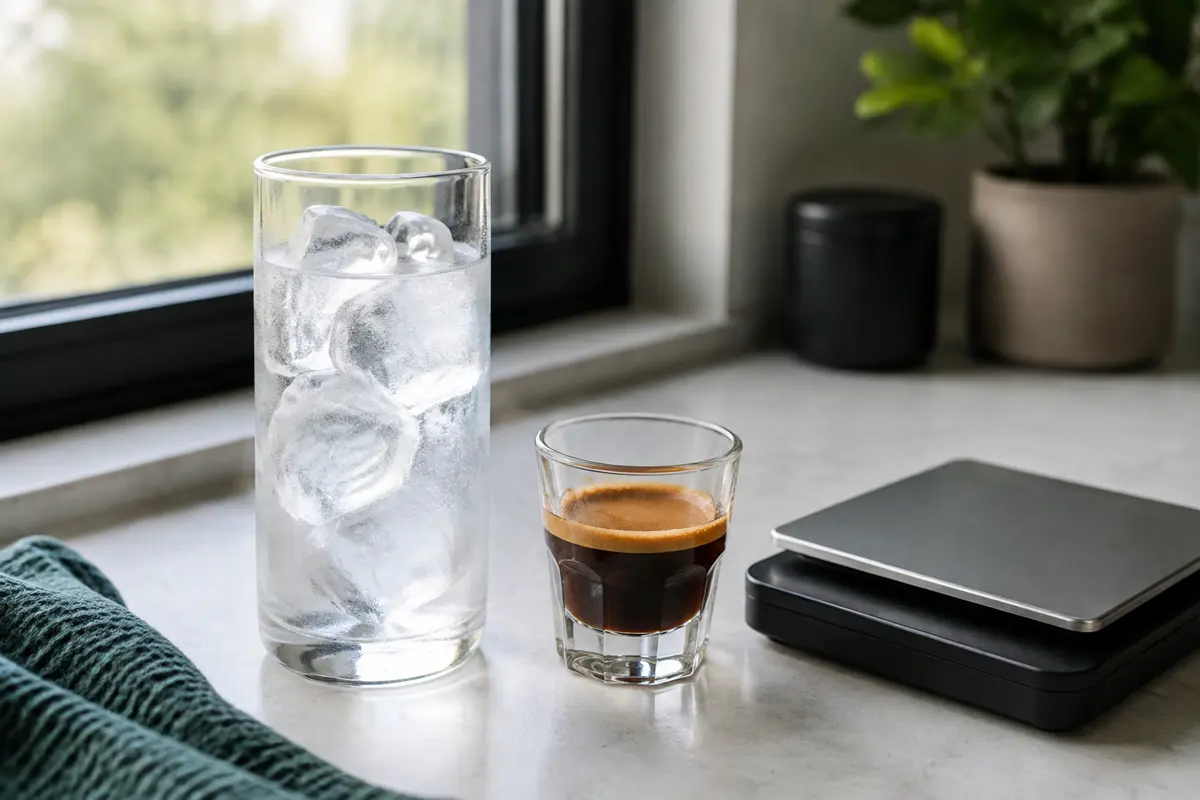
The starting water and expected melt belong in one budget. Weighing the ice during the first trial shows whether a weak finish comes from the recipe or simply from leaving the drink too long.
Adding espresso last cools it quickly and can preserve an aromatic foam on the surface. If the drink tastes balanced at first and weak ten minutes later, reduce either cold water or ice rather than extracting a stronger, harsher shot.
Large ice cubes melt more slowly but chill less surface at once, while small cubes cool rapidly and release water sooner. The choice depends on whether the drink will be finished promptly or carried for longer, so ice size changes timing rather than eliminating dilution.
For a make-ahead iced Americano, chill espresso and water separately from the ice, then combine near serving. Leaving hot espresso over ice for storage guarantees ongoing dilution and sacrifices fresh aroma.
Without an espresso machine, moka pot coffee or a short AeroPress concentrate can make a useful diluted black drink. Call the result Americano-style when clarity matters, since the Americano profile is defined by espresso plus water.
The method succeeds when every stage keeps its own job: espresso supplies extraction and aroma, water sets concentration and temperature, and ice supplies cooling while adding known dilution. Changing one stage at a time makes the finished cup easy to repeat.
Hot Americano method
- Makes
- 1 cup, about 110 ml
- Ratio
- 1 part espresso to 2 parts added water
- Water temp
- Hot but below a hard boil
- Total time
- 4 min
What you need
- 1 double espresso, about 36 g
- 72 g fresh hot water
Equipment
- Espresso maker
- Small cup
- Kettle
- Scale or marked vessel
Method
- PreheatWarm the cup, then discard the water.
- ExtractPull a balanced double espresso.
- DiluteAdd the measured hot water without filling by eye.
- TasteLet the cup cool briefly before changing the ratio.
Common questions
What is a good Americano ratio?
A 1:2 espresso-to-added-water ratio is a useful strong starting point, while 1:3 is gentler. Measure from the liquid espresso, not the dry grounds.
Does espresso or water go first?
Either can work. Espresso first is easier to measure and mix consistently; water first preserves more surface crema but can leave concentration layers.
How do you stop an iced Americano becoming watery?
Count ice melt as part of the water and use chilled water with large cold ice, rather than pouring a full hot Americano over a full glass.