How to Make Pu-erh Tea, Starting With the Cake
Pu-erh comes pressed into a cake, and brewing it starts with telling raw from ripe and getting a piece off without shredding it.
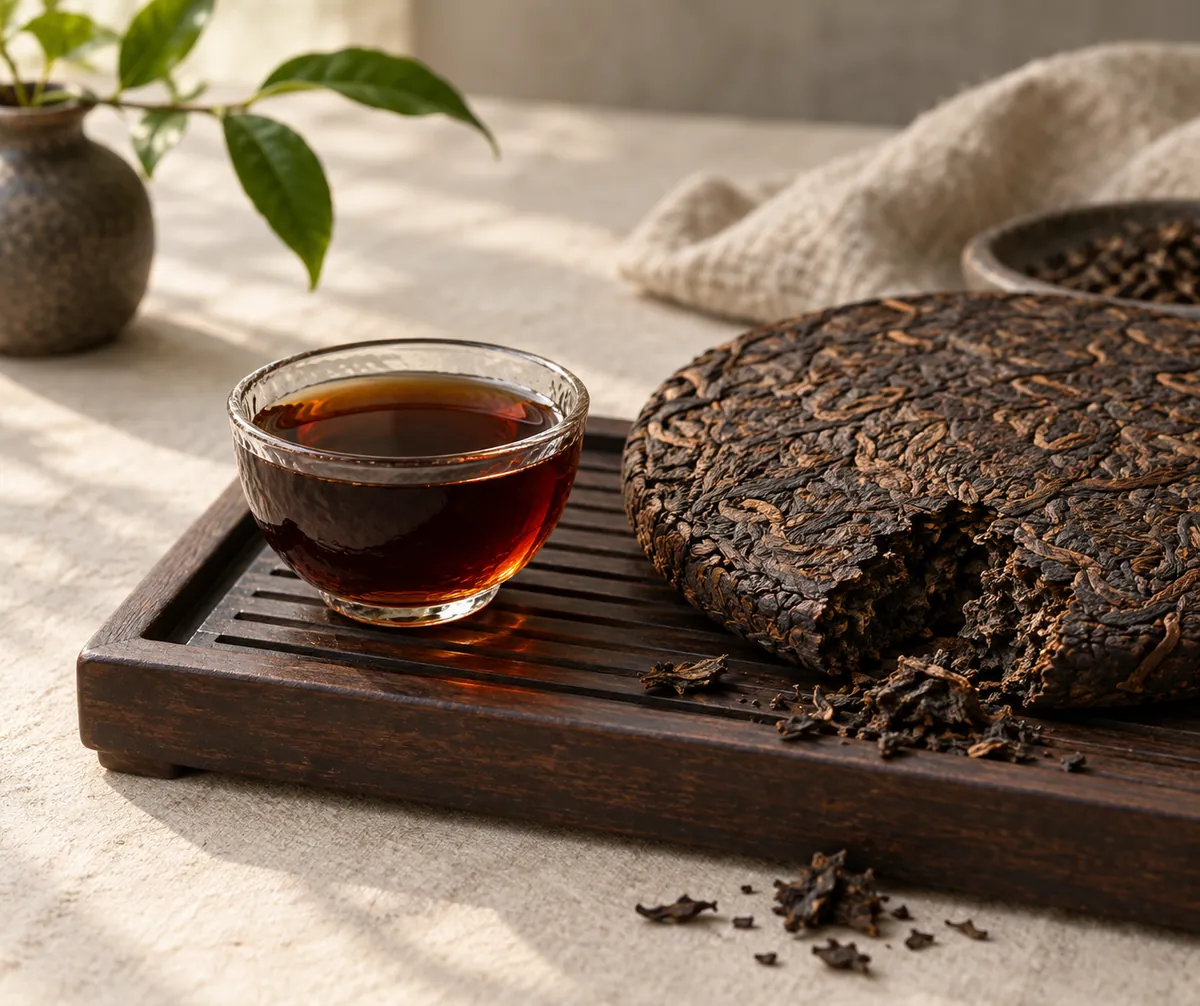
Pu-erh tea arrives as a solid disc rather than as loose leaf, and two very different teas hide under the one word.
Before any question of temperature there are two practical obstacles. You have to know which tea you have, and you have to get some of it off the cake, which no ordinary loose leaf ever asks of you.
Is your pu-erh tea raw or ripe?
Brew a small cup and hold it to the light.
Raw pu-erh runs gold or amber and lets light through, ripe runs so dark it reads as black, and that single test settles the water temperature for everything after it.
| Type | Also called | Liquor | Smell | Water |
|---|---|---|---|---|
| Raw | Sheng | Gold to amber | Hay, apricot, sharp | 90 to 95 C |
| Ripe | Shou | Near black | Damp wood, earth | Full boil |
| Aged raw | Old sheng, fifteen years or more | Deep amber | Wood, dried fruit | Full boil |
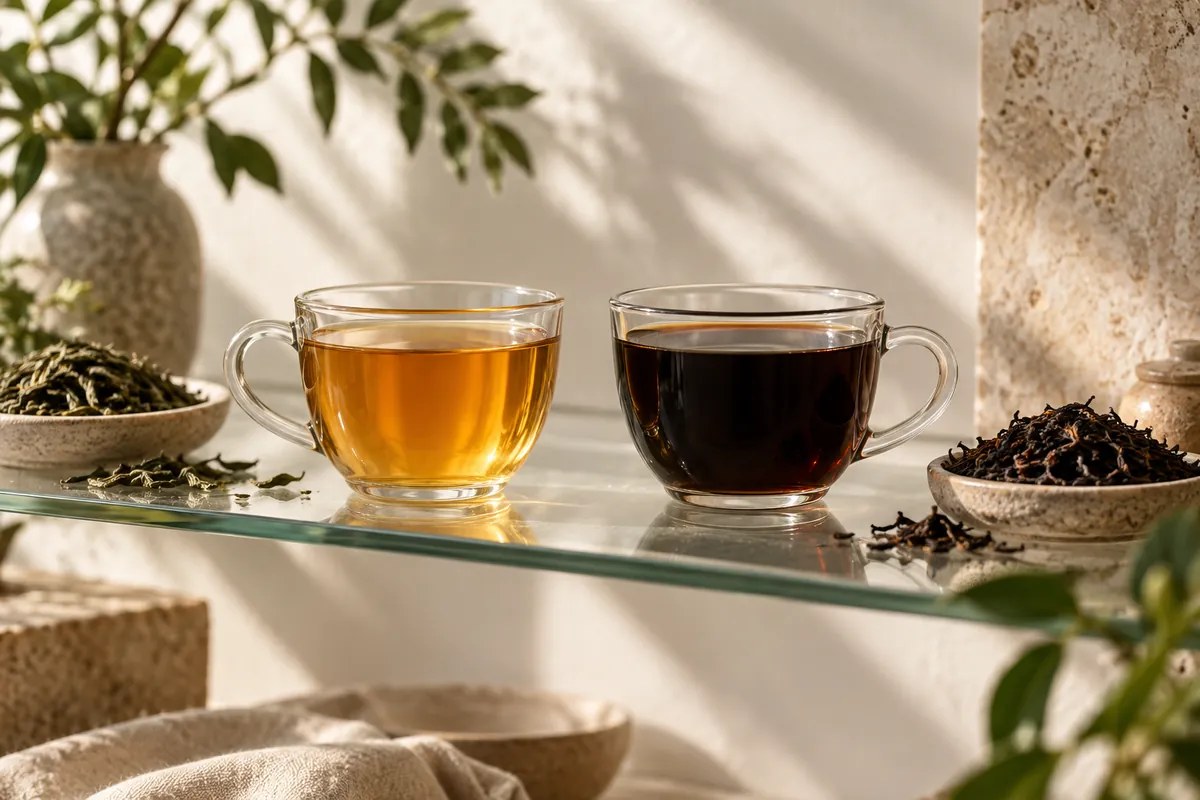
The difference is in how the two were made. Raw pu-erh is sun-dried and then left alone to change over years, while ripe pu-erh is fermented deliberately in a matter of weeks.
That compression of time shows in the cup: young raw is bitter and brisk, closer to a rough young green tea, and ripe is smooth and earthy from the start.
Smell the dry cake if you have no label, the way you would judge stored beans. Ripe smells of damp wood and forest floor, and raw smells of hay and something faintly sour.
Age muddies the visual test. Raw pu-erh darkens over decades and a thirty-year-old cake can pour almost as dark as a ripe one, which is when the smell becomes the better guide.
How do you break a piece off a pu-erh cake?
Slide, do not stab.
The leaves in a cake lie in layers, and a flat blade worked along those layers lifts them out whole while a downward stab cuts straight through them.
Opening a cake
- Start at the backThe reverse side is pressed looser than the face.
- Slide in flatPush the pick almost parallel, between the layers.
- Lever gentlyLift rather than pry, and a flake will come away.
- Take a week's worthBreak off several days at once so the cake is disturbed less.
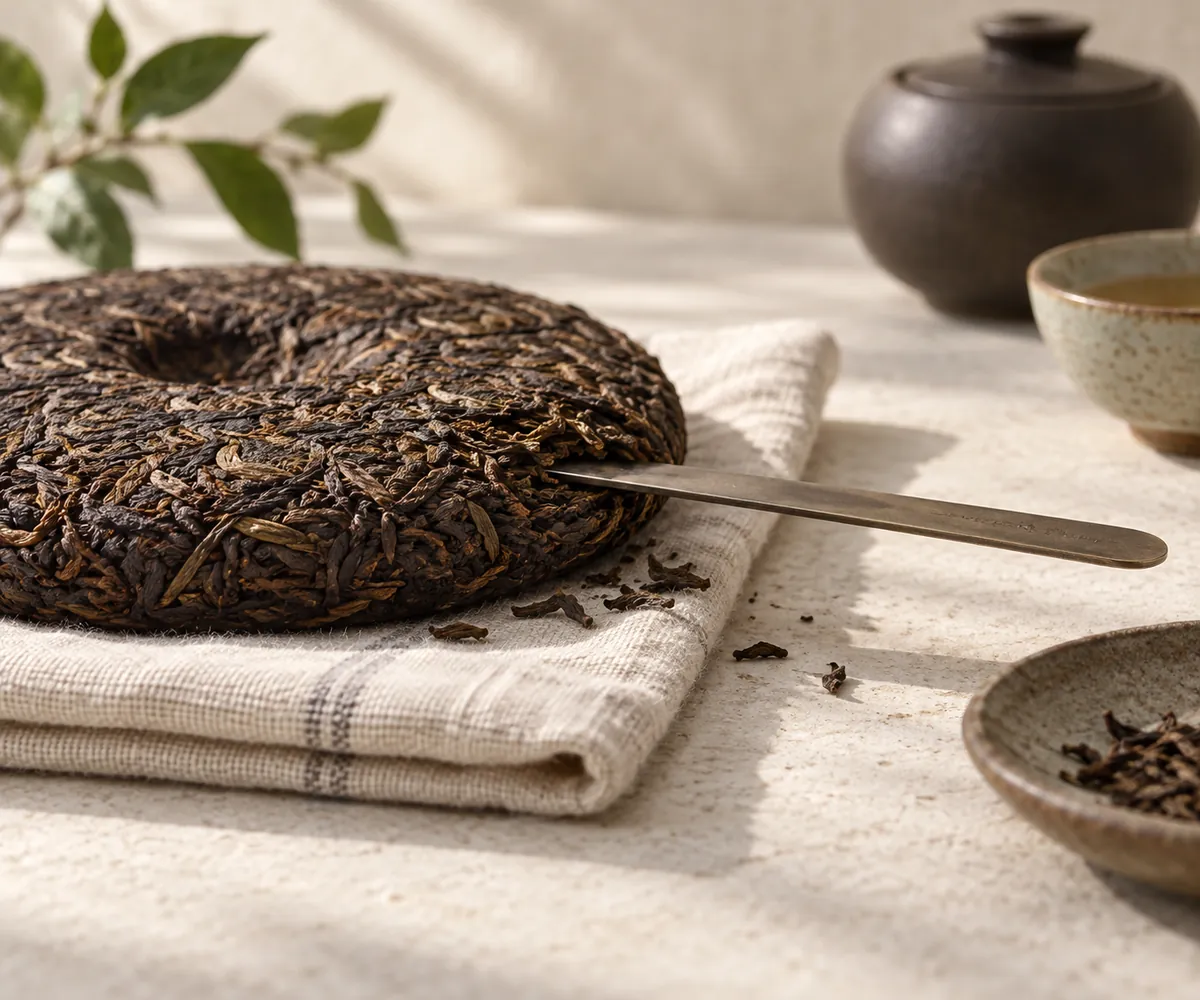
Any flat blade will do. A dedicated tea pick is cheap and comfortable, but a butter knife or a flathead screwdriver does exactly the same job.
Shredded leaf brews differently, and worse. Broken edges extract far faster than whole leaf, so a cake attacked with force gives cups that turn bitter two infusions early.
The face of a cake is pressed to look neat and is denser for it, so the reverse is where the tool goes in easily.
Some shapes fight harder than others. A tuo cha is pressed into a dense bowl and resists at every angle, and it is the one case where patience matters more than technique.
Loose pu-erh skips all of this. It exists, and it is a reasonable place to start if the cake is defeating you.
Why does pu-erh tea need a rinse?
A rinse does two jobs. It wakes compressed leaf, and it takes off the dust that a cake which has spent years on a shelf carries with it.
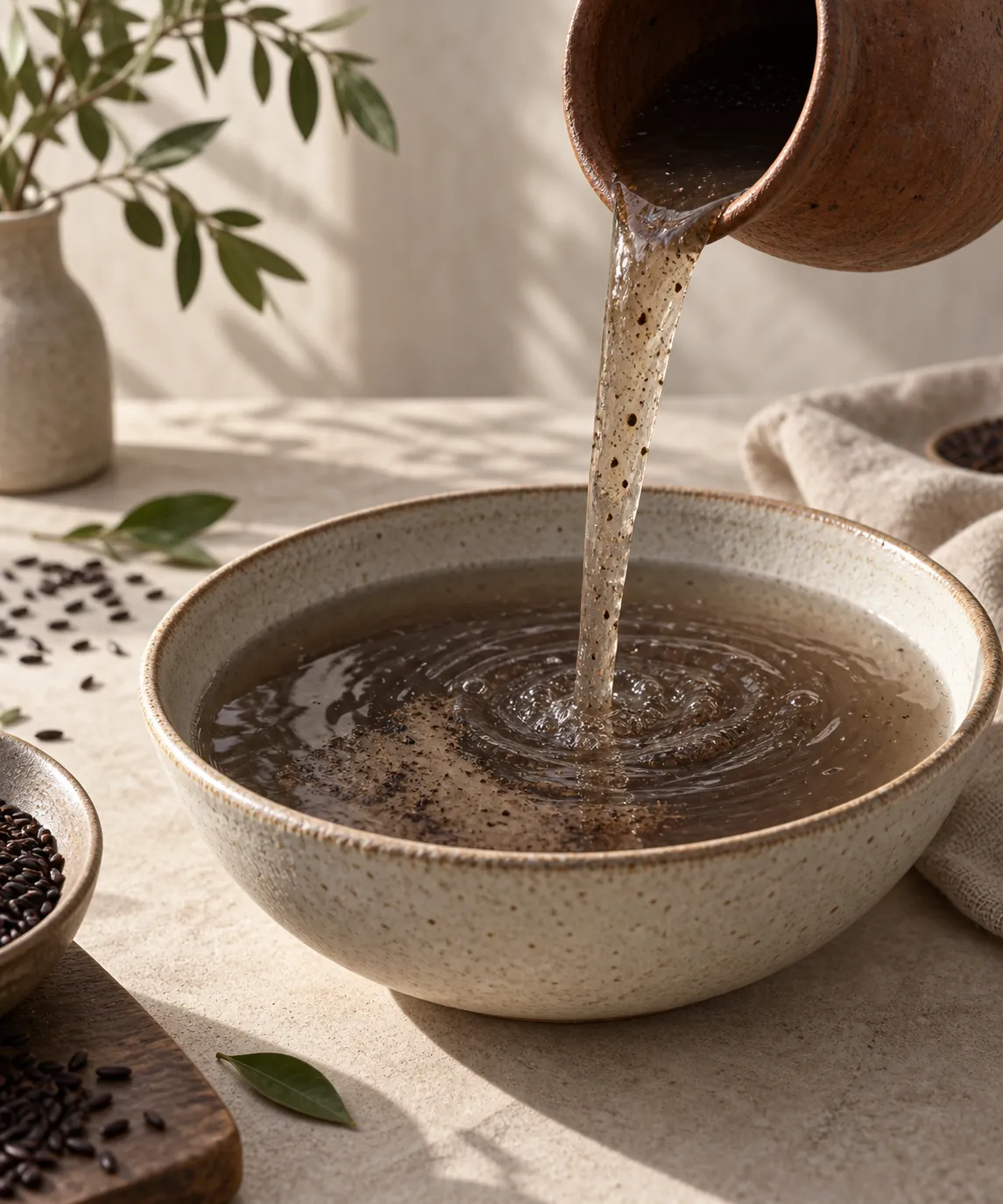
The first cup off an unrinsed cake can taste of cellar and storage, which is not what the tea tastes like once it has opened.
Ripe pu-erh gains more from it than raw. It has been through a wet fermentation and carries more surface material, so the discarded water comes out visibly darker.
A tightly pressed cake often takes two. Give it a second rinse if the chunk still looks solid after the first, because a dry core will not extract evenly.
Use the same brewing water you intend to steep with. A cool rinse wets the leaf without opening it, which gets one of the two jobs done and not the other.
What water and how much leaf does pu-erh tea need?
Ripe takes a full rolling boil, and raw wants a little less.
Water and leaf
- Ripe pu-erh
- 100 C, straight off the boil
- Raw pu-erh
- 90 to 95 C
- Leaf, western
- 2 g per 250 ml
- Leaf, gongfu
- About 7 g per 100 ml
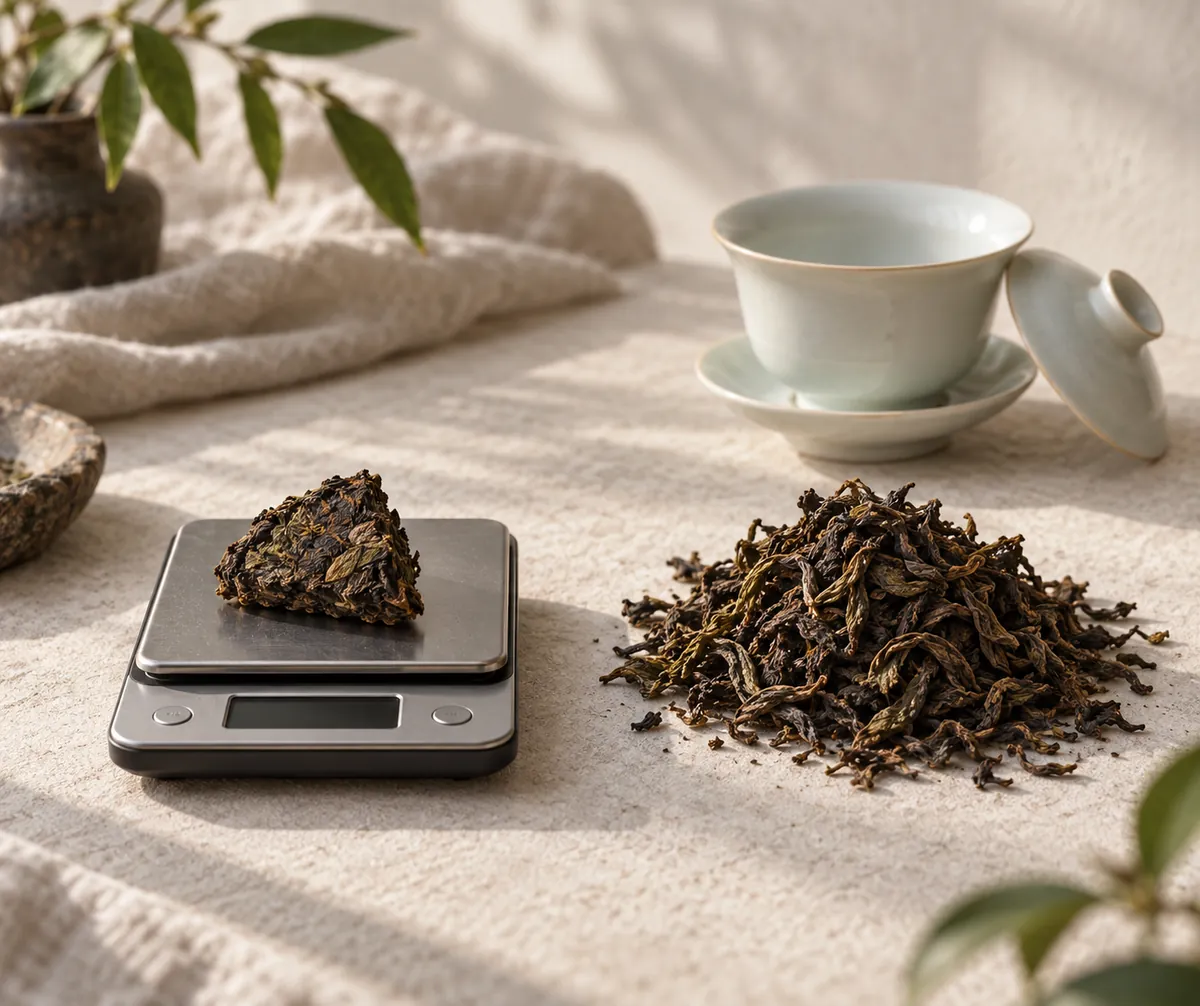
Pu-erh is one of the few teas on the steeping temperature table that genuinely wants boiling water, because ripe pu-erh has already been fermented a long way and there is little left in it for heat to spoil.
Young raw is the exception that keeps the caveat alive: it still carries the briskness of a green leaf, so full boiling water on a fresh sheng gives the same harsh edge that green tea gets at 100 C.
Raw that has aged for many years has lost much of that edge, so the table lets it take a full boil.
Weigh the leaf the first few times. Compressed tea is denser than it looks, and a chunk the size of a coin can be well over the dose you intended.
Western quantities are lower than for oolong tea. Two grams to a mug is enough because this leaf gives its colour readily, and it is easier to lengthen a steep than to rescue an over-dosed pot.
How do you brew pu-erh tea in a pot or mug?
Rinse, thirty seconds, then lengthen every round.
The unusual part is that this tea often gets better for the first several infusions rather than weaker, because the chunk is still opening while you drink.
Later steeps run one to three minutes, once the colour starts to thin.
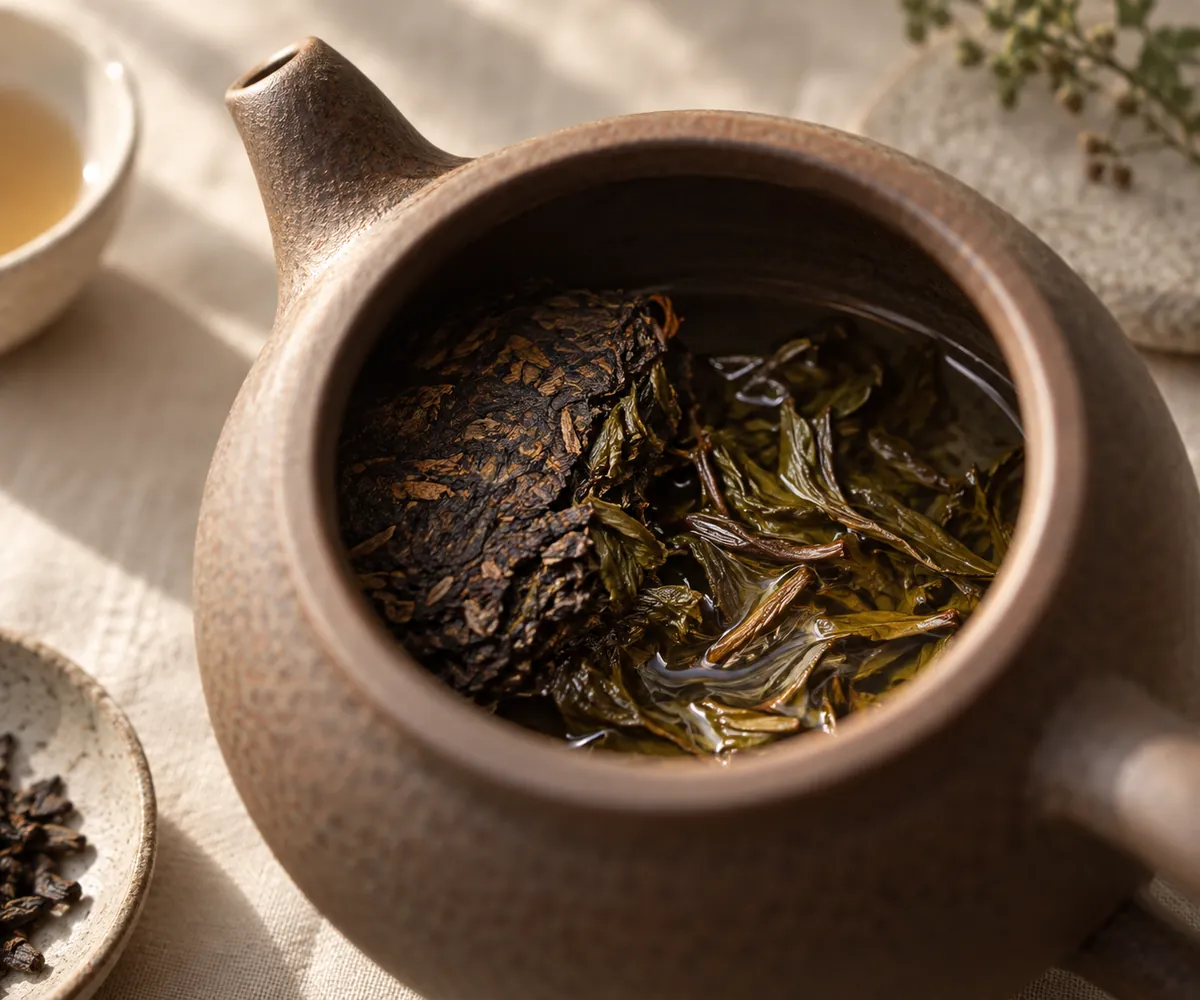
Decant completely every time, which a lidded gaiwan makes easy. Liquor left standing on the leaf carries on extracting between rounds, and this is the tea that punishes it hardest.
A plain mug is the difficult case. Without a basket strainer the leaf keeps brewing while you drink, so the bottom of the mug is always harsher than the top.
A dense chunk may want longer at the start. If the first cup is pale and the leaf still looks solid, give the second forty-five seconds rather than thirty.
The tea changes as it goes, which is the point of brewing it this way. A ripe pu-erh moves from woody to sweet to something almost like cocoa across a session, and none of that shows up in a single long steep.
How many times can you steep pu-erh tea?
Six to ten times, and the best cup is rarely the first.
Where the session peaks
- First infusionLight, still opening | Do not judge the tea on this
- Fourth infusionFullest colour and sweetness | Usually the best cup
- Tenth infusionPale, thin, woody | The practical end
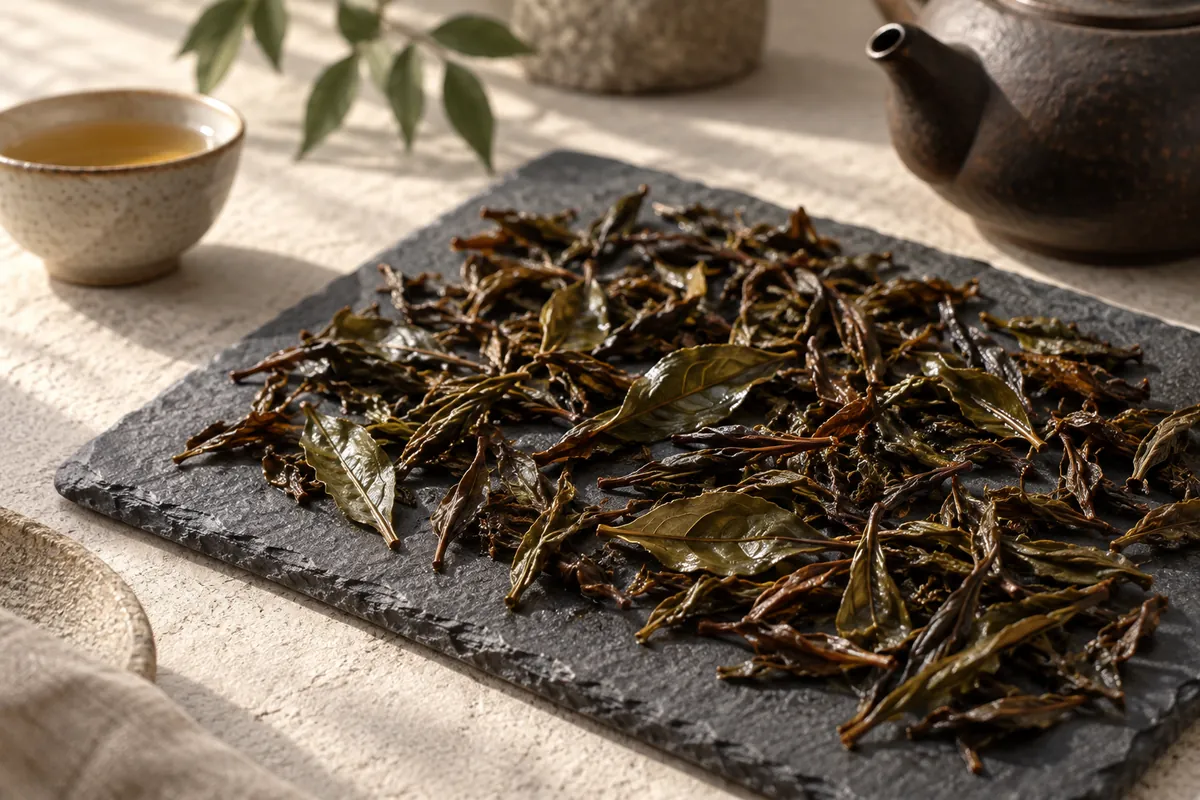
Aged cakes go further than young ones. Decades of slow change give the leaf more to release, and a good aged sheng will still be giving something at the twelfth cup.
Lengthen steadily rather than in jumps. Fifteen seconds more each round keeps the cups even, where doubling the time produces one strong cup and then a cliff.
Ripe pu-erh has one last use after the steeps stop, borrowed from stovetop cocoa. Put the spent leaf in a pan with water and simmer it for ten minutes, and it will give a final dark cup that steeping cannot reach.
How you broke the cake shows up here. Whole flakes keep giving through the later rounds where shredded leaf is spent by the sixth.
Why does my pu-erh tea taste musty?
The useful question is whether it goes away.
Mustiness that disappears after the first cup or two is storage, mustiness that persists through every infusion is the cake, and only one of those is worth doing anything about.
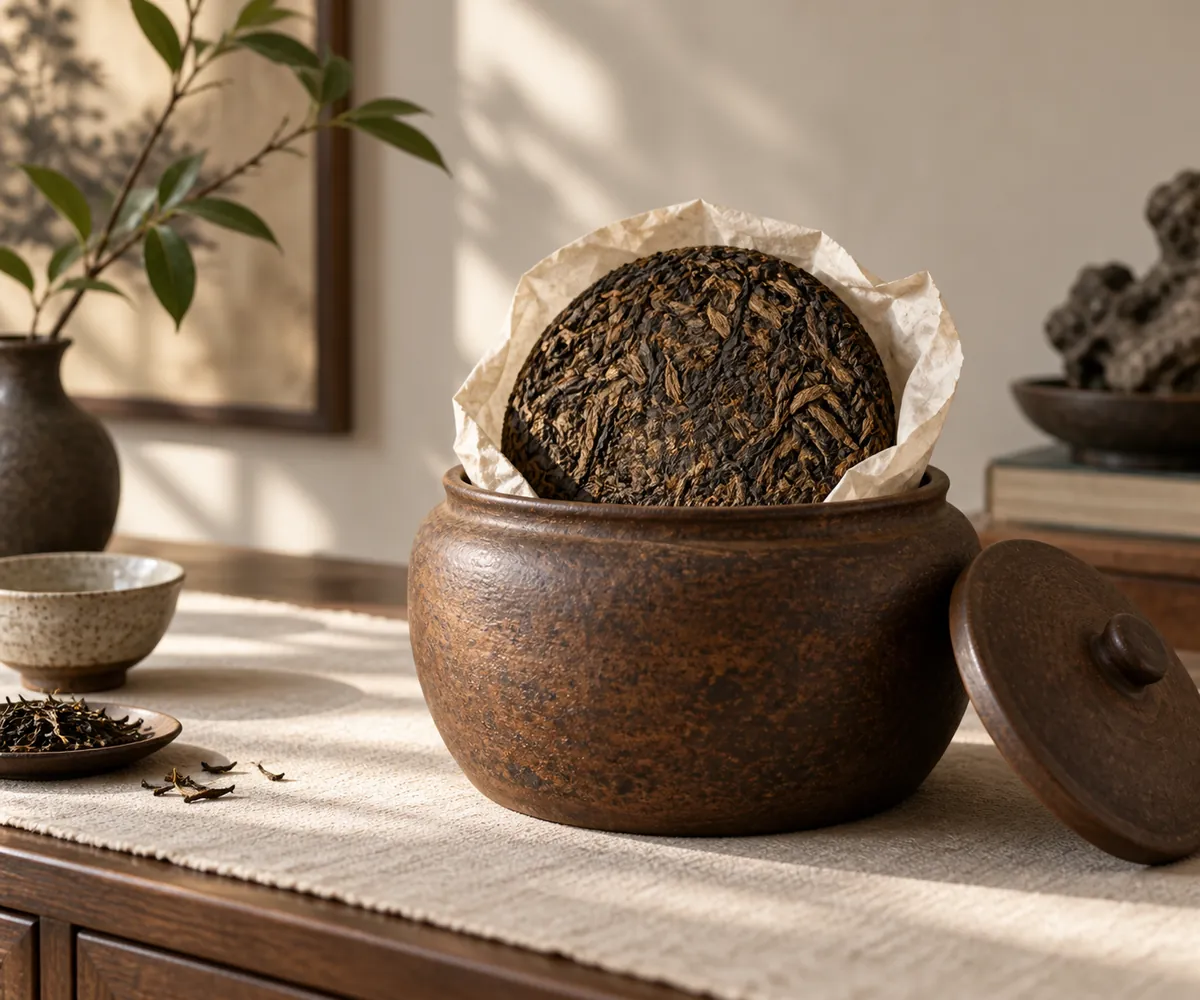
An unrinsed cake is a common cause, and the easiest for you to rule out, since the fix takes ten seconds and costs nothing.
Young ripe pu-erh often carries a distinctly fishy note. It comes from the fermentation and it fades, and a cake that tastes of the sea today will usually be clean after a year in an open jar.
Airing is more casual than it sounds. Unwrap the cake, stand it in an earthenware jar with the lid off, and leave it somewhere shaded away from the kitchen.
Damp storage is the one that does not lift. A cake kept somewhere genuinely wet keeps its cellar smell through every infusion and through any amount of airing.
Two things are not faults at all. Earthiness is what ripe pu-erh is rather than a flaw, and a cake stored beside spices or strongly scented leaf will simply taste of them, which is a lesson about the shelf rather than the tea.
Pu-erh method
- Makes
- 250 ml a cup, and six to ten infusions from one measure
- Ratio
- 2 g per 250 ml western, or about 7 g per 100 ml gongfu
- Water temp
- Full boil for ripe, 90 to 95 C for young raw
- Steep time
- About 30 seconds on the first infusion
- Total time
- 8 min
What you need
- 2 g pu-erh per 250 ml of water, broken from a cake
- Water at a full boil for ripe, or 90 to 95 C for young raw
Equipment
- Tea pick or any flat blade
- Teapot or gaiwan
- Kettle
- Discard bowl
Method
- BreakSlide a flat pick almost parallel into the back of the cake and lever a flake away.
- RinseCover the leaf with hot water and pour it away within five to ten seconds.
- First steepAbout 30 seconds, and expect it lighter than the ones after it.
- LengthenAdd roughly 15 seconds each round while the chunk keeps opening.
- DecantPour out completely every time rather than leaving liquor on the leaf.
Common questions
What is the difference between raw and ripe pu-erh?
Raw is sun-dried and left to change over years, and ripe is fermented deliberately in weeks. Raw pours gold or amber and ripe pours nearly black.
How do you break a pu-erh cake without shredding it?
Slide a flat blade almost parallel into the looser back of the cake, between the layers, then lever gently. A downward stab cuts through whole leaves.
Do you have to rinse pu-erh tea?
Yes, for five to ten seconds. It wakes compressed leaf and takes off storage dust, and an unrinsed first cup can taste of cellar and storage.
Why does my pu-erh taste fishy?
Young ripe pu-erh often does, and it fades after a year in an open jar. If the smell survives into the fourth infusion, the cake was stored damp.