What Is Soda Water? Carbonated, With Salts Deliberately Added
Soda water is carbonated water with mineral salts deliberately added. Those salts are the entire point: they change how it tastes, how it mixes, and how long the bubbles last.
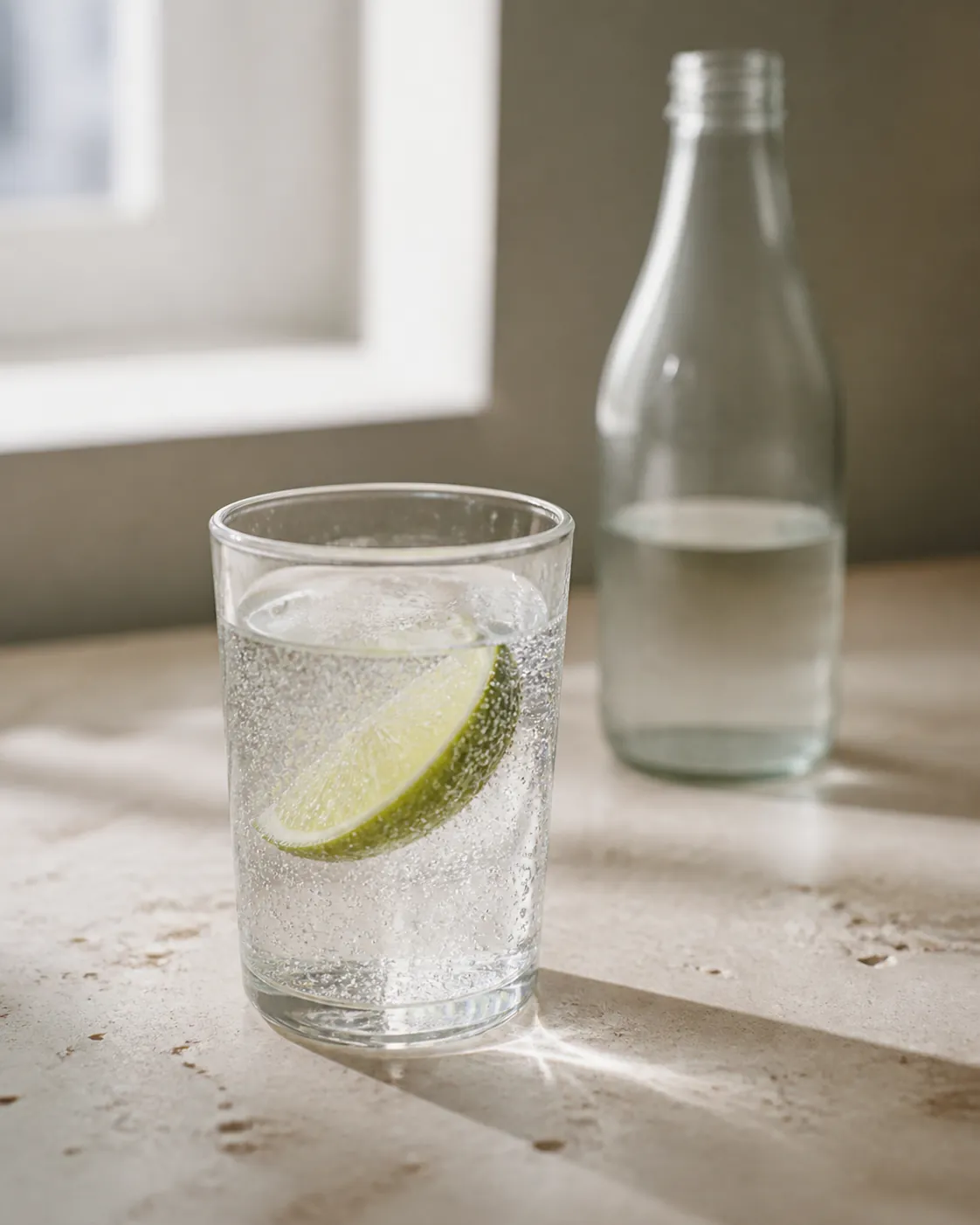
Soda water is carbonated water to which mineral salts have been added. In most markets it is the same product as club soda, and the two names are used interchangeably.
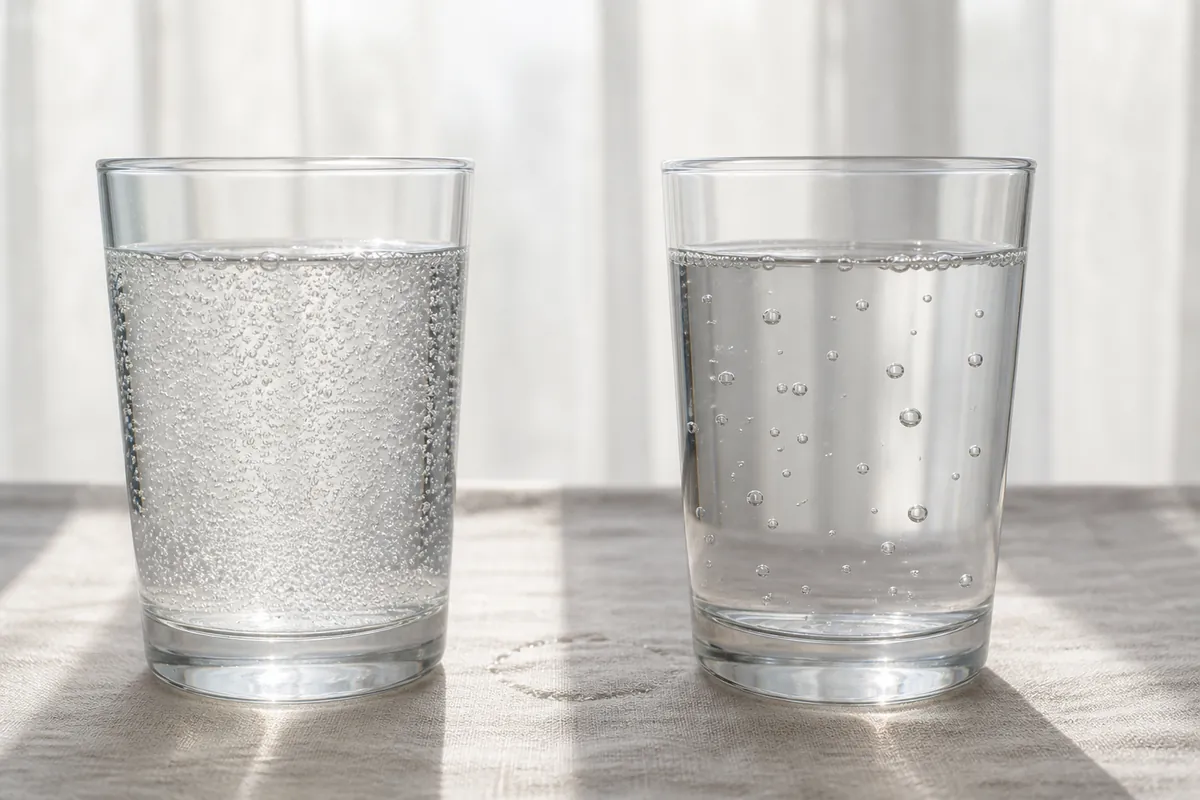
What separates it from seltzer is not the carbonation. It is a small quantity of dissolved salts, well under a gram in a litre, and the size of the effect is out of all proportion to the quantity.
Soda water at a glance
- What it is
- Carbonated water with mineral salts deliberately added
- The main salt
- Sodium bicarbonate, which buffers the acidity of the carbonation
- Other salts seen
- Potassium sulphate, sodium chloride, disodium phosphate, sodium citrate
- Same thing as
- Club soda, in most markets
- Not the same as
- Seltzer, which is carbonated water with nothing added
- Typical sodium
- Roughly 20 to 60 mg per 250 ml, depending on the brand
What the salts are, and how little of them there is
The additions are few and their quantities are small, which is what makes the size of the effect surprising when you taste the two waters side by side.
The usual additions
- Sodium bicarbonate
- The main one. Buffers the acidity and gives a rounder, faintly saline taste
- Potassium sulphate
- Adds a dry, firm edge to the finish
- Sodium chloride
- Present in some formulations, in very small amounts
- Disodium phosphate
- Used by some producers as a buffering agent
Bicarbonate is doing most of the work. It neutralises part of the carbonic acid that carbonation creates, which is why soda water tastes softer and less sharp than seltzer at the same fizz level, and why a blind taste of the two rarely comes down to bubbles at all.
Sodium is there for taste rather than for anything else, because it suppresses bitterness and makes other flavours read more strongly, which is the mechanism behind everything this page says about mixing.
Potassium sulphate and sodium citrate turn up on some labels alongside the bicarbonate, doing the same job in slightly different registers, and that is a fair part of why two brands of a supposedly neutral product taste distinguishable from one another.
Seltzer, club soda, and where the name came from
These two are the pair most often substituted for each other, and the substitution is usually fine and occasionally not.
| Soda water | Seltzer | |
|---|---|---|
| Added minerals | Yes, deliberately | None |
| Taste | Rounder, faintly saline, softer acidity | Neutral, sharper, cleaner |
| pH | Slightly higher, buffered | Slightly lower |
| Bubble persistence | Marginally longer | Marginally shorter |
| Best for | Mixing, where a little body helps | Drinking plain, or with delicate flavouring |
In a mixed drink, soda water generally performs better, because the salts give a small amount of body that stops a diluted drink reading thin and watery. Drunk plain the preference goes the other way for many people, since seltzer offers exactly the neutrality you want when the water is the drink rather than the vehicle.
The history explains the salts. Eighteenth-century chemists worked out how to dissolve carbon dioxide in water and sold the result as an imitation of naturally carbonated mineral springs, and because those springs carried dissolved salts, salts were added to the artificial version to match, which is a habit that outlived its reason.
The word soda comes from sodium carbonate, one of the salts originally used, so a drink defined by its bubbles ended up named after a mineral. That same history is why club soda and soda water mean the same thing in most places, and it leaves one live ambiguity worth knowing: across much of the United States "soda" means any sweetened carbonated soft drink, so an order needs to be specific.
The full set of overlapping names runs to five.
Why the salts help a mixer
Dilution is the problem a mixer creates. Adding carbonated water to a concentrated flavour thins it, and a completely neutral water thins it faster because it contributes nothing of its own to replace what has been spread out.
What the salts do in a mixed drink
- BodyDissolved salts give a slight weight that offsets the thinning.
- BufferingBicarbonate softens the acidic bite, so the mix reads rounder.
- PerceptionA trace of sodium makes other flavours read as more pronounced.
- BubblesDissolved solids give nucleation sites, and the carbonation holds more evenly.
That last point is why a drink built on soda water often looks livelier in the glass for longer than the same drink built on seltzer, and it is also the reason bar recipes bother to specify which water they mean. The effect is easiest to notice with something sharp: a splash of lemon and a spoon of syrup lengthened with seltzer reads as sour water, and the same two things lengthened with soda water read as a drink.
The buffering has a limit worth respecting. Over-salting is the common mistake at home, and the result is something that tastes flat and faintly of seawater rather than rounder, which is a fault no amount of extra syrup will cover.
Lengthening a concentrate, and what gets built on it
Soda water is a base far more often than it is a drink, and the salts change what can usefully sit on top of it.
With juice
Turns a strong juice into a long drink without adding sugar. Works well with tart juices.
With bitters
Angostura and soda is a classic long drink, bitter and dry, with nothing sweet in it.
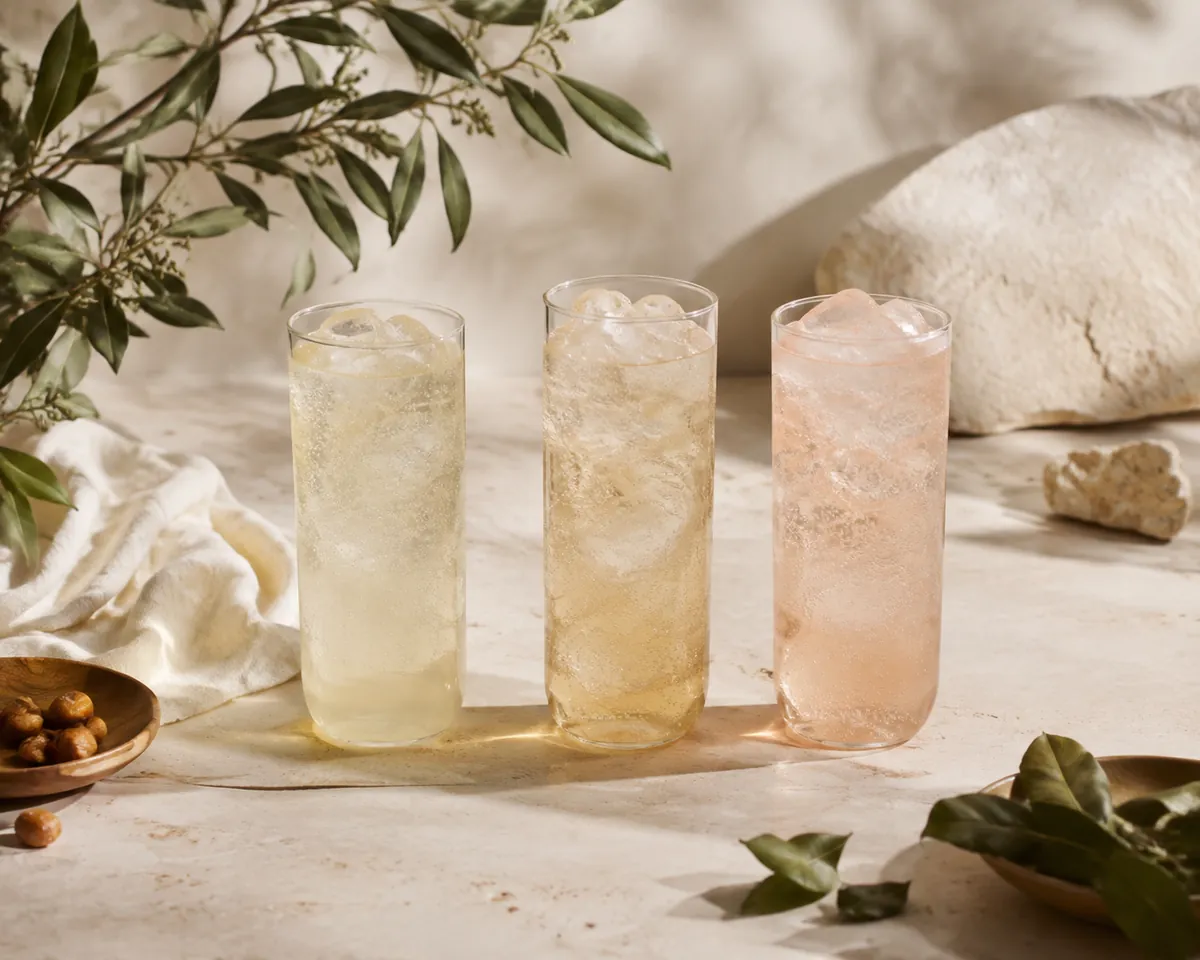
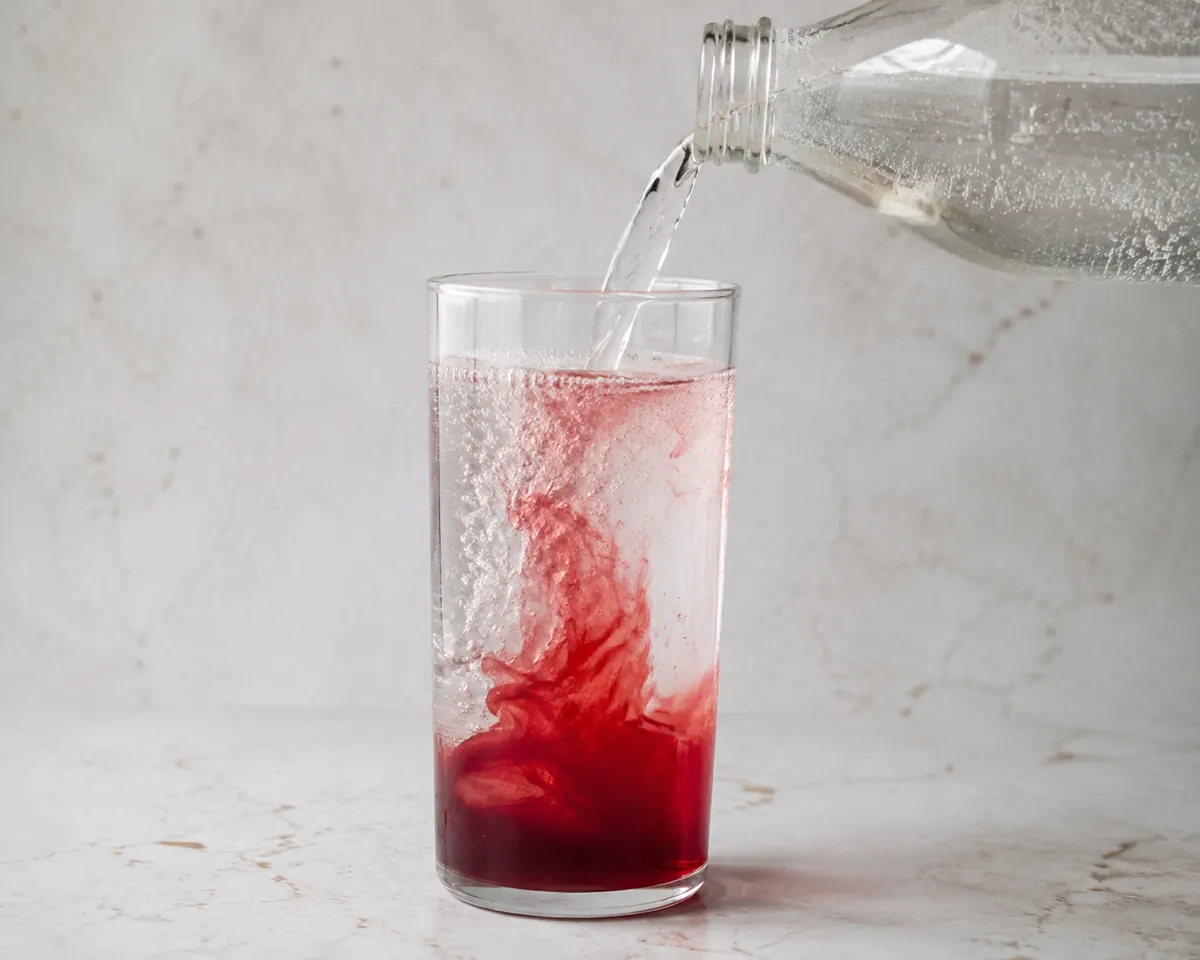
The pairing with concentrated infusions rewards trying. A strong hibiscus infusion topped with soda water makes a genuinely good long drink, because the acid and the bubbles reinforce each other, and the same works with a tart orange juice that would be too sweet at full strength.
Which water to build on comes down to the syrup rather than to preference. Sweet syrups gain from the salts, which cut the sweetness enough to stop the drink reading as cloying, and delicate floral ones are flattened by exactly the same effect.
Against a finished soft drink such as cola or root beer there is no role at all, since those arrive both carbonated and sweetened and soda water can only dilute them.
A carbonation machine makes seltzer, not soda water
Home soda water is straightforward once you accept that a soda maker produces seltzer. The salts are a second step, and the order of the two steps is not a stylistic preference.
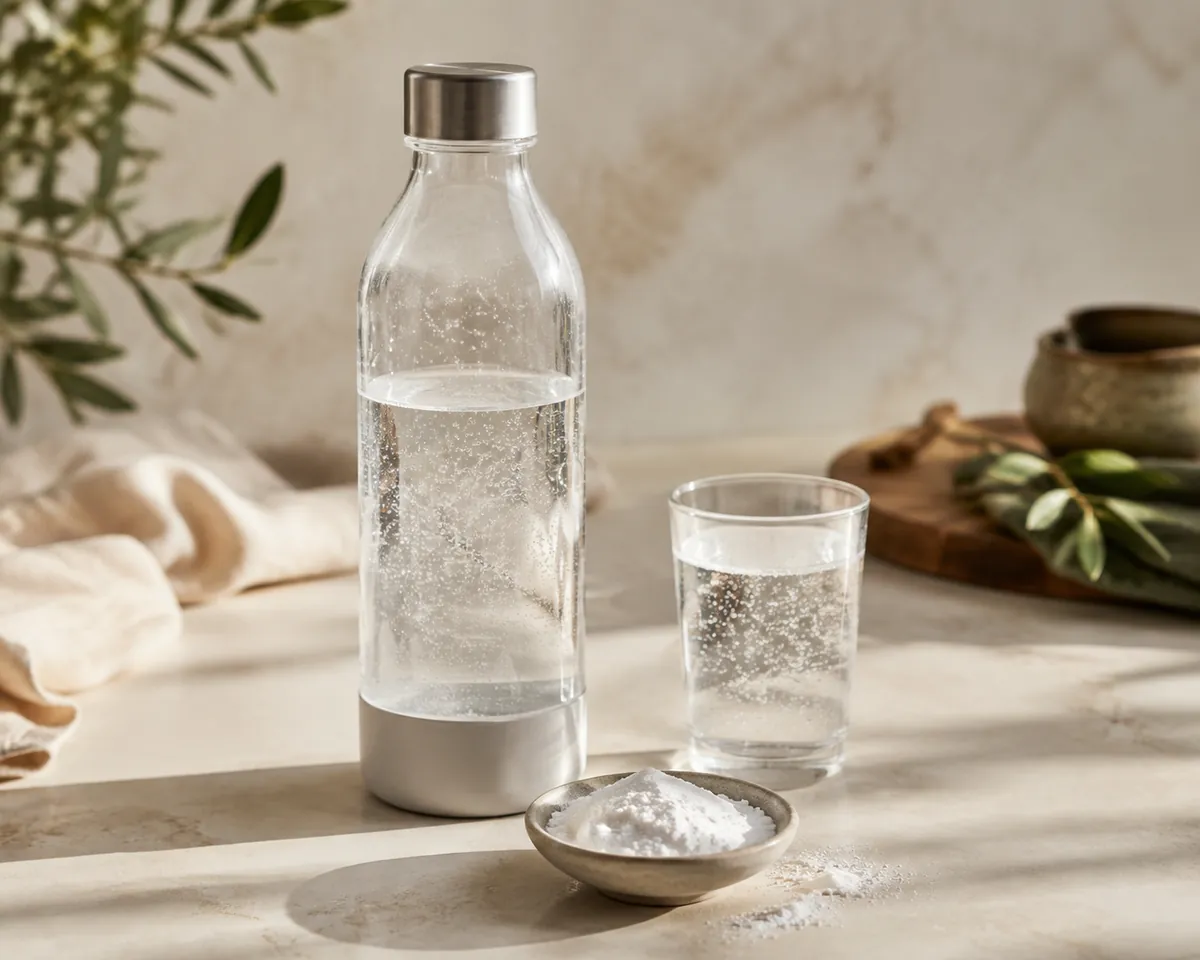
Turning seltzer into soda water
- Base
- 1 litre of freshly carbonated water, cold
- Sodium bicarbonate
- About 1/8 teaspoon, roughly 0.6 g
- Potassium sulphate
- A very small pinch, optional
- Method
- Dissolve the salts in a little water first, then add and seal immediately
- Note
- Add salts after carbonating, never before
Before bottled soda water was universal it was made at the point of use, and that equipment is still around and still has a point. A siphon is a pressurised bottle charged with a small carbon dioxide bulb, which carbonates the water inside and dispenses it under its own pressure, so the remainder stays sealed and lively between pours instead of losing gas into a growing headspace.
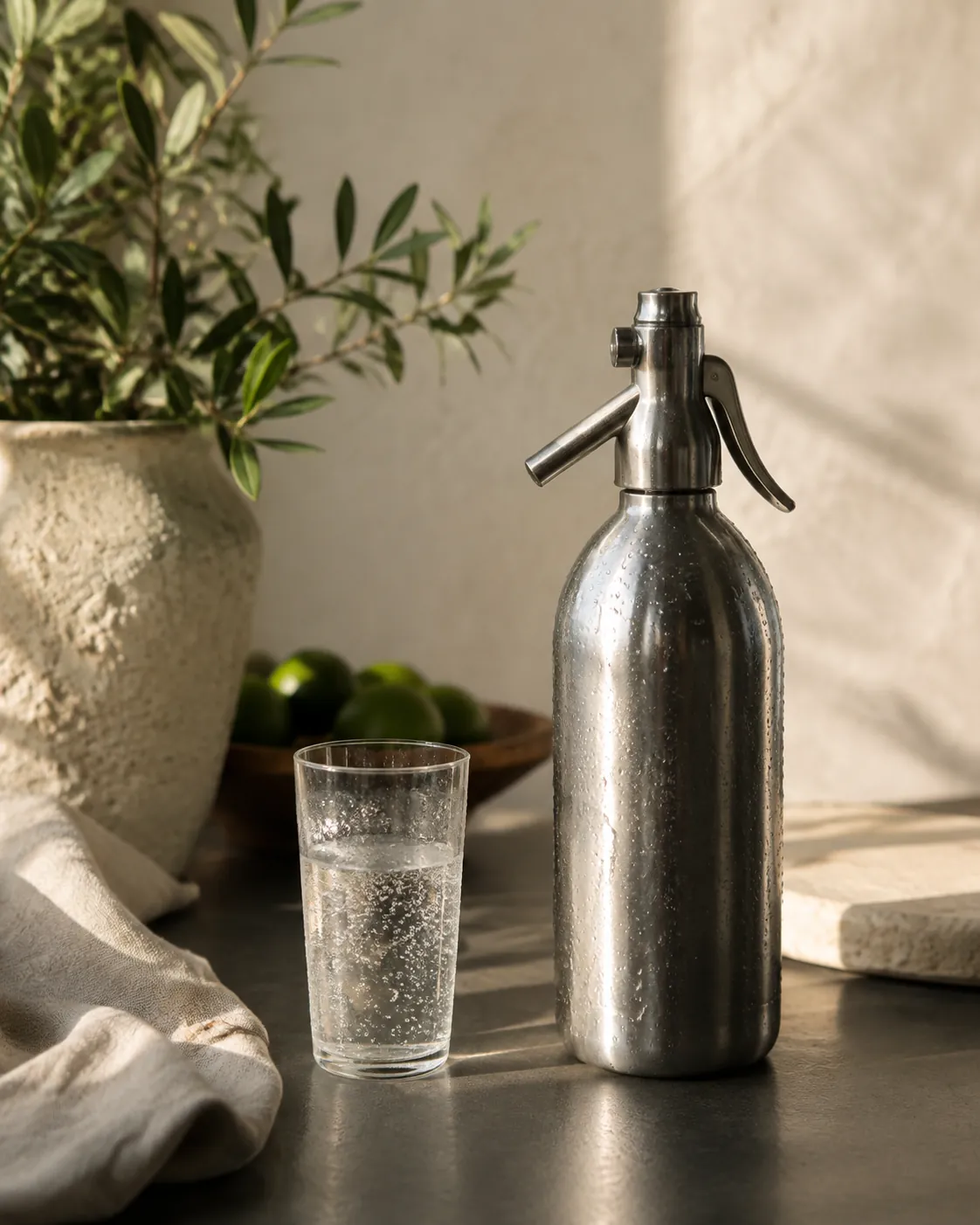
Why a siphon still has a point
- No headspace loss
- The bottle stays pressurised, so the last glass is as lively as the first
- Control
- You choose the charge level and the mineral content
- Cost
- Cheaper per litre than bottled once the equipment is paid for
- Limitation
- Only plain water. Anything with sugar or pulp will clog the valve
A siphon is the one method that keeps carbonation across days, which is why bars went on using them long after bottled soda became easy to buy, and why making your own is more practical with one than with a machine and a screw cap.
Buying it, and keeping what you have opened
Soda water is a low-cost product, and the differences between brands are real but narrow.
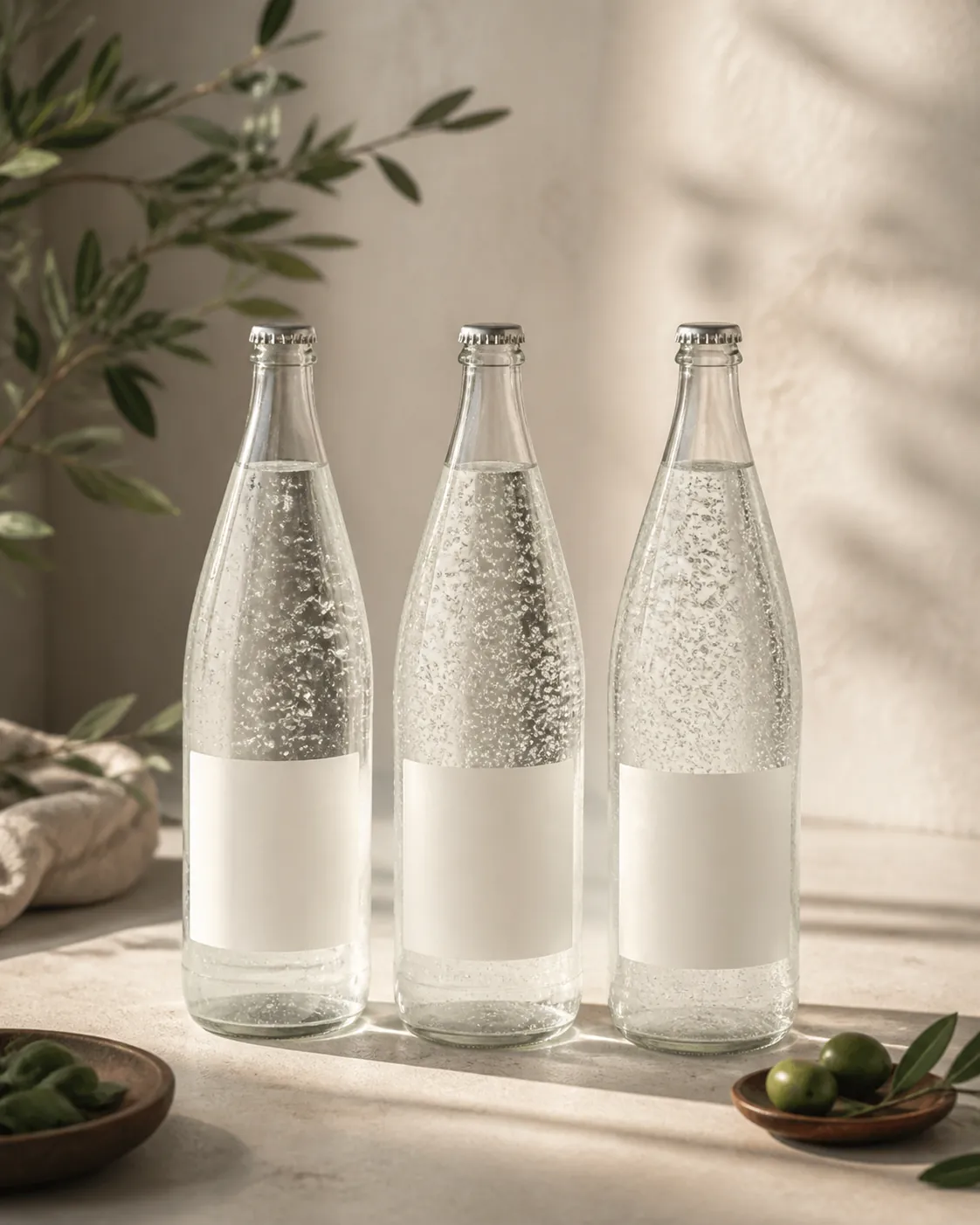
- Read the ingredients. If no minerals are listed, it is seltzer sold under the soda water name.
- Check the sodium figure if you are comparing brands; it varies more than anything else.
- Prefer glass over plastic for anything you will drink plain, since plastic loses gas over time.
- Buy small bottles for mixing. A large bottle goes flat before it is finished.
- Ignore claims about the water source. The added salts dominate whatever was there.
Small bottles are worth the premium for anyone who mixes occasionally. A drink made with half-flat soda water is noticeably worse, and the saving on a large bottle vanishes the moment half of it is poured away.
Claims about the spring the water came from are marketing rather than information here, which is a difference from mineral water, where the source analysis is the product.
Keep it cold and sealed. Cold water holds far more dissolved gas, and a tight cap lets pressure rebuild in the headspace rather than letting gas leave continuously, which is the whole of what storing it amounts to.
An opened bottle in the fridge holds usable carbonation for a day or two, and after that it is still perfectly good water and no longer a good mixer.
Where it sits among the sweetened bottles
Soda water is easiest to place by what it is not, since almost everything standing beside it on the shelf carries sugar.
| Soda water | Tonic water | Ginger ale | Cola | |
|---|---|---|---|---|
| Sugar | None | High | High | High |
| Added flavour | None | Quinine and citrus | Ginger | Citrus and spice |
| Added minerals | Yes | Incidental | No | No |
| Role | Neutral lengthener | Flavoured mixer | Flavoured mixer | Drink |
Tonic water is the bottle most often reached for by mistake and the least suitable stand-in, since it brings both sugar and quinine bitterness to whatever it lands in, and the difference between the two is not something a squeeze of citrus will paper over. Bitter lemon sits in the same trap for the same reason.
Ginger ale is a genuine alternative when you want the mixer itself to contribute something, and a finished cola is not a mixer in this sense at all. The useful test is whether the bottle brings sugar, because a mixer that sweetens has taken a decision out of your hands that soda water leaves in them.
What the bubbles do that still water does not
There is a real decision between sparkling and still in a mixed drink, and it is not only about the prickle on the tongue.
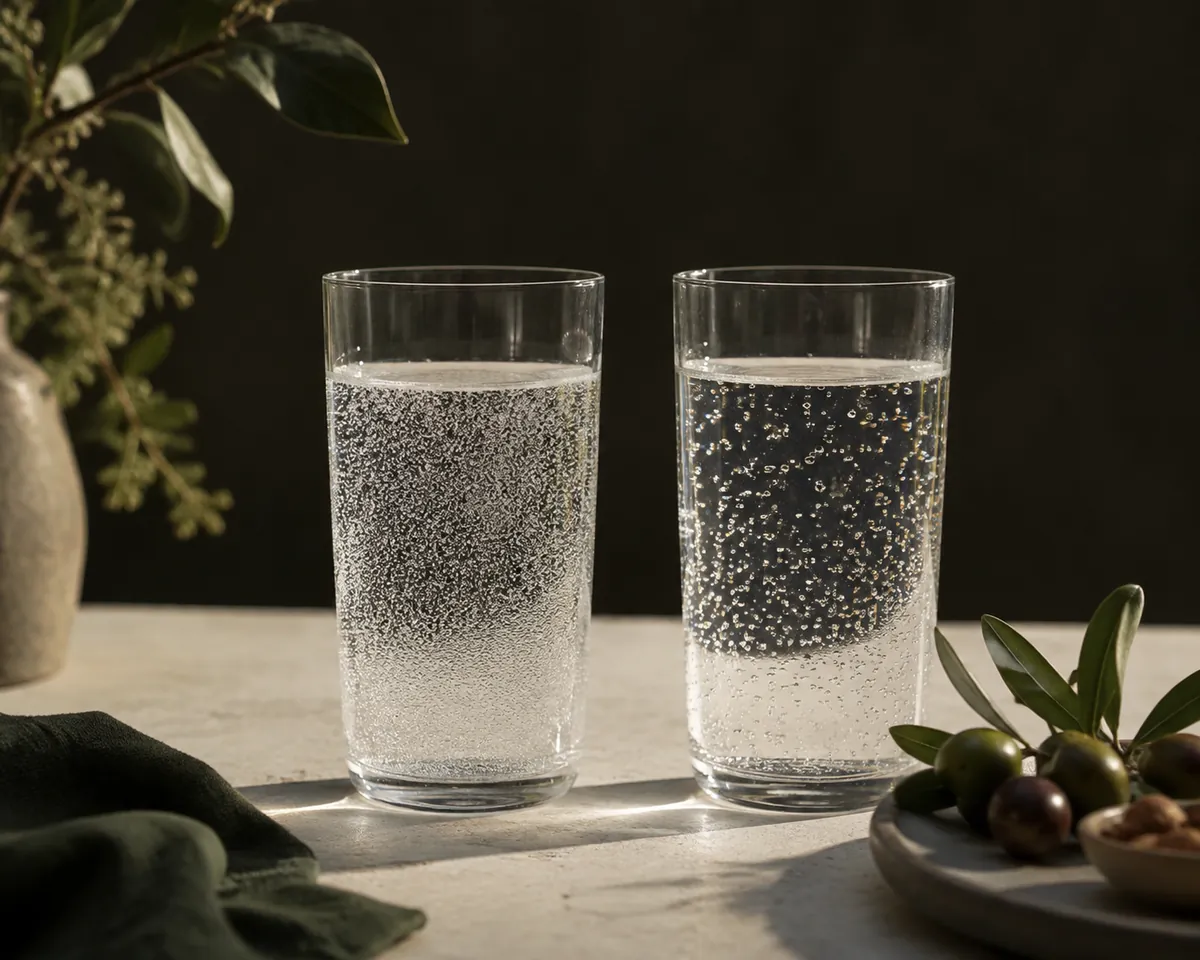
What carbonation does to a mixed drink
- Acidity
- Reads as higher, because carbonic acid adds to it
- Sweetness
- Reads as slightly lower, which is why flat versions taste cloying
- Body
- Feels fuller at the same dilution
- Aroma
- Rising bubbles carry volatile compounds to the nose
- Temperature
- Feels colder, since the prickle reinforces the cold sensation
That last effect is why a carbonated drink at the same temperature as a still one feels more refreshing, and the temperature is not doing the work. It also sets up the most common domestic disappointment, which is that carbonated mixers only behave when everything else is already cold.
Chilled soda water poured onto a room-temperature syrup or juice warms instantly, and warm liquid holds far less gas, so the drink is half flat before a spoon touches it.
Chill the flavouring as well as the water, and use fewer, larger pieces of ice rather than crushed. Those two changes cost nothing but planning and improve a homemade long drink more than any change of brand, since every rough surface in the glass is somewhere for the gas to escape.
The stain-removal claim, examined
Soda water has a long-standing reputation as a household answer to spills. Some of that survives scrutiny and some of it does not.
Poured on a fresh stain it does help, and not for either of the reasons usually given. It works because it is a colourless liquid applied promptly and the agitation lifts the stain before it sets, which means still water does very nearly as well and a cloth and cold tap water does the same job for nothing.
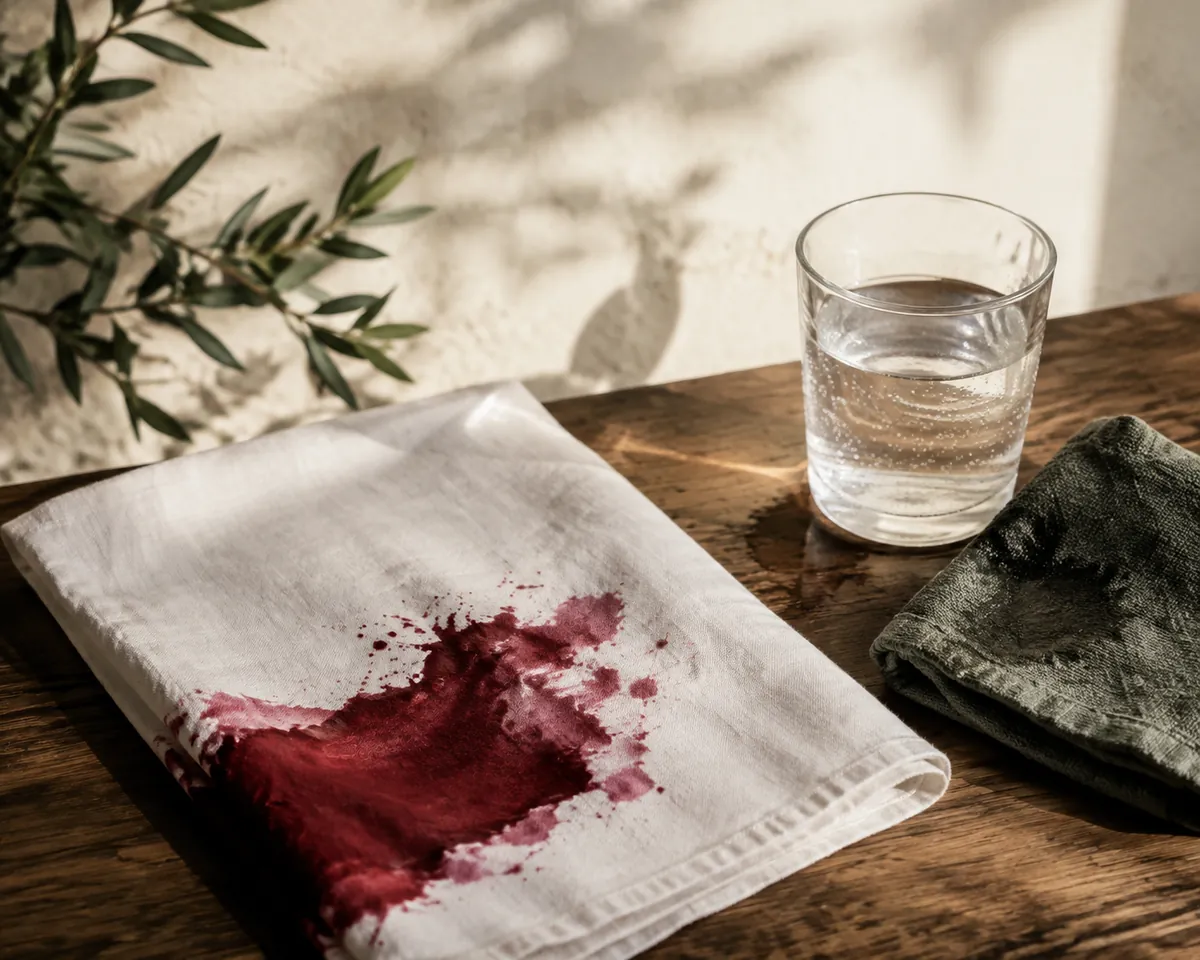
The bicarbonate content is far too low to act as a cleaning agent in any meaningful sense. A spoonful of baking soda stirred into tap water contains many times more of the same salt, so a bottle of soda water is a weak solution of the thing people imagine is doing the work.
The reputation persists because the times it worked were the times somebody acted at once, and a bottle of soda water on a table is simply the nearest cold liquid to hand when a glass goes over.
Flat, lukewarm, or mistaken for tonic
Soda water is hard to get wrong and easy to waste, and the failures repeat themselves across every kitchen.
- Pouring it too early, so the drink is half flat before it reaches the table.
- Over-stirring after topping up, which strips most of the carbonation in seconds.
- Using a large bottle for occasional mixing, so most of it goes flat unused.
- Serving it lukewarm, which loses the gas almost immediately on pouring.
- Assuming it is interchangeable with tonic water, which brings sugar and bitterness.
Top up last and stir once, gently. Almost every thin, flat mixed drink is the result of the carbonated component going in too early and then being agitated, and the two mistakes compound: a drink that has lost half its gas to an early pour loses most of the rest to an enthusiastic spoon.
The other habit worth changing is the pour itself. Tilting the glass and running the water down the side keeps far more gas in the drink than dropping it straight onto simple syrup at the bottom, where the impact and the sugar between them scrub out the carbonation in a second or two.
Common questions
Is soda water the same as club soda?
In most markets, yes. Both are carbonated water with mineral salts added, and the names are used interchangeably. Neither is the same as seltzer, which has no added minerals.
Can I use seltzer instead of soda water?
Usually yes. The difference shows up most in mixed drinks, where soda water's added salts give a little body and stop the drink tasting thin. Drunk plain, many people prefer seltzer's neutrality.
Why does soda water taste slightly salty?
Because it is. Sodium bicarbonate and sometimes sodium chloride are added deliberately, in small amounts, to buffer the acidity and give body. That faint saline note is the product working as intended.