Why Does Pour-Over Drain Too Fast? What to Check Before Adjusting
The clock can be fast for several different reasons. Separate actual drawdown from your pour schedule, then use taste and the water path to choose one useful comparison.
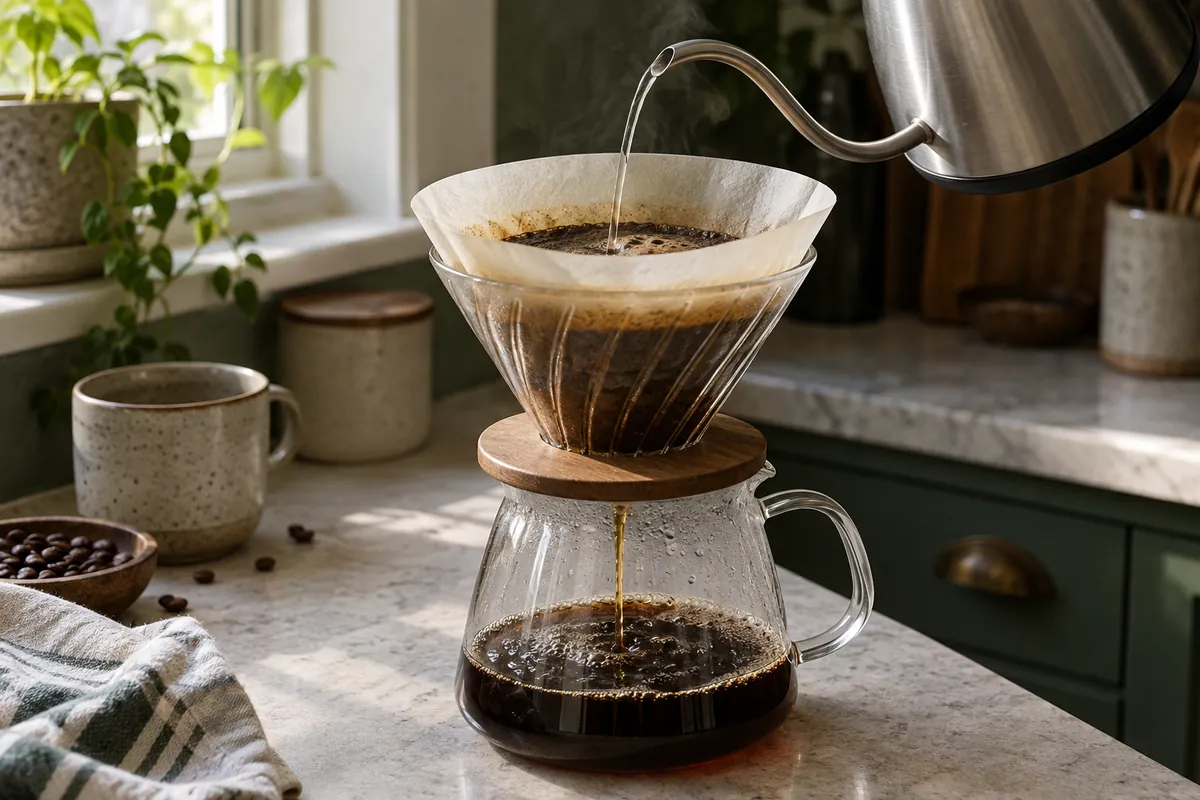
If your pour-over suddenly drains faster than usual, do not reach for the grinder yet.
Water can leave a cone quickly because the grounds offer little resistance, because part of the pour misses the coffee, or simply because you changed the batch size or pouring schedule, and each cause needs a different response.
Treat the short brew time as a clue, not a diagnosis. The stronger signal is a repeatable change in the cup, especially when it turns thin, sharp, or hollow.
First, separate pouring time from drawdown time. If your last pour ends earlier, the whole brew will end earlier even when water moves through the bed at exactly the same rate.
Watch what happens after that last pour. If the water level then falls much faster than it did in comparable brews, the flow path deserves a closer look, and we can narrow the cause from there.
When is a fast pour-over actually a problem?
A recipe time only makes sense with the recipe and equipment that produced it. Published timing ranges are useful as setup-specific references, not universal pass marks.
Why published times are not interchangeable
- SCA two-cup method
- About 2:30 to 3:00 for its own dose and brewer.
- Hario Alpha 01
- Roughly 3:00 to 4:00 with its named paper, dose and intermittent pours.
- Useful baseline
- Your previous cup made with the same coffee, dose, paper, dripper, water and pour schedule.
Read the clock in two parts
- Pour startsBegin the total brew clock when the first water reaches the coffee.
- Last pour endsRecord this separately so a quicker hand is not mistaken for faster bed flow.
- Drawdown endsThe interval after the last pour shows how long the remaining water took to leave the cone.
- Cup resultTaste decides whether the shorter drain needs investigation or is simply a good fast brew.
Now taste the coffee. A quicker cup that still has the sweetness and balance you wanted needs no repair.
If the cup has also become thin, unusually sharp, or hollow, less coffee may have dissolved into the water, but that still does not identify the cause by itself.
An overly dilute coffee-to-water ratio can taste thin even when the bed drains normally.
One brew gives you very little evidence because your hand may simply have moved faster, so repeat the same recipe before treating the clock as a fault.
Your own stable baseline is more useful than a minute mark borrowed from somebody else's brewer.
Why does a coarse grind speed the drain?
Water moves through the spaces between coffee particles. When you grind coarser, those spaces generally become larger, the bed offers less resistance, and the water can fall through more quickly.
The same change also reduces the surface area available to the water. Faster passage and less exposed surface can therefore pull the cup in the same direction: lower concentration with a sharp, unfinished taste.
You can often see the texture difference before brewing, since coarse grounds leave wider gaps while a medium-fine bed closes some of them.
Appearance helps you recognise the grind, but it cannot show the route the water eventually took.
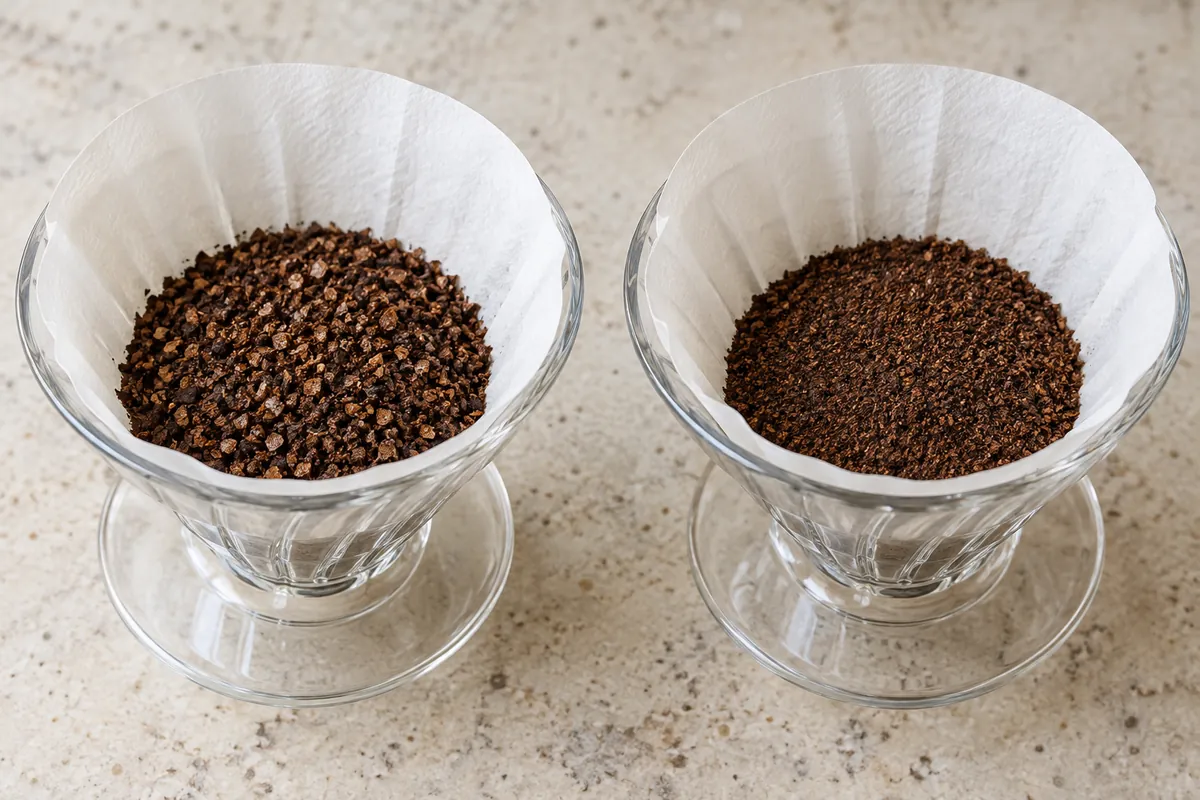
When the water runs through very quickly and the cup is weak or watery, try a finer grind.
The flavour condition matters, since a fast, balanced cup will not improve merely because its timer moves closer to a published recipe.
Your burr grinder setting is not a particle measurement. Two coffees can produce different particle distributions at the same mark, and moving the setting changes both flow resistance and how quickly soluble material becomes available.
Make one modest move finer. Keep the dose, paper, water, and pours unchanged, then judge the cup rather than stopping when the clock looks familiar.
If the next brew turns harsh or the bed begins to pool, you have moved beyond the useful correction for that setup. If it drains more slowly but still tastes thin, a simple coarse-grind diagnosis no longer explains the result.
Before going finer again, check whether some water is avoiding the grounds or whether your coffee-to-water ratio changed.
Pre-ground coffee removes the grind test, but it does not end the diagnosis, because you can still measure the dose, reseat the paper, and repeat the same pouring pattern.
Holding the slurry for a long steep would change the method itself, and the French press and pour-over comparison explains why immersion time answers a different question from flow through a cone.
Where does fast water miss the grounds?
If your stream lands on exposed paper near the edge, some water can leave the cone without crossing the full coffee bed.
This is bypass: water travels beside the grounds and can dilute the coffee below, which is a different fault from fast movement through coarse grounds.
Grinding finer cannot force water poured outside the bed to enter it.
The pour is the part you can inspect directly.
- Keep the stream over the coffee bed instead of repeatedly washing bare paper.
- Wet the full surface during the bloom so obvious dry pockets do not persist.
- Judge the cup after the placement change, even if total time barely moves.
A gooseneck kettle makes that placement easier to repeat because its narrow spout gives you finer control over direction and flow. It cannot correct a coarse grind or a poorly seated filter by itself.
Pay attention to the first small wetting pour too.
Dry pockets can persist when only one part of the bed becomes saturated at the start, which is why an initial bloom belongs to the setup rather than serving as dead time before brewing. Exact water amounts and pauses still belong to the recipe in front of you, not to a universal cure.
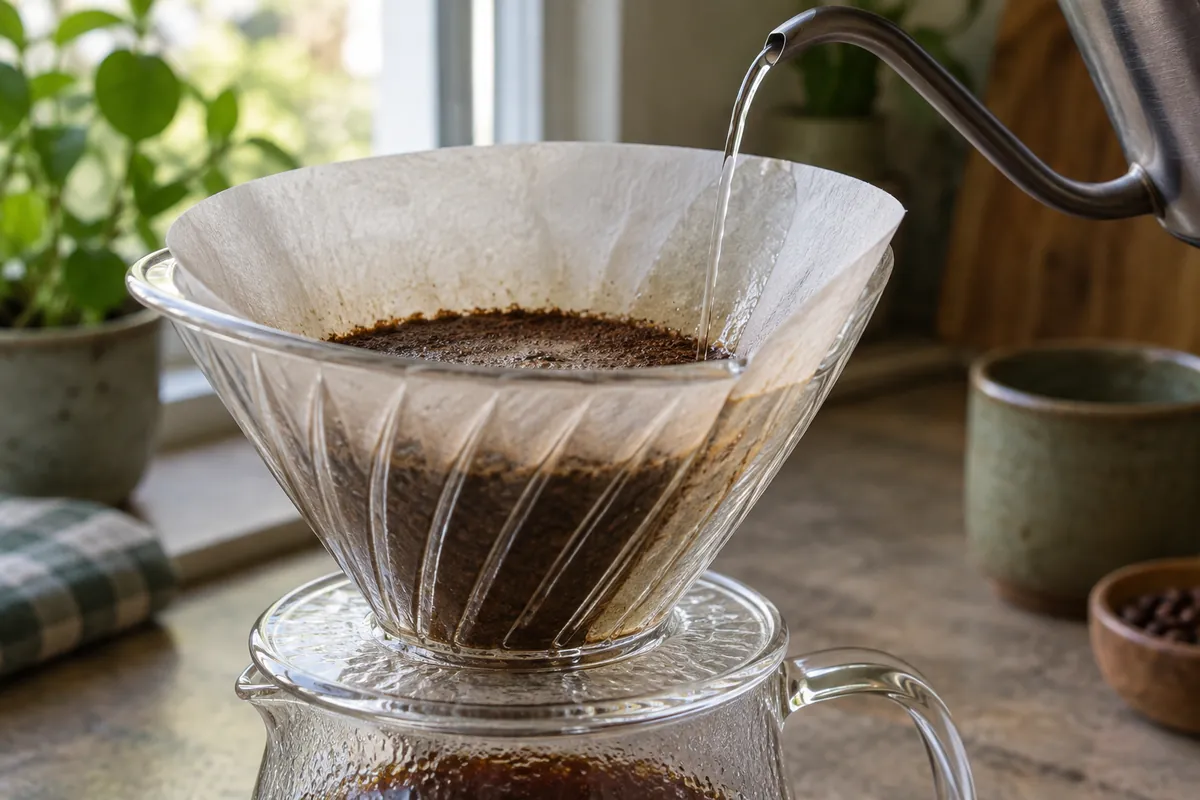
A crater or a ring of grounds on the finished paper can make uneven pouring worth testing, but it cannot reconstruct every path the water took. A perfectly level bed proves just as little.
Repeatable stream placement gives you better evidence. If the cup improves while total time barely changes, the timer was never the whole problem.
Why can a fast pour-over still taste bitter or drying?
Fast does not always mean weak. Your total brew time says how long the process lasted, but it cannot tell you whether every part of the bed received similar contact with water.
Differences in porosity and permeability can steer water through lower-resistance routes instead of distributing it evenly across the coffee bed.
Three fast-flow paths
- Coarse flow
- Water crosses most of the coffee bed but meets less resistance.
- Bypass
- Water travels beside or around the coffee instead of through it.
- Channeling
- Water favors a lower-resistance route through only part of the bed.
When flow concentrates in a few routes, some coffee may remain poorly wetted while other areas receive more contact. The cup can then taste sharp or hollow and still finish with drying or bitter notes, a combination that does not fit the simple idea that fast drawdown always means uniform under-extraction.
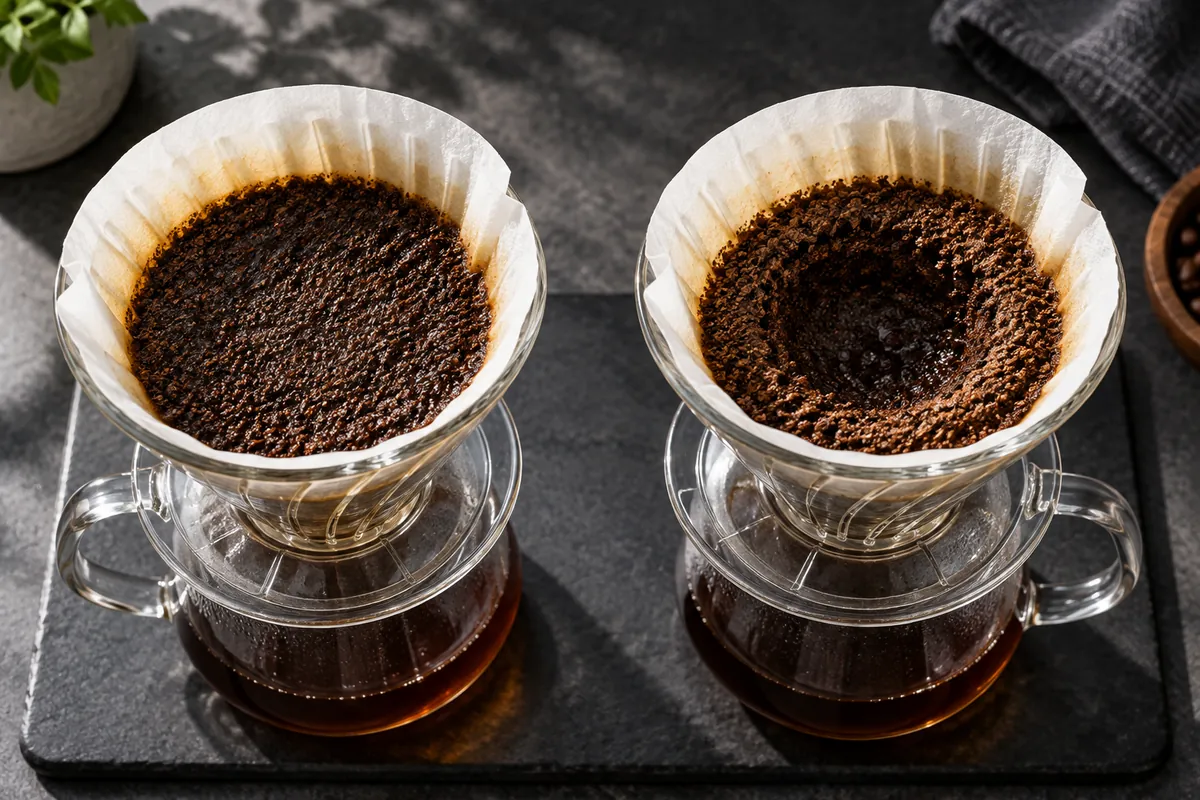
For your next comparison, leave the grind alone. Level the dry bed, wet the full surface during the bloom, and keep the main pours over the coffee rather than the exposed paper.
If the cup becomes more coherent while drawdown barely changes, uneven contact was probably part of the problem. If it stays uniformly harsh, look again at ratio, brewing water, and roast before making fast flow responsible for every bitter note.
What changed in the cone besides grind?
A smaller coffee dose creates a shallower bed when you use the same dripper, so water may have less coffee to cross.
If you reduce the water by the same proportion, the total brew can also finish sooner simply because there is less to pour.
Those are separate reasons for a faster finish, and neither makes a small batch automatically wrong. Compare it with a small-batch recipe, not with the time for a larger brew.
Paper can change the result as well. Use the paper size specified for the dripper, because material and fit can affect how water leaves the grounds.
If your fast drain began when you switched papers, restore the known paper before changing the grinder. A filter that folds oddly, leaves a gap, or sits differently in the cone has already changed the setup.
That does not prove the new paper is defective, and it does not mean every paper with the same general shape drains at one speed. It only gives you the cleanest first comparison.
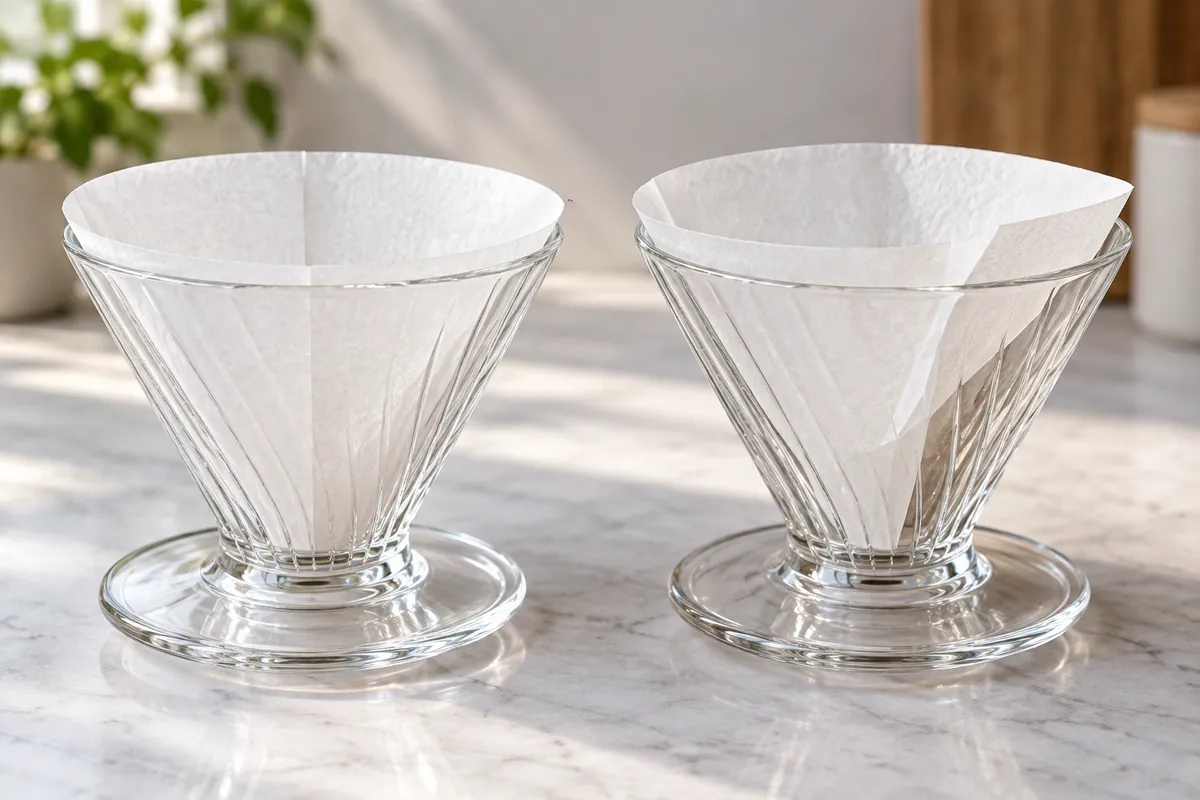
Changes that reset the timing comparison
- Coffee dose
- A smaller amount can leave a shallower bed in the same cone.
- Filter paper
- Different material or seating can change how water leaves the grounds.
- Dripper
- Cone size and outlet design change the flow path and the useful batch range.
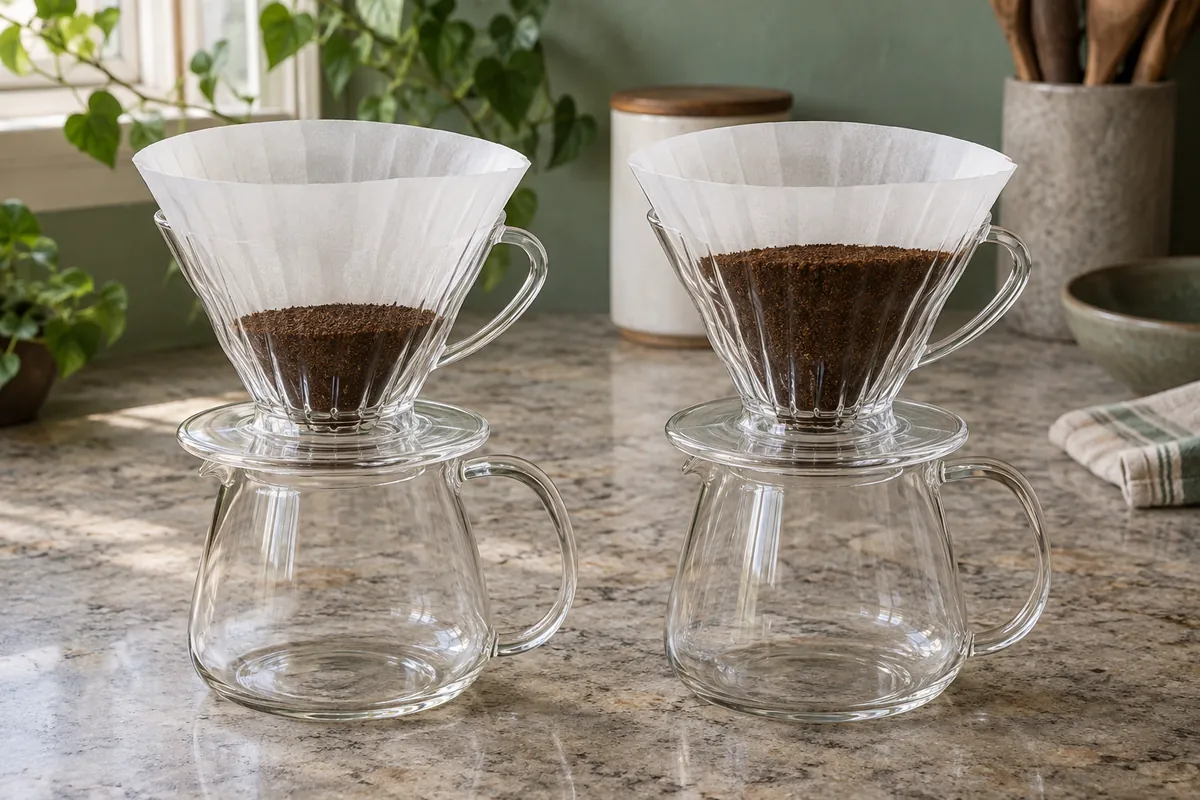
A different dripper can make your familiar time meaningless even when the coffee stays the same. Shape, outlet, and matching paper work together, so the brewer changes the route the water can take.
The pour-over method covers that broader equipment choice. For this diagnosis, restore the previous cone and paper first, or treat the maker's recipe as a fresh baseline.
Which single change should you test next?
Changing grind, dose, paper, and pouring together may produce a better cup, but you will not know which change fixed it. Start with the most specific clue you observed.
Hold everything else steady where you can, then compare both the drainage after the last pour and the finished cup. What we want from the next brew is evidence, not merely a slower clock.
| What you noticed | First comparison | What would support it |
|---|---|---|
| Fast, thin, evenly wetted at the same ratio | Grind a little finer with the same dose and pours | More sweetness or body without a stalled bed |
| Water down the paper edge | Keep grind fixed. Pour over the coffee bed | Better flavor even if the clock changes little |
| Faster after new paper | Restore the compatible paper and its seating | The former flow and cup return |
| Fast with sharp and drying flavors | Keep grind fixed. Improve wetting and stream control | The cup becomes more coherent without a finer setting |
| Fast but balanced | Repeat the same recipe before adjusting | A second good cup shows speed alone was harmless |
These are controlled comparisons, not laboratory tests. A weak cup may combine coarse grinding with bypass, so one change can solve only part of what you taste.
That is still useful: if moving the pour inward improves the cup, keep the better placement before testing grind.
If returning to the old paper restores the result, the grinder was never your first suspect.
Record the coffee, dose, water, paper, and the moment your final pour ends, then add a brief taste note. You only need enough detail to tell whether the next brew actually improved.
Stop when the cup tastes good and repeats reliably, even if its drawdown remains faster than a recipe written for another brewer.