What Is Matcha? Shade Grown, Steamed, and Stone Ground
Matcha is green tea leaf that has been shade grown, steamed, dried, stripped of stems, and stone ground into a fine powder. It is whisked into water rather than steeped, so you consume the leaf itself.
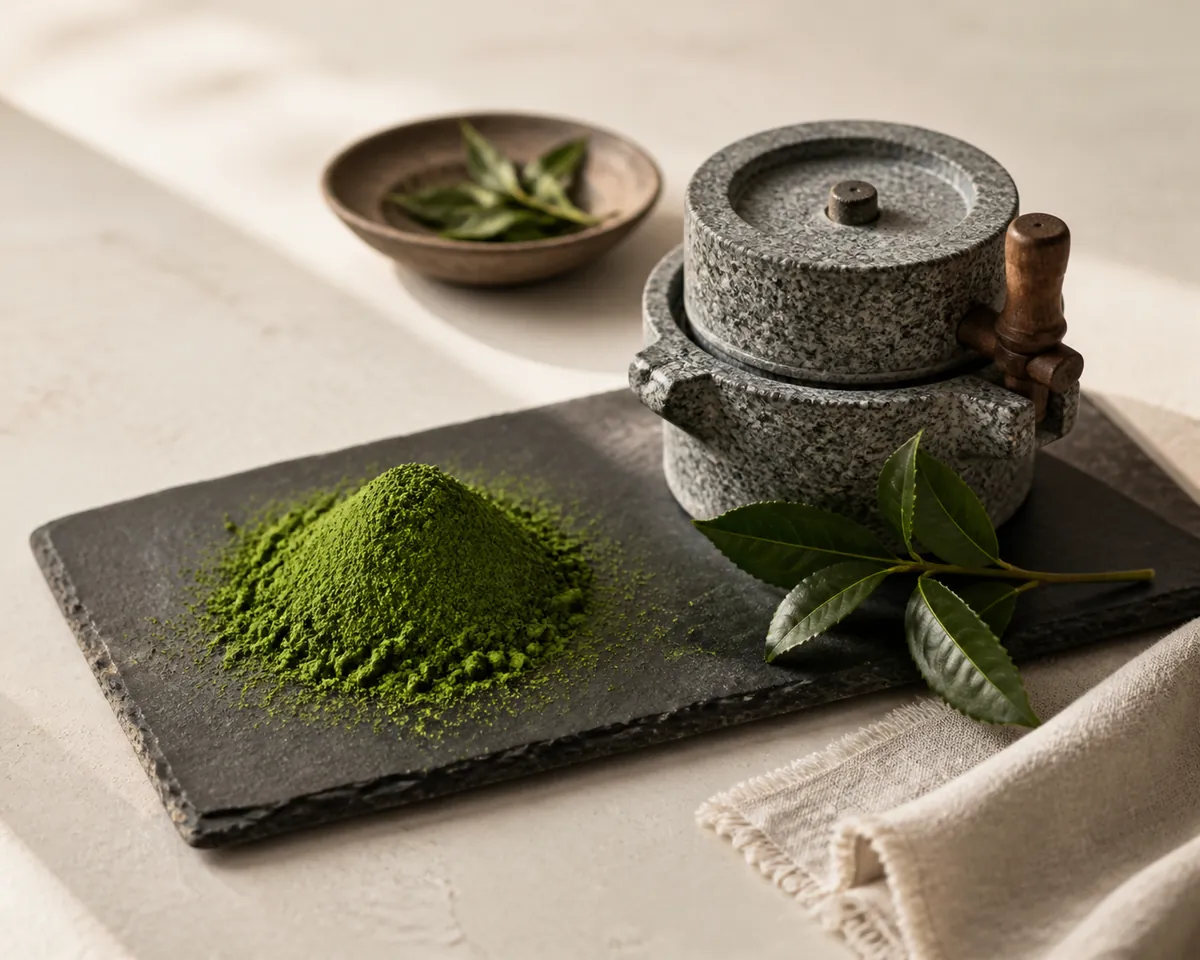
Matcha comes from the same plant as every other true tea, Camellia sinensis. Three things make it behave unlike anything else on the shelf: how it is grown, how it is processed, and the fact that you drink the leaf rather than an infusion of it.
That last point is the one that matters most. Every other tea on a shelf is a flavouring agent for hot water, and matcha is a food you happen to drink, which is why a serving is weighed in grams instead of counted in spoons.
Matcha at a glance
- Plant
- Camellia sinensis, the same species as green, black and oolong tea
- Growing
- Shaded from the sun for three to four weeks before the leaves are picked
- Processing
- Steamed, dried, stripped of stem and vein, then ground on slow granite mills
- Form
- Whole leaf suspended in water rather than an infusion strained off it
- Standard serving
- Around 2 g of powder to 60 to 70 ml of water
- Colour when fresh
- Vivid jade, dulling towards olive as the powder oxidises
- Historic centre
- Uji, south of Kyoto, with Nishio, Yame and Kagoshima behind it
Three or four weeks under cover
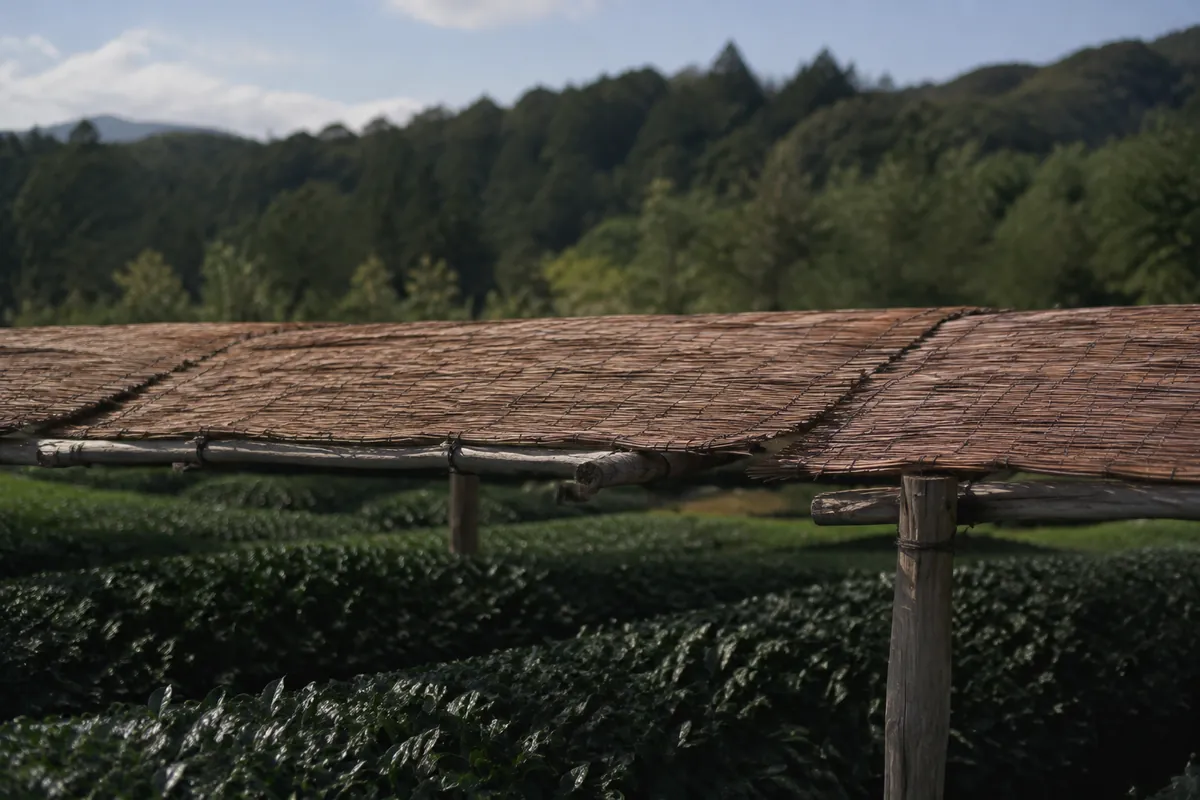
Growers cover the bushes for roughly three to four weeks before picking, using either reed screens laid over a frame, the traditional arrangement called tana, or black synthetic netting draped directly onto the plants.
Deprived of light, the plant produces more chlorophyll, which is where the colour comes from, and accumulates more amino acids, chiefly theanine. Shading also slows the conversion of those amino acids into catechins, the compounds that taste bitter and drying.
The cost of all this is yield. A plant starved of light grows slowly and gives a smaller crop, and those weeks under cover are most of what you are paying for rather than any step that follows them.
Shading is also the single variable separating matcha from ordinary green tea, which is grown in full sun and tastes correspondingly sharper.
The same mechanism explains why sencha reads grassy and a little astringent where a shaded leaf reads savoury and sweet. Almost nothing else about matcha is explicable without those few weeks, which is why they come first.
From shaded bush to stone mill
Nothing in the chain is quick.
Each stage removes something. The two that remove the most are the ones a shopper never sees: de-veining, which discards stems and leaf ribs, and stone milling, which cannot be rushed without cooking the aroma out of the powder.
How matcha is made
- HarvestThe shaded leaves are picked, usually the youngest and most tender ones.
- SteamThey are steamed within hours to stop oxidation, which is what keeps the colour and the fresh character.
- DryThe leaves are dried and become a rough material called aracha.
- De-stem and de-veinStems and leaf veins are removed. What remains is called tencha, and this step is a large part of what separates good matcha from harsh matcha.
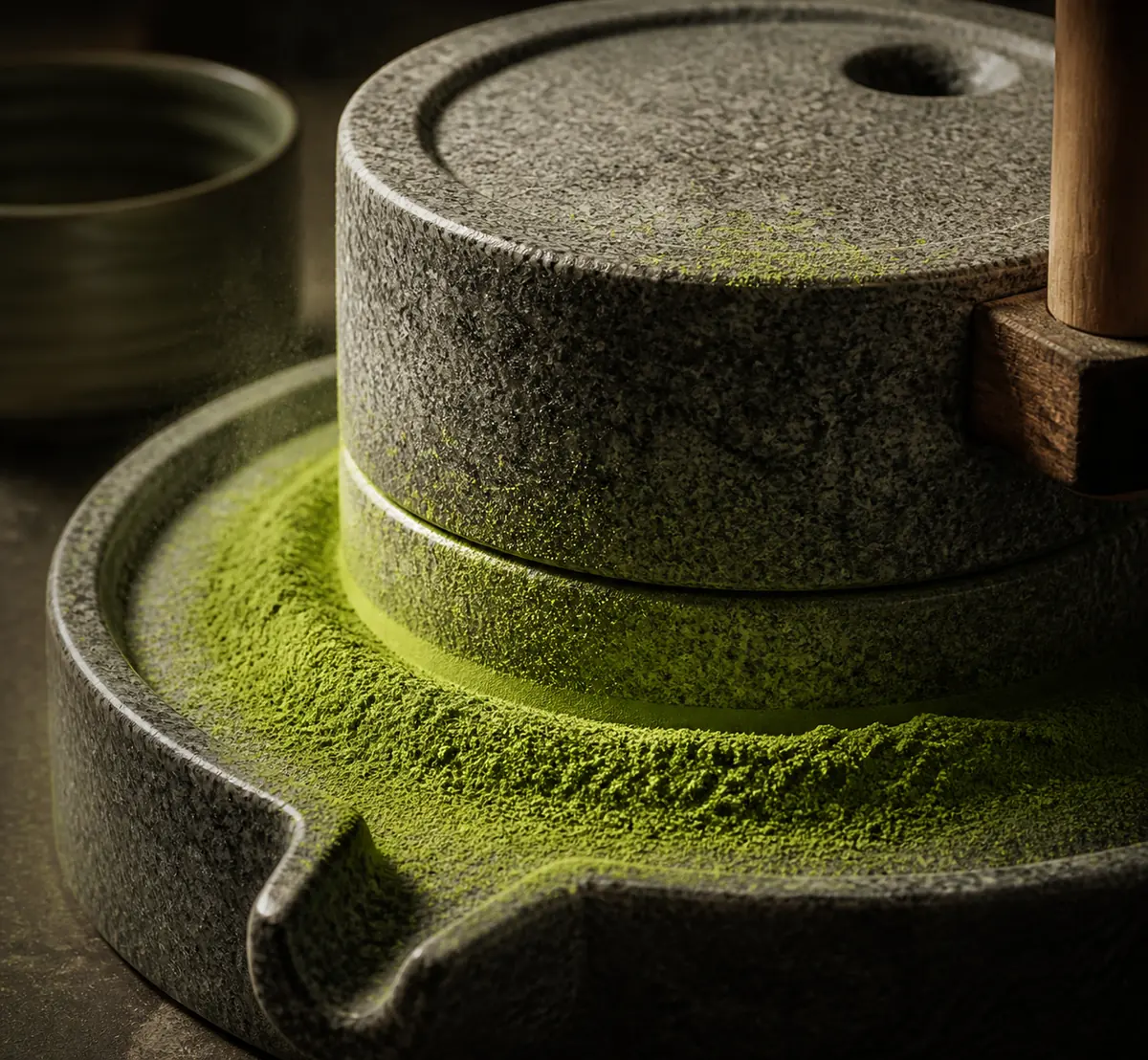
- Stone grindTencha is ground on slow granite mills into a powder fine enough to stay suspended in water.
What survives steaming, drying and de-veining is called tencha, and it is the raw stock every matcha is milled from. A wholesaler selling tencha by the kilo and a shop selling a 30 g tin are handling the same leaf at two different stages of the same process.
A granite mill turns slowly because friction generates heat, and heat destroys exactly the aromatics the shading spent a month building. Roughly 40 g an hour is the ordinary rate, which comes out at about an hour of grinding for a handful of servings.
Anything sold cheaply in volume was almost certainly ground another way, on a ball mill or an air mill, and that powder is coarser and duller in the bowl. It is usually sold as culinary grade, which is an honest enough description of where it belongs.
Why drinking the leaf changes everything
Steeped tea gives you what dissolved, and the leaf goes in the bin. Matcha keeps the leaf in the cup, so everything the leaf contains reaches you rather than a fraction of it.
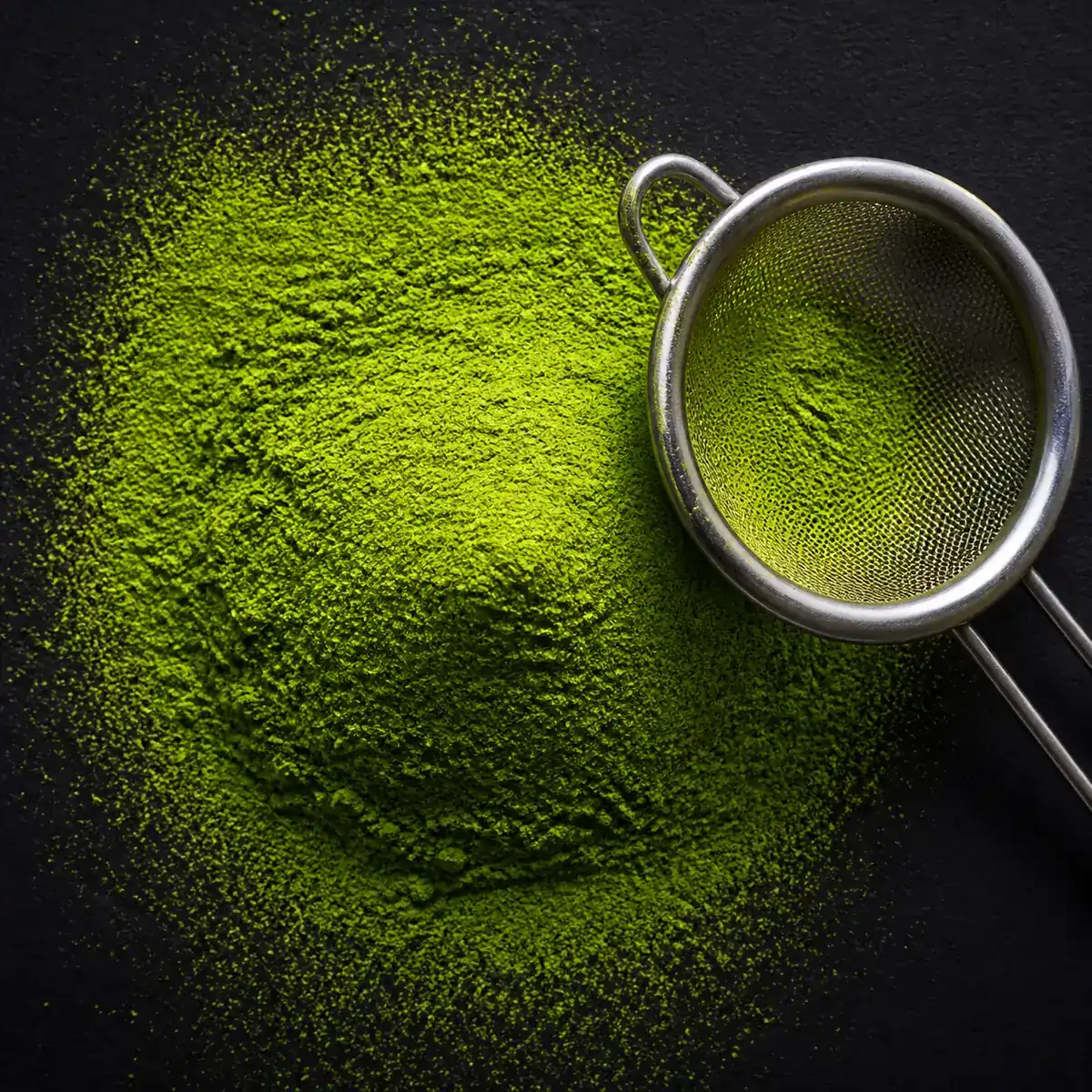
The particles are a few microns across and never dissolve at all. They hang in the water for a few minutes and then settle, which is why a bowl needs whisking rather than stirring, and why it separates visibly if you set it down and forget it.
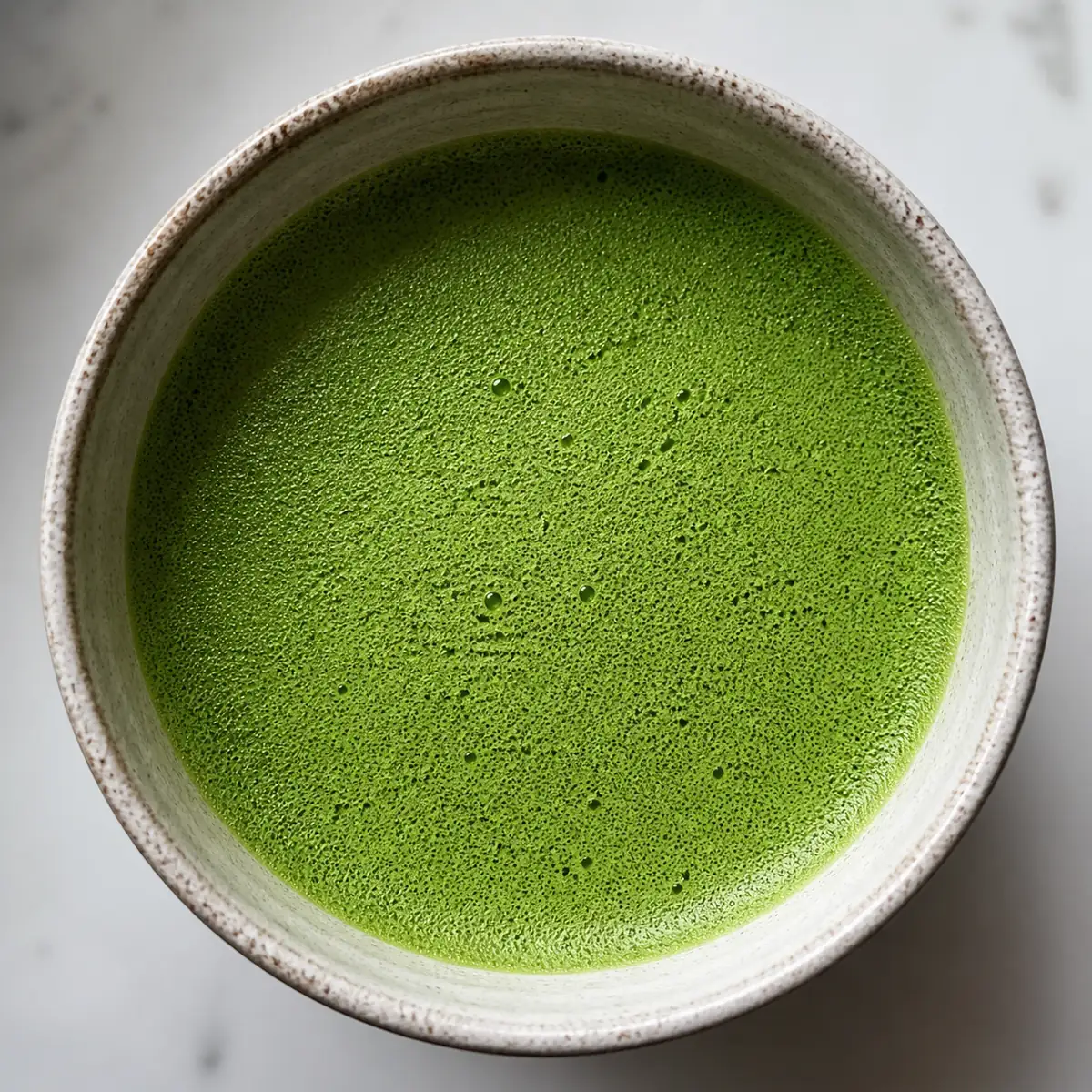
That one structural difference accounts for the whole gap between a bowl and a cup: the concentration, the body, and the caffeine figure alike. It is the point the green tea and matcha comparison turns on.
It also means poor leaf has nowhere to hide. Material that would make a merely dull cup of steeped tea makes a bitter, gritty, flat bowl of matcha, which is why the price range in this one category is so much wider than in any other tea.
The serving is correspondingly tiny. Two grams in 70 ml is three mouthfuls rather than a mug, and caffeine in matcha works through what that dose actually carries against a cup of tea and a cup of coffee.
Usucha, koicha and the ratio between them
Traditional preparation splits into two forms that use the same powder and almost none of the same technique, and what separates them is concentration rather than skill.
The two preparations
- Usucha, thin
- 2 g of powder to 60 to 70 ml of water
- Koicha, thick
- 4 g of powder to about 30 ml of water
- Usucha finish
- Whisked briskly to a fine, even foam
- Koicha finish
- Kneaded and folded, glossy, with no foam at all
Usucha, the thin form, is what almost everyone outside Japan means by the word matcha. Two grams of sifted powder go into 60 or 70 ml of water and the whisk works until a fine foam covers the surface.
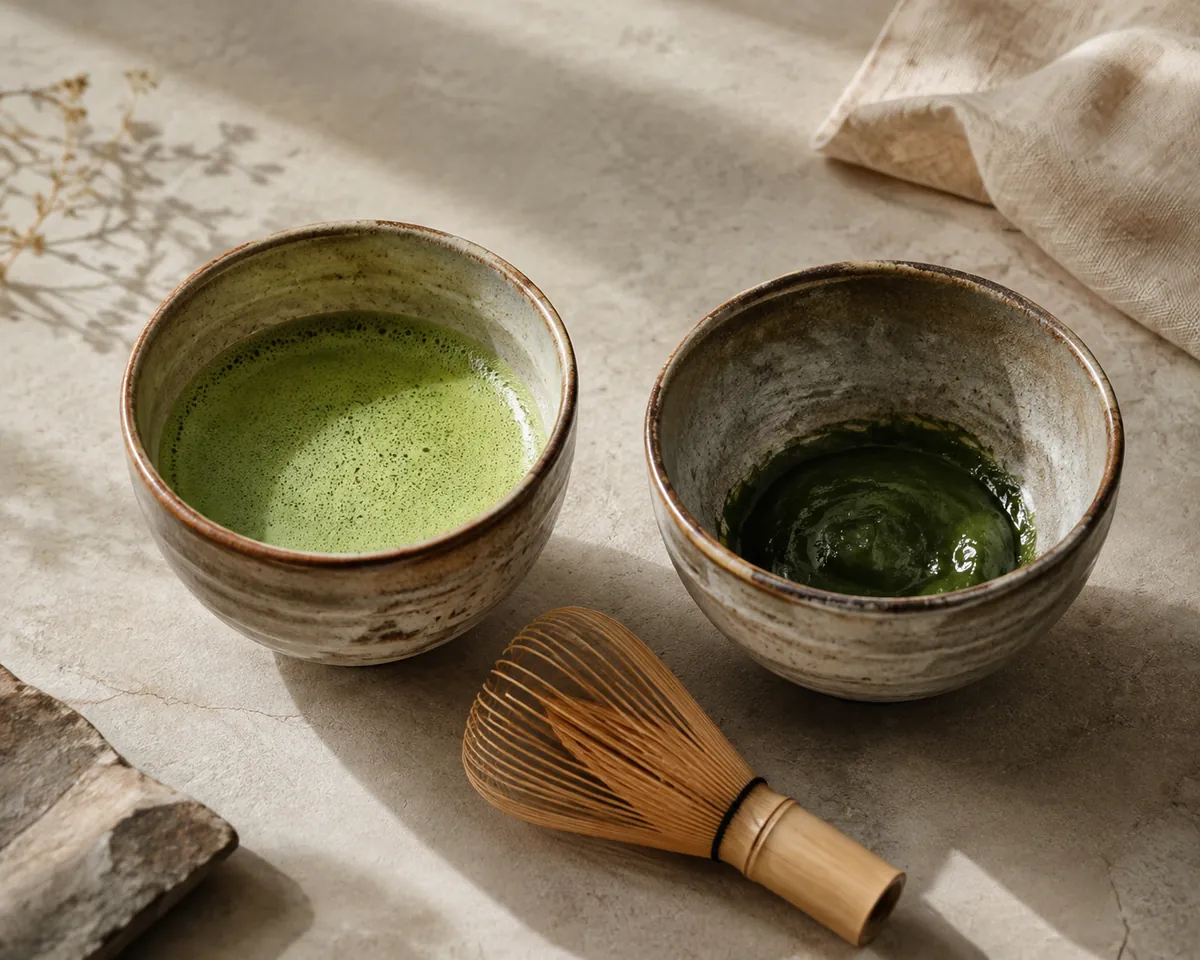
The thick form doubles the powder and halves the water. There is not enough liquid left to whisk in any ordinary sense, so the chasen kneads and folds instead, and koicha comes out closer to paint than to a drink.
Grade stops being optional at that ratio. Every trace of astringency in the leaf is concentrated along with everything else, so a later-harvest powder prepared thick comes out genuinely undrinkable rather than merely disappointing.
The everyday form is the one worth learning first, and how to whisk matcha sets out the whole sequence at the counter, down to the water it is made with.
What ceremonial and culinary actually promise
Grade names on a matcha tin are marketing terms rather than a regulated standard. They still track something real, because the tiers correspond fairly reliably to harvest timing and to how thoroughly the stem and vein were taken out.
| Label | Typically made from | Best used for |
|---|---|---|
| Ceremonial | Youngest leaves from the first harvest | Whisked with water alone, where the flavour is exposed |
| Premium or daily | Slightly later leaves | Everyday drinking, and lattes where you still want the tea to show |
| Culinary | Later harvests, coarser leaf | Baking and sweetened drinks, where sugar and dairy cover the astringency |
A culinary powder whisked plain tastes harsh and flat, and that is the product behaving as designed rather than a failure of technique. It was built to be tasted through milk and sugar, which is why a matcha latte is a poor way to judge a tin you are thinking of buying.
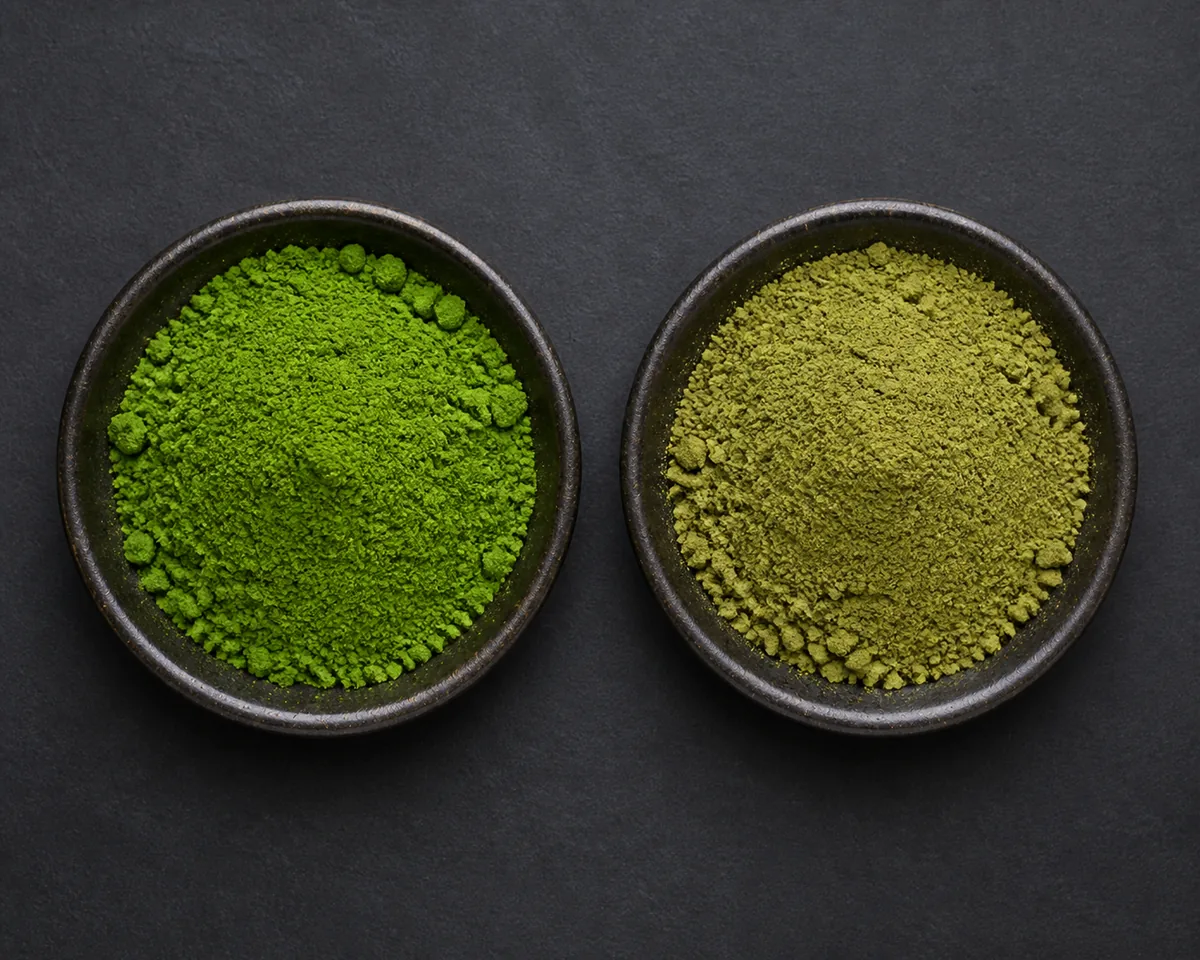
Colour is the one signal a shelf gives you before you have tasted anything. A vivid, slightly electric green indicates young shaded leaf; dull, yellowish or khaki powder indicates later leaf, a coarser mill, or a tin that has stood open too long.
Two tins carrying the same grade word can therefore be very different from each other. The tier most exposed by that is ceremonial grade, because it is drunk with nothing at all to hide behind.
Reading a tin before you buy it
Sellers print more than they need to.
The useful words are the verifiable ones. Harvest year, region and cultivar can each be checked against what the tea does in the bowl, and the grade word cannot, because nobody has defined it.
What each word on the tin means
- Tencha
- The shaded, unrolled leaf that matcha is milled from. The raw material
- Stone-milled
- Ground on granite wheels, slowly. The traditional method and the slowest
- Ceremonial
- Not a regulated term. Indicates first-harvest leaf intended for drinking plain
- Culinary
- Also unregulated. Later leaf, made to be tasted through milk and sugar
- Usucha and koicha
- Thin and thick preparation, which is a recipe rather than a grade
- Cultivar
- The plant variety, such as Okumidori or Samidori. A sign of a careful producer
- Harvest year
- The single most useful thing on a tin, and the most often absent
A cultivar name such as Okumidori, Samidori or Asahi tells you the producer expects a buyer to notice the difference between plant varieties. That is not a quality guarantee in itself, and it is a fair proxy for care taken at every other stage.
Harvest year is the most useful line on the pack and the one most often missing. A tin naming no year, no region and no country is almost always a blended, mill-ground powder whatever the front of it claims, and what matcha tastes like describes how that shows up in the cup.
Song dynasty whisking, kept only in Japan
Powdered tea is older than steeped tea, which is the reverse of what most people assume.
Whisking powdered tea was the ordinary method in Song dynasty China, and the monk Eisai carried it to Japan at the end of the twelfth century. China then abandoned it entirely in favour of steeping loose leaf, and Japan did not.
The tea ceremony formalised the practice from the fifteenth century onward. Shade growing arrived later still, in the sixteenth, when producers around Uji found that covering the bushes gave them a sweeter, greener powder than open cultivation ever had.
That sequence explains a detail that puzzles people. Matcha is Japanese by practice and Chinese by origin, which is why the equipment names are Japanese while the method itself is not, and why steeped Chinese tea today runs through a gaiwan rather than a whisk.
Uji, Nishio, Yame and Kagoshima
Four Japanese regions produce nearly all of the matcha worth naming, and the differences between them are large enough to buy on rather than merely to read about.
| Region | Character | Note |
|---|---|---|
| Uji, Kyoto | The benchmark. Refined, deeply umami, expensive | The historic centre, and small |
| Nishio, Aichi | Sweet and mellow, less austere than Uji | A large share of world production |
| Yame, Fukuoka | Rich and thick, strong in umami | Small and highly regarded |
| Kagoshima | Bright, vivid green, more vegetal | Warm and modern, with heavy machine cultivation |
| Shizuoka | Mostly a loose-leaf region, with some matcha | Volume rather than reputation |
Uji carries the premium and the region is tiny, so a good deal of tea labelled Uji is grown nearby and finished there. That is legal and entirely ordinary, and it is worth knowing when two tins differ by twenty pounds.
Outside Japan the picture loosens considerably. China produces a large volume of powdered green tea that is usually unshaded and ground in a mill rather than on stone, which pushes it towards the sharp edge described in green tea bitterness.
Korea and Taiwan both make small quantities of genuinely shaded, stone-milled powder that stands comparison with mid-range Japanese product. The word matcha is not protected anywhere, so origin is the line to read, and a tin naming no country at all is telling you something by leaving it out.
Why a 30 g tin costs what it does
Price follows yield here, not branding.
Shading cuts the crop because the plant is deliberately being starved of light. De-stemming and de-veining after steaming throw away a further large fraction of what was picked, leaving only the tender tissue that becomes tencha.
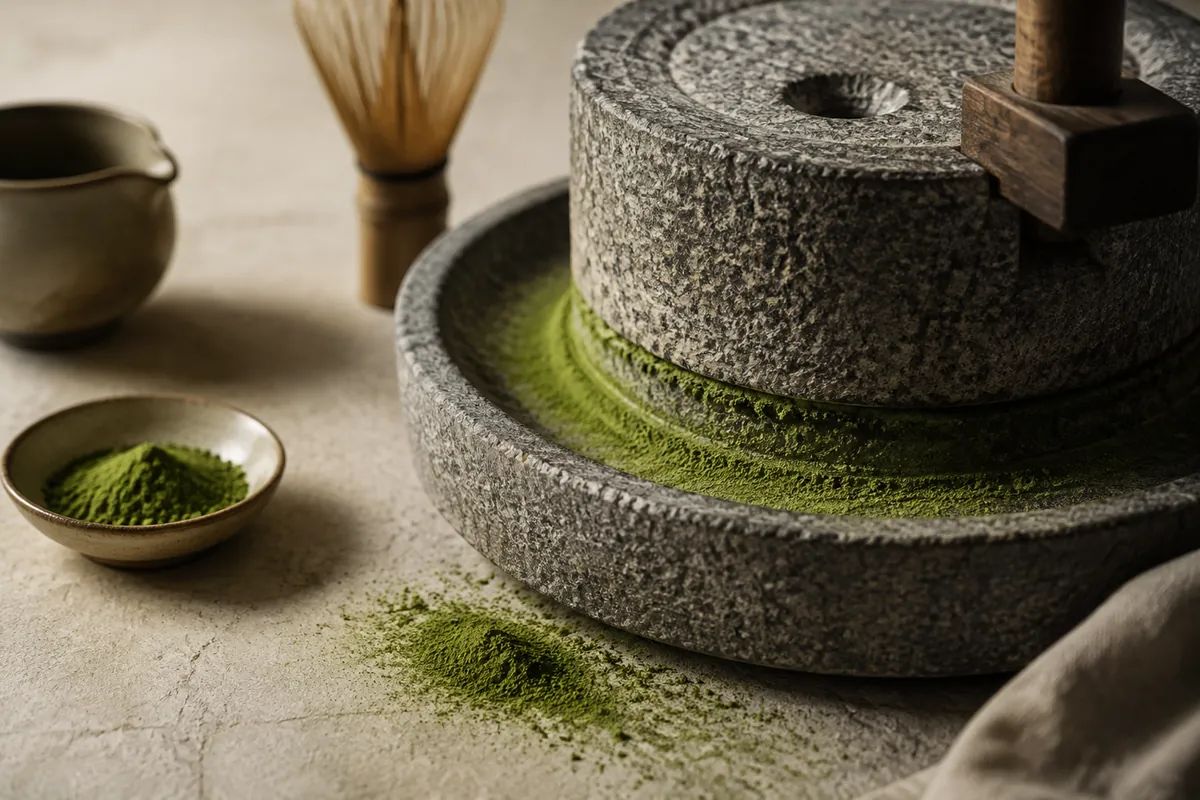
Stone milling is the bottleneck and it is fixed by physics rather than by factory capacity. A mill turned faster generates heat that damages the aroma, so the rate cannot be bought down, and cheap matcha is almost always ground some other way instead.
Those constraints stack on top of one another. A tin of good matcha costs about what a kilogram of decent black tea does, and comparing them by price per gram misses that roughly a tenth of the harvested leaf survives to the cup, ground at forty grams an hour.
What happens after the tin is opened
Milled leaf is almost entirely surface, so the clock that decides how a tin tastes starts not at harvest and not at packing but at the moment the seal is broken.
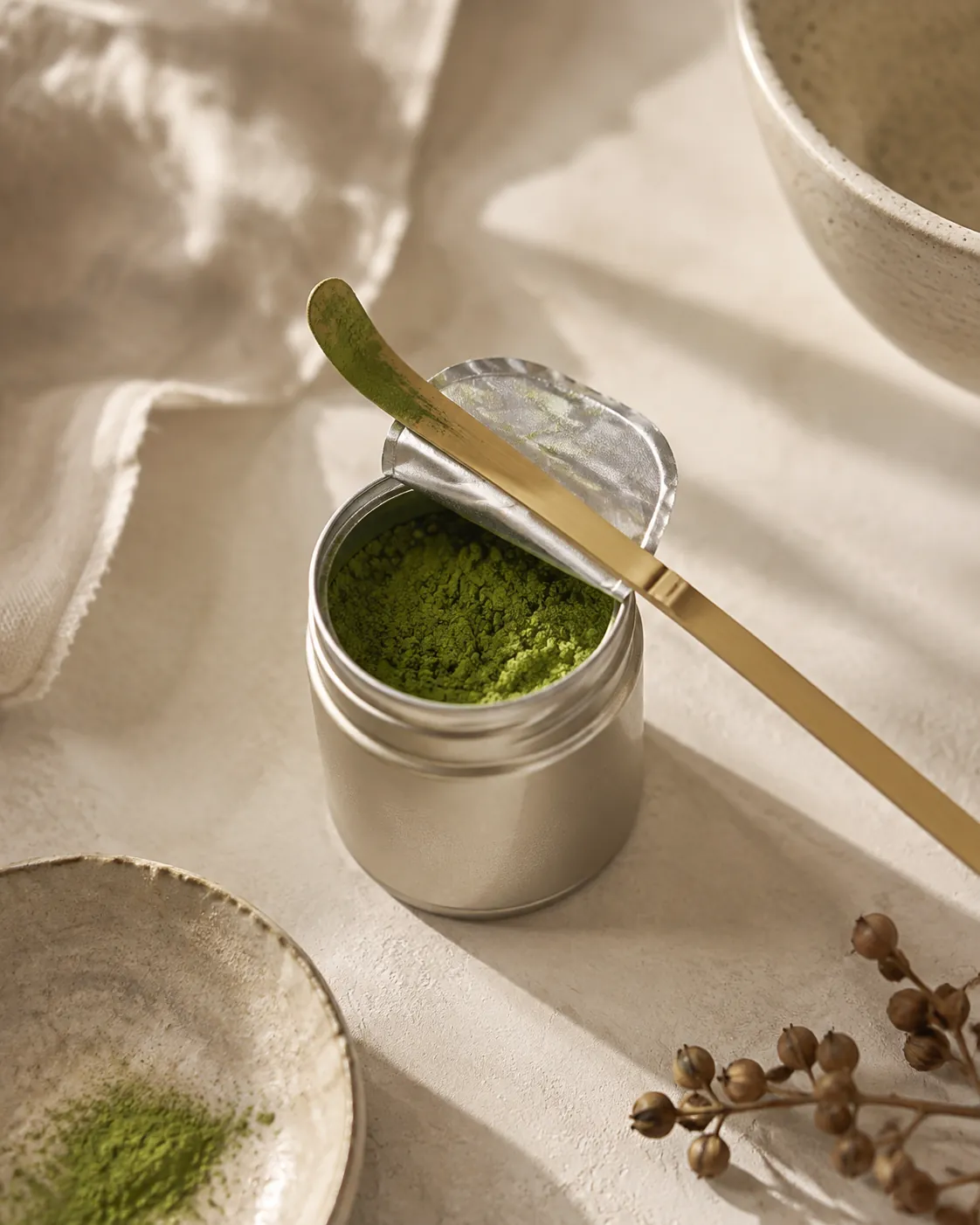
A tin fades from jade towards khaki over weeks rather than months, and the compounds that go first are exactly the ones the shading built. Once the colour has turned it does not come back, whatever is done at the bowl.
Buying small is the only practical answer. A 30 g tin finished inside a month is better value than a 100 g tin that spends its second half dull, and storing matcha covers the tin, the fridge and the condensation trap that catches most people.
The order in which a tin loses things is consistent enough to read backwards from the bowl.
What an opened tin loses, in order
- Sweet marine aromaWithin a fortnight, and it is the first thing anyone misses
- Jade colourWeeks, shifting steadily towards khaki
- UmamiFollows the colour, and takes the thickness of the foam with it
- FoamThin and short-lived once the amino acids have gone
- AstringencyNever leaves, so it becomes the whole flavour by default
That sequence explains why a faded tin tastes harsh rather than merely weak: nothing was added, the parts that balanced the astringency simply left first. It is also why uses for faded powder all involve sugar, fat or salt, and why none of them is a plain bowl.
If a bowl tastes harsh with fresh powder and water at the right temperature, the cause is elsewhere, and why matcha tastes wrong works through the possibilities in the order they are worth checking.
Common questions
Is matcha just powdered green tea?
Not quite. Any green tea can be powdered, but matcha is made from shade-grown leaf that has been de-stemmed and de-veined before slow stone grinding. Those steps are what give it its colour and its savoury depth.
Why is matcha so expensive?
Shading for weeks before harvest, hand-picking young leaves, removing stems and veins, and slow stone grinding are all labour-intensive and low-yield steps.
What is the difference between ceremonial and culinary matcha?
The labels are not regulated, but ceremonial grade generally uses younger first-harvest leaves and is meant to be whisked with water alone, while culinary grade uses coarser later leaf intended for baking and sweetened drinks.