How to Make a Macchiato, Once You Know Which One You Mean
The word means stained, and it has been attached both to a coffee marked with milk and to a milk marked with coffee.

Before you can make a macchiato you have to decide which one, because three different drinks carry the name and two of them are built in opposite orders.
Macchiato means stained, and the word has been used for a coffee stained with a spot of milk and, later, for a glass of milk stained with coffee, which is not a small difference.
Which macchiato are you actually making?
Everything starts with what you were handed.
An espresso macchiato is a shot with a spoonful of foam on it, whereas a latte macchiato is a tall glass of milk with the espresso poured in last, and the caramel version is that one with syrup.
| Drink | Base | Added last | Volume | Vessel |
|---|---|---|---|---|
| Espresso macchiato | Espresso | A spoonful of foam | 30 to 60 ml | Demitasse |
| Latte macchiato | Frothed milk | The espresso | About 250 ml | Tall glass |
| Caramel macchiato | Syrup and milk | Espresso and drizzle | About 350 ml | Tall glass |
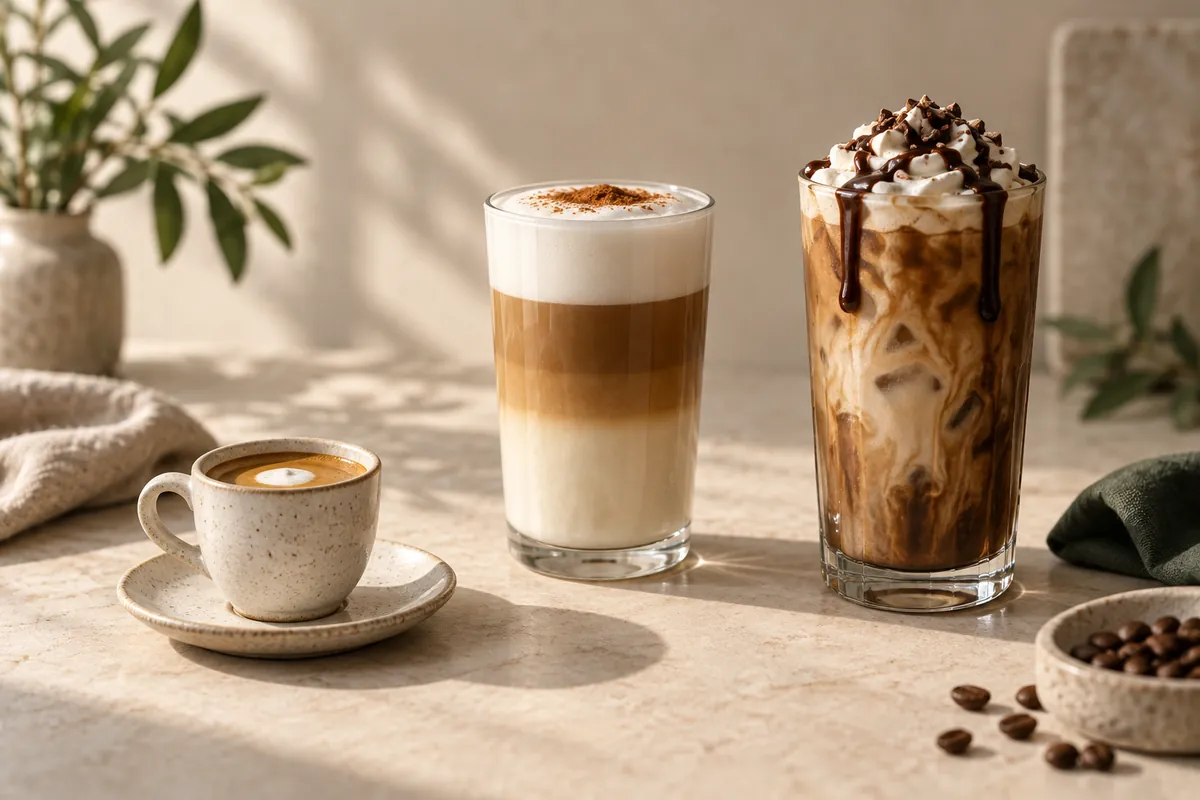
What separates them is the order: in an espresso macchiato the milk marks the coffee, and in a latte macchiato the coffee marks the milk.
In some chains the drink sold under this name is closer to a latte with syrup than to either traditional build.
Naming is inconsistent, so the menu description and cup size are more reliable than the word alone. Lavazza's French site describes a macchiato as an espresso with a dash of usually frothy milk, and a latte macchiato as the milk-heavy drink with espresso added.
A short macchiato uses a single shot and a long one a double, which changes the coffee volume rather than the milk.
The espresso decides whether the small drink works
An espresso macchiato contains too little milk to hide a poorly extracted shot. The mark rounds the first impression, but the coffee still supplies nearly all the liquid, aroma, and finish.
Taste the espresso before adding foam: a balanced shot should carry sweetness and body alongside acidity or roast character. If you find it sharply sour, hollow, or drying on its own, a spoonful of milk can soften the edge without repairing the extraction.
| Espresso alone | With a small milk mark | Better next move |
|---|---|---|
| Sweet and concentrated | Rounder at the first sip, still clearly espresso | Serve it |
| Bright but balanced | Acidity softens while fruit remains | Keep the shot and use a small mark |
| Fast, pale, and sharp | Thin coffee with a milky top | Correct grind or distribution |
| Slow, dark, and drying | Bitter coffee with a sweeter first sip | Shorten extraction or grind coarser |
| Stale and flat | Soft but still empty | Use fresher coffee before changing milk |
Fresh crema helps the mark remain visible, but it is not the quality test. Taste outranks the surface, since gas and roast level can create crema on a shot that still lacks balance.
Pull into a warmed demitasse and add the milk promptly, because the small serving loses heat quickly and a delay makes the cup flatter while the foam begins draining in the pitcher.
A single or double can both be macchiato when the milk remains a mark. The useful distinction is the coffee-to-milk relationship, not a universal millilitre rule.
How do you make an espresso macchiato?
A shot, and one spoonful of foam on top of it.
That is the whole drink, and the quantity is what keeps it from becoming something else. Once milk becomes a visible share of the liquid rather than a mark on top, the cup moves toward a piccolo or cortado rather than a traditional espresso macchiato.
Espresso macchiato, in order
- PullBrew a single or double espresso straight into a warmed demitasse.
- SteamTexture a small amount of milk until the foam is glossy enough to lift on a spoon.
- MarkSpoon one small dollop onto the centre of the crema.
- ServeTake it out immediately, before the mark sinks.

Spoon it rather than pour it. Pouring integrates the milk into the coffee, and the point of the drink is that the milk sits on top as a visible mark.
The finished drink is 30 to 60 ml, a mouthful or two served in a demitasse and meant to be drunk quickly.
Crema does the holding, but a shot pulled on stale beans gives a thin crema and the mark sinks through it before the cup reaches the table.
How do you texture such a small amount of milk?
The milk quantity in the cup may be tiny, but a steam wand cannot work reliably with a tablespoon in the pitcher. Use enough cold milk to cover the steam tip and form a stable whirlpool, then accept that some will remain unused.
A narrow pitcher makes this easier than a large one, because the deeper liquid gives the tip room to draw air without breaking the surface, while an oversized jug spreads a small dose too shallowly.
Small-pitcher milk control
- Start coldCold milk and a cool pitcher provide time to place the tip correctly
- Cover the tipUse enough milk for the steam holes to stay just beneath the surface
- Add brief airIntroduce a controlled hiss, then stop stretching before bubbles become coarse
- Build a rollKeep the liquid circulating until the surface turns glossy
- Stop by temperatureFinish while the milk still tastes sweet and remains fluid
- Swirl and spoonRecombine the pitcher, then lift only the amount the cup needs
Some milk is left over once the cup is filled, and steaming it again is a poor answer, because reheating damages texture and raises food-safety questions. Make another drink immediately or begin with the smallest quantity your equipment can texture properly.
Without a wand, a handheld frother or small French press can create enough spoonable foam. Warm the milk separately, aerate it, let the largest bubbles rise for a few seconds, and take the glossy layer rather than the dry cap.
Clean the wand at once. Wipe it with a dedicated damp cloth and purge according to the machine instructions, because dried milk in one steam hole changes the jet that the next pitcher depends on.
How do you make a latte macchiato?
Milk goes in first. Fill a tall glass with warm frothed milk, let it settle so the foam separates on top, and only then pour the espresso through it.
Filled roughly two thirds with warm milk and foam, the glass finishes in three bands: milk at the base, coffee through the middle, foam on top.
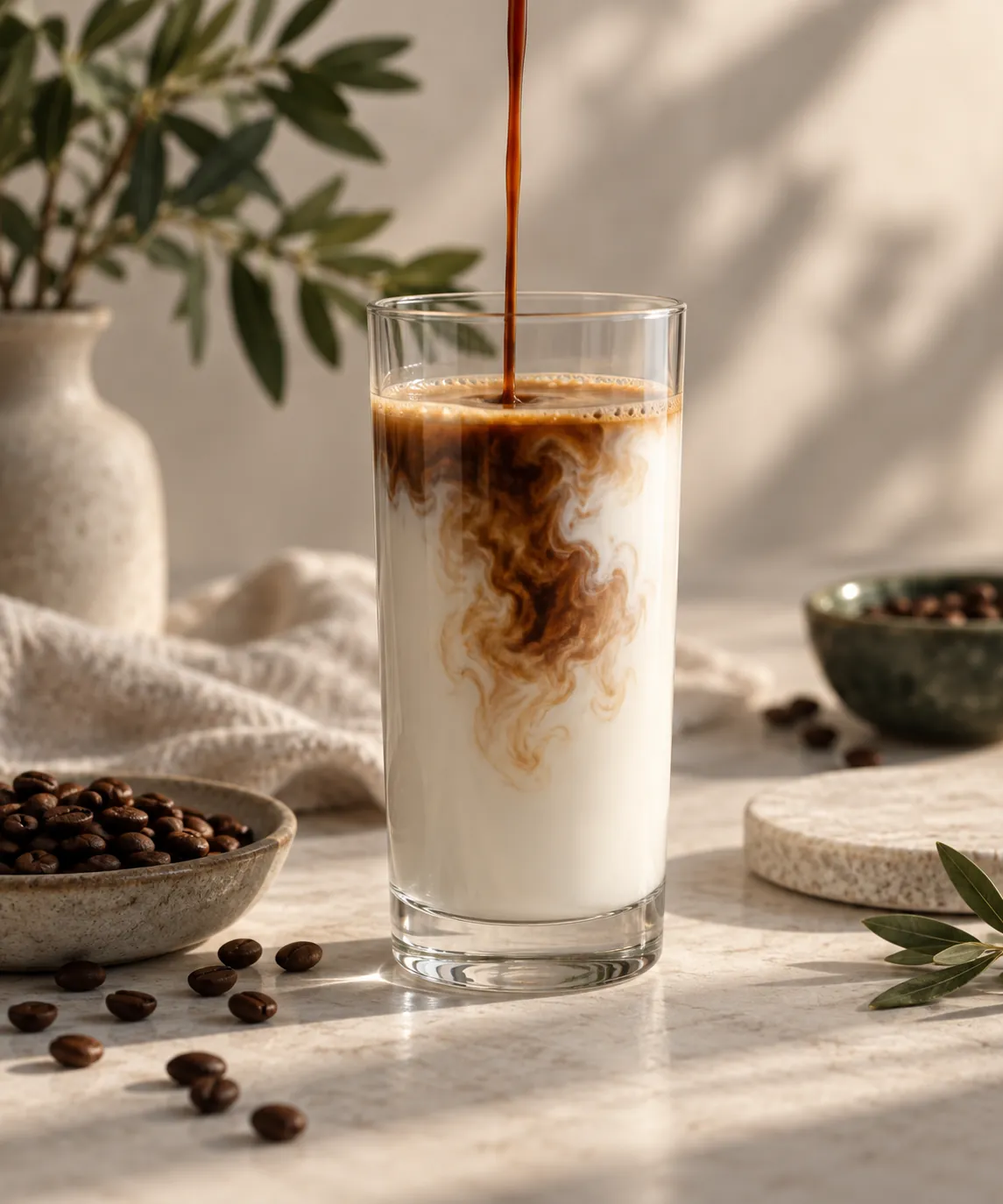
Pour slowly, or over the back of a spoon. A fast pour punches straight through the foam and mixes the glass into something indistinguishable from a milky coffee.
A single shot makes the traditional contrast easiest to hold, but volume alone does not decide the layers. A double can work in a larger glass when it is poured slowly enough for the foam to brake the stream.
Use a clear glass, because a latte macchiato in an opaque cup tastes the same and you lose the entire reason anyone builds it this way.
Why does the espresso float in layers?
Density and temperature together hold the layers apart, since espresso tends to be less dense than the milk below it and, once it has slowed down, settles into a band rather than sinking to the bottom.
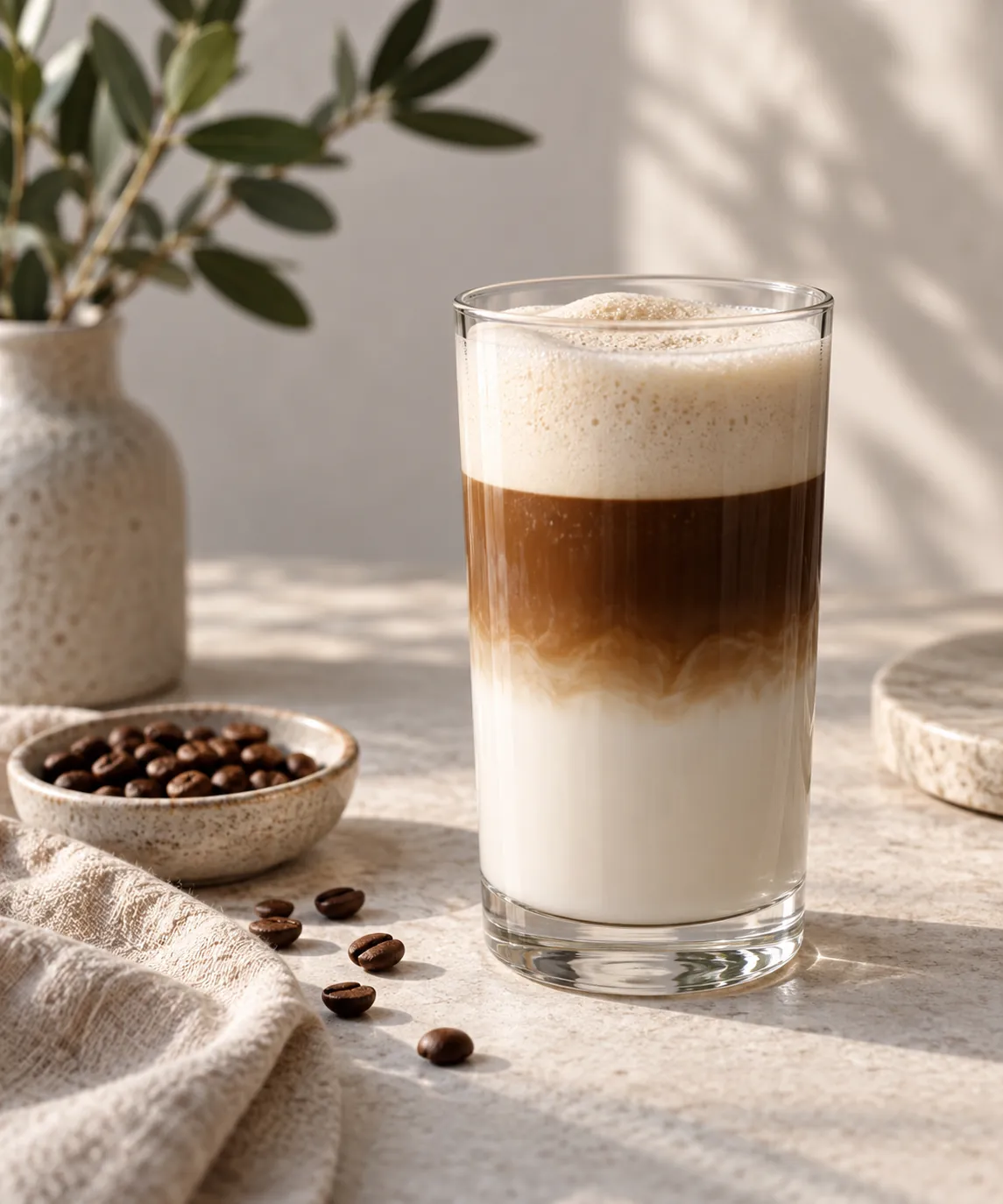
The foam is doing more work than it looks. It acts as a brake on the incoming espresso, taking enough speed out of it that the coffee arrives gently rather than driving through.
Temperature matters as much as density. Warm milk and hot espresso are closer together in both respects, so the gap that holds them apart narrows and the bands blur.
The iced version layers more reliably for the same reason: cold milk is denser and further from the espresso in temperature, which gives the effect a much wider margin.
None of it is permanent. The layers merge on their own within a few minutes whether you stir them or not, and they are meant to be looked at rather than preserved.
How do you make an iced caramel macchiato?
Syrup first, then milk, then ice, then the shot.
It is the latte macchiato order with two additions, so the layering above carries straight over.
Iced caramel macchiato
- Vanilla syrup
- 15 to 20 ml
- Cold milk
- About 180 ml
- Ice
- Fill the glass
- Espresso
- 60 ml, poured last
- Caramel
- Drizzled on top
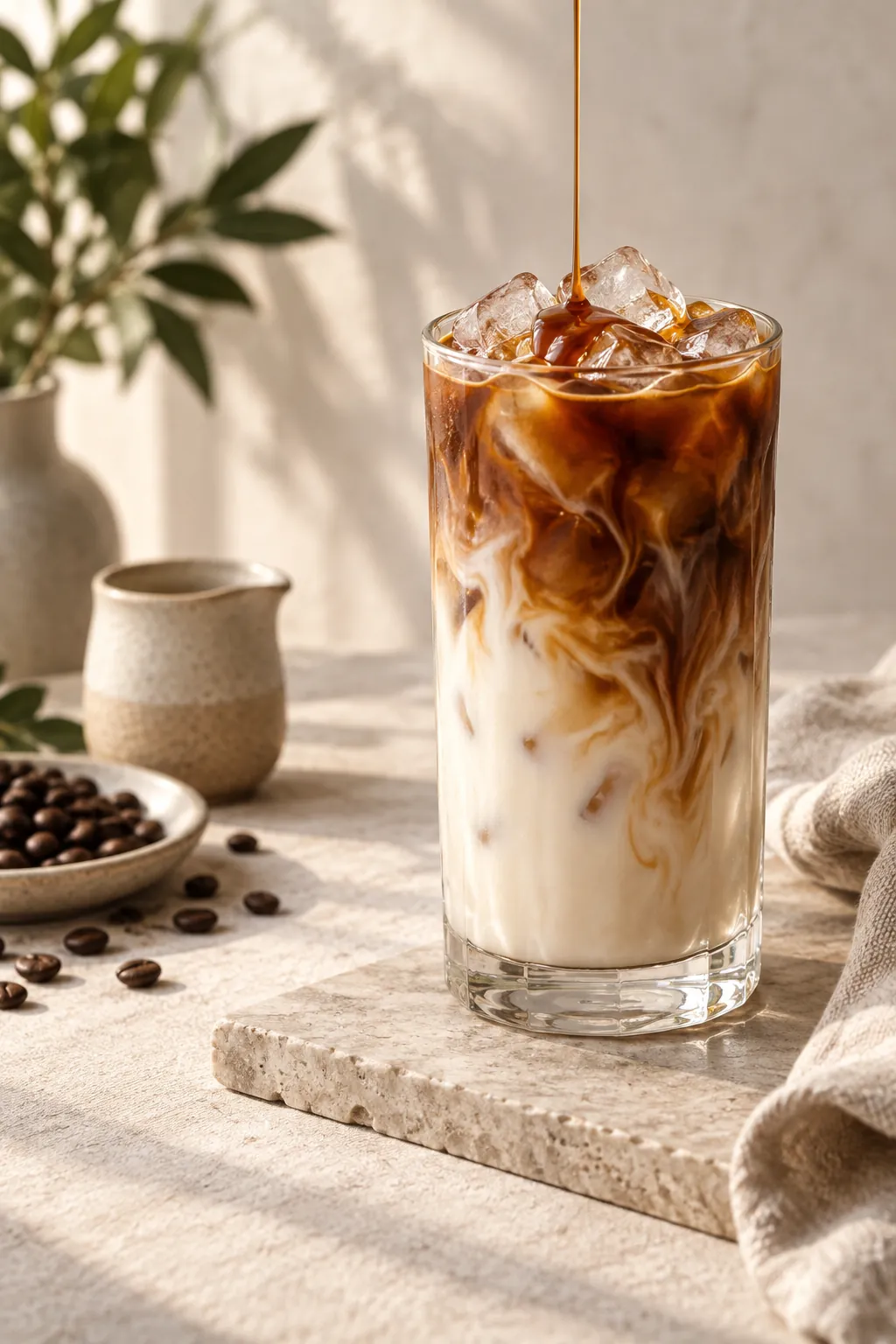
The syrup goes in before the milk and, deliberately, stays at the bottom until you stir, so the first sip is milder than the last.
The drizzle is the finishing move rather than an ingredient. It goes over the surface at the end, where it slides down the inside of the glass as the drink is carried.
Cold milk gives this version an advantage over the hot one, because a packed glass of ice keeps everything cold and dense, so the bands hold far longer than they would in warm milk.
Syrup sweetness varies between brands. Treat the 15 to 20 ml as a starting point and adjust it once rather than sweetening the finished glass.
Can you make a macchiato without an espresso machine?
You can reproduce the coffee-to-milk balance, though a substitute brewer will not create the same pressure-driven espresso texture. Concentration matters more than trying to imitate crema with whipped milk.
Strong instant
Dissolve a measured double-strength portion in minimal hot water for the simplest version
French press
Poor fit for the tiny traditional drink because normal brew strength disappears under even a little milk
For an espresso-style macchiato, keep the substitute base short and add only a spoonful of foam, since enlarging the coffee to compensate for lower concentration changes the drink into a small milk coffee rather than making the flavour more espresso-like.
A latte macchiato is more forgiving because the milk is the base. Pouring a moka-pot or AeroPress concentrate into the foam can still create visible bands if the stream is gentle and the glass is narrow.
The iced caramel version is easier again. Cold milk, ice, syrup, and a concentrated base create its intended long-drink balance even when the coffee did not come from a pump machine.
Name the drink for what it is when serving someone else: calling the result a moka-pot macchiato or AeroPress macchiato tells them what changed without pretending the substitute and an espresso shot are physically identical.
What kind of foam does a macchiato need?
Two different foams serve the two traditional builds: the espresso macchiato needs a small spoonable mark that will stay visible on the crema, while the latte macchiato needs wetter microfoam that can form a cap while still allowing coffee to pass through.
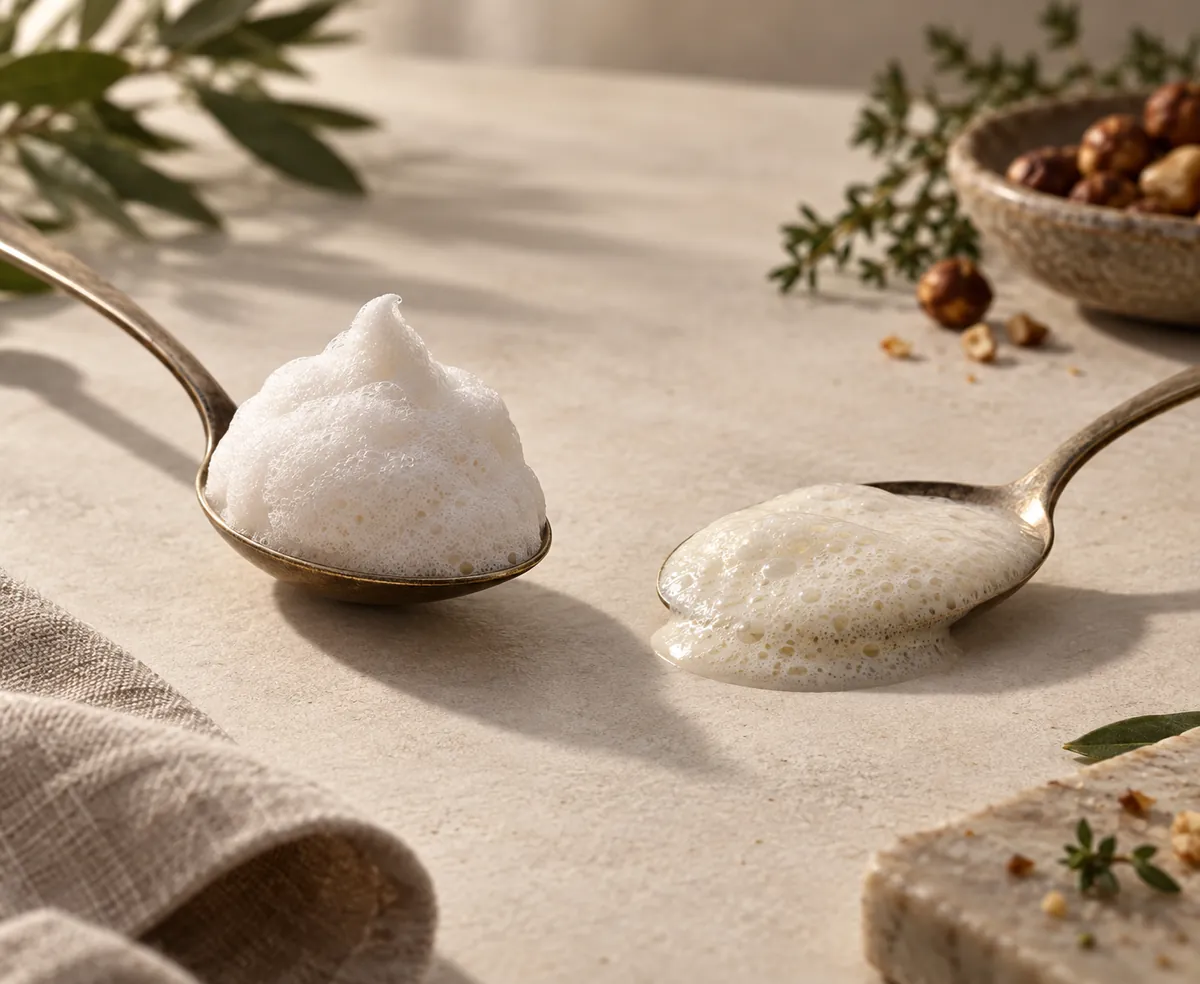
A handheld milk frother makes dry foam more easily than a wand does, because it aerates without heating and cannot help but overdo the air.
For the small cup, introduce a little more air than you would for a flat white, then keep the milk moving so the bubbles remain fine. The goal is a mark with body, not coarse bath-like foam.
The wet foam for a layered glass is ordinary microfoam. It has to sit on the milk as a distinct layer and still be open enough for the espresso to cross.
Get them the wrong way round and the drinks fail differently. Foam that is too fluid disappears into the espresso, while a dry rigid cap in a tall glass stops the coffee crossing cleanly.
Why did my layers collapse?
Three faults and two ordinary effects lead to the same finished glass, and a uniform brown glass tells you nothing about which stage went wrong. The diagnosis has to work backwards from what you did.
- Did the espresso go in quickly rather than slowly?
- Was the milk very hot when the shot arrived?
- Was there a proper foam layer on top, or only a thin skin?
- Was the glass wide, or did the drink stand for several minutes?
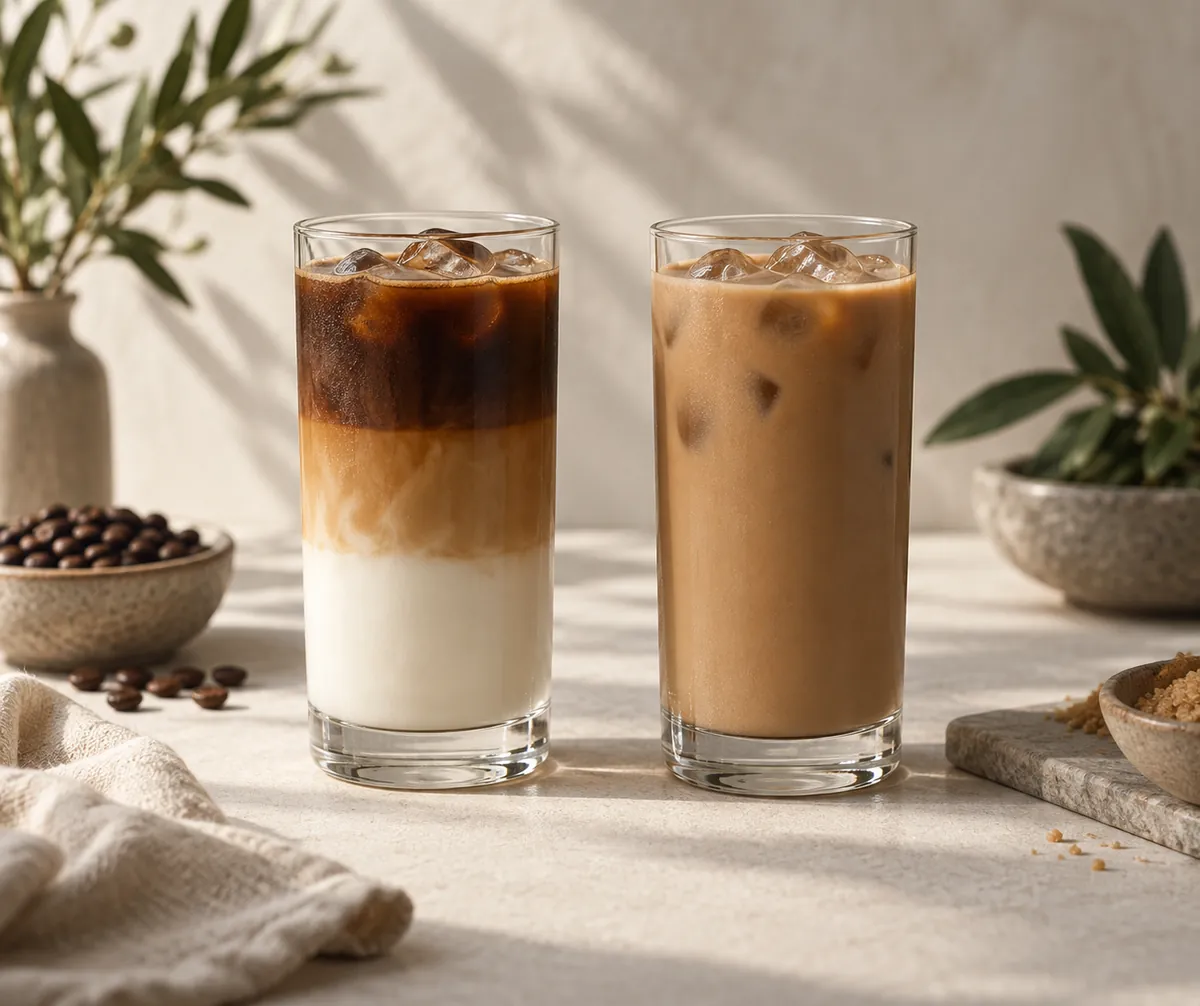
Pour speed is the commonest by a distance. Espresso arriving fast carries enough momentum through the foam to stir the whole glass on the way down.
Temperature is next. Milk taken to full steaming heat sits too close to the espresso in both density and temperature, and the margin disappears.
Foam depth is the quiet one, because a glass with only a skin on top has nothing to slow the coffee and the pour that would have worked over a proper layer goes straight through.
The last checklist question covers two effects that are not faults at all. A wide glass spreads the same bands thinner and harder to see, and any macchiato left standing for five minutes will have merged on its own.
Plant drinks are the exception: some differ enough in density from dairy that they will not hold a band however carefully the espresso is poured.
Espresso macchiato method
- Makes
- 1 cup, 30 to 60 ml
- Ratio
- One shot marked with one spoonful of foam
- Water temp
- Milk steamed to 60 to 65 C
- Total time
- 3 min
What you need
- 1 single or double espresso
- A small amount of milk, textured to a dry foam
Equipment
- Espresso machine or manual maker
- Milk jug or frother
- Demitasse
- Teaspoon
Method
- PullBrew the espresso straight into a warmed demitasse.
- SteamTexture a small amount of milk until the foam is glossy enough to lift on a spoon.
- MarkSpoon one small dollop onto the centre of the crema.
- ServeTake it out immediately, before the mark sinks.
Common questions
Is a macchiato stronger than a latte?
An espresso macchiato is, because it is almost entirely coffee. A latte macchiato is usually milder than a latte, since it carries one shot in more milk.
Can you make a macchiato without an espresso machine?
Yes, using a moka pot or a short AeroPress press for the shot. The foam matters more than the brewer, and a handheld frother covers that.
Why is my espresso macchiato just milky coffee?
The milk was poured rather than spooned. A spoonful sits on the crema as a mark, and anything poured integrates immediately.
Do the layers have to be stirred before drinking?
Yes for an even drink. Unstirred, the first mouthfuls are foam and coffee and the last are plain milk or syrup.