How to Make Jasmine Tea Without Boiling Off the Scent
The aroma was laid onto the leaf overnight and never built into it, which is why a boiling kettle can remove it in seconds.
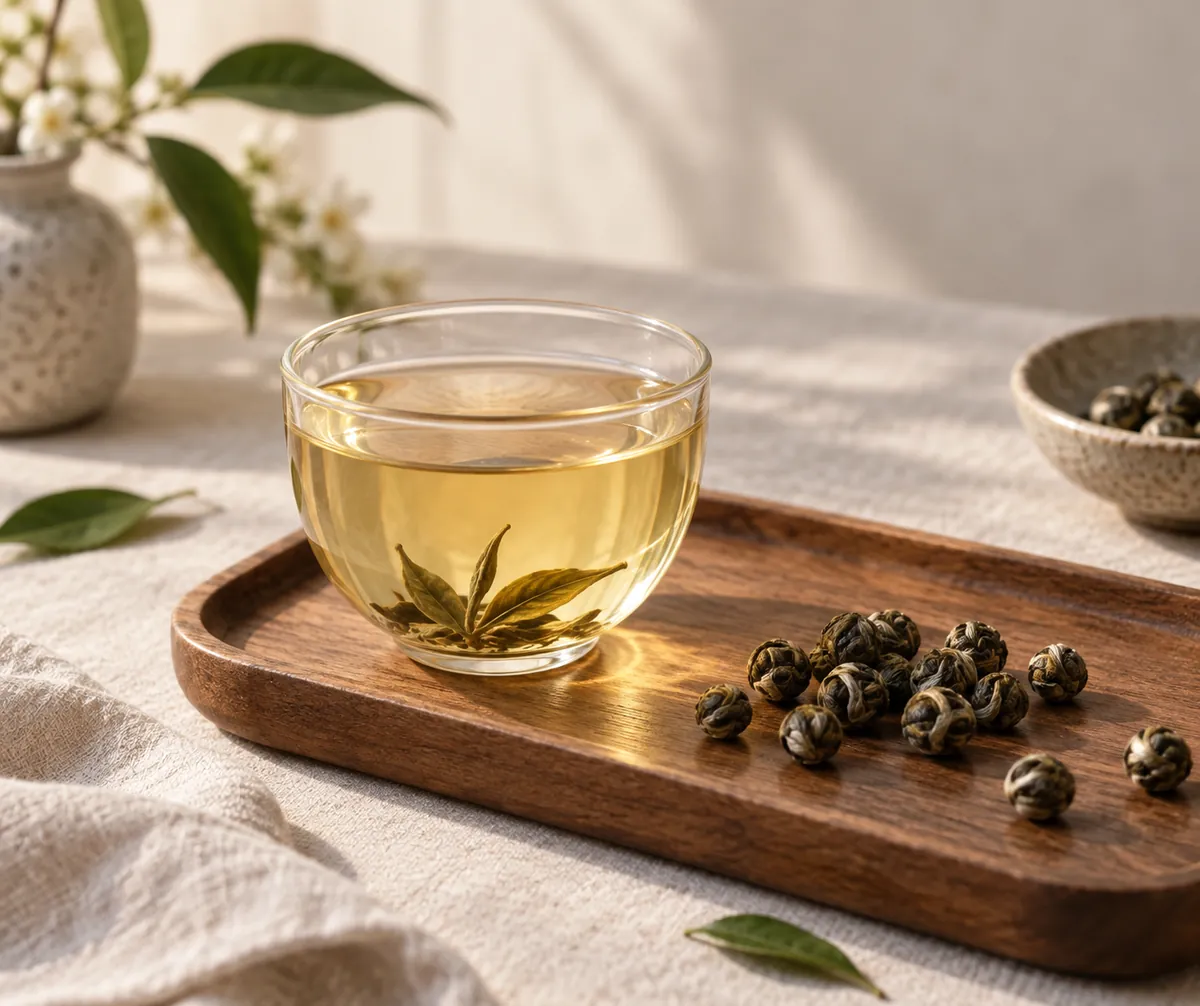
Brew jasmine tea at 80 to 85 C for two to three minutes, using about 3 g of leaf to 200 ml of water.
The floral aroma was transferred from jasmine blossoms into finished tea during scenting, while the leaf underneath still extracts like its own tea type. Good brewing protects both jobs: enough heat to open the leaf, but not so much contact that a delicate base becomes rough.
What temperature and ratio does jasmine tea need?
Jasmine tea wants water well below the boil, at eighty to eighty-five degrees, with a steep of two to three minutes and roughly three grams of leaf to a 200 ml cup.
Above 85 C, a delicate green base can release astringency faster and the most volatile floral notes escape the cup more quickly. A heavier oolong or black base may tolerate hotter water, so the package description matters more than the word jasmine alone.
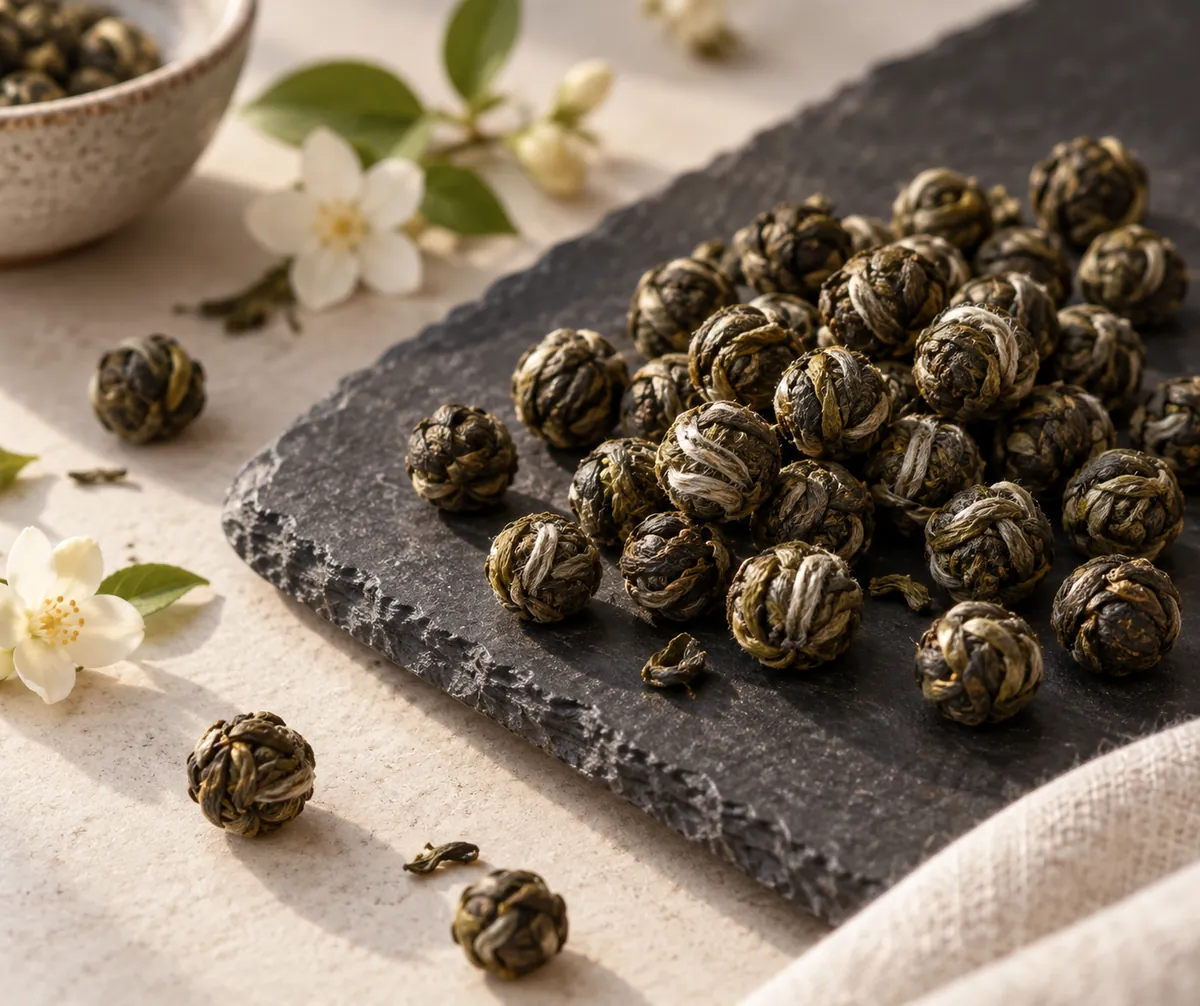
The 80 to 85 C range sits at the warm end of the green tea range and well below the boil, so a habit built on black tea can ruin the cup. Harney & Sons' brewing guide for its Dragon Pearl jasmine recommends water around 175 F (about 79 C).
Getting the temperature right is a minute of waiting rather than a thermometer. Boil the kettle, let it stand, and pour.
Two things shift the target. A jasmine tea on a black or oolong base takes a few degrees more than a green one, and a cold pot pulls several degrees out of the water the moment it lands.
Read the base tea before choosing the recipe
Jasmine describes the scent, not the leaf beneath it. Most bags use green tea, but white, oolong, black, and mixed bases exist, and each carries a different tolerance for heat and time.
| Base or form | Useful starting water | What to watch |
|---|---|---|
| Green jasmine | 80 to 85 C | Astringency rising before the floral aroma opens |
| White jasmine | Around 80 C | Delicate body that can seem faint beside a strong scent |
| Jasmine oolong | 85 to 90 C | Rolled leaf that may need more room and later infusions |
| Jasmine black tea | A few degrees above green jasmine, or as the pack says | Stronger body and malt beneath the flowers |
| Tea bag or fine fannings | Follow the pack, then shorten if rough | Fast extraction from small particles |
Read the ingredients and leaf description instead of relying on petals. Traditional scenting normally removes spent flowers, so a bag with few or no visible blossoms may have received more careful processing than one filled with decorative white pieces.
A convincing jasmine aroma has floral, green, fruity, or honeyed edges, which is how you tell intensity from quality when you open the bag. A single piercing perfume note that remains harsh at several doses may come from added flavoring or an unbalanced scenting process.
In one study of jasmine tea, repeated scenting increased aroma strength and persistence, but the number of rounds is not always printed and more scenting does not rescue poor base tea. The leaf still has to taste good after the first aroma fades, because later infusions expose it more clearly.
Pearls make the leaf grade visible through intact buds and whole leaves, yet a high price does not set the brewing time for you. Roll tightness, particle size, and the base tea still decide when to decant.
Pearls or loose leaf: does the form change anything?
It changes how fast the leaf gives everything up.
Pearls are young leaves and buds rolled by hand into tight spheres, and a tight sphere takes time to open. That slowness spreads the extraction across the whole steep instead of front-loading it.
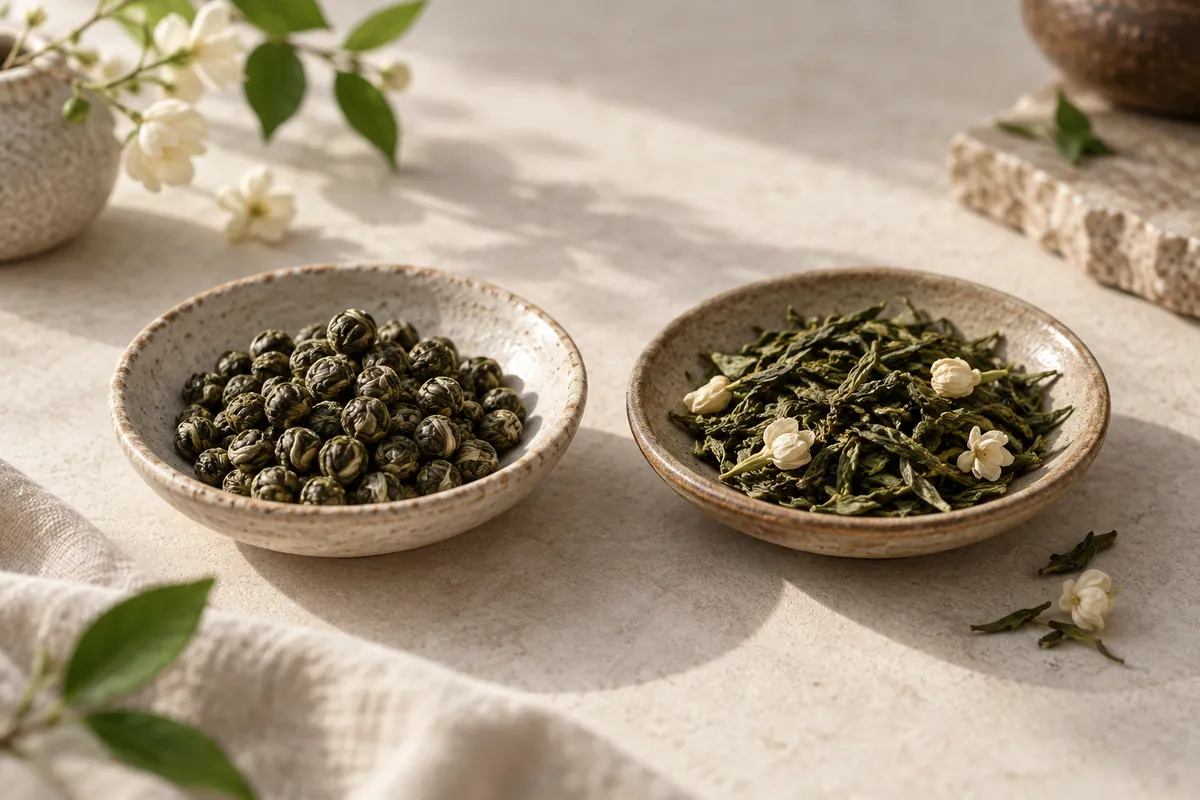
Pearls
Rolled tight, open slowly, forgiving on timing, cost more.
Loose scented leaf
Already open, extracts fast, needs closer watching.
Bags
Cut finest of all, done in well under a minute.
Loose scented leaf is already flat and open, so the water reaches everything at once. The same three minutes that suits pearls will overshoot it.
White tea shows what rolling does, since it is made from young material similar to that in pearls and is deliberately never rolled at all, which is why it behaves so differently in water.
Price follows both the leaf and the scenting work. Pearls often use young material and require rolling, while repeated rounds with fresh blossoms add labor and aroma persistence, so you usually pay more per gram for them than for coarser loose leaf scented fewer times.
Some cheap pearls are rolled from broken leaf rather than whole buds, and they open almost immediately, which removes the forgiveness the form is supposed to buy.
How do you brew jasmine pearls?
Use glass, and watch rather than time.
A gaiwan or a plain glass lets you see the pearls open, which is a better guide than a timer because every batch opens at its own pace.
Jasmine pearls, in order
- WarmRinse the glass or gaiwan with hot water and tip it out.
- LoadAdd about 3 g of pearls.
- PourAdd water at 80 to 85 C gently, down the side rather than onto the leaf.
- WatchThe pearls loosen, then unfurl and hang mid-water.
- DecantPour off completely once most of them have opened.
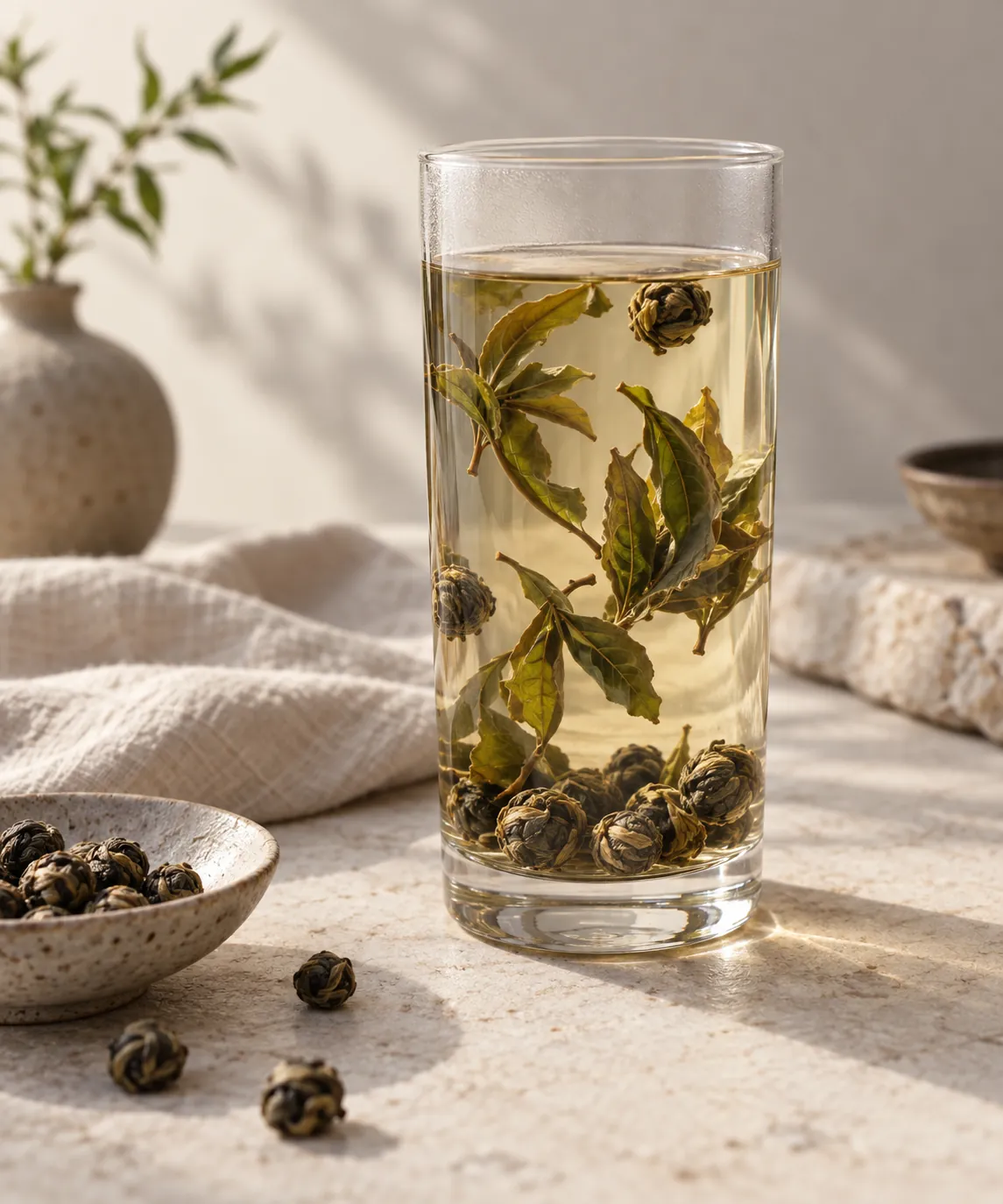
Pour gently down the side of the glass. Water dropped onto the pearls agitates them open faster and pushes more out of the leaf than the temperature alone would.
Decant to the last drop. Leaf standing in liquor between infusions carries on extracting, and the second cup arrives already too far along.
A closed pot works perfectly well.
It simply removes the visual cue and puts you back on a timer, which is fine once you know how a particular bag behaves.
Water and teaware can either preserve or flatten the aroma
Jasmine tea exposes water faults quickly because its body is light and much of its interest reaches the nose. Chlorine can cover the flowers, while very hard water can make the cup seem dull and heavier than the same leaf brewed with moderately mineral water.
Fresh filtered water helps when the tap smells strongly treated, though laboratory purity is not the goal, since extremely low-mineral water can leave tea tasting thin and gives you no buffering against small changes in dose.
A glass or glazed porcelain vessel keeps the aroma easy to read and does not retain yesterday's tea.
An unglazed pot can absorb scent over time, which is a poor match when it also holds roasted, smoky, or heavily flavored teas.
Clear glass
Shows pearl opening and liquor color, with no retained aroma
Glazed gaiwan
Decants quickly and makes repeated infusions easy to control
Basket infuser
Best for one mug when the leaf can be removed completely
Small unglazed pot
Risk of carrying another tea's aroma into a delicate jasmine
Closed travel bottle
Convenient only if the leaf can be separated before it overextracts
Preheat a small vessel when repeatability matters, but allow for that heat in the water choice. A cold heavy mug can pull the infusion below the intended range, while a fully heated gaiwan keeps the first steep closer to the kettle temperature.
Complete separation matters more than vessel tradition. Any setup works when water can circulate around the leaf and the finished liquor can be removed promptly.
How many times can you re-steep jasmine tea?
Three to five, and each one is a different drink.
The scent is the first thing to go. It sits on the surface of the leaf rather than inside it, so the first infusion carries most of it and the second noticeably less.
| Infusion | Water | Time | What the cup carries |
|---|---|---|---|
| First | 80 to 85 C | 2 to 3 min | Almost all the floral scent |
| Second | 85 C | 1 to 2 min | Scent present, green base emerging |
| Third | 90 C | 1 min | Nutty green character leads |
| Fourth and after | 90 C | 1 min or more | Plain green tea, still pleasant |
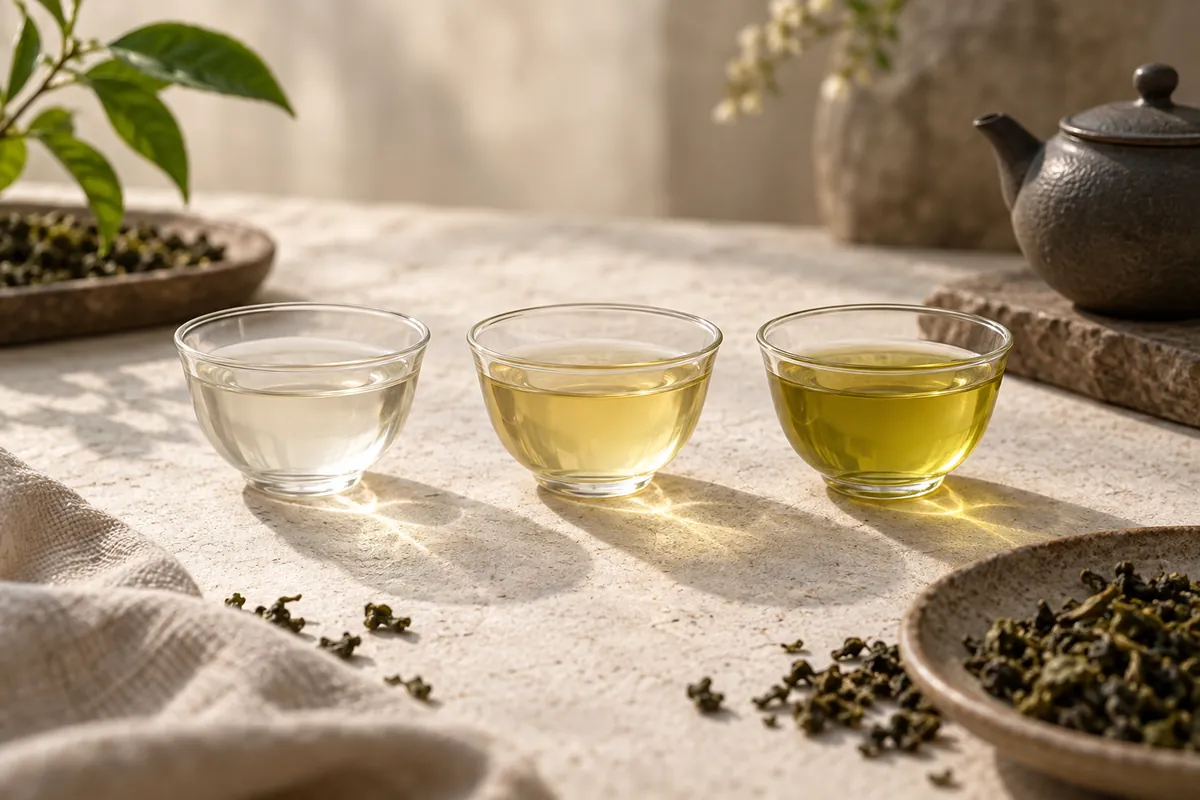
People find it counterintuitive that the cup that looks weakest is the one carrying what you paid for, and that the darker later cups are the green leaf underneath showing through.
Raise the water slightly and shorten the time as you go, because there is less left to pull each round and the leaf needs more encouragement but less contact.
Bags are the exception, since the cut is fine enough that everything comes out in the first infusion and a second is usually not worth pouring.
Why does mine taste bitter or soapy?
Two complaints, two entirely different causes.
Bitter comes from the leaf underneath. Soapy comes from the scent on top, and the fix for one is the opposite of the fix for the other.
Check whether the water was straight off the boil, whether the steep ran past three minutes, and whether the bag smells of perfume instead of flowers when you open it.
Bitterness is over-extraction of the green base, from heat or from time, so it is the ordinary green tea fault and responds to the ordinary green tea fix.
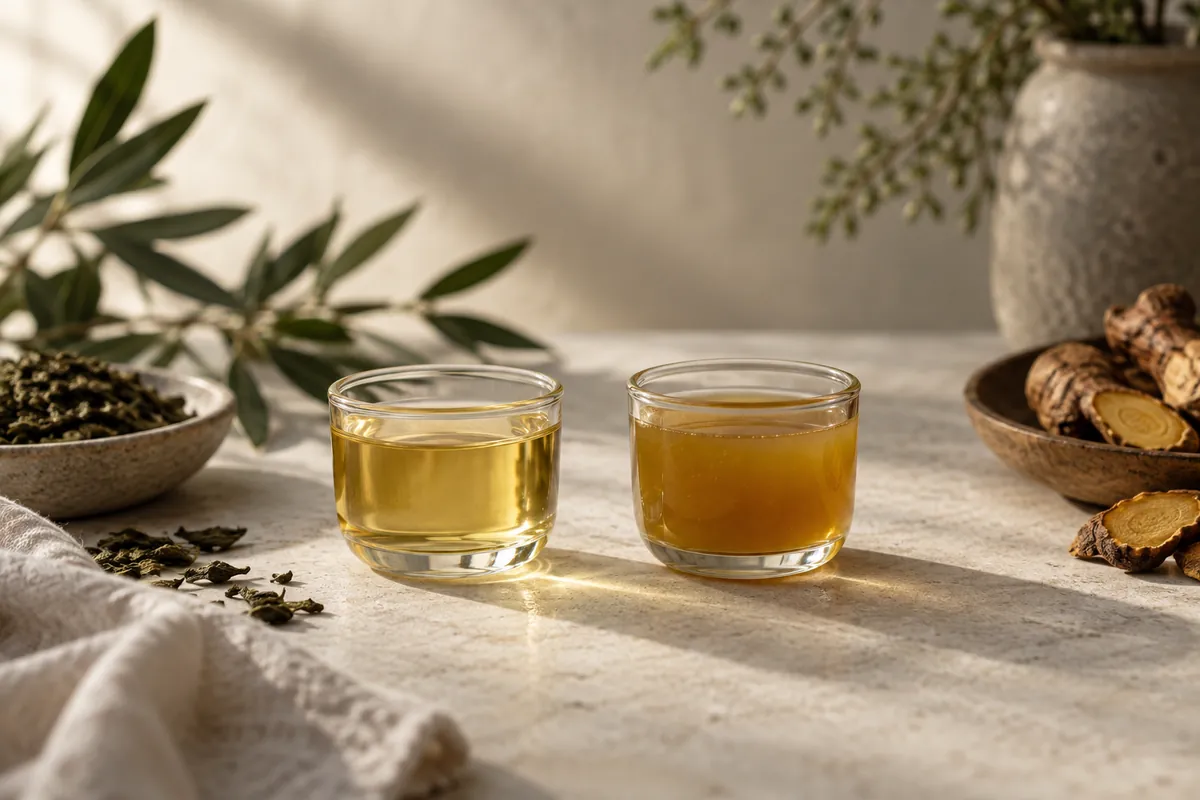
Soapiness means too much scent for the volume of water, which almost always means too much leaf, and shortening the steep will not touch it.
A cup tasting of perfume feels over-brewed, so people cut the time, and what they actually needed was less leaf.
Two faults are not brewing faults at all. Cheap jasmine tea scented with oil rather than flowers can read soapy at any dose, and hard water flattens the aroma however carefully you pour.
How is jasmine tea actually scented?
The flowers are laid among the leaves and then taken away again.
Harney & Sons describes repeated contact with fresh blossoms as how traditional jasmine tea gains its aroma. The finished leaf absorbs volatile compounds released as the flowers open, then the spent blossoms are separated before another scenting round.
Blossoms are gathered during the day while still closed, layered with the leaf in the evening, and left together for several hours while the pile of leaf and flowers warms slightly.
Jasmine blossoms open after dark, so the scenting is a night operation and the leaf and flowers are separated the next morning.
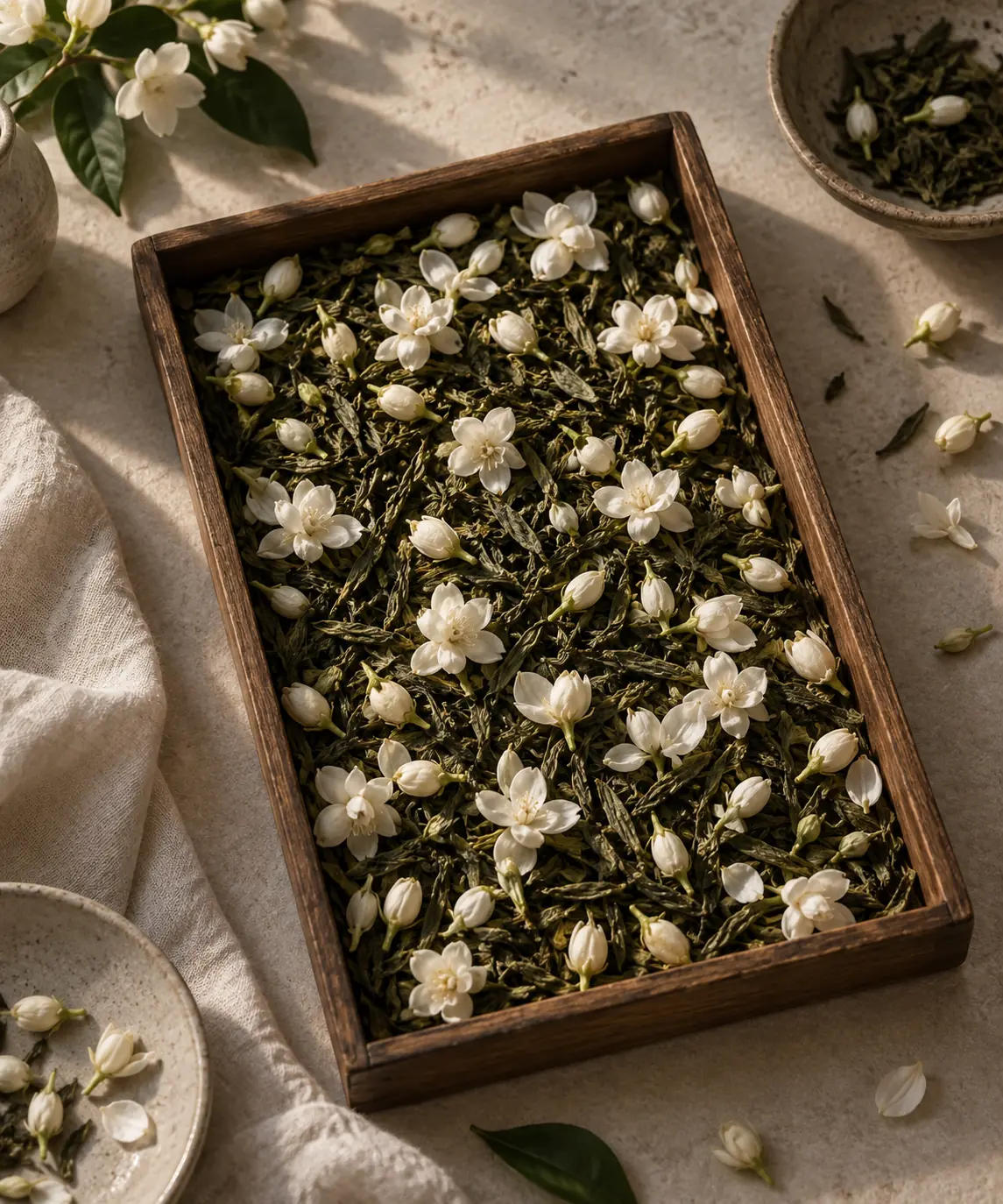
Better jasmine tea is often scented several times, with fresh flowers each round, and a heavily scented tea can carry its aroma further into the infusions than a lightly scented one.
The temperature rule follows from this process, because the aroma was absorbed onto the leaf rather than built into it, and heat can drive it back off in seconds.
The same scenting is applied to other bases. A jasmine oolong carries the flower over a heavier leaf and takes a few degrees more water than a green one.
Dried blossoms left in your bag are decorative. They can look like a mark of quality, but traditional scenting removes the spent flowers.
Should jasmine tea take milk or sweetener?
A lightly scented green jasmine is usually clearest without either, because milk covers the leaf's small body before it covers the aroma. A stronger black-tea base or a deliberately concentrated green jasmine can support milk when the drink is meant to be fuller.
Sweetener changes perception as well as sweetness. A small amount can round a sharp edge and make floral notes seem broader, while a heavy syrup turns the tea into a perfume carrier with little base character left.
| Tea and use | Milk | Sweetener | Best adjustment |
|---|---|---|---|
| Delicate green jasmine | Usually overwhelms it | Little or none | Lower bitterness through water and time first |
| Jasmine black tea | Works in a modest amount | Optional | Brew the leaf slightly stronger |
| Iced jasmine | Useful when built as milk tea | Syrup dissolves more evenly than crystals | Account for ice and milk as dilution |
| Cold brew | Often unnecessary | Add only after tasting cold | Increase leaf before extending beyond the aroma window |
Jasmine milk tea wants a larger leaf dose with the hot contact kept under control, because extending a weak brew far past its clean point extracts more astringency, whereas a larger dose supplies more aroma and body in the same short window.
Dissolve sugar or simple syrup while part of the tea is still warm, then add cold milk and ice. Granulated sugar stirred into a finished cold glass collects at the bottom and makes the last mouthful much sweeter than the first.
Plant drinks bring their own flavor. Oat can reinforce sweetness but mute the floral top, while a strongly nutty almond drink may compete with jasmine rather than simply softening it.
Taste the plain infusion first even when milk tea is the goal. That sample tells you whether the base is balanced before additions make every fault harder to identify.
Can you make jasmine tea iced or cold brewed?
Cold suits this tea better than it suits most.
Four to eight hours in the fridge and the leaf gives up its scent with almost none of the tannin that would normally sit under it.
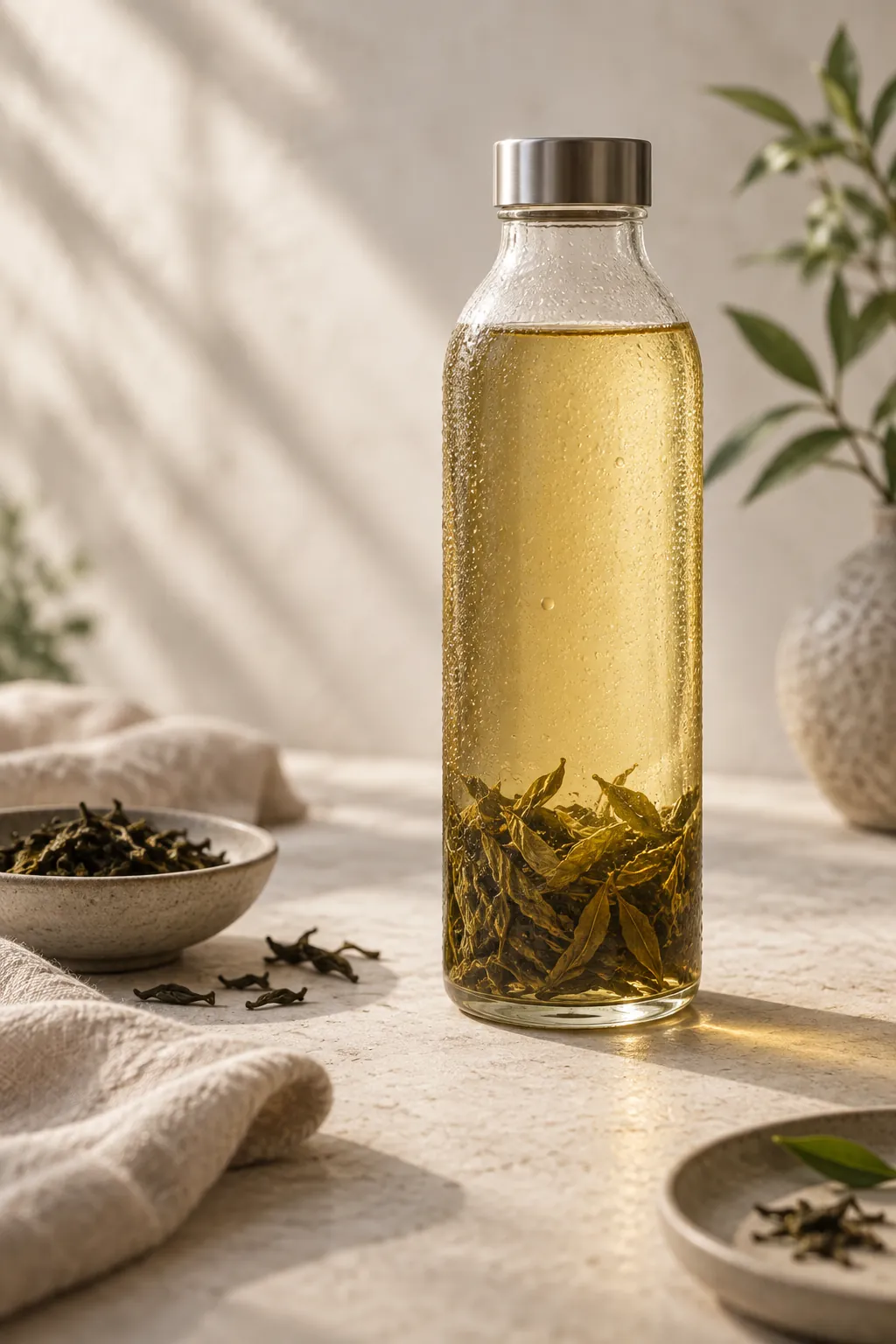
Low temperature slows the extraction of catechins and other astringent material, so the floral aroma can remain prominent even during a long refrigerated steep.
That also makes it a rescue: a bag that tasted harsh hot is often perfectly good cold, which is worth trying before writing off an expensive tea.
For iced, brew heavier. Whatever ice you add melts into the glass as unmeasured water, exactly as it does in any iced tea, and a normal dose disappears into it.
Cold-steeped jasmine loses its aroma as it stands, so use it soon and keep any left covered in the fridge, discarding it at the first sign of mould, gas or an off smell. Pearls need the longer end of the range because cold water opens them slowly.
Jasmine tea method
- Makes
- 1 cup, about 200 ml
- Ratio
- About 3 g of leaf per 200 ml of water
- Water temp
- 80 to 85 C
- Total time
- 5 min
What you need
- 3 g jasmine pearls or scented leaf
- 200 ml water at 80 to 85 C
Equipment
- Glass or gaiwan
- Kettle
- Scale
- Small cups
Method
- WarmRinse the glass or gaiwan with hot water and tip it out.
- LoadAdd about 3 g of leaf.
- PourAdd water at 80 to 85 C gently, down the side rather than onto the leaf.
- WatchLet the pearls loosen and unfurl rather than timing blind.
- DecantPour off completely once most of them have opened.
- Re-steepRaise the water slightly and shorten the time for each later infusion.
Common questions
Should jasmine tea contain visible flowers?
Usually not. Traditional scenting removes the spent blossoms, so petals left in the bag are decorative rather than a sign of quality.
Can you rinse jasmine pearls before brewing?
Better not to. A rinse washes off the surface aroma that the scenting put there, which is exactly what you are paying for.
Is jasmine tea always green tea?
Most often, but the same scenting is applied to white, oolong and black bases. A heavier base takes a few degrees more water.
Why does my jasmine tea smell stronger than it tastes?
That is normal and it is how the tea works. The aroma sits on the surface of the leaf and reaches the nose before anything reaches the palate.