How to Make Dragon Well Tea Without Losing Its Sweetness
Flat Dragon Well leaves show their progress as they stand, open, and sink. Moderate water and short first infusions preserve their toasted, sweet character.
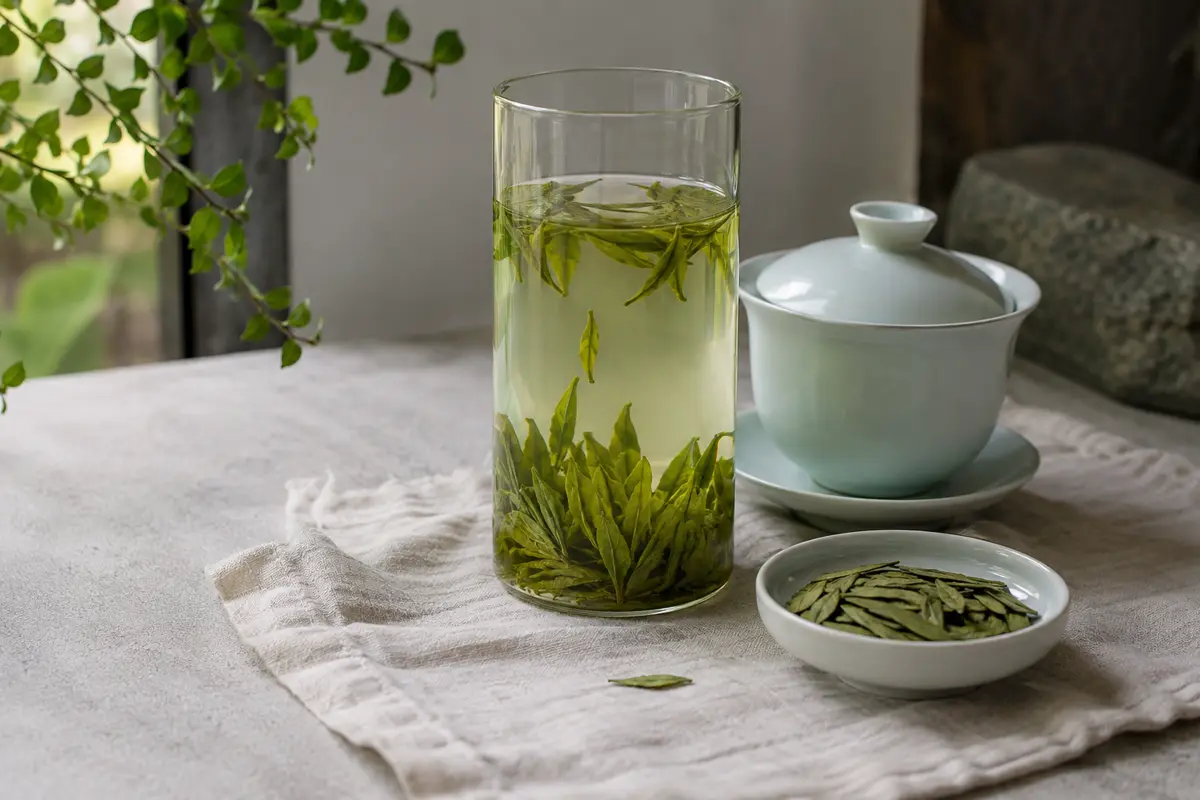
To make Dragon Well tea, begin with 3 g of leaf in 250 ml of water at about 80 C and taste after one minute.
The flat pan-fired leaves open quickly at the edges but continue releasing sweetness over several infusions, so cooler water and short contact preserve the toasted chestnut character.
Dragon Well starting point
- Leaf
- 3 g
- Water
- 250 ml
- Temperature
- About 80 C
- First taste
- 60 seconds
- First infusion
- 1 to 2 minutes
- Later infusions
- Add time as the leaf opens
Read the flat leaf before heating water
Dragon Well, or Longjing, should show flattened blade-like leaves rather than tightly rolled needles or dark broken dust.
A mix of buds and small leaves is normal, but a high proportion of powder extracts quickly and narrows the useful brewing window.
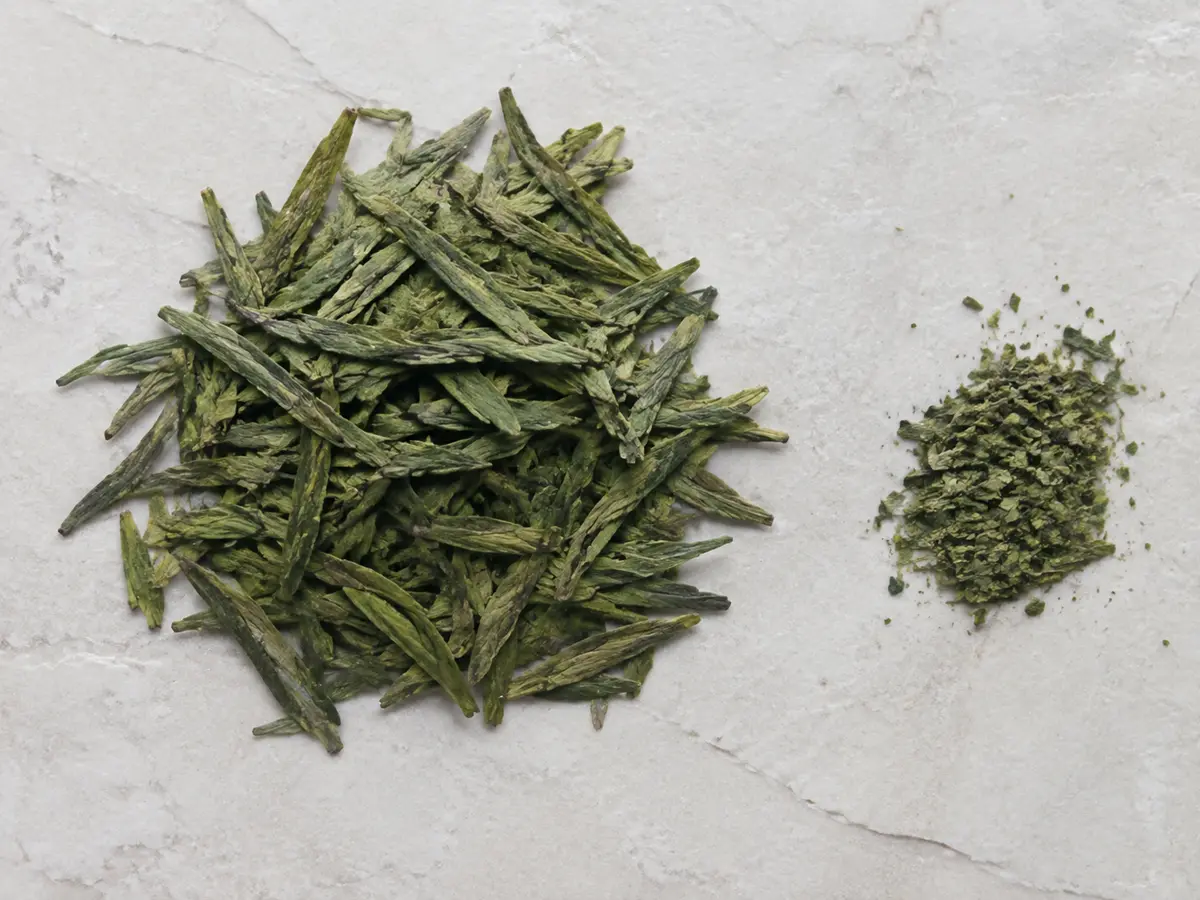
The Dragon Well profile explains how pan-firing fixes and shapes the leaf. At the kettle, that shape tells you to give the blades room, watch how they stand and sink, and avoid treating them like compact tea-bag particles.
Fresh leaf smells toasted, green, and gently sweet. A packet that smells only of cardboard will make a faded cup however carefully you time it, so inspect aroma before technique.
Leaf grade changes appearance without creating one universally correct dose. Small tender pieces open and release flavor quickly, while larger mature leaves may need slightly more time or leaf mass to give the same body.
Use the first brew as a controlled reading of the packet you own.
Changing temperature, dose, and vessel together makes an expensive tea as difficult to understand as an inexpensive one.
Cool the water enough to protect sweetness
Freshly boiled water can pull bitterness and drying catechins from green tea faster than its quieter sweet and nutty notes become clear. Let the kettle rest, mix hot and cool water in a separate vessel, or use a temperature-controlled kettle to reach roughly 75 to 85 C.
How water temperature changes Dragon Well
- 70 to 75 CGentle and sweet, but a tired leaf may taste thin
- Around 80 CToasted aroma, soft vegetal sweetness, restrained grip
- 85 to 90 CFaster and stronger, with a narrower stopping point
- Near boilingHarshness can cover the leaf's chestnut character
Water composition matters alongside heat. Very hard water can make the liquor look dull and mute aroma, while a neutral filtered brewing water lets the toasted edge remain distinct.
Chlorine is especially conspicuous in a delicate green tea because there is little roast or spice to cover it. If tap water smells like a swimming pool when warm, filter it or let an appropriate carbon filter handle the odor before adjusting the leaf.
Avoid repeatedly reboiling a nearly empty kettle.
Refill with fresh water for a new session so the starting water volume, mineral concentration, and cooling behavior remain easier to repeat.
Do not guess from steam alone.
Repeating the same rest time with the same kettle and room gives a useful household reference even when no thermometer is available.
If the kettle has no display, pour boiling water into a room-temperature pitcher and then into the brewing vessel. The transfer sheds heat predictably enough for repeatable trials, although vessel size and season still change the final temperature.
Pre-warming and cooling are separate choices. Warm glass prevents a large temperature drop, but water should still reach the leaf at the intended temperature rather than entering boiling simply because the vessel was heated first.
Brew it in a tall glass when appearance helps
A clear glass makes leaf movement visible. Add the leaves, pour water down the side rather than directly blasting the pile, and leave enough space at the top to observe the blades standing, opening, and falling.
Glass-brewing sequence
- Warm the glassRinse with hot water and empty it
- Add leafUse 3 g for about 250 ml
- Pour gentlyWet the flat blades without a forceful central stream
- WatchLet leaves stand, open, and begin to sink
- TasteStart near one minute and sip before the cup darkens
- Top upLeave a little liquor before adding more warm water
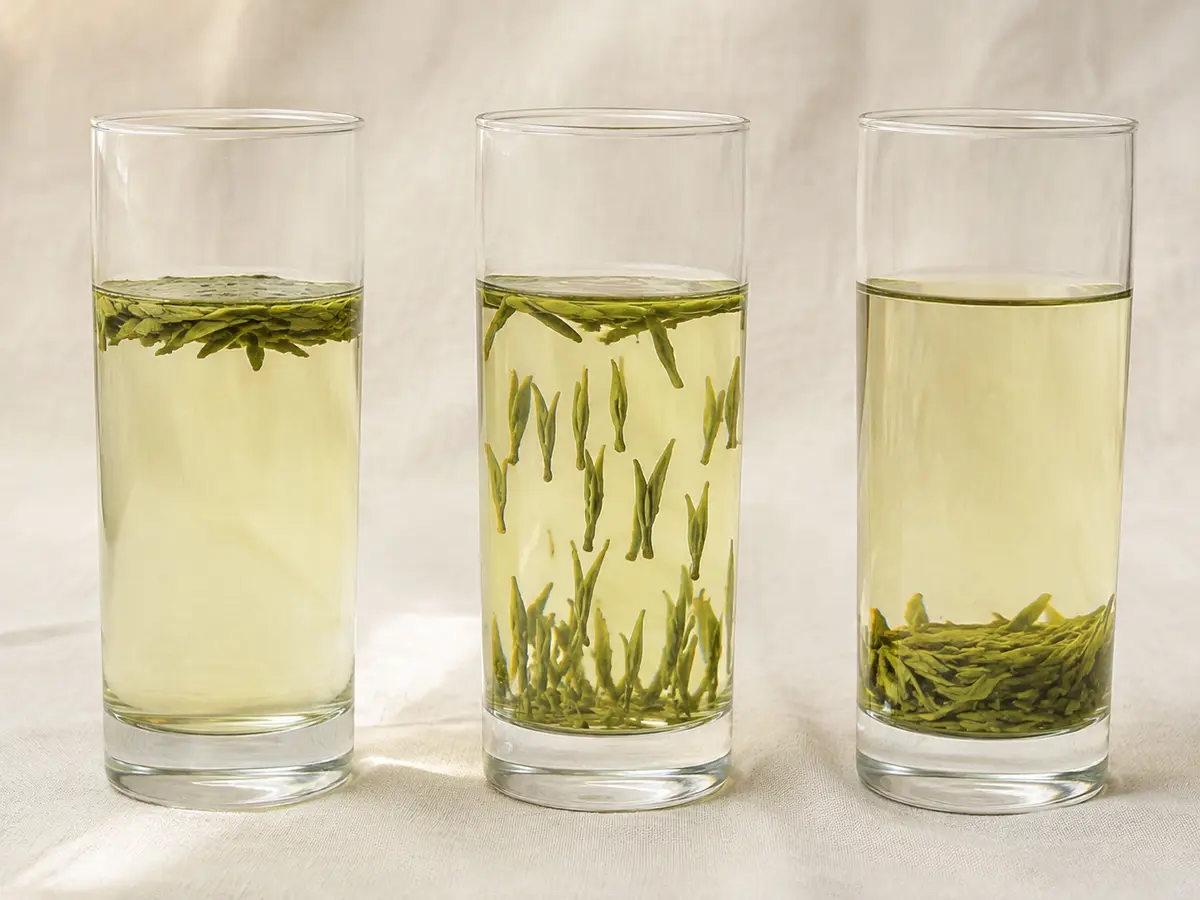
Glass brewing does not provide a hard stop because leaf remains in the drink. Sip while the balance is right, then top up before the glass empties so the next addition blends with a small amount of the previous infusion.
An upper pour wets floating leaves from above, while a gentle side pour protects delicate blades from a direct stream. Either can work; repeat the same pour position until you understand how quickly that leaf sinks and strengthens.
Do not drink the last concentrated mouthful if it has become rough.
Leaving a shallow layer for the next top-up keeps the continuous brew more even and prevents the bottom leaves from sitting nearly dry between additions.
Leaf movement is a cue, not a stopwatch. Some leaves sink early because of shape or moisture while others remain afloat even after their flavor has developed.
Use a gaiwan for separate infusions
A gaiwan gives tight control. Use a smaller vessel, maintain enough leaf to smell and taste clearly, and shorten the early infusions rather than copying the long glass method.
Dragon Well in a gaiwan
- WarmHeat the gaiwan and serving cup, then empty them
- DoseCover the base lightly with flat leaf
- WetAdd water near 80 C around the edge
- InfuseBegin with a short first infusion
- DecantPour every drop into the serving cup or pitcher
- RepeatAdd time gradually while the opened leaf still smells lively
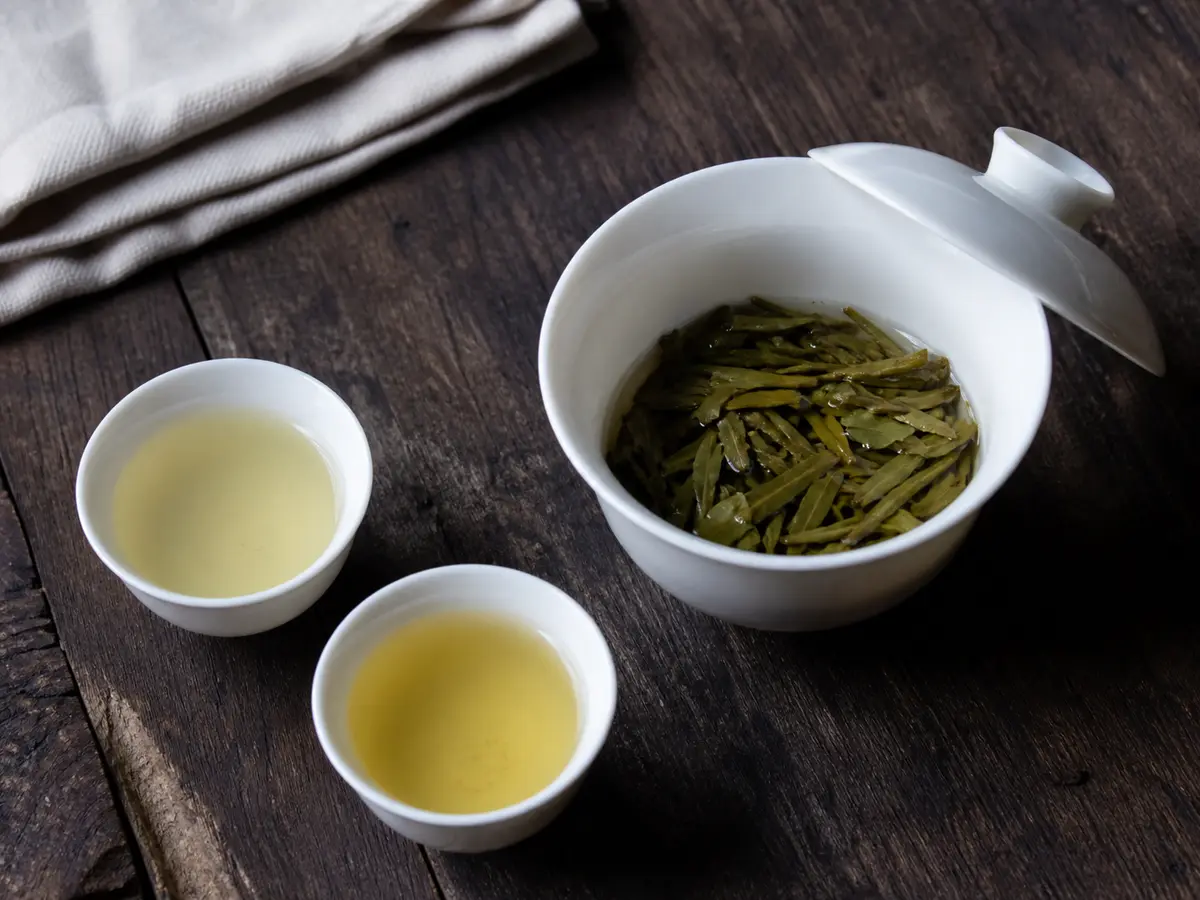
Complete decanting prevents the liquor trapped at the bottom from becoming the harshest part of the next cup. It also lets you compare infusions instead of experiencing one continuously changing glass.
The first infusion often emphasizes toasted aroma, while later cups can feel sweeter and more vegetal as the flat leaves fully soften. Stop when aroma disappears, not when the leaf loses all color.
Lay the lid slightly askew and pour in one continuous motion so every infusion ends at nearly the same moment. A gaiwan that retains a tablespoon of liquor keeps extracting between rounds and can make the next short infusion unexpectedly harsh.
Spread the warm leaves on the lid after pouring and smell them before adding more water. Toasted nut, steamed greens, fresh peas, or a clean mineral note can remain vivid even when liquor color changes very little.
Adjust strength without making the tea harsh
If the cup is too light but clean, add leaf on the next brew before pushing water toward boiling.
More leaf raises aroma and body while keeping the extraction window short.
- Thin and fragrant: increase leaf slightly or pre-warm the vessel.
- Bitter from the first sip: lower water temperature.
- Dry only at the finish: shorten contact or decant more completely.
- Flat and dull: test fresher leaf or lower-mineral water.
- Strong first cup, empty second: shorten the first infusion and reserve more for later.
| What you notice | Likely cause | Next brew |
|---|---|---|
| Chestnut aroma but little body | Dose too low | Add a small amount of leaf |
| Vegetal bitterness | Water too hot | Cool the water before pouring |
| Rough final mouthful | Leaf remained in concentrated liquor | Decant completely or top up earlier |
| Cloudy liquor with dust | Broken leaf and agitation | Pour gently and strain if needed |
| No change across infusions | First infusion ran too long | Shorten it and extend later rounds |
The color should remain pale yellow-green to warm gold, but color alone cannot identify balance. Taste and afterfeel carry more information than darkness.
A roasted or older Dragon Well can naturally brew more golden than a vivid spring leaf. Do not cool the water until the cup becomes weak merely to force a green color seen in a photograph.
If broken leaf collects in the cup, pour through a small clean strainer without pressing the fragments. Straining improves texture but cannot reverse bitterness that was already extracted with excessive heat.
More leaf beats more heat when you want a fuller cup without losing the tea's soft toasted edge.
Adjust in small increments because broad flat leaves are difficult to measure by spoon volume. A scale gives the cleanest comparison, but repeating the same shallow visual layer across the base of one gaiwan can work once that vessel is calibrated.
If the first infusion is sweet but later ones are empty, the opening contact probably took too much from the leaf. Shorten that first round before increasing total dose, then let the second and third infusions carry more of the session.
When every infusion is faint, confirm that water remained hot enough after entering the vessel. An oversized cold glass can pull a nominal 80 C pour below the range where the leaf develops useful body.
Choose additions that do not bury the leaf
Dragon Well is normally served plain because milk covers its light body and makes its vegetal notes read muddy. Sugar can make a poor cup easier to drink, but it also hides the quiet sweetness used to judge leaf quality and temperature.
Plain water | The clearest view of toasted, sweet, and vegetal changes
Light food | Mild rice, fruit, or unsalted nuts keep the tea audible
Milk | Too heavy for the leaf's body and pan-fired aroma
Lemon | Bright acid can dominate the soft nutty finish
Ice | Possible, but dilution requires a deliberate stronger brew
For cold service, brew with additional leaf at the same moderate temperature, then chill promptly over measured ice. Extending the steep to create concentrate extracts extra grip before the ice supplies dilution.
The best serving cup is small enough that the tea does not sit until cold. A wide white cup makes liquor color visible, while a tall glass keeps the leaves in view during continuous brewing.
When brewing for several people, decant into a small pitcher before dividing the tea. Pouring directly from a gaiwan into cups one after another gives the last cup longer contact and a noticeably stronger finish.
Food pairing should remain quiet enough to preserve the tea's light body. Salty, oily, or heavily spiced foods make the next sip seem thinner and can hide the chestnut aroma used to judge a successful brew.
Keep opened leaf away from kitchen odors
Green tea loses its fresh aroma faster than fully oxidized black tea.
Close the package firmly, store it in a cool dark cupboard, and keep it away from coffee, spices, and scented cleaning products.
- - Press excess air from a resealable inner pouch
- - Use a clean dry spoon instead of reaching in with damp fingers
- - Keep the packet away from the kettle's steam
- - Divide a large purchase so the main supply stays closed
- - Discard wet leaves after the final same-day infusion
The general guide to storing loose-leaf tea covers air, light, heat, moisture, and odor transfer. Dragon Well particularly exposes odor contamination because its own aroma is light and its broad dry surfaces sit close together in the packet.
Do not refrigerate an opened pouch unless it can remain sealed until it returns to room temperature.
Opening cold tea in humid air causes condensation on the leaves, which damages aroma and can introduce moisture.
For a vacuum-packed reserve, divide unopened packets by likely drinking pace and open only one at a time. Let a chilled sealed packet warm fully before breaking the seal so room air cannot condense on cold leaves.
Spent leaves should smell clean and vegetal, not sour or musty. Multiple infusions belong to one session; do not leave wet leaves at room temperature for many hours and resume brewing the next day.
Buy an amount you can finish while it remains vivid.
A careful 80 C brew cannot restore a toasted fragrance that disappeared during months in an open tin.
Label separate packets with the opening date and keep daily-use leaf in the smallest practical container. This limits the amount of fresh tea exposed each time the lid opens and keeps the reserve from absorbing kitchen air.
Clean glass and porcelain with an unscented product and rinse thoroughly. Dragon Well's restrained aroma makes traces of coffee oil, dish fragrance, or yesterday's flavored tea unusually easy to notice.
Dragon Well glass method
- Makes
- 1 glass, about 250 ml
- Ratio
- 3 g tea to 250 ml water
- Water temp
- About 80 C / 176 F
- Total time
- 5 min
What you need
- 3 g Dragon Well tea
- 250 ml fresh water
Equipment
- Kettle
- Tall heat-safe glass or roomy infuser
- Scale or tea spoon
- Timer
Method
- WarmRinse the glass with hot water and empty it.
- DoseAdd 3 g of flat Dragon Well leaf.
- PourAdd water near 80 C gently down the side.
- WatchLet the leaves stand, open, and begin to sink.
- TasteBegin near one minute and drink while balanced.
- Top upLeave a little liquor before adding more water.
Common questions
What temperature should Dragon Well tea use?
About 80 C is a useful starting point. Cooler water emphasizes sweetness, while hotter water extracts faster and can cover the toasted character with bitterness.
How long should Dragon Well steep?
Taste the first infusion from about one minute and commonly finish within two. Shorter gaiwan infusions and continuous glass brewing use different timing because one fully separates leaf from liquor and the other does not.
Can Dragon Well be brewed more than once?
Yes. Good intact leaf often gives several infusions; shorten the first round and add time gradually while the opened leaves still smell lively.