What Is Condensed Milk? Reduced by Half, and Half Sugar
Condensed milk is milk reduced by half with sugar making up close to half the weight. That sugar is the preservative, the reason the tin keeps for years, and the reason you cannot make a drink richer without also making it sweeter.
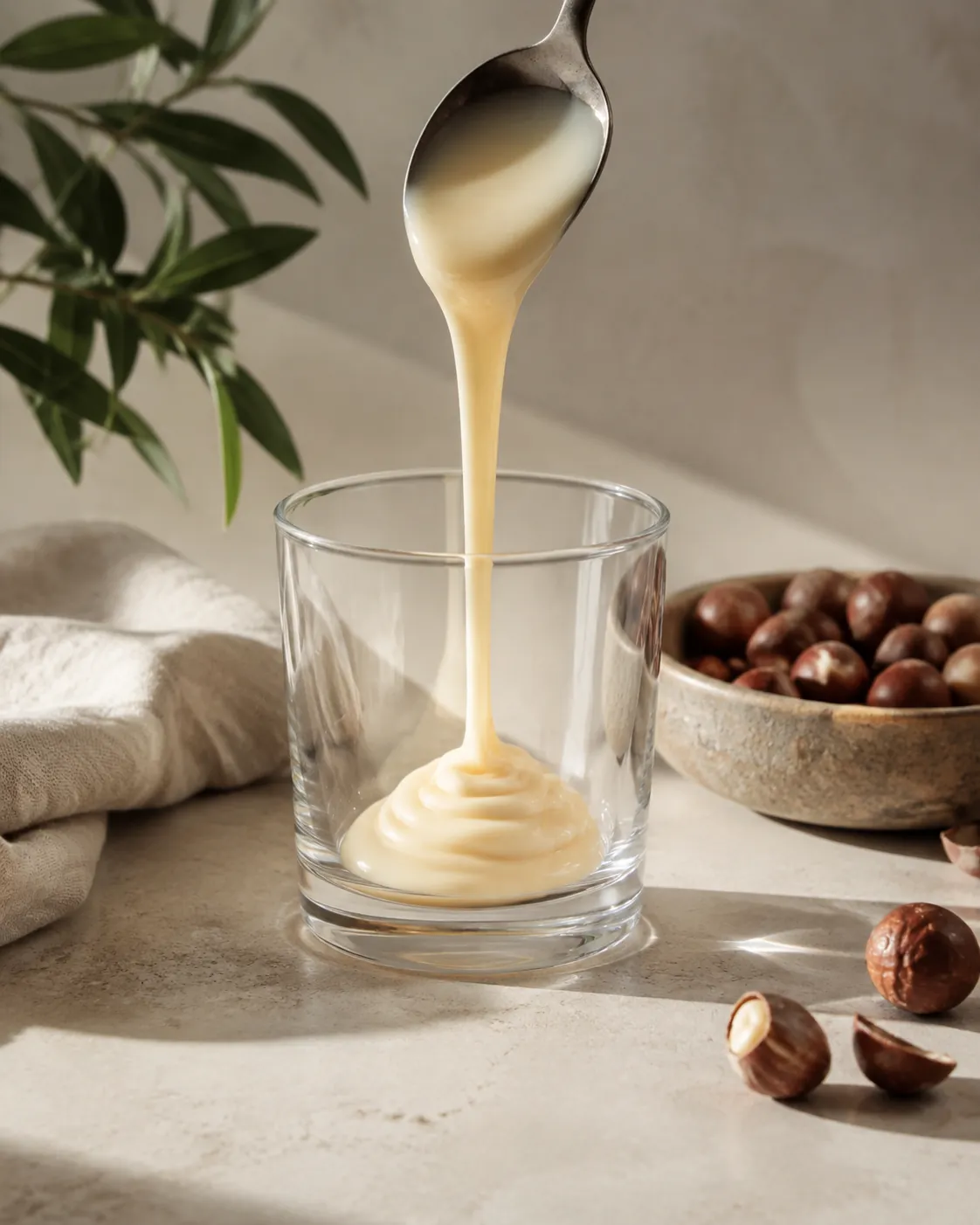
Condensed milk is milk with most of its water boiled off and a large quantity of sugar stirred in. It pours thick and slow, it is ivory rather than white, and in a drink it does two jobs at once that every other dairy option splits between two ingredients.
That doubling is the whole character of it. Condensed milk is a sweetener and a creamer welded together, at a ratio the tin decided rather than you, and every practical fact about using it follows from that.
The sugar is also why the tin keeps for years without refrigeration, which is not a side effect but the original point of the product.
Condensed milk at a glance
- What it is
- Milk reduced by roughly half, with sugar added
- Sugar
- Around 45 to 55 per cent by weight
- Texture
- Thick and slow-pouring, close to a syrup
- Colour
- Ivory, deepening to pale caramel with age
- Keeping
- Years unopened, no refrigeration needed
- Not the same as
- Evaporated milk, which has no sugar at all
What condensed milk is
The process is simple and old. Fresh milk is warmed and held under reduced pressure so that water evaporates at a lower temperature than it otherwise would, and it is taken down to roughly half its starting volume.
Sugar goes in either before or during that reduction.
What comes out is not concentrated milk in the ordinary sense. The sugar makes up close to half the finished weight, so a spoonful delivers far more sweetness than dairy, and the milk is the minority partner by taste even though it supplies the body.
Colour comes from the heat. Some browning happens during reduction, which is why even a fresh tin is ivory rather than the white of whole milk, and why an old tin is noticeably darker.
None of this is a modern convenience product. It was developed in the nineteenth century as a way of moving milk long distances without refrigeration, and the formulation has barely changed since.
Why the sugar is the preservative
Evaporated milk is sterilised in the tin. Condensed milk is not, and it does not need to be, because the sugar concentration leaves too little available water for spoilage organisms to work with.
That single difference in preservation method explains almost everything that separates the two products. Evaporated milk tastes faintly cooked because it was heated hard in the tin; condensed milk tastes clean and sweet because it never had to be.
It also explains the texture.
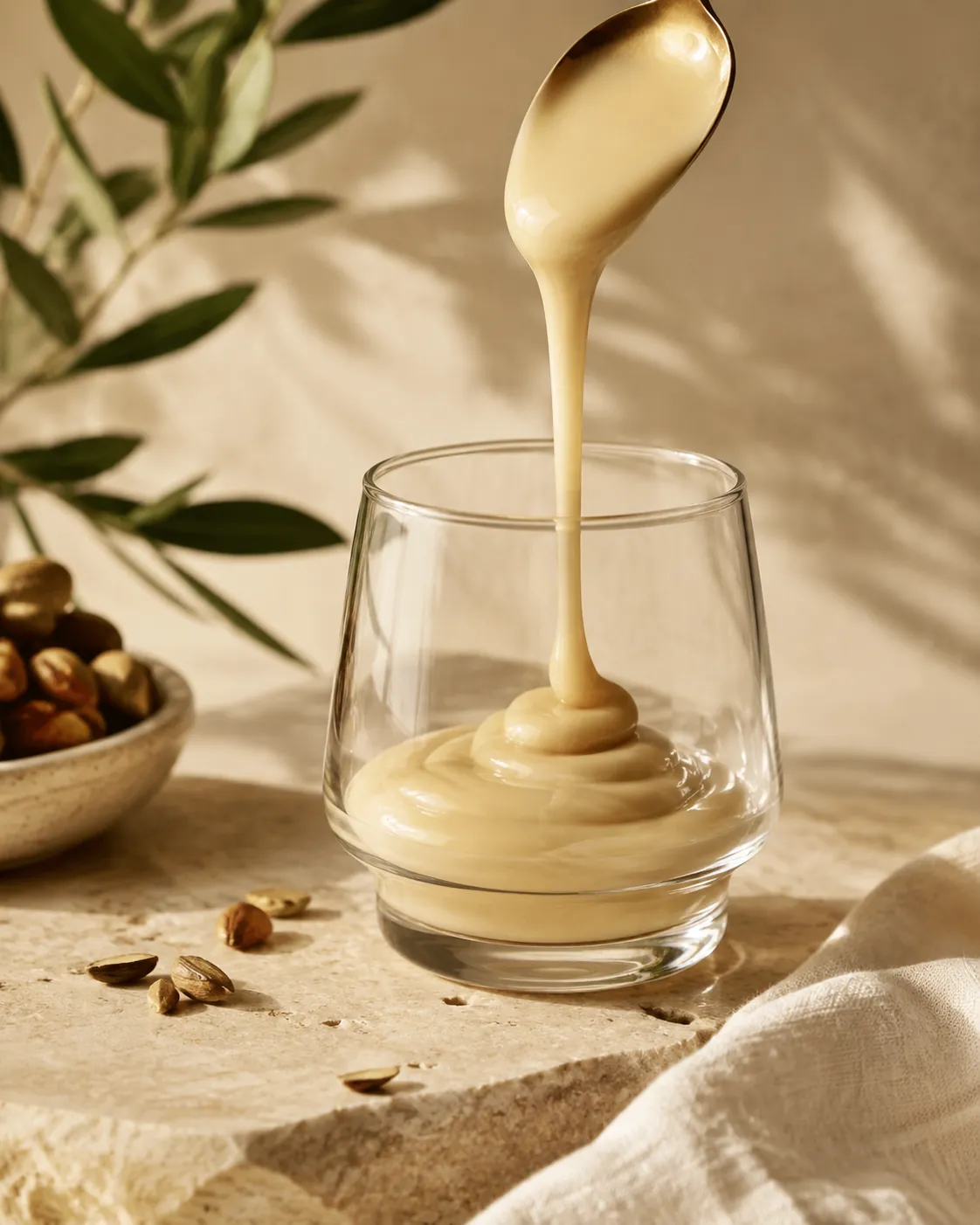
Sugar in solution is viscous, and at this concentration it gives the product a body closer to golden syrup than to any dairy liquid, which is what lets it sit in a layer at the bottom of a glass.
Condensed against evaporated milk
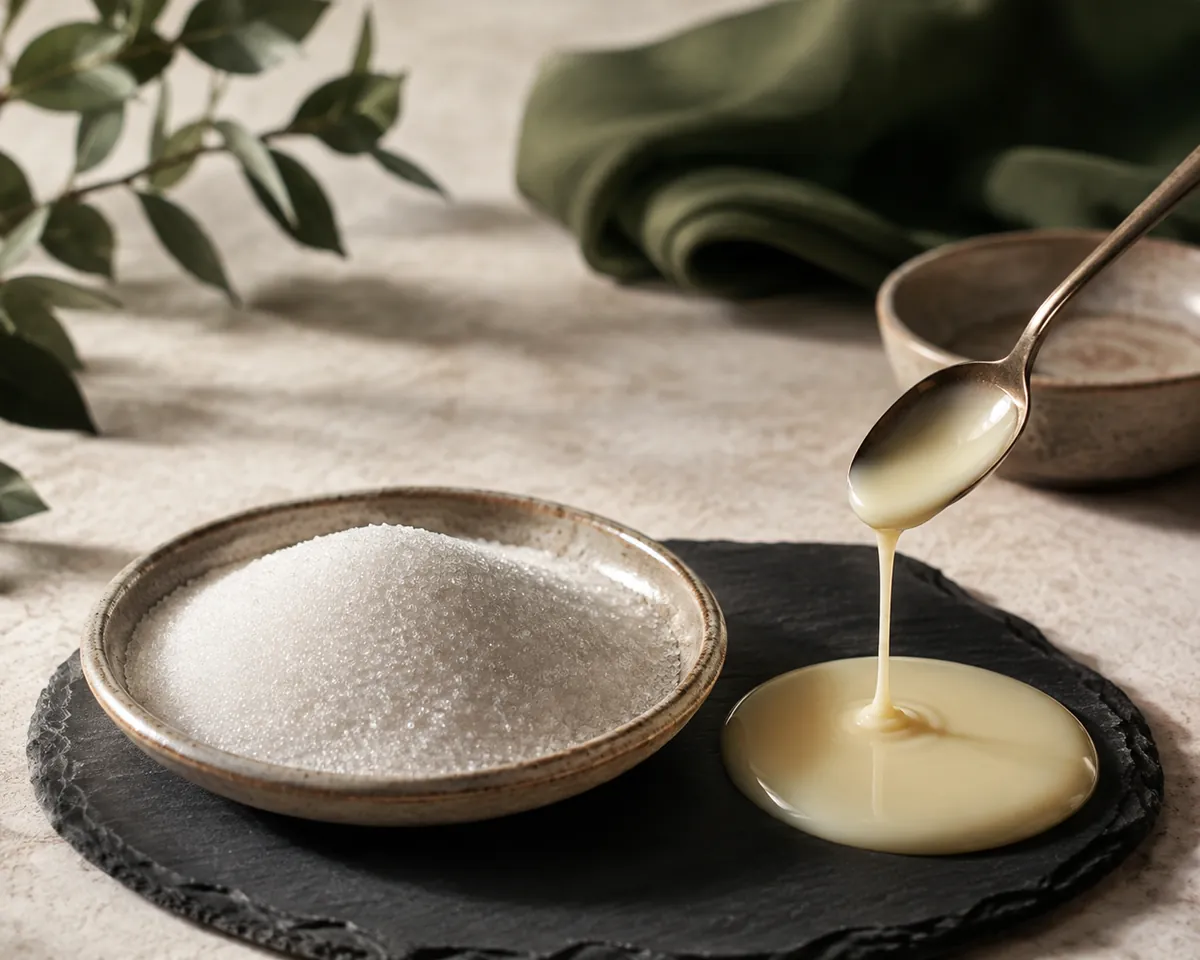
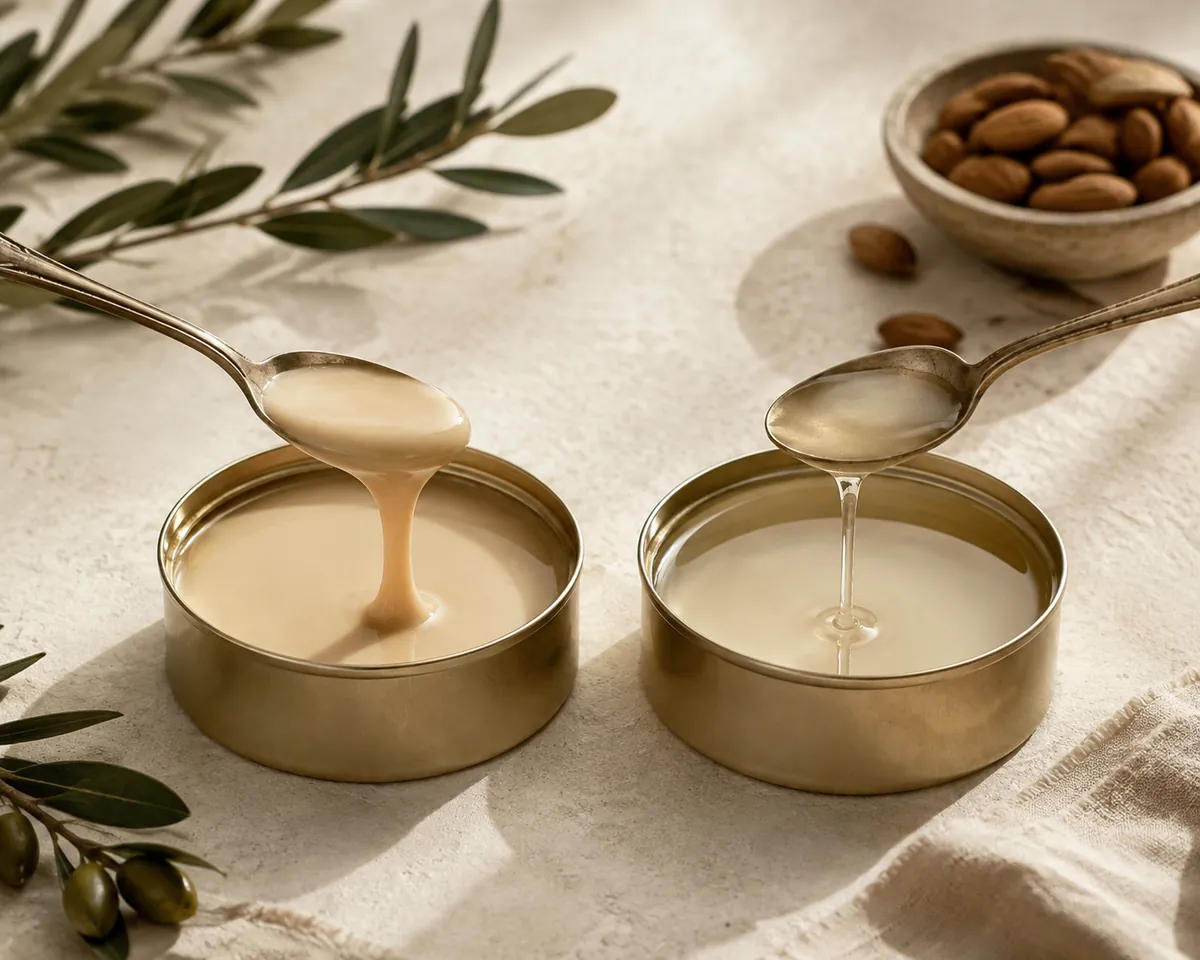
These two sit side by side on the same shelf in similar tins and are constantly bought in place of one another. They are not interchangeable in any drink.
| Condensed | Evaporated | |
|---|---|---|
| Sugar | Around half the weight | None added |
| Preserved by | Sugar concentration | Sterilisation in the tin |
| Texture | Thick, syrupy | Pourable, like thin cream |
| Taste | Sweet, clean, milky | Faintly cooked, not sweet |
| Use in coffee | Sweetener and creamer in one | Creamer only |
| Substitutable | No | No |
Swapping one for the other fails in both directions and fails loudly. Evaporated milk in a Vietnamese coffee gives an unsweetened, oddly thin drink; condensed milk in a Hong Kong milk tea gives something closer to a dessert.
The labels do not help. Both are often shortened on the tin, and in several languages the same word covers both, so reading the sugar line is the only reliable test.
What it does in a cup of coffee
Dropped into hot coffee it dissolves completely and quickly, which sets it apart from sugar and from most syrups. There is no undissolved grit at the bottom and no need to stir at length.
It sweetens hard.
A tablespoon in a small cup is roughly the sweetness of two teaspoons of cane sugar with milk on top, and most people who have not used it before use too much on the first attempt.
The body is the part that surprises. Concentrated milk solids give a fuller mouthfeel than an equivalent splash of milk, so the drink reads as rich rather than merely sweet, and it stands up to very strong coffee without disappearing.
It also does not curdle. The acid-and-heat mechanism described under curdling in coffee needs enough free water and unstabilised protein to work with, and a product this concentrated and this sweet gives it neither.
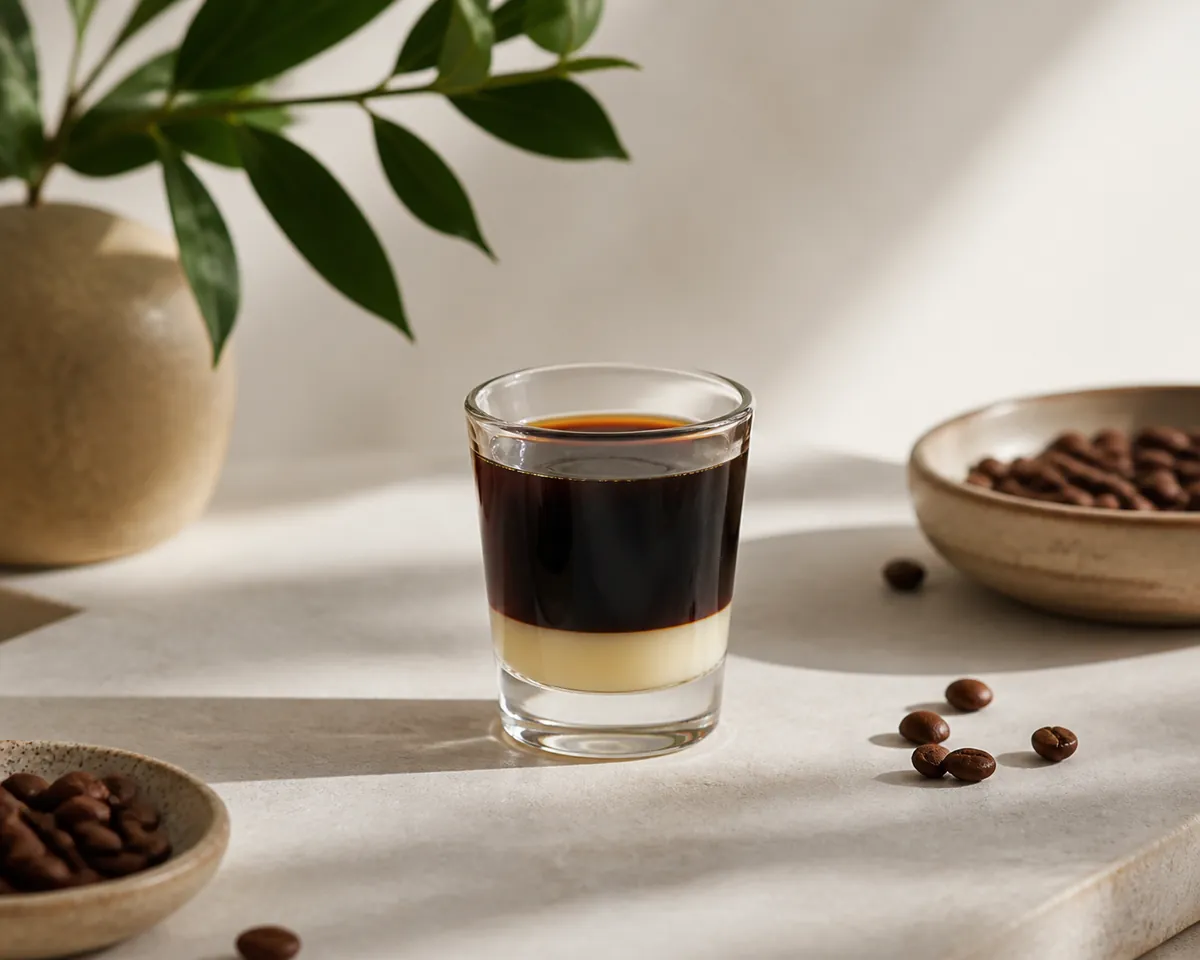
Vietnamese iced coffee, and why it uses this
The pairing is not an accident of taste. Vietnamese coffee is typically dark-roasted and often carries robusta, brewed slowly through a small metal filter into a glass that already holds the condensed milk.
The order that matters
- Milk firstA generous spoonful of condensed milk in the bottom of the glass
- Brew over itCoffee dripped directly onto the milk, hot and very strong
- WaitThe two sit in layers while the filter finishes
- StirCombined thoroughly only at the end
- IcePoured over a full glass of ice, or ice added and stirred again
Fresh milk was scarce and expensive where the drink developed, and tinned condensed milk was not. The drink was built around what kept in a hot climate, and the flavour combination turned out to be better than the compromise it started as.
There is a technical reason it works too. A dark, heavy, bitter brew needs both sweetness and body to become drinkable at that strength, and reaching for one ingredient rather than two keeps the volume of the drink small and its concentration high.
Poured over ice, the dilution that follows is planned for rather than accidental, which is why the undiluted version tastes almost too intense on its own.
In tea, and the drinks beyond coffee
Condensed milk appears across a wide band of tea traditions, and in most of them for the same reason it appears in coffee: a strong, tannic brew needs sweetening and softening at once.
- Thai iced tea, where it joins evaporated milk over crushed ice
- Malaysian and Singaporean teh, pulled between two vessels to aerate it
- Iced tea across Southeast Asia, in place of sugar and milk separately
- Hot cocoa, where it replaces both the sugar and the milk
- Coffee with a small dose, as a Spanish-style bombón
Strong black tea is the natural partner, because the astringency has something to push against. In a delicate tea it is a waste of both ingredients, and in a chai it competes with the spice rather than carrying it.

Hot chocolate is the most underrated use. Condensed milk supplies sugar, dairy and thickness together, and a cocoa made with it needs nothing else beyond water and cocoa powder.
The one thing you cannot do with it
Sweetness and richness arrive locked together, and there is no way to turn one dial without moving the other. That is the real cost of the ingredient and the reason it is not a general-purpose milk.
Suppose you want the drink richer but not sweeter. Adding more condensed milk always adds more sugar, and no version of the product separates the two. The usual workaround is a splash of evaporated milk alongside it, which is exactly what Thai iced tea does.
Going the other way is easier. Less condensed milk plus a splash of whole milk or oat milk gives a lighter, less sweet drink with most of the character intact.
Plan the ratio before you pour, because the correction always involves adding a second ingredient rather than adjusting the first. An espresso base makes that easier than a long brew does, since there is less liquid to rebalance.
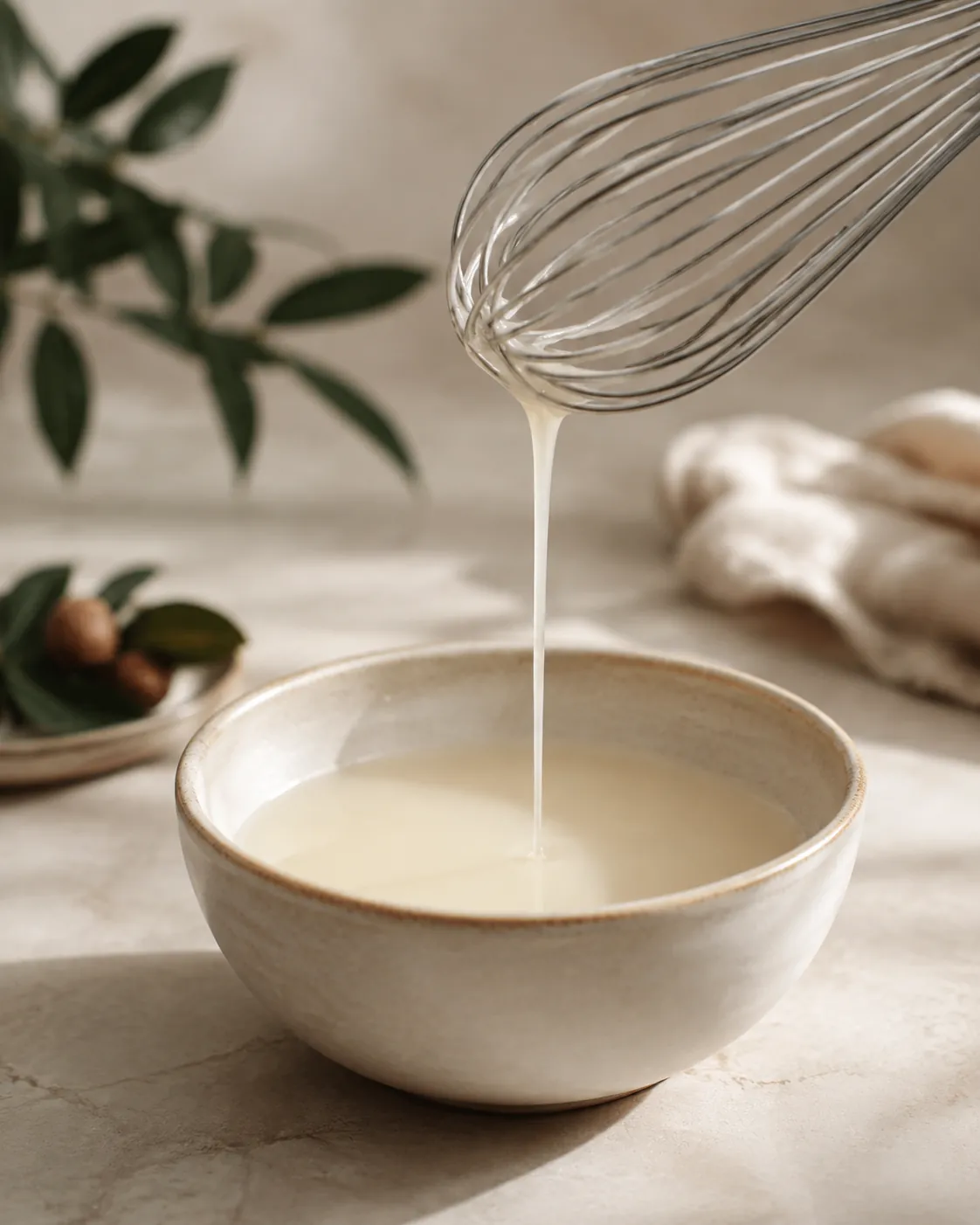
Working with it: measuring, dissolving, layering
Getting it out of the tin is the first practical problem and the one nobody warns you about. It clings to a spoon, it runs slowly, and it will not level itself in a measuring spoon.
Measuring
Warm the spoon in hot water and it releases cleanly
Dissolving
Stirs instantly into hot liquid, slowly into cold
Cold drinks
Dissolve it in the hot coffee first, then chill or ice
Layering
Pour the drink gently over the back of a spoon to keep it separate
Decanting
Move the contents to a jar; the tin edge is sharp and it will not seal
Cold dissolving is the trap.
Spooned straight into an iced coffee it sinks and stays there, and stirring a thick syrup through cold liquid takes far longer than it should, which is why the traditional method combines it with the hot brew first.
The layered look that photographs well is deliberate and fragile. It survives only until the first stir, and a layered drink is an unmixed drink, which tastes of nothing but coffee at the top and nothing but sugar at the bottom.
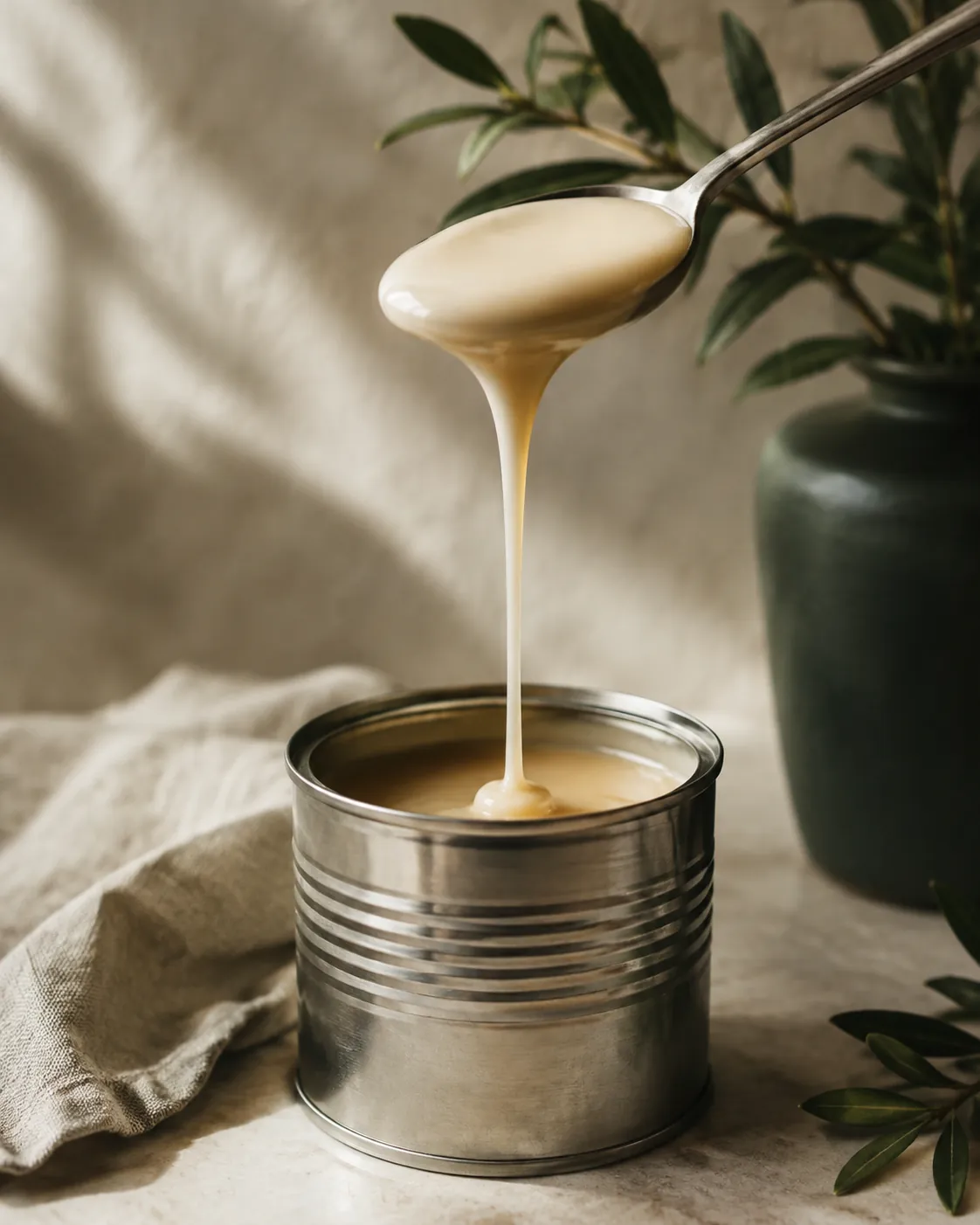
Tins, tubes and what to check
The ingredient list should be short: milk and sugar, and in some products lactose or milk powder used to standardise the mix. Anything longer is worth a second look.
- Check it says sweetened condensed milk, not evaporated
- Look for milk and sugar at the top of a short ingredient list
- Treat vegetable fat in the list as a filled-milk product, not the real thing
- Prefer a resealable tube or squeeze bottle if you use small amounts
- Note the sugar percentage where it is given, since it varies by brand
Filled milk is the substitution to watch for. It replaces some or all of the milk fat with vegetable oil, is common and legal, and behaves similarly in a drink while tasting flatter and slightly waxy on the finish.
Squeeze bottles and tubes cost more per gram and solve the two genuine annoyances of the tin, which are measuring and storing. For anyone using a spoonful at a time, that premium is usually worth paying.

Storage, and the colour change
Unopened, a tin needs nothing: a cupboard, out of direct heat, and it will hold for a year or two past the date on it without any real change beyond colour.
The colour change is worth understanding rather than fearing. Sugars and milk proteins react slowly even at room temperature, so an old tin darkens towards caramel and its flavour deepens in the same direction.
That is browning, not spoilage.
Unopened
Cupboard, cool and dark, stable for years
Opened
Fridge in a sealed jar, and realistically two weeks
Surface mould
The failure to watch for; discard rather than scrape
Crystals
Grittiness after long storage is sugar crystallising, not spoilage
Do not leave it in the opened tin. The metal edge is sharp, the tin will not seal, and the contents pick up a faint metallic note within a few days.
A screw-top jar solves all three, and takes ten seconds.
Freezing works and is rarely worth it. It stays soft rather than freezing solid, because of the sugar, and it thaws slightly grainy.
Where it sits among milk options
Condensed milk is not competing with milk. It is competing with the combination of milk and sugar, and against that pair it wins on convenience, on keeping, and on how much body it delivers per spoonful.
Across the milk and plant drinks shelf it is the only option that arrives pre-sweetened, and the only one that keeps unrefrigerated for years. Against a measured simple syrup plus milk it trades control for a single spoon.
Evaporated milk is its unsweetened sibling and the two are frequently used together.
Its limits are the flip side of its strengths. It commits you to a sweetness level, it is wrong in anything delicate, and it will overwhelm a good drip coffee as thoroughly as it rescues a harsh one.
Where the brew is strong and the sweetness is wanted, nothing else does the job in a single spoon.
Common questions
Can you use evaporated milk instead of condensed milk?
No, and the swap fails in both directions. Evaporated milk has no added sugar and pours like thin cream, so it makes an unsweetened, thin drink where condensed milk was intended. Condensed milk used in place of evaporated turns a milk tea into something closer to a dessert.
Why does an unopened tin keep for years without a fridge?
The sugar concentration leaves too little available water for spoilage organisms to work with, so the product is preserved by its own sugar rather than by sterilisation. Once the tin is open, airborne moulds can grow on the surface, so it goes in the fridge in a sealed jar.
Why has my condensed milk turned darker?
Sugars and milk proteins react slowly even at room temperature, so a tin darkens towards caramel over time and the flavour deepens in the same direction. That is browning rather than spoilage. Surface mould on an opened tin is the failure to watch for instead.