Coconut water vs Electrolyte drink
Coconut Water vs Electrolyte Drink: Potassium Against Sodium
Coconut water is potassium-forward and varies with the harvest. A formulated electrolyte drink is sodium-forward and identical from pack to pack. Axis by axis, that origin difference explains almost everything, and on several axes neither one wins.
Coconut water is the liquid inside a young green nut, potassium-forward at roughly 250 mg per 100 ml against 25 mg of sodium, and its composition moves with the harvest. An electrolyte drink is a formulation built around sodium, identical from pack to pack, and available as a dry powder or tablet. The sugars overlap; the mineral profiles are reversed; and what either does for anybody is outside what this page describes.
Side by side
| Attribute | Coconut water | Electrolyte drink |
|---|---|---|
| Made by | Draining the liquid from a green coconut | Dissolving chosen salts and sugars into water |
| Leading mineral | Potassium | Sodium, in nearly every product |
| Sodium | Low, around 25 mg per 100 ml | Chosen by the formulator, and highly variable |
| Potassium | High, around 250 mg per 100 ml | Usually well below the sodium figure |
| Sugars | Around 4 g per 100 ml, all naturally present | None to a sports-drink level, added |
| Consistency | Varies with the palm and the harvest | Identical from pack to pack |
| Who set the figures | The palm and the harvest | A formulation brief |
| Dry format | Not available in any usable form | Powder or tablet, the standard low-cost route |
A liquid that was found against a liquid that was designed
These two sit next to each other in the chiller and are constantly described as versions of one another. They are not.
One is drained out of a fruit and bottled largely as it came, and the other is a recipe.
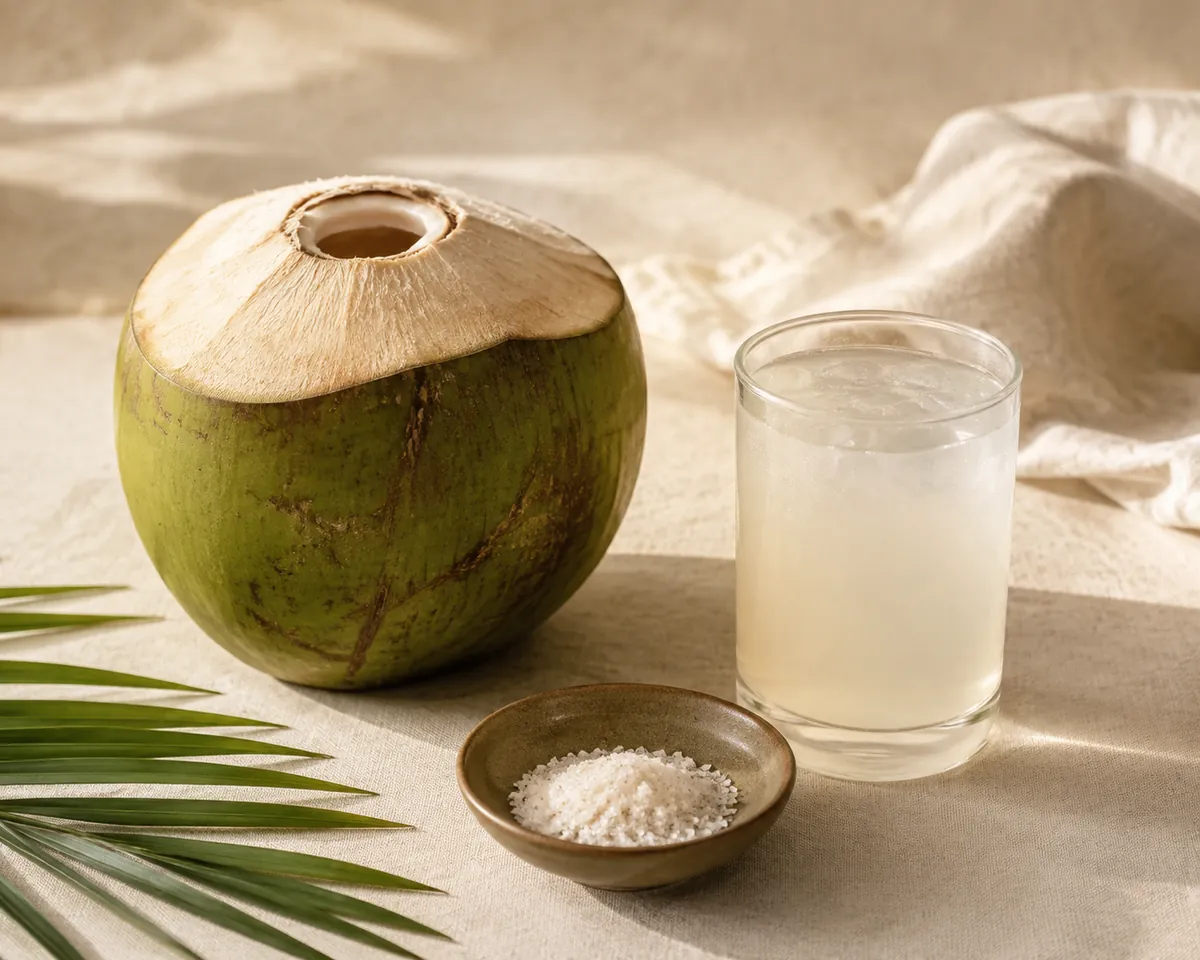
Coconut water is the liquid endosperm inside a young green nut, and nobody chose what is in it. Its composition was set by the palm, the age of the nut at harvest and the weather that season, which is why two cartons from different origins can taste noticeably different from one another.
An electrolyte drink starts from the opposite end. Somebody decided how much sodium the bottle would carry, chose which salt would deliver it, and then built flavour and sweetness around a mixture that would otherwise be unpleasant to swallow.
That difference in origin runs through every axis in this comparison, and it explains most of what follows. It also means the two are not competing on the same terms, and on several of the axes below neither of them wins.
What the sodium and potassium figures actually say
The single compositional fact worth knowing is that the two products lead with different minerals, and the ordering is reversed between them.
Coconut water is a potassium-forward liquid. Typical figures put potassium around 250 mg per 100 ml with sodium near 25 mg, so potassium leads by roughly ten to one, and that ratio is a property of the nut rather than a decision anyone made.
Formulated products invert that. Sodium is normally the largest single mineral addition and potassium appears in smaller quantities, because sodium is what the formulation was built around and the rest of the panel follows it.
| Coconut water | Electrolyte drink | |
|---|---|---|
| Leading mineral | Potassium | Sodium, in nearly every product |
| Sodium level | Low, around 25 mg per 100 ml | Chosen by the formulator, and highly variable |
| Potassium level | High, around 250 mg per 100 ml | Usually well below the sodium figure |
| Sugars | Around 4 g per 100 ml, all naturally present | Anything from none to a sports-drink level, added |
| Who set the figures | The palm and the harvest | A formulation brief |
The comparison is harder than it looks for a mundane reason. Coconut water is usually labelled per 100 ml and electrolyte products are usually labelled per serving, and a serving can be a sachet, a tablet in 500 ml, or half a bottle, so the two numbers on the shelf in front of you frequently describe different volumes of liquid.
Why the sugars are the same order of magnitude and arrived differently
Anyone comparing the sugar rows finds them closer than the marketing on either bottle would suggest, and the interesting part is how each got there.
Coconut water carries roughly 4 g of sugars per 100 ml, none of it added. Those are the sugars the nut laid down as a nutrient store for the embryo, and they fall as the nut matures, which is one reason a mature brown coconut tastes flat.
A sports-style formulation lands in the same region with added sucrose, glucose or maltodextrin, and a zero-sugar powder lands near nothing at all. The category has no single sugar figure, which is why a comparison against it is always really a comparison against one product you have picked out of it.
Sugars per 100 ml, roughly, across both categories
- Full-sugar sports drinkCommonly 4 to 8 g, added as sucrose or glucose
- Coconut waterAround 4 g, naturally present in the nut
- Coconut water from concentrate with juice addedHigher, and the addition must be declared
- Everyday electrolyte powderLow, often close to nothing
- Electrolyte tablet in waterEffectively none
The label language differs more than the contents do. A coconut carton can say no added sugar and be accurate while carrying as much sugar as a sports drink, and a zero-sugar tablet carries none at all, so the phrase on the front tells you about the process rather than about the figure underneath it.
How consistent each one is from bottle to bottle
Here one of the two genuinely wins, and it is worth being plain about it because it is a factual property rather than a judgement.
A formulated drink is made to a specification. Every sachet of a given product carries the same salts in the same quantities, the panel is the same on every pack, and a batch that misses the specification is a manufacturing fault rather than a variation.

Coconut water has no specification to miss. Nut maturity at harvest moves the sugars and the minerals, the choice between heat pasteurisation and high-pressure processing moves the aroma, and whether the product was shipped as liquid or reconstituted from concentrate moves it again.
What varies in each, and why
- Coconut waterNut age, origin, season, processing method, concentrate or not
- Electrolyte drinkNothing between packs of the same product, by design
- Coconut water againTwo cartons of one brand can differ if the harvests did
- Electrolyte drink againTwo brands can differ tenfold, but each stays put
The consequence is that the two categories vary along different axes. Coconut water varies within a brand and formulated drinks vary between brands, so the reading strategy is different: for one, taste the bottle you bought, and for the other, read the panel once and trust it thereafter.
What each one tastes like beside the other
Put them side by side and the difference is not subtle, and neither is it the difference most people expect.
Coconut water is lightly sweet with a faint mineral salinity underneath, very little actual coconut character, and a short clean finish when it is fresh. Where the nut was too old or the handling was poor, a soapy sourness comes up that no amount of chilling hides, and the flavour in detail turns almost entirely on that one variable.
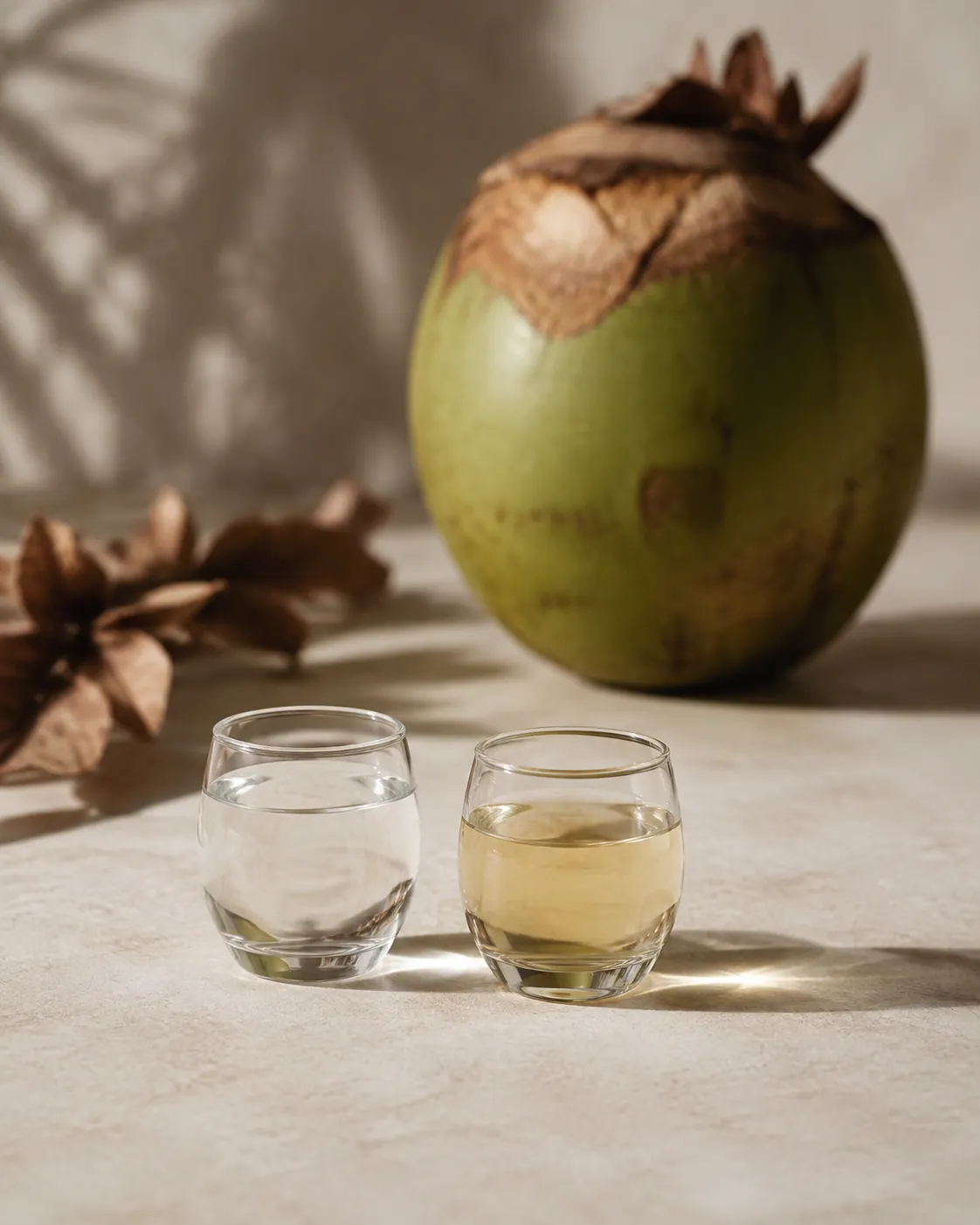
A formulated drink tastes of citrus, acid and sweetness arranged to cover salt. That is the whole design problem in the category: dissolved salt at any useful concentration is unpleasant cold, so citric acid and sugar are doing the work of making it drinkable.
Coconut water, fresh
Clean, faintly saline, barely nutty, with a short finish
Coconut water, from concentrate
Flatter, more cooked, and often faintly caramelised
Full-sugar formulation
Sweet-sour citrus, with the salt largely hidden underneath
Tablet in tap water
The most exposed version, and the one where the salt shows
The zero-sugar case is the one that surprises people most. Removing the sugar from a formulation does not remove any salt, so the identical sodium content reads as considerably saltier, and stevia or sucralose fill the sweetness gap without restoring the body that sugar contributed.
The claims attached to both, and what is not assessed here
Both products are sold with a set of assertions around them, and naming those assertions is different from evaluating them.
Coconut water is widely marketed as a natural alternative to a sports drink. Formulated drinks are marketed on their mineral content and on words like advanced, rapid and optimised, which are defined by nobody.
Those claims exist, they are easy to find on either shelf, and this page describes what is in each bottle rather than what either does.

The natural-alternative claim is worth examining on its own terms, because it makes a compositional assertion that the panels can answer. A high-potassium, low-sodium liquid is a different profile rather than an unprocessed version of a sodium-forward one, and the two panels sit further apart than the phrase suggests.
An oral rehydration solution is a third thing again, built to a published reference composition rather than to a flavour brief, and it is not interchangeable with either product on this page. It shares a shelf with them and very little else.
What each one costs, and what the money is paying for
Price runs the other way from what the ingredient lists imply, and the reasons are worth separating because they are entirely different.
Coconut water is expensive because of agriculture and freight. A nut picked young for its water will never mature into a nut sold for flesh and oil, so the grower gives up the more valuable crop, and the liquid is then shipped across an ocean at close to the weight of water.
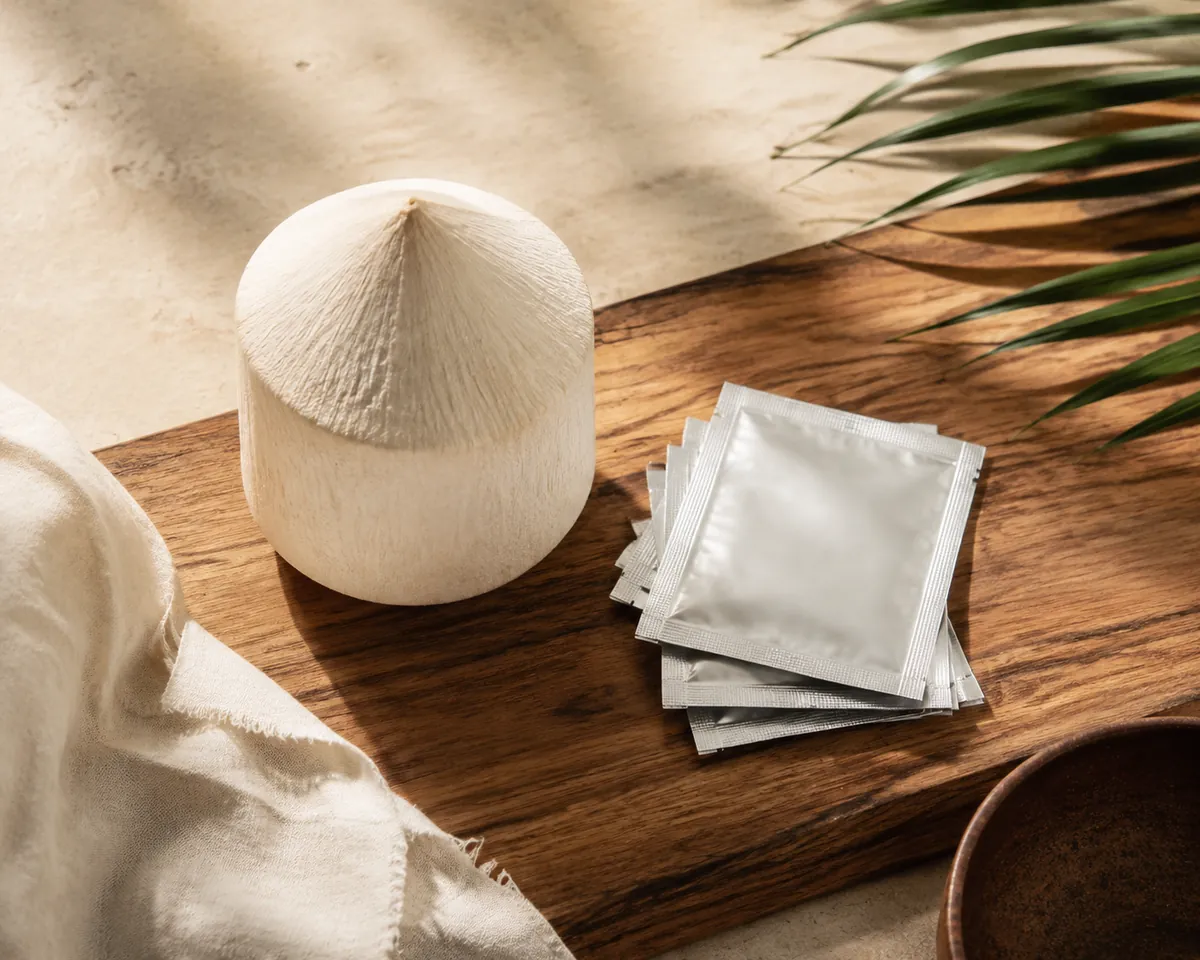
| Coconut water | Electrolyte drink | |
|---|---|---|
| Raw material | High, and an opportunity cost as much as a price | Commodity salts and sugars, very cheap |
| Shipping | Expensive, since it is mostly water by weight | Trivial, if sold as a powder or tablet |
| Dry format | Not available in any usable form | The standard low-cost route |
| Cheapest version | A whole nut where a shop stocks them | A sachet mixed into your own water |
| Where the price sits | In the farming and the freight | In the brand and the packaging |
Formulated products can be sold dry, which changes the economics completely. A sachet or a tablet ships a few grams instead of half a litre, the buyer supplies the water, and the ingredients themselves are commodity salts and sugars that cost very little, which is why making one in a kitchen is so much cheaper than buying it ready-mixed.
Nothing equivalent exists on the other side. Coconut water cannot be reconstituted from a dry powder in any form that resembles the drink, and even the liquid concentrate route costs it most of its aroma, so there is no cheap version that is still the same product.
Which formats each one comes in
The two categories present themselves in different shapes, and knowing the shapes makes the shelf far easier to read.
Coconut water arrives in three: an ambient carton that has been heat-treated, a chilled bottle that was pressure-treated instead, and a whole nut with a straw hole cut in it. Those are three different drinks in practice, and the gap between the fresh nut and the ambient carton is wider than the gap between two brands of carton.
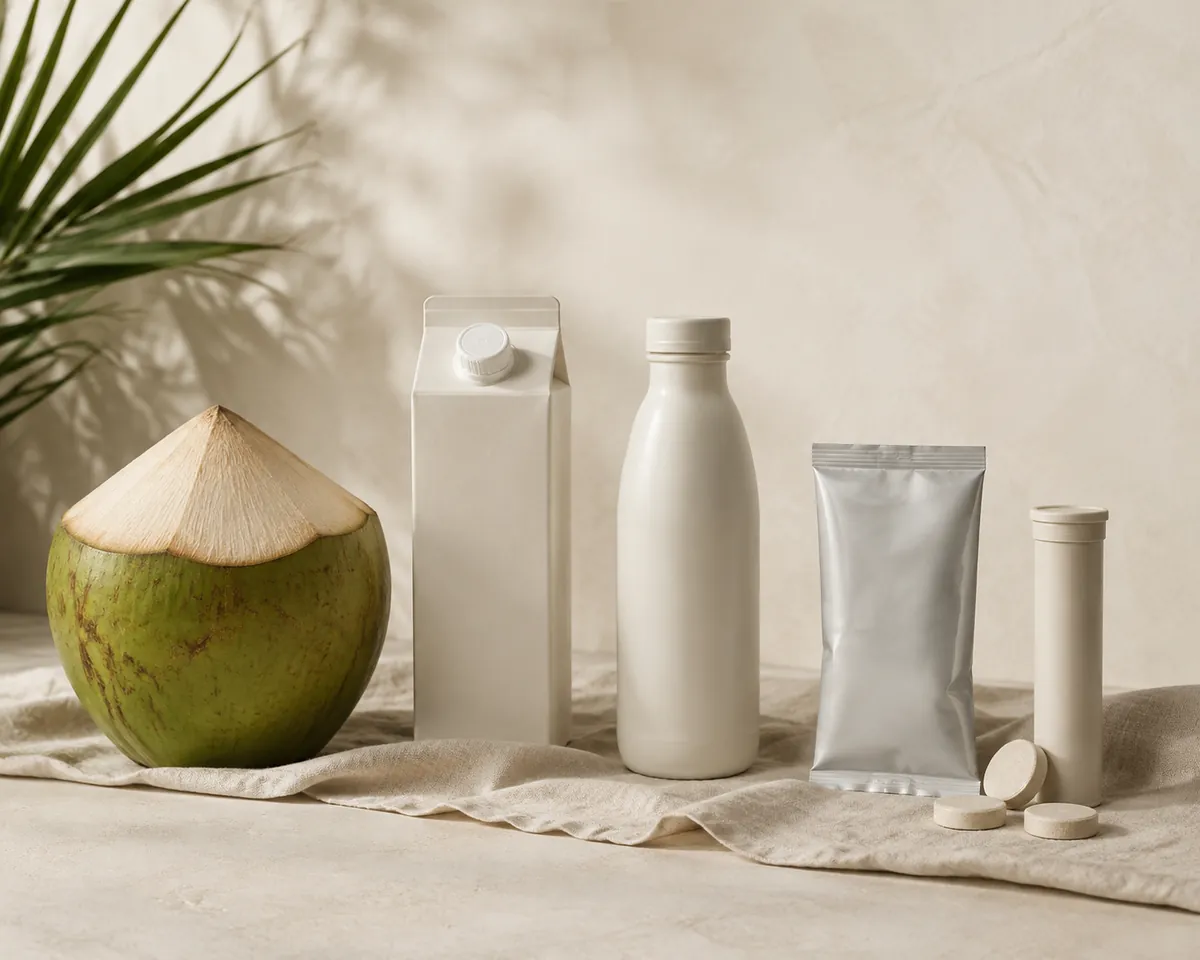
- Ambient carton: heat-treated, shelf-stable for months, flatter in flavour.
- Chilled bottle: pressure-treated, keeps more aroma, needs a cold chain throughout.
- Whole nut: best flavour, shortest window, and opening one is its own task.
- Powder sachet: the formulated route, mixed into your own water.
- Effervescent tablet: the same idea with less sugar and more acid.
- Ready-to-drink bottle: convenient, and the most expensive way to buy salt and water.
The formulated side has no equivalent of the whole nut, and the coconut side has no equivalent of the tablet. That is the practical consequence of the origin difference, and it decides the shopping question long before any panel is read.
Where the two formats do overlap is in the ready-to-drink bottle, which is the only shape both categories share. Set beside each other in a chiller they look like variants of one drink, which is a large part of why the comparison gets made at all, and it is the shape in which a sports drink is easiest to mistake for either.
How each behaves once it is open
Stability is an axis where the two are not close, and it follows directly from what is dissolved in each of them.
Coconut water is among the least stable drinks on the shelf. Its aromatics are volatile and its enzymes are active, so the clean note goes first, a flat sourness follows, and a refrigerated bottle tastes noticeably older by the second day.
A freshly opened nut changes within the hour.
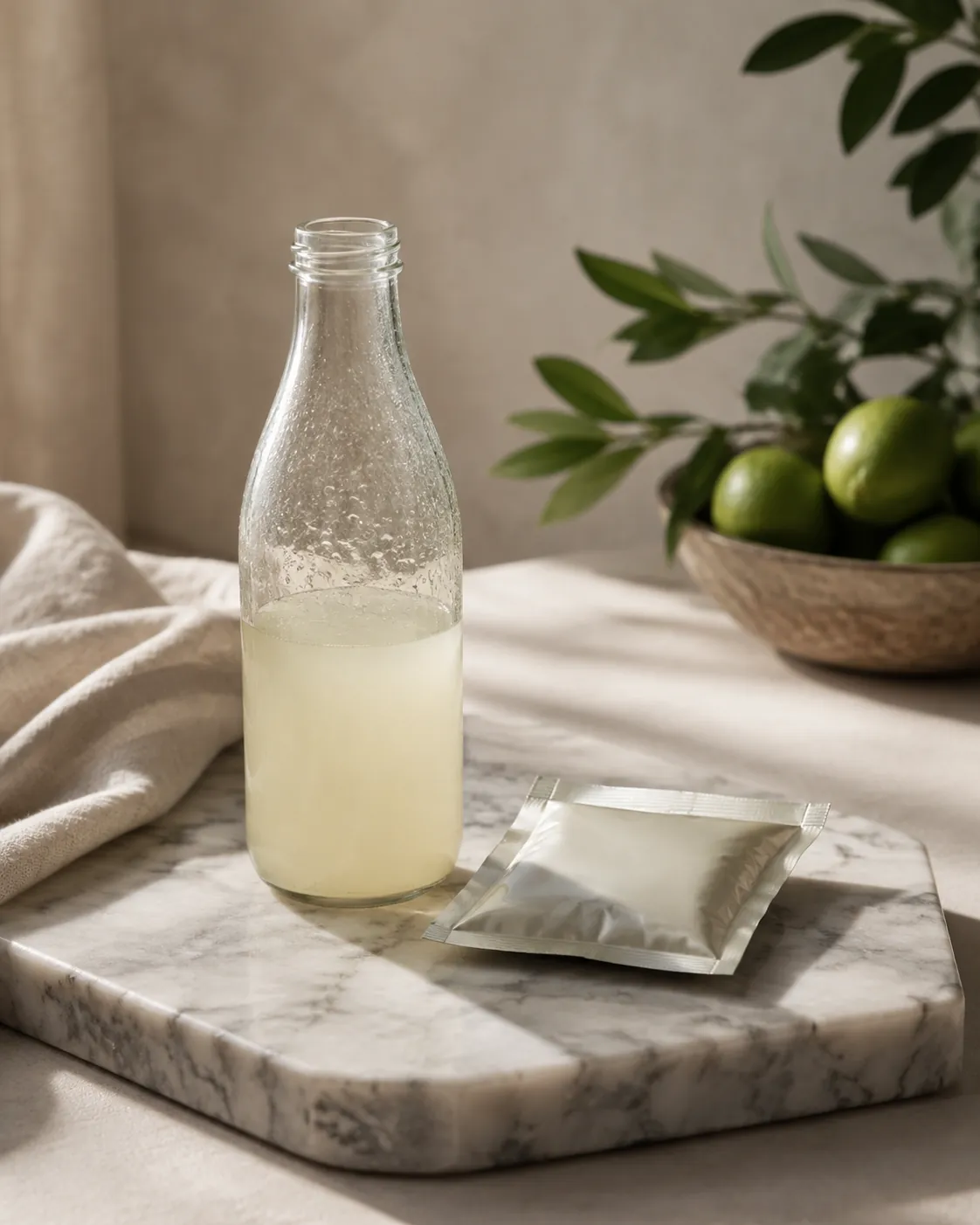
A salt and sugar solution has nothing comparable to lose. Dry powders and tablets keep more or less indefinitely if they stay sealed and dry, an unopened bottle keeps to its date without drifting, and an opened one goes off through ordinary microbial spoilage rather than by losing character.
How long each holds its character once opened
- Fresh from the nutUnder an hour before the clean note goes
- Chilled pressure-treated bottleA day or two, and it must stay cold
- Ambient carton, openedTwo or three days, declining steadily
- Mixed electrolyte drinkTreat as any other opened soft drink
- Dry sachet or tablet, sealedIndefinite, provided it stays dry
Buy coconut water in the size you will finish, since the second half of a large bottle is measurably worse than the first, and that asymmetry has no equivalent on the formulated side. The practical detail sits with keeping coconut water and, separately, with keeping the mixed version.
Where neither is the right answer
Several of the axes people expect to be decisive turn out not to separate the two at all, and saying so is more useful than manufacturing a verdict.
Sugars are the clearest example. A full-sugar formulation and a plain coconut water land in the same region per 100 ml, and the difference is in how the sugar arrived rather than in how much of it is there.

Sugars
Overlapping ranges. Origin differs, quantity often does not
Flavour
A preference, and the two are not on the same scale
Naturalness
Not a measurable property, and the panels do not report it
What either is for
Outside what this site describes, on either side
Mineral content
Different profiles, and neither is a version of the other
Availability
Both are stocked almost everywhere, in different formats
The naturalness axis deserves its own note because it carries so much of the marketing weight. Coconut water is unarguably less processed, and less processed is a description of a supply chain rather than a property of the liquid, which is why it settles nothing on its own and is stated here as a fact about manufacturing.
Anyone hoping the panels would resolve the argument is asking them for something they do not contain. They report composition, they report it well, and everything past that is a question this page leaves alone, exactly as the electrolyte category page does.
Choosing between them on the things this page can describe
What is left is a small set of questions that are genuinely answerable from the shelf, and all of them are about the drink rather than about the drinker.
If you want the same thing every time, the formulated product delivers it and coconut water does not. If you want the flavour of the fresh version, only a whole nut gives it and no carton is close.
If cost per litre matters most, a dry sachet mixed at home is the cheapest route on either side by a wide margin.
| Question | Coconut water | Electrolyte drink |
|---|---|---|
| Same every time | No | Yes |
| Best fresh flavour | Yes, from a whole nut | Not applicable |
| Cheapest per litre | No | Yes, as a powder |
| Keeps once opened | Poorly | Well |
| Sugar-free option exists | Only by not sweetening it | Yes, as a standard product |
| Which is better for you | Not answered here | Not answered here |
The last row is not evasion. Composition is checkable and printed on the pack, and what a drink does for anybody is neither, so this page keeps to the half that can be verified and links out for the rest.
Beyond the pair, the same shelf holds mineral water, whose minerals come from geology at concentrations nobody chose, and infused water, which carries flavour and nothing else. Reading all four as compositions rather than as claims is the only approach that makes the shelf legible, and it is the one that also explains why a plain glass of coconut water works in a berry smoothie while a citrus-flavoured formulation does not.
Common questions
Is coconut water a natural electrolyte drink?
The two have reversed mineral profiles. Coconut water leads with potassium at roughly 250 mg per 100 ml against about 25 mg of sodium, while a formulated drink is built around sodium with potassium in smaller quantities. That makes coconut water a different composition rather than an unprocessed version of the same one.
Does coconut water have less sugar than a sports drink?
Often not. Coconut water carries around 4 g of sugars per 100 ml, none of it added, and a full-sugar sports formulation commonly lands at 4 to 8 g with sugar added. The difference is in how the sugar arrived rather than in how much of it is present, and a zero-sugar powder carries close to none.
Why do two cartons of coconut water taste different when two sports drinks do not?
Coconut water has no specification. Nut maturity at harvest, origin, season and whether the product was heat-treated, pressure-treated or reconstituted from concentrate all move the flavour. A formulated drink is made to a fixed composition, so it varies between brands rather than within one.